

 Dirty Bird Bakersfield
AR-15, AR-15 Barrels, AR-15 Barrels
Best AR-15 Barrels for Sale: Top Picks for Every Budget and Purpose

Nov
Table of Contents
AR-15 barrels decide more about how a rifle shoots than any other part on it. The barrel sets the rifle’s accuracy, velocity, balance, and much of its reliability, and it is usually the first decision a builder makes. This guide covers why the barrel matters, how length, gas system, steel, lining, twist, and profile change the rifle, and the AR-15 barrels we carry and recommend for 2026.
Why Choosing the Right AR-15 Barrel Matters
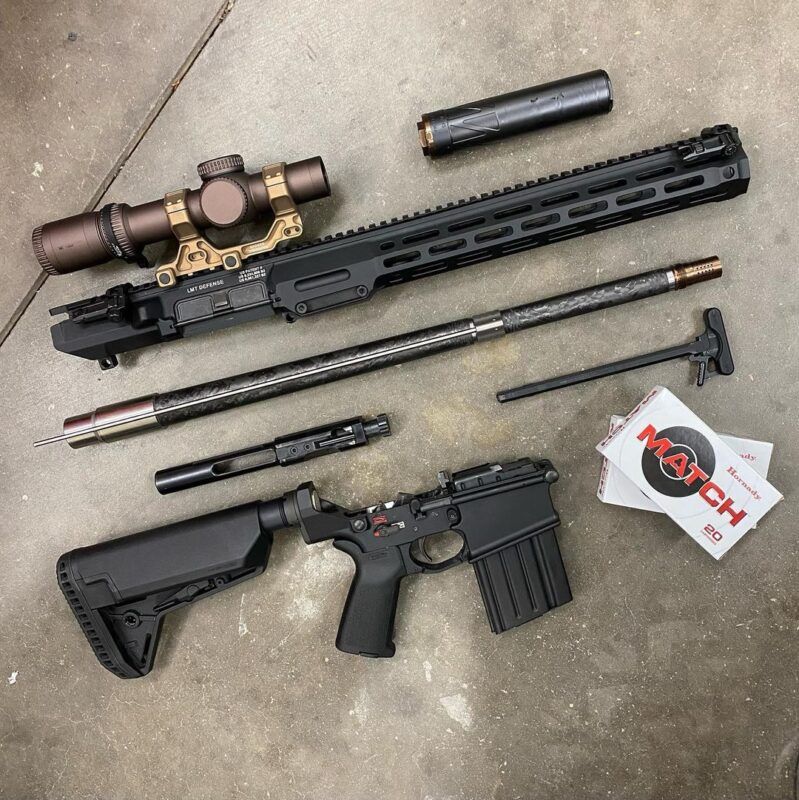
The barrel is the backbone of the rifle. It affects nearly every part of the shooting experience, from accuracy and velocity to how the rifle balances and how long it keeps running. A barrel built for precision work behaves very differently from one built for high-volume range days or a defensive carbine, so the right choice starts with what the rifle is for.
Length, material, profile, twist rate, and gas system all play a role. A longer barrel adds velocity and usually some practical accuracy, but it also adds weight. A shorter barrel handles faster in tight spaces and gives up some ballistic performance. Once those trade-offs are clear, picking a barrel gets a lot simpler.
Matching AR-15 Barrels to the Job
For precision shooting, a stainless steel barrel in a heavier profile and a longer length, such as 18 or 20 inches, holds tight tolerances and stays consistent at distance. For general use, a 16-inch barrel in 4150 CMV with a mid-length gas system gives a balanced mix of accuracy, durability, and handling, which suits most recreational and defensive rifles.
For close quarters and light builds, a 14.5-inch or 13.7-inch barrel in a lightweight or pencil profile gives the most portability and the fastest handling. Those lengths need a permanently attached muzzle device to reach the 16-inch legal minimum on a rifle, which we cover in the legal section below.
What to Look for in AR-15 Barrels
A few specifications do most of the work, and it pays to understand each one before you buy.
Barrel Length and Gas System
Barrel length drives velocity and handling. A 20-inch barrel gets the most velocity and range, and a 16-inch barrel is the most versatile length for most shooters. The gas system has to match the barrel. Rifle, mid-length, carbine, and pistol gas lengths each suit a range of barrel lengths, and the pairing matters for smooth cycling and reliability. A mid-length system on a 14.5- to 16-inch barrel softens the gas pulse compared with carbine gas and has become the default for many builders, while carbine gas remains the proven choice at 11.5 and 14.5 inches.
Material and Construction
Most AR-15 barrels are made from 4150 chrome moly vanadium (CMV) steel or 416R stainless steel. CMV is tough and handles heat well, which makes it a natural fit for high-volume shooting. Stainless is easier to machine to a fine finish and is the usual choice for competition and precision rifles.
Lining and Coating
Most modern AR-15 barrels use chrome lining or nitriding, sold as Melonite or QPQ, to protect the bore from wear and corrosion. Chrome lining is the military standard and adds throat life for high round counts. Nitride treats the steel itself rather than plating it, holds up well, and is common on modern barrels at every price. The right choice depends on how much you shoot and what you want from the rifle.
Twist Rate
Twist rate determines which bullet weights a barrel stabilizes. A 1:8 twist is the most versatile choice for a general-purpose AR-15 and handles the common 55- to 77-grain range well. A 1:7 twist is the military standard and favors heavier bullets, and it still shoots common 55-grain ammunition.
Barrel Profile
Profile affects weight, heat management, and handling. Heavy profiles add stability and soak up heat, and lightweight profiles cut fatigue on a rifle you carry. Hybrid profiles, such as the Faxon Gunner, keep metal where the barrel needs it and remove it everywhere else.

Fluting and Carbon Fiber
For specialized builds, look at fluting or carbon fiber wraps. Fluting saves a little weight and adds some style. Carbon fiber saves considerably more weight and helps a barrel shed heat, at a much higher price.
Our AR-15 Barrel Picks for 2026
Dirty Bird M4 Carbine Barrels With F-Marked Front Sight Base
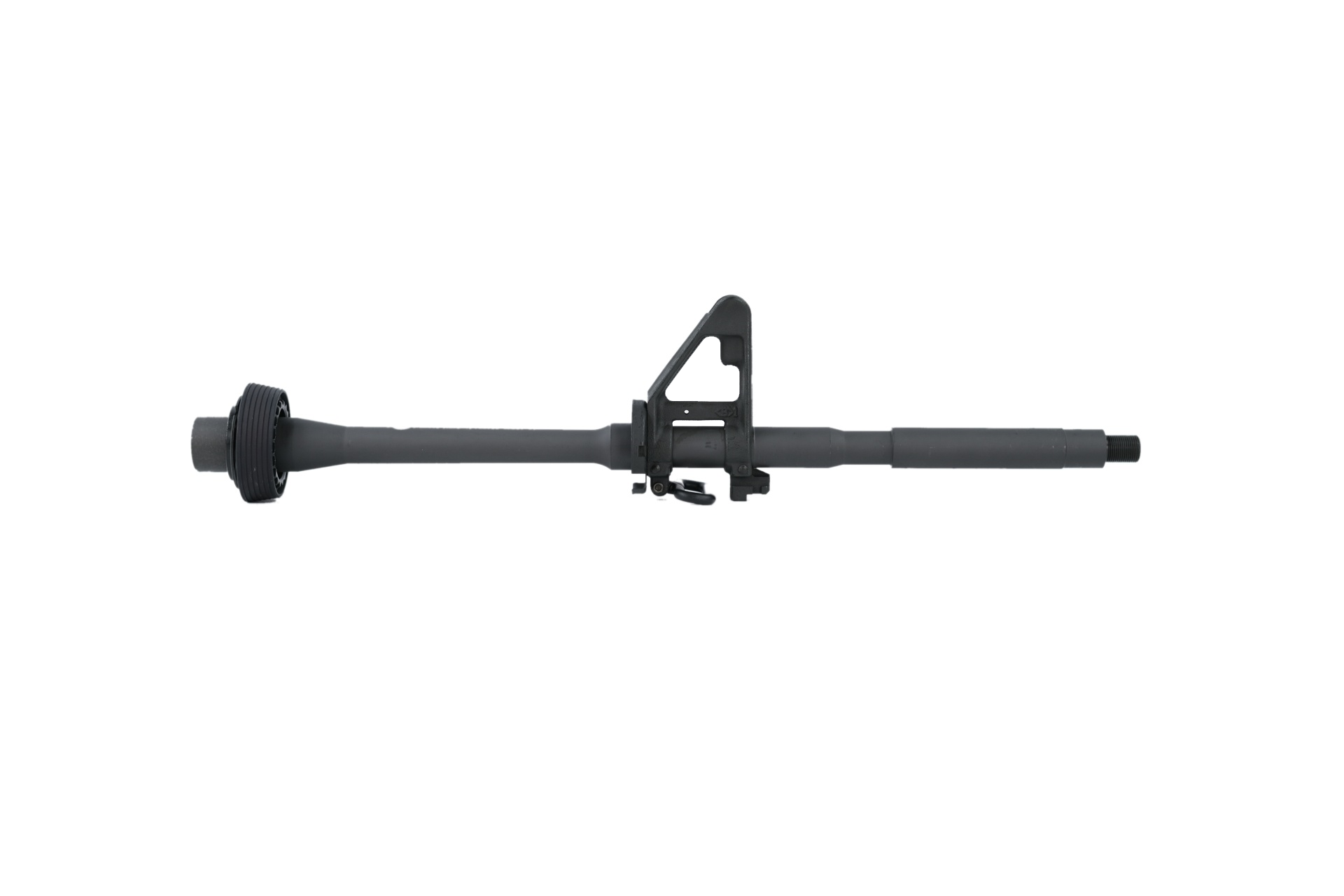
We are proud of our Dirty Bird barrels, and the Dirty Bird 16″ M4 carbine barrel is the one we point most rifle builders toward. It is machined from chrome moly vanadium steel with a chrome-lined bore and chamber, finished in manganese phosphate, and cut with a 5.56 NATO chamber and a 1:7 twist that handles 55- through 77-grain bullets. It runs a carbine-length gas system, uses an M4 profile and M4 feed ramp extension, and has a 1/2×28 threaded muzzle.
The front end is what makes it a retro build barrel. It ships with a pinned F-marked front sight base, the taller base made for flat-top uppers, so a detachable carry handle or a standard-height rear sight lines up without shims. The handguard cap, delta ring assembly, and front sling swivel come installed, ready for standard M4 two-piece handguards. Our post on Dirty Bird retro AR-15 barrels covers the full line.
The same barrel comes in a 14.5-inch true M4 length and an 11.5-inch compact length. The 11.5-inch is actually our best-selling Dirty Bird AR-15 barrel, but both shorter lengths come with legal strings attached, so read the section below before you order one.
NBS Barrels
If budget comes first, the NBS line is our answer. NBS is our private-label brand. When we find a barrel maker we like, we buy in large quantities, sell those barrels under the NBS name, and pass the savings on to customers through Dirty Bird and AR15Discounts.com. The barrels are sourced from Tier 1 American manufacturers and made under ISO-9001 or higher quality standards, and every NBS barrel 16 inches or longer is guaranteed to hold 1 MOA or better with match-grade ammunition from a rest.
Our most popular NBS barrel is the 16″ 5.56 NATO mid-length, a government-profile barrel with a 1:7 twist, a black nitride finish, a .750 gas block journal, and 1/2×28 threads.

Ballistic Advantage 16″ SPR Fluted .223 Wylde
Ballistic Advantage barrels are known for careful gas port sizing that keeps rifles running suppressed or unsuppressed, and for the shoulderless Hanson profile. The 16″ SPR fluted Premium Series barrel is the best-selling AR-15 barrel in our store. It is 416R stainless with a bead-blasted finish, a .223 Wylde chamber that handles .223 Remington and 5.56 NATO, a 1:8 twist, and a mid-length gas system on a .750 journal.
Aggressive flutes bring the weight down to about 27 ounces, and the extension has a nickel boron coated M4 feed ramp. The barrel is high-pressure tested and magnetic particle inspected. It makes a lot of sense for a light precision or general-purpose rifle with a free-float handguard.

Rosco Manufacturing Bloodline Barrels
Rosco Manufacturing built its name as a dependable OEM barrel maker and now sells its own Bloodline, Purebred, and K9 lines, all made in-house in Rhode Island. Our pick is the Bloodline 16″ 5.56 mid-length, which Rosco designed around the USASOC Improved Upper Receiver Group specs.
It is 4150 CMV with a nitride finish inside and out, a 1:7 twist, a mid-length gas system on a .750 gas seat, an 11-degree crown, and 1/2×28 threads. Rosco tunes twist rates and gas port sizes to each barrel instead of using one blanket spec.

Faxon Barrels
If you want to spend a bit more on your barrel, Faxon is a strong choice. Our sister site ARBuildJunkie.com talked with Bob Faxon about how the company approaches barrels.
Faxon comes from more than 40 years of precision machining, and it shows in the fit and finish of its AR-15 barrels. The 16″ Government/SOCOM barrel is 4150 steel with a QPQ nitride finish, a 5.56 NATO chamber, a 1:8 twist, and a mid-length gas system on a .750 journal. It is a simple, heavy-enough barrel for a rifle that will see a lot of rounds.

Faxon also machines muzzle devices directly into some of its Gunner barrels, with either an integral slim flash hider or an integral slim 3-port brake. The device cannot come loose or fall out of time, and it saves the weight of separate hardware. California builders should note that the integral flash hider counts as a flash suppressor on a detachable-magazine rifle, and it cannot be swapped for a brake, so the 3-port brake version is the one for a featureless build.

Criterion 18″ .223 Wylde Hybrid
For a step into precision shooting, consider something a little longer that was built for accuracy from the start. The Criterion 18″ Hybrid barrel is 4150 chrome moly with a chrome-lined, honed, and hand-lapped bore, a phosphate exterior, a .223 Wylde chamber, a 1:8 twist, and a rifle-length gas system on a dimpled .750 journal. Criterion tunes the gas port for use with or without a suppressor, and the hybrid contour keeps weight down under the handguard.

Proof Research Carbon Fiber Barrels
Proof Research wraps a precision steel core in carbon fiber to make light, stiff barrels that behave like a heavy target barrel without the weight. The carbon wrap increases stiffness and helps manage heat, and the result is one of the most respected premium barrels in the AR-15 world.
That performance comes at a high price, which makes Proof barrels a better fit for competition shooters, hunters, and anyone who puts weight savings and precision first. Ask our team about Proof availability if you want one for your build, and weigh whether your shooting justifies the extra cost.
Short AR-15 Barrels, SBR Rules, and California
Under federal law, a rifle with a barrel shorter than 16 inches is a short-barreled rifle under the National Firearms Act. Barrel length is measured to the end of the barrel or a permanently attached muzzle device, so a 14.5-inch barrel with a device pinned and welded to reach 16 inches is a standard rifle. An 11.5-inch barrel on a rifle lower makes an SBR, and the other route is to build it as an AR pistol from the start.
The federal SBR rules changed in 2026. The tax on making or transferring an SBR dropped to zero on January 1, 2026, and in October 2026 ATF announced in an open letter that it will no longer require approval or registration for SBRs. That is enforcement discretion. The NFA itself is still law, ATF still asks owners to file a Form 20 before taking an SBR across state lines, and state laws still apply. Our post on the ATF NFA open letter explains what changed, and builders should check current guidance before they assemble one.
California is a different story. A rifle with a barrel under 16 inches is a short-barreled rifle under Penal Code 17170, which PC 33215 prohibits, and the federal change does nothing to alter that. An AR pistol built on an 11.5-inch barrel runs into the assault weapon rules in PC 30515(a)(4). California counts a permanently attached muzzle device toward barrel length under 11 CCR 5471(d), so a 14.5-inch barrel can work, but on a featureless rifle that device has to be a brake or compensator rather than a flash hider, since a flash suppressor is a prohibited feature on a detachable-magazine rifle under PC 30515(a)(1). Our team in Bakersfield can help California builders get this right, and our list of common California compliance mistakes is worth a read first.
Choosing Among These AR-15 Barrels
Selecting a barrel means balancing length, material, lining, twist, and profile against what the rifle is for. A budget build does well with an NBS barrel. A retro carbine wants the Dirty Bird M4 with its front sight base. A light general-purpose rifle fits the Ballistic Advantage SPR, Rosco Bloodline, or Faxon Gunner, and a precision build points toward the Criterion or a Proof Research barrel.
If you want more depth on the decision, our guide on how to choose the right AR-15 barrel walks through it step by step. When you are ready, browse the full range of AR-15 barrels at Dirty Bird Guns and Ammo, from budget builds to premium rifles.