

 Dirty Bird Bakersfield
AR Parts and Accesories, AR-15, Bolt carrier Groups
AR-15 Bolt Carrier Group Guide: Types, Picks and Fixes
Nov
The AR-15 bolt carrier group does more work than any other assembly in the rifle. Every shot, it unlocks from the barrel, pulls the empty case out, throws it clear, strips a fresh round from the magazine, and locks back up, all in a fraction of a second. When an AR-15 runs well, the BCG is usually the reason, and when it starts acting up, the BCG is the first place we look.
This guide covers how the parts work together, steels and finishes, M16 versus semi-auto carriers, the BCGs we stock and recommend, the malfunctions owners bring to our counter, and how to keep a BCG running for the long haul. The picks section lists only carriers we have in stock, with Dirty Bird Industries BCGs first.
AR-15 Bolt Carrier Groups Explained Table of Contents
How an AR-15 Bolt Carrier Group Works
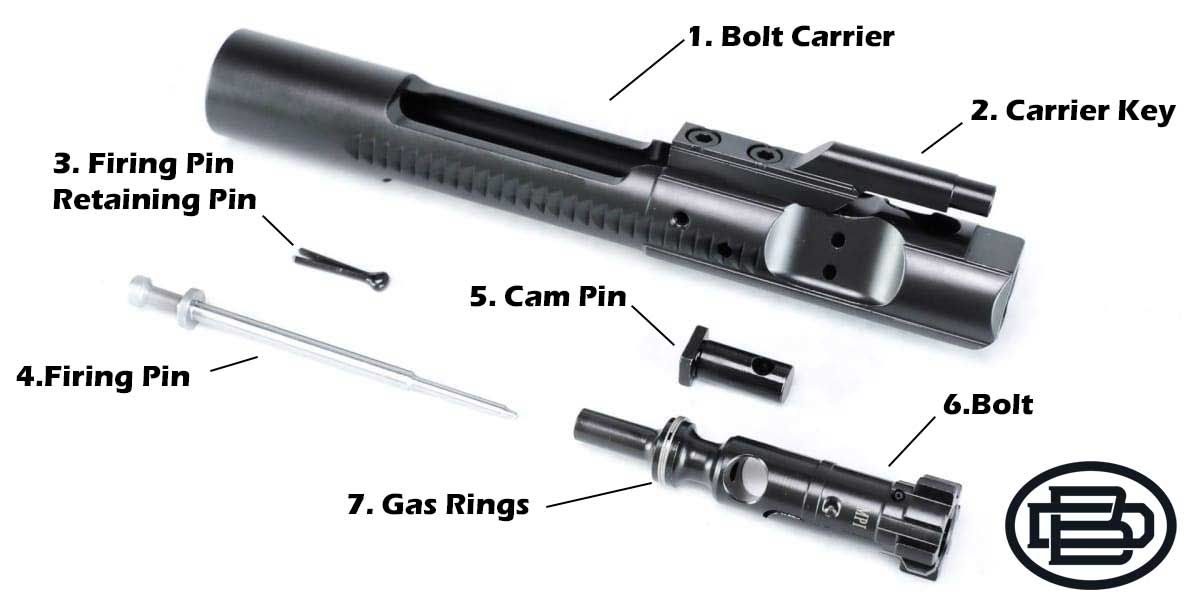
A BCG has eight main parts: the carrier, the gas key, the bolt, the cam pin, the firing pin, the firing pin retaining pin, and the extractor and ejector that live in the bolt. Each part has one job, and a problem with any of them shows up as a malfunction.
The Carrier and Gas Key
The carrier is the steel body that rides inside the upper receiver and holds the bolt. On top sits the gas key, a short tube that lines up with the gas tube. Two screws hold the key down, and those screws are staked, meaning metal from the key is punched into the screw heads so they cannot back out. On a quality carrier, the carrier bore and the inside of the gas key are chrome lined to resist heat and corrosion.
The Bolt, Extractor and Ejector
The bolt locks into the barrel extension with seven lugs, and the extractor acts as an eighth. The extractor is a spring-loaded claw that grabs the case rim, usually helped by a rubber insert or O-ring around its spring. The ejector is a spring-loaded plunger in the bolt face that kicks the case out once it clears the chamber. Three gas rings on the bolt tail seal it inside the carrier.
Cam Pin, Firing Pin and Retaining Pin
The cam pin passes through the carrier and bolt and rides in a curved slot in the carrier, so carrier movement rotates the bolt to lock or unlock it. The firing pin runs through the bolt and through the cam pin, which is why the cam pin cannot come out until the firing pin is removed. A small retaining pin, often called the cotter pin, holds the firing pin in place.
The Firing Cycle
When a round fires, gas bleeds through a port in the barrel, travels down the gas tube, and enters the gas key. That gas pushes the carrier rearward while the bolt is still locked. After a short travel, the cam pin rotates the bolt to unlock it, the carrier pulls the bolt back, and the extractor drags the case out until the ejector throws it clear. The buffer spring then drives everything forward, the bolt strips the next round into the chamber, and the cam pin rotates the bolt back into lock. Mike Mihalski of Sons of Liberty Gun Works walks through it in this ARBuildJunkie interview.
Read on ARBuildJunkie: AR Bolt Carrier Group Basics with Mike Mihalski of SOLGW
BCG Materials, Testing and Coatings
Most quality carriers are machined from 8620 steel and heat treated. The bolt takes the most stress, so it is where materials matter most. The military specification calls for Carpenter 158 steel, and C158 bolts have a long service record. Many makers now use 9310, an alloy known for toughness and fatigue strength. Either makes a durable bolt when it is heat treated and shot peened correctly, and the maker matters more than the alloy name on the box.
High pressure testing (HPT) means each bolt fires a proof round loaded well above normal pressure. Magnetic particle inspection (MPI) follows, using a magnetic field and iron particles to reveal cracks too small to see. A bolt listed as HPT and MPI tested has been checked individually after the proof load, and that is the standard we look for on a hard-use rifle.
Manganese phosphate is the original military finish, a dull gray surface that holds oil well and costs the least. Black nitride is a heat treatment that hardens the outer layer of the steel itself, leaving a slick, corrosion-resistant surface that wipes clean easily, and it is the most common finish we sell. Nickel boron, hard chrome, DLC, and TiN are applied coatings that make carbon easier to remove, usually at a higher price. Our guide to BCG materials and coatings covers each one in depth.
Types of AR-15 Bolt Carrier Groups
Most BCGs on the market fall into four types: the M16 profile carrier, the older semi-auto carrier, enhanced carriers, and lightweight or adjustable carriers. The M16 profile is the default for a general-purpose rifle, and the other three exist to solve specific problems with mass, gas, or fouling.
M16 Full-Auto Profile vs Semi-Auto Carriers
The difference is at the bottom rear of the carrier. An M16 profile carrier, also sold as a full-auto or F-A carrier, keeps a full-length lower section behind the cam pin, while a semi-auto carrier has that section cut away and weighs slightly less. Both fit the same upper, use the same bolt, and work with a standard AR-15 trigger. Most builders choose the M16 profile because the extra mass adds momentum, which helps the carrier push through fouling, smooths unlocking, and keeps the rifle running with hot ammunition or a suppressor. Semi-auto carriers have become harder to find as most makers moved to the M16 profile. Our M16 bolt carrier group guide goes into more detail.
Is an M16 Bolt Carrier Legal in an AR-15?
Yes. An M16 profile carrier is a standard part that is legal to own and to run in a semi-automatic AR-15, it sells over the counter with no paperwork, and many factory semi-auto rifles ship with one. The carrier profile does not change how the rifle fires, and a semi-automatic AR-15 fires one round per pull of the trigger whichever carrier is installed. The name describes the carrier’s shape and its military origin.
Enhanced Carriers
Enhanced carriers keep standard dimensions but change the shape to address known weak points. Common changes include a flared rear that reduces carrier tilt, gas vents moved forward or underneath to send gas away from the shooter, angled sand cuts in the rails that move fouling out of the way, and bolts ground after heat treatment for a more precise fit. They make the most sense on suppressed rifles, short barrels, and rifles that see heavy use.
Lightweight, Low-Mass and Adjustable Carriers
Lightweight carriers use titanium, aluminum, or skeletonized steel to cut reciprocating mass, which reduces muzzle movement for faster follow-up shots. Examples on our shelves include the Rubber City Armory Low Mass Competition BCG and the RISE Armament RA-1010 Low-Mass BCG. Less mass also means less margin, so these carriers usually need an adjustable gas block or adjustable gas key and the right buffer to cycle reliably. An adjustable gas key meters gas at the carrier, which helps on a rifle that switches between suppressed and unsuppressed use. Treat lightweight carriers as tuning parts for a specific build.
Our AR-15 Bolt Carrier Group Picks
These are the BCGs we recommend from what we stock, all full-size 5.56 carriers. The list starts with the Dirty Bird Industries BCG line, which we design and stand behind, then covers the outside brands our customers buy most for each role. The rest of our selection is in the AR-15 bolt carrier group collection.
Dirty Bird Industries Enhanced Bolt Carrier Group
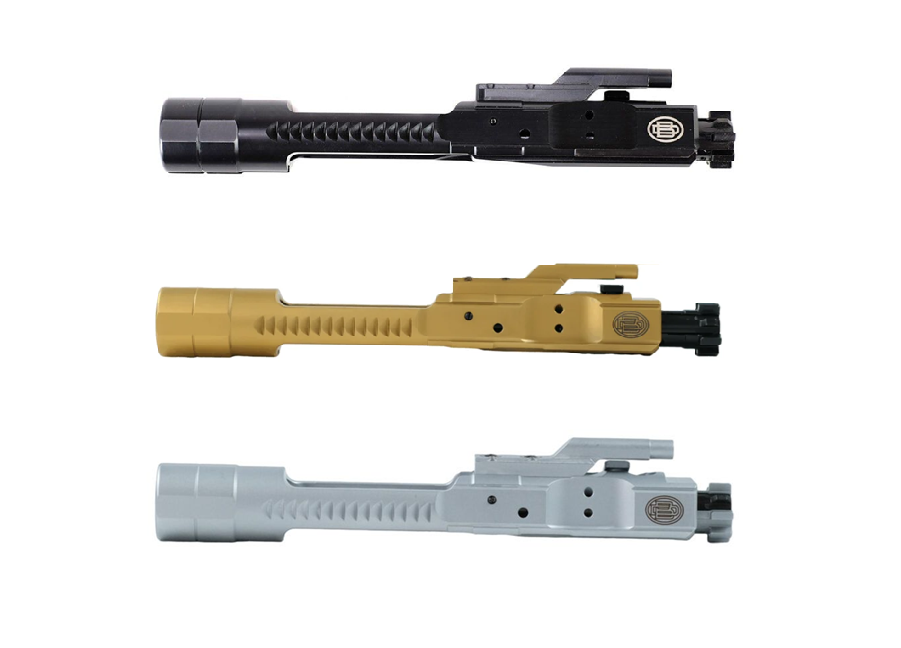
The Dirty Bird Industries Enhanced BCG brings enhanced-carrier features to a mid-range price. The carrier relocates its load-bearing surfaces to reduce tilt during recoil and adds wall thickness around the gas exhaust ports. The 9310 bolt is ground on its outer surfaces and lugs after heat treatment for a precise fit, and every bolt is HPT and MPI tested. It is offered in black nitride, chrome, DLC, and TiN.
Dirty Bird Industries Sand-Cut Bolt Carrier Group
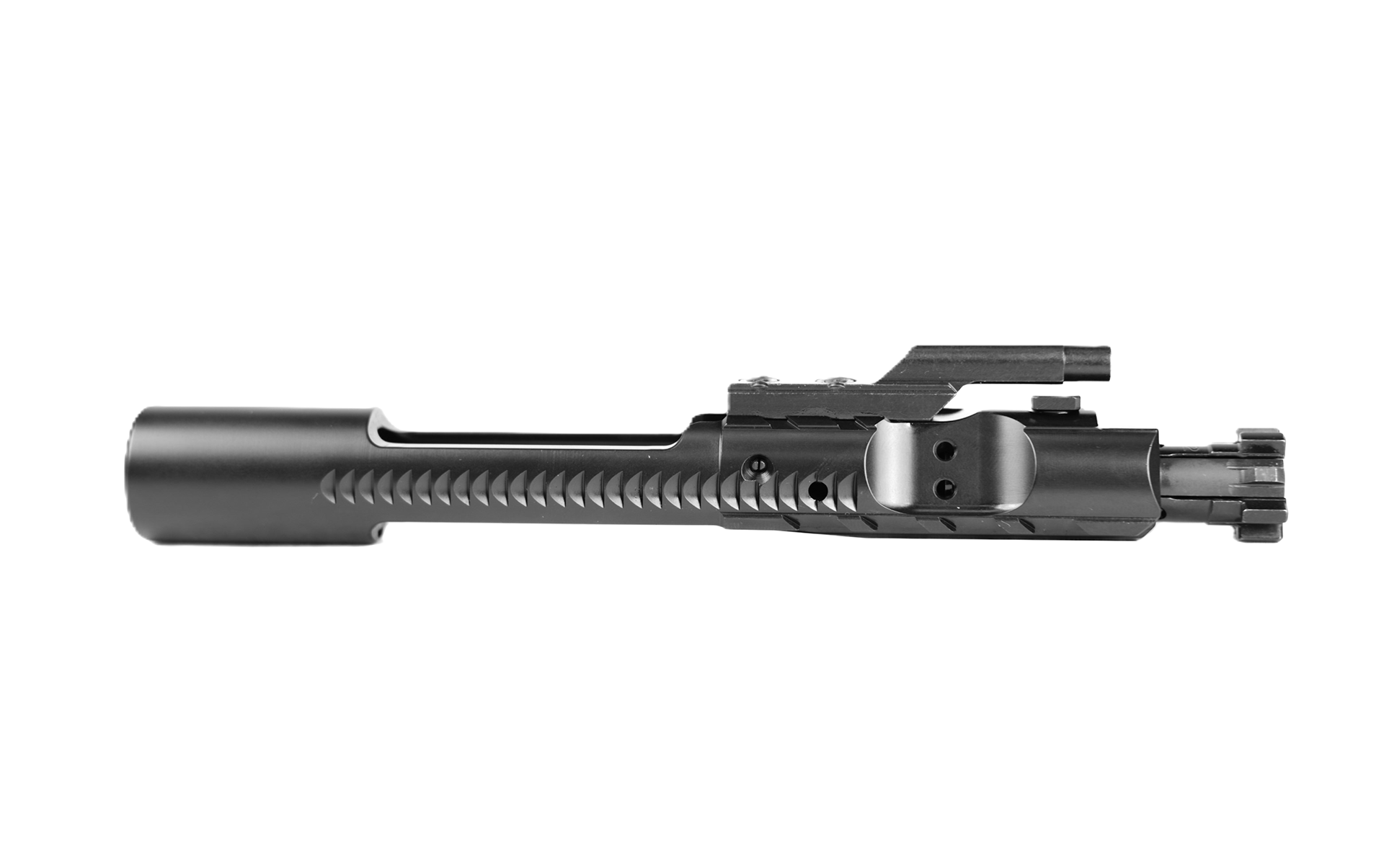
The Dirty Bird Industries Sand-Cut BCG is the one we point to for suppressed rifles and dirty conditions. Angled cuts in the carrier rails give carbon and grit somewhere to go besides the contact surfaces. It pairs an 8620 M16 profile carrier with a shot peened, MPI tested 9310 bolt and a billet 4130 gas key with staked Grade 8 screws, and it ships with a Viton O-ring and extractor insert installed.
Dirty Bird Phosphate/Chrome-Lined Bolt Carrier Group
For a traditional mil-spec build, the Dirty Bird phosphate and chrome-lined BCG follows the military pattern closely. It has a shot peened Carpenter 158 bolt that is individually HPT and MPI tested, a full-mass M16 profile 8620 carrier with a hard chrome bore, and a chromoly gas key with staked Grade 8 screws sealed with Permatex. It is made in the USA and backed by the Dirty Bird Industries lifetime warranty.
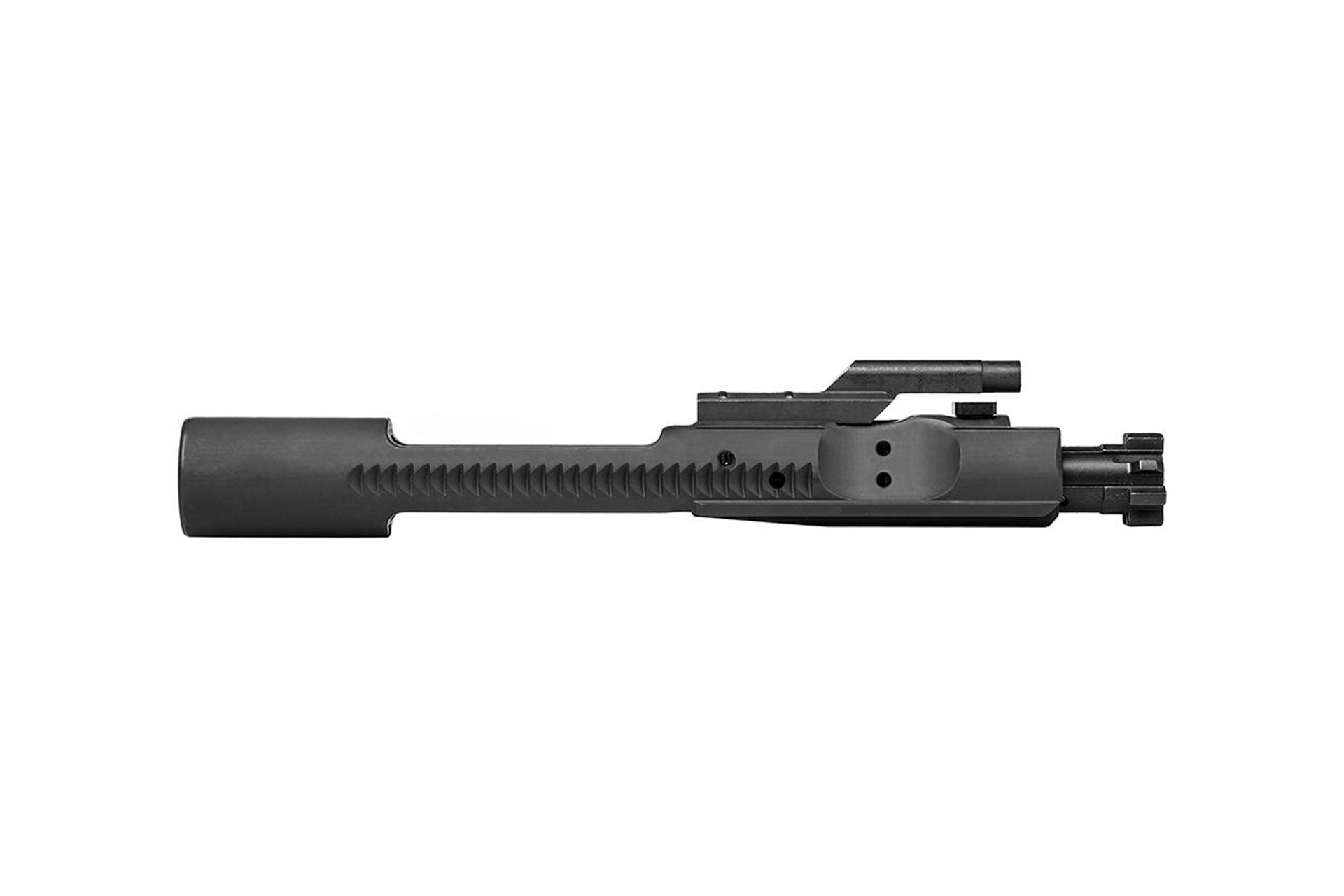
Toolcraft M16 Profile Bolt Carrier Group, Black Nitride
The Toolcraft M16 profile BCG is one of the most recommended budget carriers available and one of our top sellers. It pairs a 9310 bolt with an 8620 carrier, salt bath black nitride on both, an MPI tested bolt, a staked gas key, and a lifetime replacement warranty. Our Toolcraft BCG overview explains why so many builders start here.

NBS Bolt Carrier Group, Black Nitride
The NBS black nitride BCG is our top-selling BCG and the least expensive carrier on this list. The specification is solid for the price, with a 9310 bolt, an 8620 carrier, MPI, a hard-chromed 8740 firing pin, a D2 tool steel extractor, and a staked gas key with Grade 8 screws. For a first build or a range rifle, it gets the important details right.
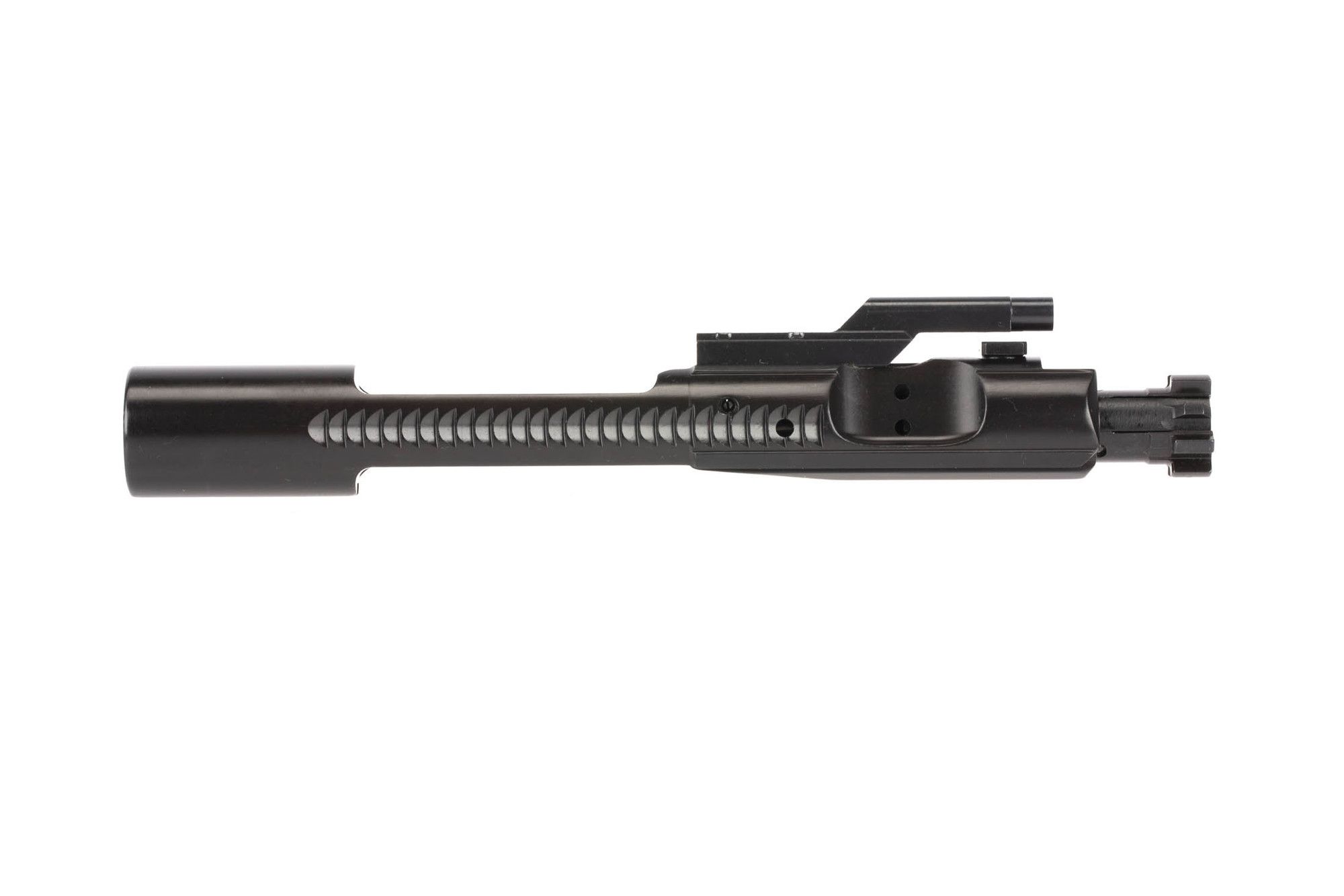
Microbest C158 HPT/MPI Bolt Carrier Group, Chrome
The Microbest C158 chrome BCG suits builders who want an easy-cleaning finish. The Carpenter 158 bolt is individually HPT and MPI tested, the M16 cut carrier is 8620 steel, hard chrome covers both, and it carries a lifetime warranty. Our Microbest BCG review covers the full lineup.
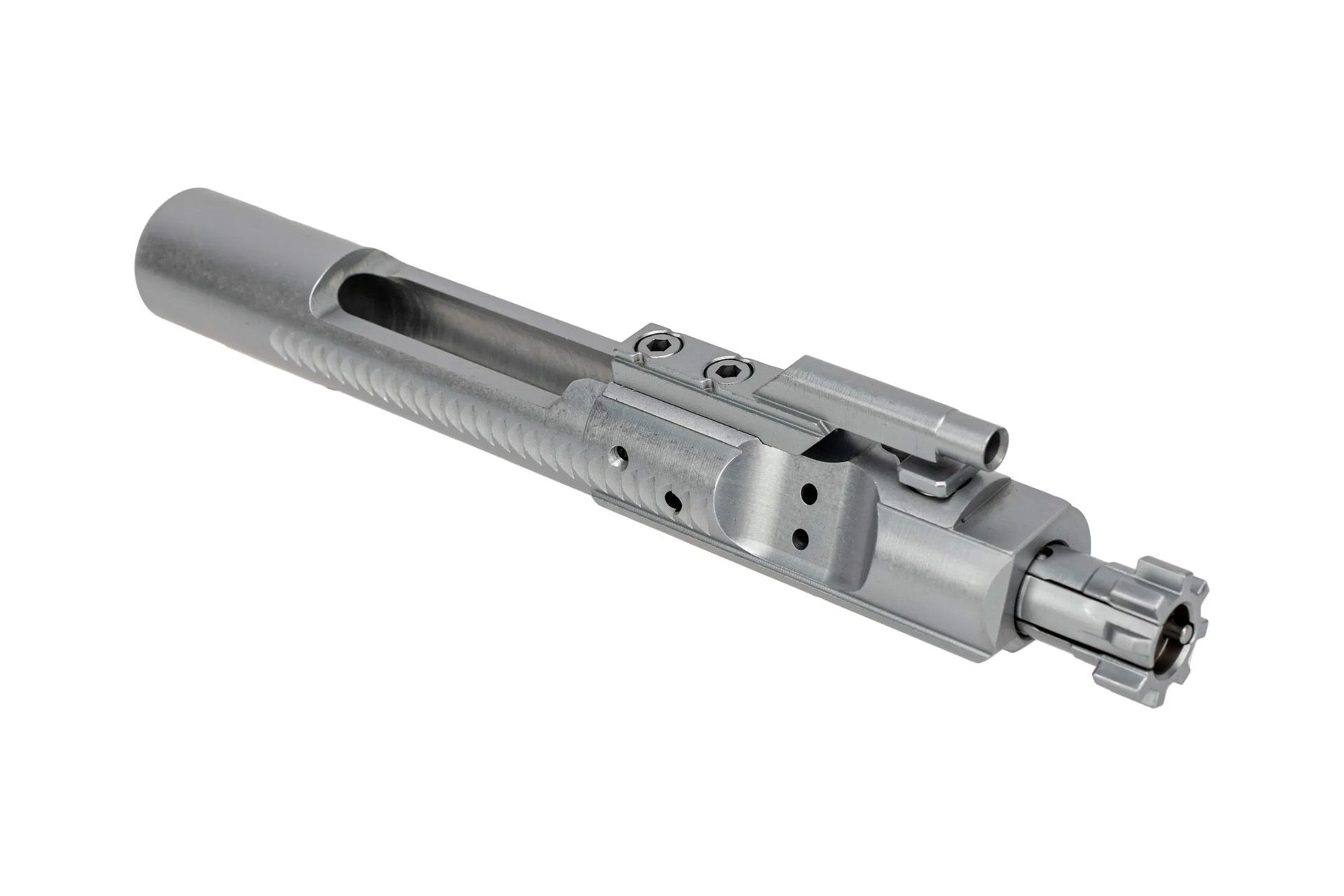
Rubber City Armory Blacknitride+ M16 Bolt Carrier Group
The Rubber City Armory Blacknitride+ M16 BCG uses the H&M Blacknitride+ treatment on an 8620 carrier and a 9310 bolt, with a billet staked gas key and a tool steel extractor and cam pin. Carbon wipes off the finish with a rag. ARBuildJunkie talked with the company about the process in the interview below.
Read on ARBuildJunkie: Rubber City Armory Blacknitride+ Bolt Carrier Groups: An ARBuildJunkie Q&A

LMT Defense 5.56 F-A Bolt Carrier Group
Lewis Machine and Tool has supplied BCGs and parts to the U.S. military for years, and the LMT 5.56 F-A BCG is the same carrier LMT installs in its own full-auto rifles. It is a traditional manganese phosphate M16 carrier with a Carpenter 158 bolt, HPT and MPI testing, and a properly staked gas key with hardened screws, a sound choice for a hard-use rifle built to military pattern.
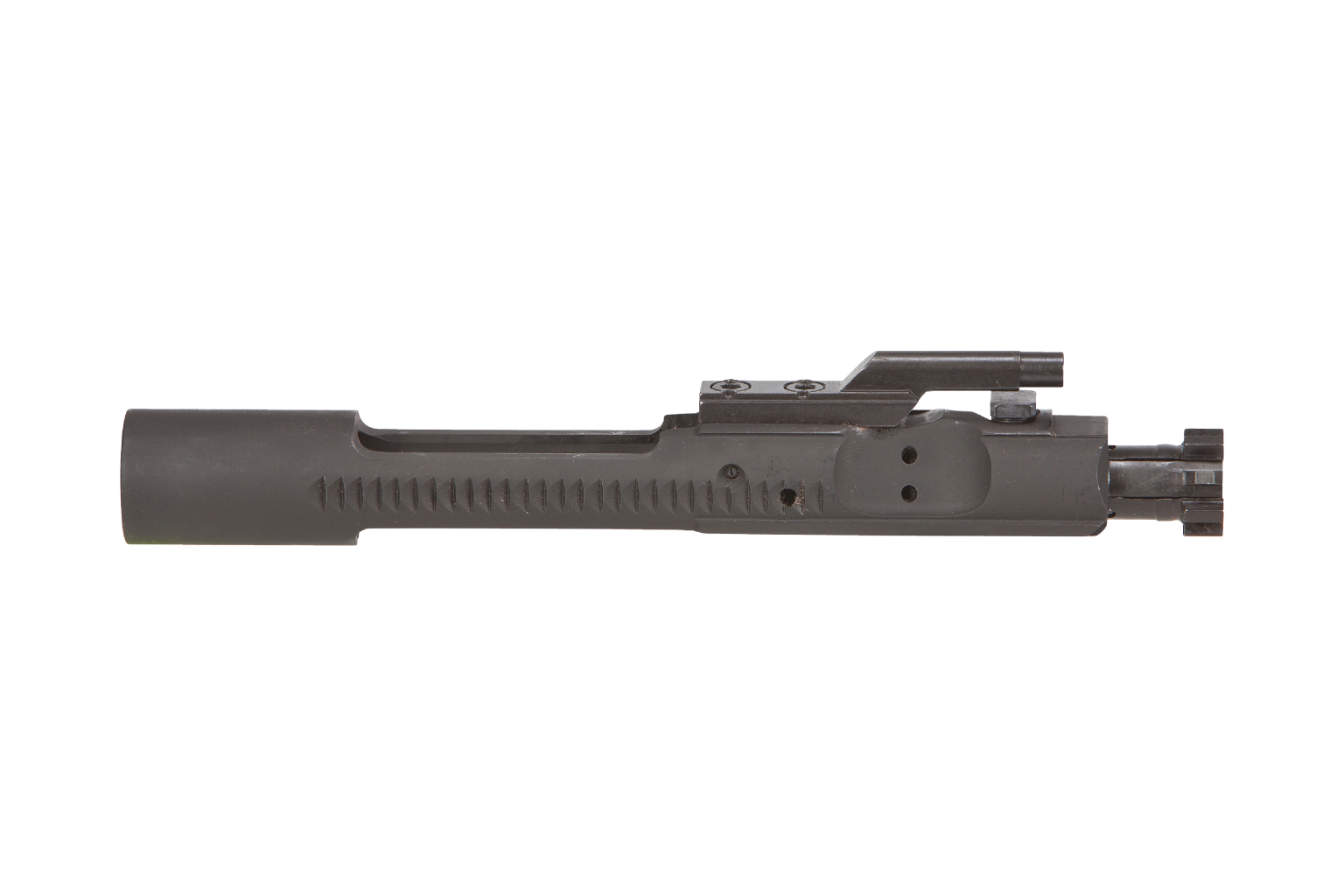
KAK Industry K-SPEC Bolt Carrier Group, Chrome Lined Phosphate
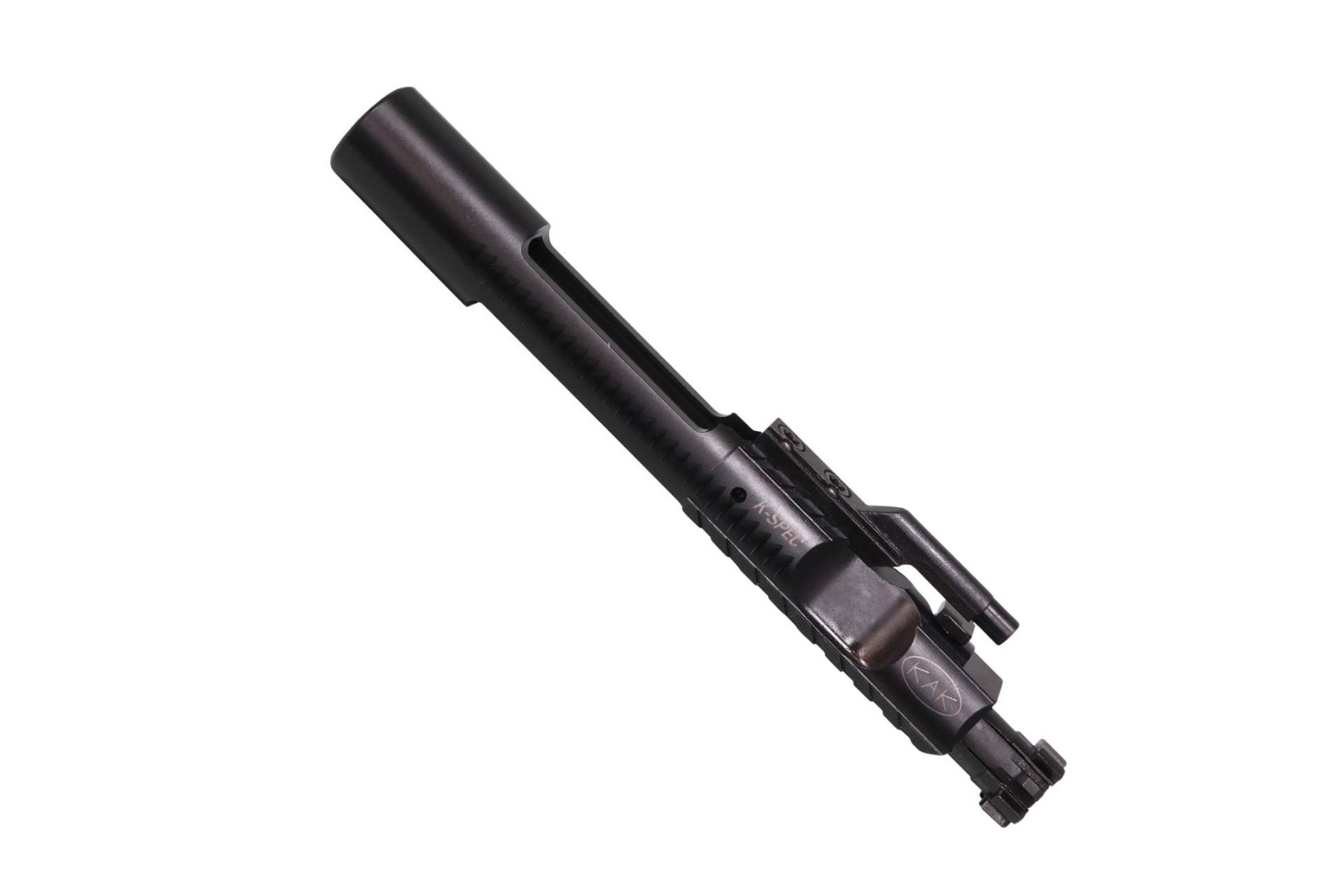
The KAK Industry K-SPEC BCG packs several reliability upgrades into an M16 profile carrier. Angled rail slots clear debris, the gas relief vents move from the ejection port side to the bottom of the carrier to send less gas toward the shooter’s face, and a dual ejector setup uses standard mil-spec ejectors and springs. KAK says it runs suppressed without extra gas or buffer tuning.
CMC Enhanced Bolt Carrier Group, Black Nitride
The CMC Enhanced BCG is built for suppressed rifles and short barrels. A flared rear reduces tilt, enlarged forward ports vent gas away from the shooter, and CMC says the added mass increases dwell time to help extraction. The 9310 bolt is shot peened, black nitrided, and HPT and MPI tested, with the area behind the gas rings ground smooth for easier cleaning.

Lantac Enhanced AR-15/M16 Bolt Carrier Group
The Lantac Enhanced BCG is a premium enhanced carrier in nickel boron. Forward-facing gas ports run cooler and cleaner with a suppressor, a flared boss at the tail steadies the carrier, and the domed stainless cam pin reduces wear inside the upper. The bolt is shot peened Carpenter 158 with MPI, and the carrier bore and gas key are chrome lined.

Geissele Reliability Enhancement Kit, H1
The Geissele Reliability Enhancement Kit pairs the Geissele Enhanced BCG with a Super 42 braided buffer spring and an H1 buffer, so carrier, spring, and buffer arrive matched. The full-mass M16 carrier has longer upper rails to prevent tilt, an H13 tool steel cam pin, and Geissele’s Nanoweapon chrome nitride finish, and the C158 bolt is HPT and MPI tested. It suits a rifle with reliability problems because it replaces all three parts in one step.

Rubber City Armory Lightweight Titanium BCG with Adjustable Gas Key
For a lightweight build, the Rubber City Armory titanium BCG with adjustable gas key weighs well under a steel M16 carrier while keeping the M16 profile. The titanium carrier and 9310 bolt get a durable surface treatment, and the billet adjustable gas key lets the builder meter gas to suit the ammunition and setup. Plan on tuning it at the range.

Common AR-15 Bolt Carrier Group Problems and Fixes
Magazines, ammunition, and the gas system cause many of the malfunctions people blame on the AR-15 bolt carrier group. Before replacing parts, clean and lube the BCG, try a known good magazine and known good ammunition, and see whether the problem follows the part. These are the BCG-related problems we see most at the counter.
Failure to Extract or Eject
A case left in the chamber or dribbled out of the port usually points to the extractor. A weak extractor spring, a worn insert, or a chipped claw lets the rim slip, and a new spring and insert fixes most cases for very little money. A dirty or rough chamber holds the case tighter, so clean it too. Weak ejection can also mean the rifle is short of gas.
Failure to Feed and Short-Stroking
When the bolt fails to chamber the next round, check the magazine first. If the magazine is good, look for a dry or fouled BCG, worn gas rings, or a gas leak that leaves the carrier short of energy. For the gas ring test, pull the bolt out to its unlocked position and stand the BCG on the bolt face. If the carrier slides down under its own weight, replace the rings.
Bolt Not Locking Back on an Empty Magazine
The bolt catch depends on the magazine follower pushing it up after the last round, so a worn magazine spring or follower causes most of these complaints and a weak bolt catch spring causes some. If the rifle also short-strokes, the carrier may not be traveling far enough, which points to a leaking gas key, a misaligned gas block, or worn gas rings.
Light Primer Strikes
On the BCG side, light strikes usually come from carbon in the firing pin channel, a worn or damaged firing pin tip, or too little firing pin protrusion. Clean the channel and inspect the pin. If the BCG checks out, the hammer spring is the next suspect, especially a reduced-power aftermarket spring paired with hard military primers.
Bolt Stuck in Battery
A bolt that will not unlock with the charging handle often comes from a dry or badly fouled BCG, a dirty chamber, or out-of-spec ammunition. Keep the muzzle pointed in a safe direction and treat the rifle as loaded. If firm pressure on the charging handle does not free it, take it to a gunsmith instead of forcing it.
Loose Gas Key
A loose gas key leaks gas and causes short-stroking, failures to lock back, and erratic cycling. The screws should be tight and the staking marks deep and intact. A key that moves at all needs to be re-staked with the proper tool, or the carrier needs to be replaced.
Gas in the Face
Suppressors raise back pressure and push more gas back through the action toward the shooter. An adjustable gas block or adjustable gas key reduces the gas reaching the carrier, and enhanced carriers with relocated vents, like the KAK K-SPEC and the CMC Enhanced, send more of what remains away from the face.
Worn Cam Pins and Cracked Bolt Lugs
Cam pins wear with use, and one with flat spots or a mushroomed head is cheap to replace. Cracked lugs are more serious. Inspect the lugs at every deep cleaning, especially the ones beside the extractor, and check around the cam pin hole for cracks. A cracked bolt gets replaced, and a new bolt in an existing barrel should have its headspace checked with gauges before the rifle goes back into service.
Cleaning, Lubrication and Inspection
An AR-15 runs best wet. Before each range trip, put a light coat of quality oil or grease on the carrier rails, the cam pin and its slot, the bolt body, and the gas rings. To clean, break the BCG down, scrape carbon off the bolt tail and the inside of the carrier, and wipe down the firing pin, the bolt face, the extractor claw, and the area around the ejector. Coated finishes wipe clean with solvent and a rag, while phosphate takes more scrubbing.
Once or twice a year, or more often on a high-round-count rifle, inspect the lugs and cam pin hole under good light, run the gas ring test, check the gas key staking, and look over the extractor spring, insert, and firing pin tip. Extractor springs and gas rings wear long before the bolt or carrier, so spares are inexpensive insurance.
How to Choose an AR-15 Bolt Carrier Group
Start with the specifications that separate a durable BCG from a cheap one: a Carpenter 158 or 9310 bolt, MPI on every bolt and ideally HPT as well, a chrome-lined carrier bore and gas key, and properly staked gas key screws. An AR-15 bolt carrier group that meets those marks from a known maker will serve almost any rifle.
From there, match the carrier to the rifle. A general-purpose or home defense AR-15 is well served by a full-mass M16 profile BCG in phosphate or black nitride. A suppressed rifle or short barrel benefits from an enhanced carrier or a matched kit like the Geissele REK. A competition rifle with a tuned gas system is the place for a lightweight or adjustable carrier. Choose the finish by how much cleaning you want to do, and put the money into the bolt and its testing before the coating.
Common Questions About AR-15 Bolt Carrier Groups
How long does a BCG last?
The carrier rarely wears out. The bolt is the part with a service life, and it usually shows cracks at the lugs or cam pin hole before it fails, which is why regular inspection matters. Extractor springs, inserts, and gas rings wear sooner and cost little to replace.
Do I need to check headspace with a new BCG?
Checking headspace with go and no-go gauges is the safe practice any time a bolt goes into a barrel it was not fitted to. Quality bolts and barrels almost always pass, and the check takes a minute.
Can a 5.56 BCG run .300 Blackout?
Yes. A standard 5.56 BCG works with .223 Remington, 5.56 NATO, and .300 Blackout because they share a bolt face. Cartridges like 6.5 Grendel, 7.62×39, and .458 SOCOM need a bolt made for their case head, 9mm uppers use a different carrier, and Dirty Bird Industries makes a dedicated .22 LR stainless BCG for rimfire uppers.
Does a better BCG improve accuracy?
The barrel, the ammunition, and the shooter decide accuracy far more than the BCG. A quality BCG locks up consistently and keeps the rifle running, but a carrier swap alone rarely shrinks groups.
Can a BCG ship to California?
A bolt carrier group is not a firearm or a firearm precursor part under California law, which limits that term to unfinished frames and receivers, so it can generally ship to a California address. Parts orders still go through the identity and address check described in the FAQ on each product page, and buyers should confirm current California law if they have any doubt.
Matching the Bolt Carrier to the Rifle
The right BCG depends on the build, and the specification sheet tells most of the story. A properly tested C158 or 9310 bolt, a staked gas key, and a full-mass carrier will keep the large majority of AR-15s running for years. Enhanced, lightweight, and adjustable carriers solve specific problems, and they earn their price when the rifle actually has those problems.
Our rule of thumb for any AR-15 bolt carrier group is to pay for the bolt and the testing first, the carrier profile second, and the coating last. Compare the BCGs above, check them against your build, and choose from the Dirty Bird Industries line or the full bolt carrier group collection.
Don’t use a carbon scraper on the bolt head .
We stopped doing that years ago .
By doing that you can adversely affect wear on the bolt head