

 Dirty Bird Bakersfield
AR Parts and Accesories, AR-15, AR-15 Barrels, AR-15 Barrels, Rifle
Dirty Bird Retro AR-15 Barrels: Bringing the Classic M4 Carbine Back
Sep
Table of Contents
For years, the AR market has moved steadily toward free-float handguards, low-profile gas blocks, lightweight barrel profiles, and increasingly specialized components. All of that development has produced some outstanding rifles, but it has also made one of the most recognizable AR configurations surprisingly difficult to build correctly without hunting down individual parts. The fixed front sight base, two-piece handguard, phosphate barrel, and simple M4 silhouette that once defined the American fighting carbine have become something of a specialty item.
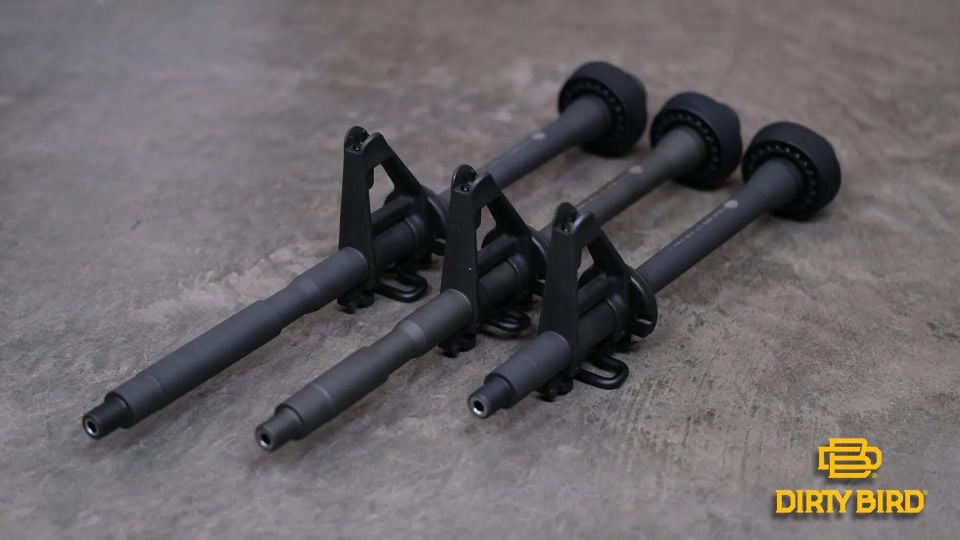
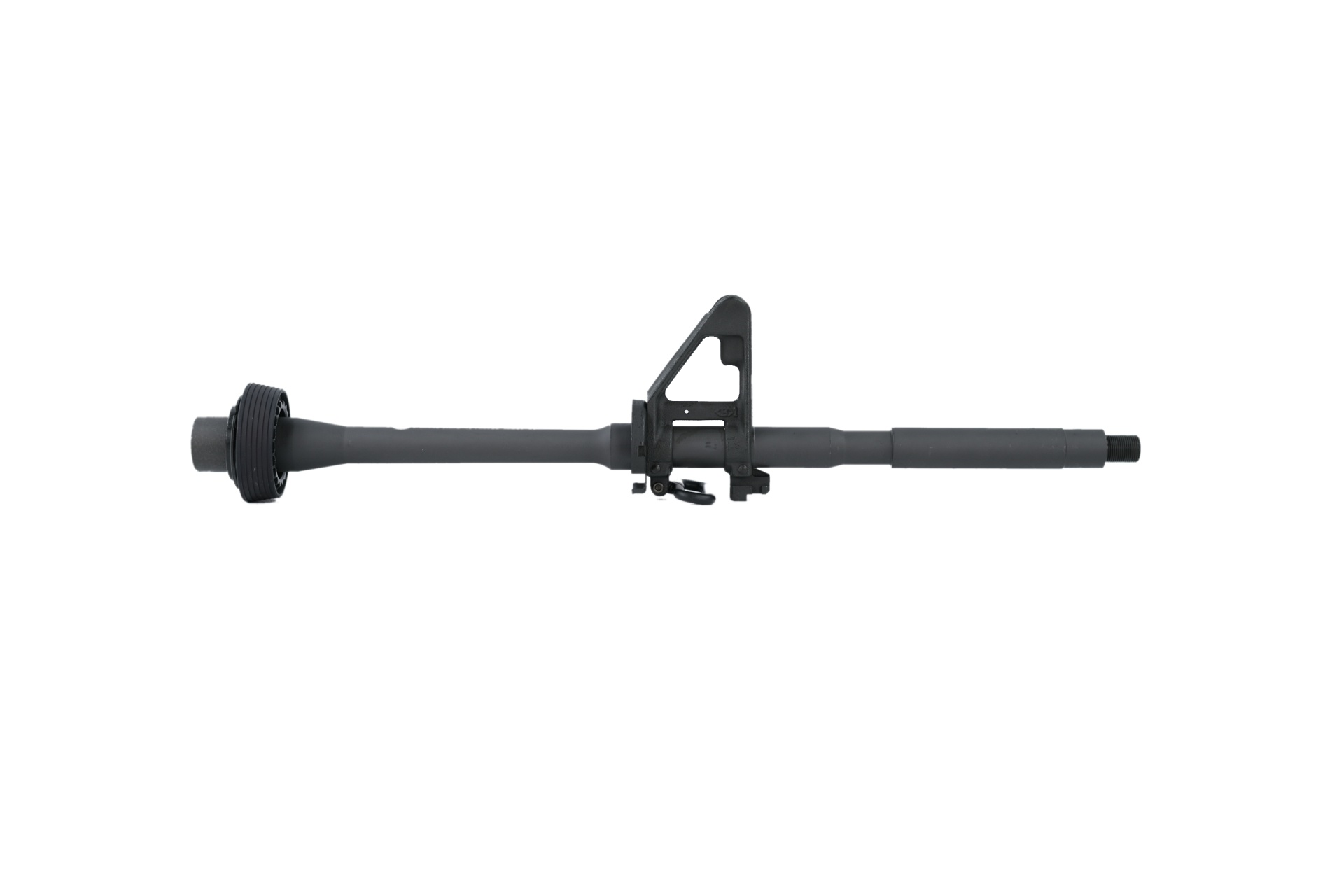
Dirty Bird is going back in the other direction with a new group of retro-oriented AR-15 barrels built around the classic M4 formula. Available in 11.5-inch, 14.5-inch, and 16-inch configurations, these barrels combine a traditional M4 profile with chrome lining, a phosphate exterior, carbine-length gas, and a pinned F-marked front sight base. The result is a much easier starting point for anyone putting together an M4-style clone, a GWOT-inspired carbine, or simply an AR that looks and feels like the rifles that dominated the platform before long free-float rails took over.
Why Retro and Clone Rifles Have Taken Off
Clone rifles are about more than putting old parts on a modern AR. For many builders, the appeal comes from recreating a recognizable military configuration and understanding why those components were used in the first place. That might mean an M4A1 Block I, a CQBR-style short carbine, a Mk12, or something inspired by one of those rifles without attempting to reproduce every marking and manufacturer exactly.
That distinction matters because clone building exists on a spectrum. Chris from CloneRifles.com explained to AR Build Junkie that some builders chase complete period correctness while others are more interested in honoring the configuration and history. He also noted that discontinued legacy parts have become increasingly difficult to find as military contracts end and manufacturers move away from older products.
That makes well-executed modern components, including retro-style AR-15 barrels, increasingly valuable. Not everyone needs a barrel with the exact markings found on a rifle issued during a particular year. Plenty of builders simply want the correct overall profile, finish, sight arrangement, and handguard setup so the completed rifle captures the character of an M4-era carbine.
The Front Sight Base Is More Than a Retro Look
The pinned front sight base is probably the most immediately recognizable feature of these Dirty Bird AR-15 barrels. On the classic carbine, the front sight base does two jobs. It holds the fixed front sight and also serves as the gas block, placing the gas system out in the open instead of hiding it beneath a handguard.
There is also a practical advantage to Dirty Bird supplying these AR-15 barrels with the FSB already pinned in place. A traditional front sight base is not normally installed like a modern clamp-on or set-screw gas block. Proper installation involves drilling the base and barrel together for taper pins, which is one reason builders often prefer buying the barrel assembly with the FSB already fitted.
Dirty Bird goes further by including the handguard cap, delta-ring assembly, and front sling swivel on the 11.5- and 14.5-inch versions. That allows the builder to use standard carbine-length two-piece handguards and avoids having to collect much of the surrounding hardware separately.
What Does F-Marked Actually Mean?
The small “F” stamped on the front sight base matters more than it might appear, particularly on an M4-style clone.
An F-marked front sight base was developed around the sight geometry of the M4 flat-top upper receiver and detachable carry handle. According to ArmaLite’s technical documentation, the sight deck on an F-height base is approximately .040 inch taller than a standard A2 front sight base relative to the bore centerline. That dimensional change puts the front sight into the appropriate adjustment range when used with the M4-style flat-top receiver and its rear sight arrangement.
It is worth being specific here because this is often described incorrectly. The entire front sight tower is not simply .040 inch taller. The important dimensional change is the height of the deck where the front sight post threads into the base. Windham Weaponry has likewise explained that mismatched configurations can often be corrected with additional front sight adjustment or a taller front sight post, so a non-F base does not automatically make a rifle impossible to zero.
For someone deliberately assembling an M4-style flat-top carbine, however, the F-marked configuration is the appropriate detail to have from the beginning.
Why Clone Builders Care About the F Mark
Clone builders tend to notice things that disappear completely on a modern free-float build. The barrel profile, handguard cap, front sling swivel, front sight base, delta ring, muzzle device, stock, rear sight, and optic can all help identify the period and configuration being recreated.
An F-marked FSB fits naturally into later flat-top military carbine builds, particularly the broad family of M4 configurations that have become popular with clone builders. AR Build Junkie’s discussions with experienced clone builders have repeatedly highlighted M4A1 variants as some of the more approachable military clones because recognizable configurations can still be assembled without every component becoming unobtainable.
That does not mean installing one of these AR-15 barrels automatically creates a clone-correct rifle. Strict clone correctness can depend on manufacturer, markings, production period, rails, optics, accessories, and numerous other details. These barrels are better viewed as a strong foundation for an M4-style or retro-inspired project.
Dirty Bird 11.5-Inch M4 Carbine Barrel
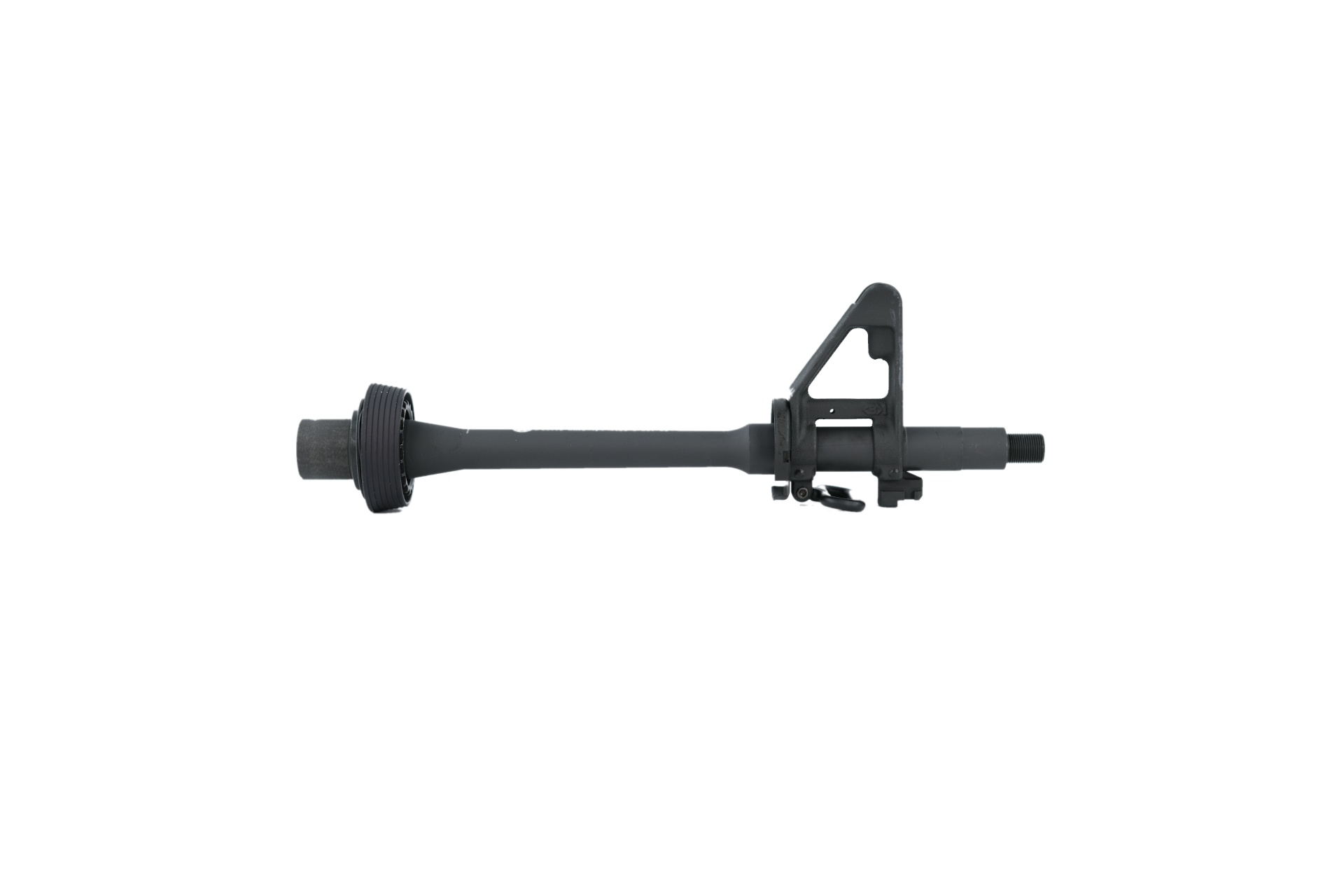
The 11.5-inch Dirty Bird is the most compact of the retro AR-15 barrels in the lineup. It is machined from CrMoV steel with a chrome-lined bore and chamber, manganese-phosphate exterior finish, 5.56 NATO chamber, 1:7 twist, carbine-length gas system, M4 profile, and 1/2×28 muzzle threads. Dirty Bird also uses a phosphate-coated M4 feed-ramp extension.
Up front is the pinned F-marked front sight base, and Dirty Bird includes the handguard cap, delta-ring assembly, and front sling swivel. The complete setup is clearly aimed at someone building a compact traditional carbine rather than another short AR hidden beneath a modern free-float rail.
The 11.5-inch length also requires the builder to pay attention to the final firearm configuration and applicable federal, state, and local requirements. From a build standpoint, however, it gives the retro lineup a legitimate short-carbine option instead of treating “retro” as synonymous with a 16-inch civilian rifle.
Dirty Bird 14.5-Inch M4 Carbine Barrel
The 14.5-inch version is the obvious choice among these AR-15 barrels for someone trying to capture the proportions of the M4 itself. Dirty Bird lists the barrel with CrMoV construction, chrome-lined bore and chamber, manganese-phosphate finish, 5.56 NATO chamber, 1:7 twist, carbine-length gas, M4 profile, and 1/2×28 muzzle threads. The pinned F-marked front sight base, handguard cap, delta ring, and sling swivel are already part of the assembly.
For a non-NFA rifle configuration, a 14.5-inch barrel can be used with an appropriately sized permanently attached muzzle device to bring the barrel to the required legal length. Dirty Bird specifically notes the pin-and-weld option on the product listing.
More than anything, though, the 14.5 simply looks right on an M4-inspired build. The barrel length, carbine gas system, fixed sight tower, and traditional handguard arrangement produce the proportions most people associate with the military M4 carbine.
Dirty Bird 16-Inch M4 Carbine Barrel
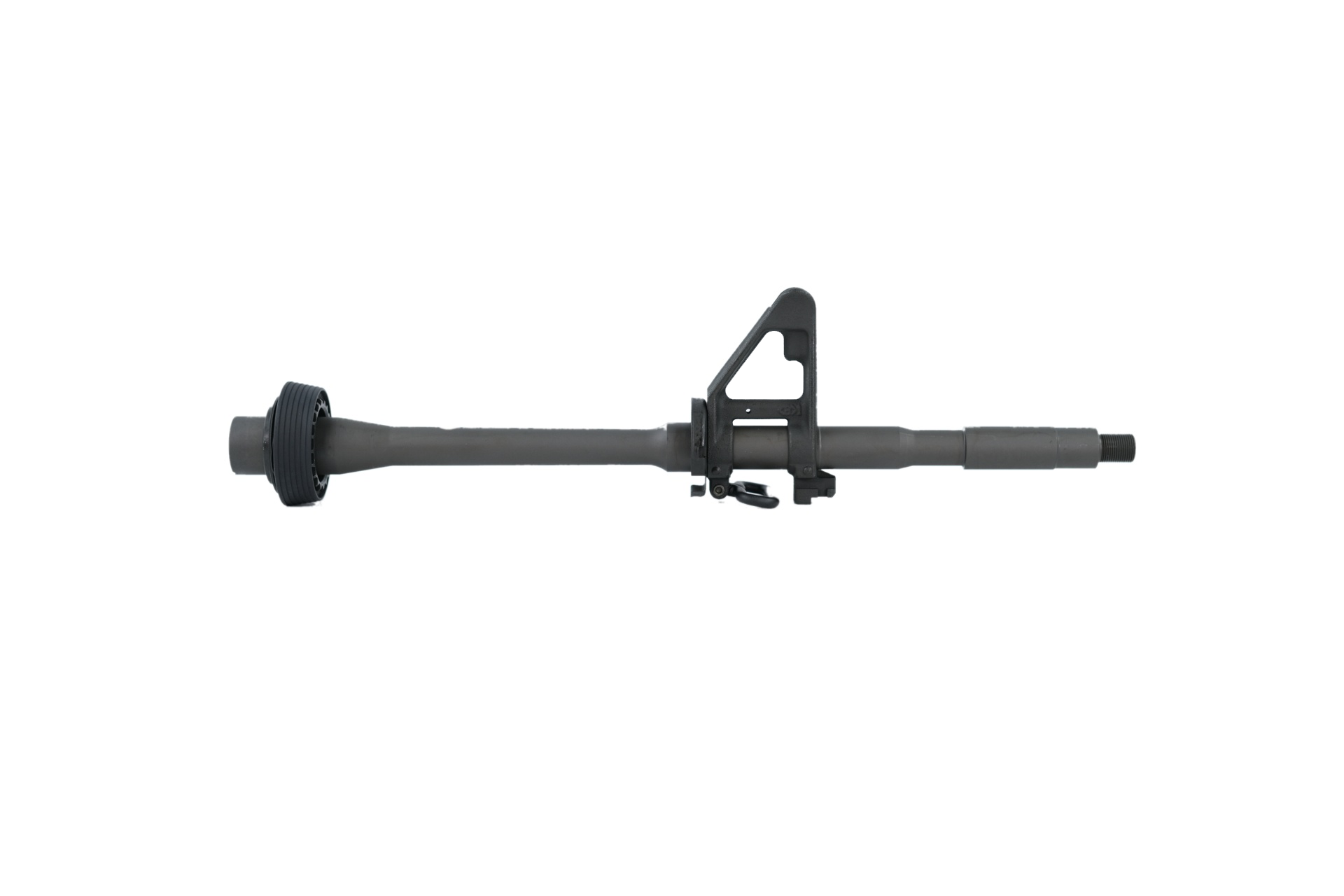
The 16-inch version takes the same basic retro concept and puts it into a more straightforward rifle-length format. Its listing identifies it as a 5.56 M4 carbine-pattern AR-15 barrel with phosphate and chrome-lined construction and an F-marked front sight base.
For a strict M4 clone, the extra 1.5 inches obviously changes the profile. For a retro-inspired civilian carbine, though, the 16-inch option makes a lot of sense. It lets the builder keep the fixed front sight base, conventional carbine layout, and classic appearance without needing a permanently attached muzzle device simply to reach 16 inches.
That kind of rifle may not win a clone-correctness contest, but not every retro build needs to. Sometimes the goal is simply a traditional fixed-front-sight AR that is simple, recognizable, and enjoyable to shoot.
Why Chrome Lining and Phosphate Fit These AR-15 Barrels
The finish and bore treatment are just as important to the character of these AR-15 barrels as the front sight base. Chrome lining has a long history in military-style barrels because it provides corrosion resistance and helps protect the bore and chamber during hard use. Dirty Bird specifically uses a chrome-lined bore and chamber on the verified 11.5- and 14.5-inch configurations.
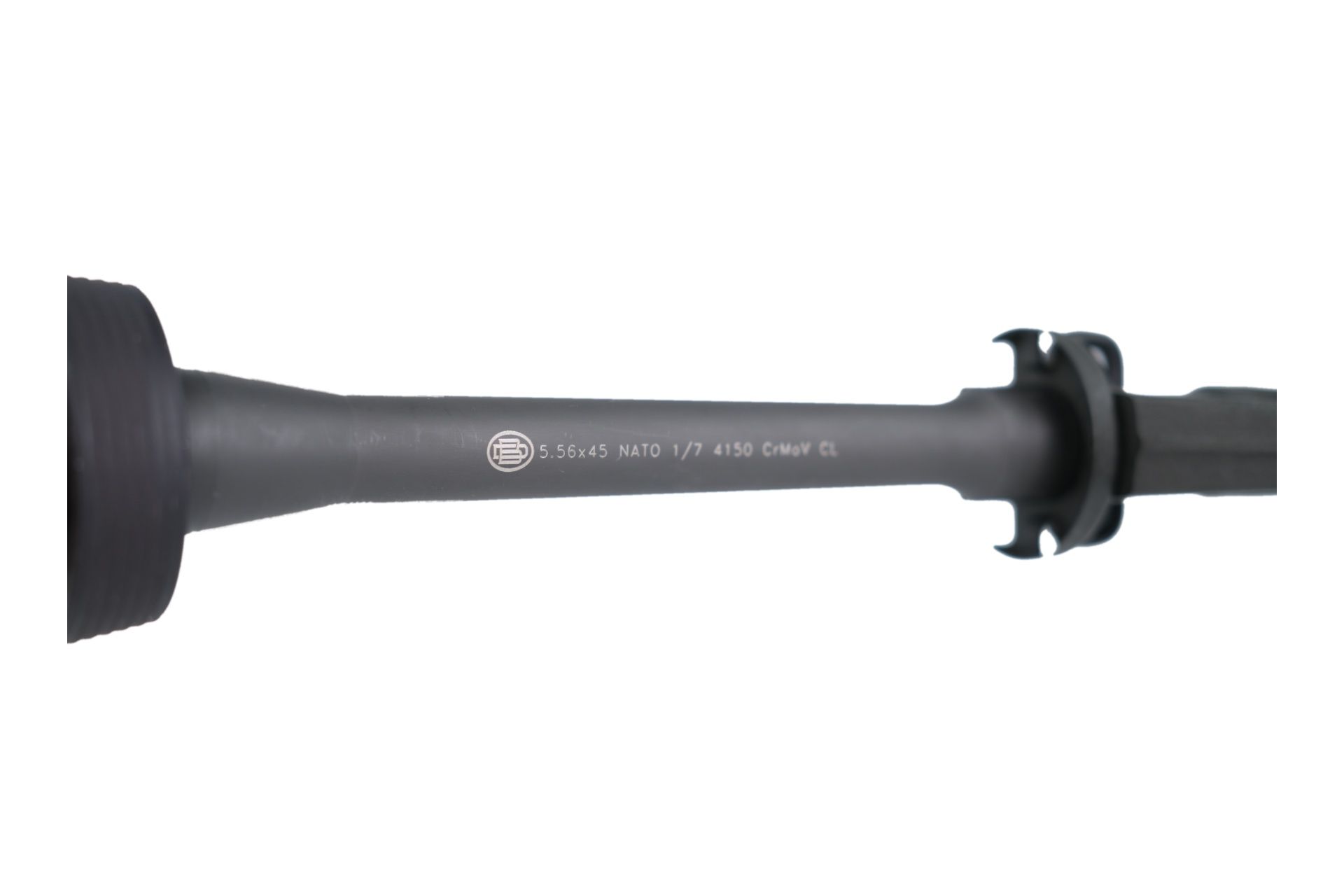
The manganese-phosphate exterior continues that traditional service-rifle approach. Modern nitride finishes work extremely well, but phosphate simply belongs visually and historically on this kind of build. When the goal is an M4-style carbine, those choices help these AR-15 barrels look like part of the rifle rather than a modern component dressed up with old furniture.
Going Back to What Made the Carbine Recognizable
There is something refreshing about AR-15 barrels that are not trying to reinvent the platform. Dirty Bird’s retro barrels bring back a combination that worked for decades: chrome lining, phosphate, an M4 profile, carbine gas, traditional handguard hardware, and a pinned front sight base that is always there when you shoulder the rifle.
Of the three AR-15 barrels, the 11.5-inch version gives builders a foundation for a compact retro carbine. The 14.5-inch model comes closest to the classic M4 proportions and is likely to be the natural choice for many clone-inspired projects. The 16-inch version brings much of the same character to a conventional rifle-length setup without requiring the builder to commit to the underlying 14.5-inch format.
None of them eliminates the research that makes clone building interesting, and they are not intended to magically turn every collection of parts into a perfectly correct military reproduction. What they do is solve one of the more annoying parts of the project by putting the barrel, traditional finish, F-marked sight base, and classic M4 layout together from the start.
In a market filled with increasingly modern AR-15 barrels, sometimes the interesting move is not to chase the newest idea. Sometimes it is to build the kind of carbine that made the platform iconic in the first place.