

 Dirty Bird Bakersfield
AR Parts and Accesories, AR-15
Stripped Lower Receiver Buying Guide 2026: Forged vs Billet
Oct
Table of Contents
TL;DR- Too Long Didn’t Read
For most AR-15 builds, a mil-spec forged 7075-T6 stripped lower is the right choice. Forged versus billet matters less than how well the receiver was machined and inspected.
- Forged lowers are strong, affordable, and fit standard parts kits, receiver extensions, and uppers.
- Billet lowers earn their price with integrated features like flared mag wells, ambidextrous controls, and oversized trigger guards.
- The Dirty Bird MCF-A pairs forged strength with billet-style ambidextrous features.
- Prices run from under $57 per lower in a 3-pack to about $500 for a premium billet lower.
Every stripped lower receiver buying guide eventually lands on the same argument, forged or billet, and after years of talking with so many buyers at Dirty Bird Guns & Ammo, we have learned that it gets more attention than it deserves. Builders arrive convinced that the material on the spec sheet will decide how the rifle runs. Some have been told billet is the premium choice, and others have heard that forged is the only serious option. The material matters, but the machinist and the quality control behind the part decide far more.
This stripped lower receiver buying guide explains what forged and billet really mean and what separates a well-made lower from a bargain that turns into a headache. It also covers the AR-15 stripped lowers we carry, what they cost in 2026, and the federal basics a first-time buyer should understand. The goal is a lower that fits the rifle being built, not the one winning the latest forum thread.
Why the Stripped Lower Is Where the Build Starts
Any stripped lower receiver buying guide has to start with the fact that the lower is the foundation of the rifle in two ways. Mechanically, it holds the fire control group, magazine, bolt catch, safety selector, grip, and receiver extension, and it anchors the upper with two pins. Legally, federal law defines the frame or receiver of a firearm as a firearm in its own right under 18 U.S.C. § 921(a)(3)(B), and on the AR-15 the lower is the serialized receiver.
In practice, an AR-15 stripped lower receiver bought from a dealer generally goes through the ATF Form 4473 and the background check federal law requires. Uppers, barrels, and parts kits generally do not require a transfer under federal law, which is why many builders treat the lower as the one permanent piece of the rifle. State and local rules can add requirements, so buyers should confirm the law where they live.
Forged vs Billet: What the Terms Actually Mean
A forged lower starts as a piece of 7075 aluminum that is heated and forced between dies under heavy pressure into a rough receiver shape. That forging is then heat treated and machined, with the magazine well, fire control pocket, pin holes, and buffer tube threads all cut afterward. Forging aligns the grain of the aluminum with the shape of the part, which is a big part of why forged 7075-T6 became the standard for AR-15 lowers.
A billet lower is machined entirely from a solid block, usually 7075-T6 and occasionally 6061-T6. Without a forging die to work around, the designer can add an integral trigger guard, a flared magazine well, sharper lines, or a tension screw that takes up play between the upper and lower. The trade is more machine time and a higher price. UN12 Magazine’s forged vs billet lower receivers video makes a helpful visual companion to this section.
Stripped Lower Receiver Buying Guide Basics: Forged 7075-T6 Is the Proven Default
For most AR-15 builds, the best stripped lower receiver is a mil-spec pattern forged lower, and that has been true for decades. It accepts standard lower parts kits, receiver extensions, and uppers from nearly every reputable maker. A forged lower that has been machined correctly will likely outlast several barrels and probably the shooter’s interest in the build.
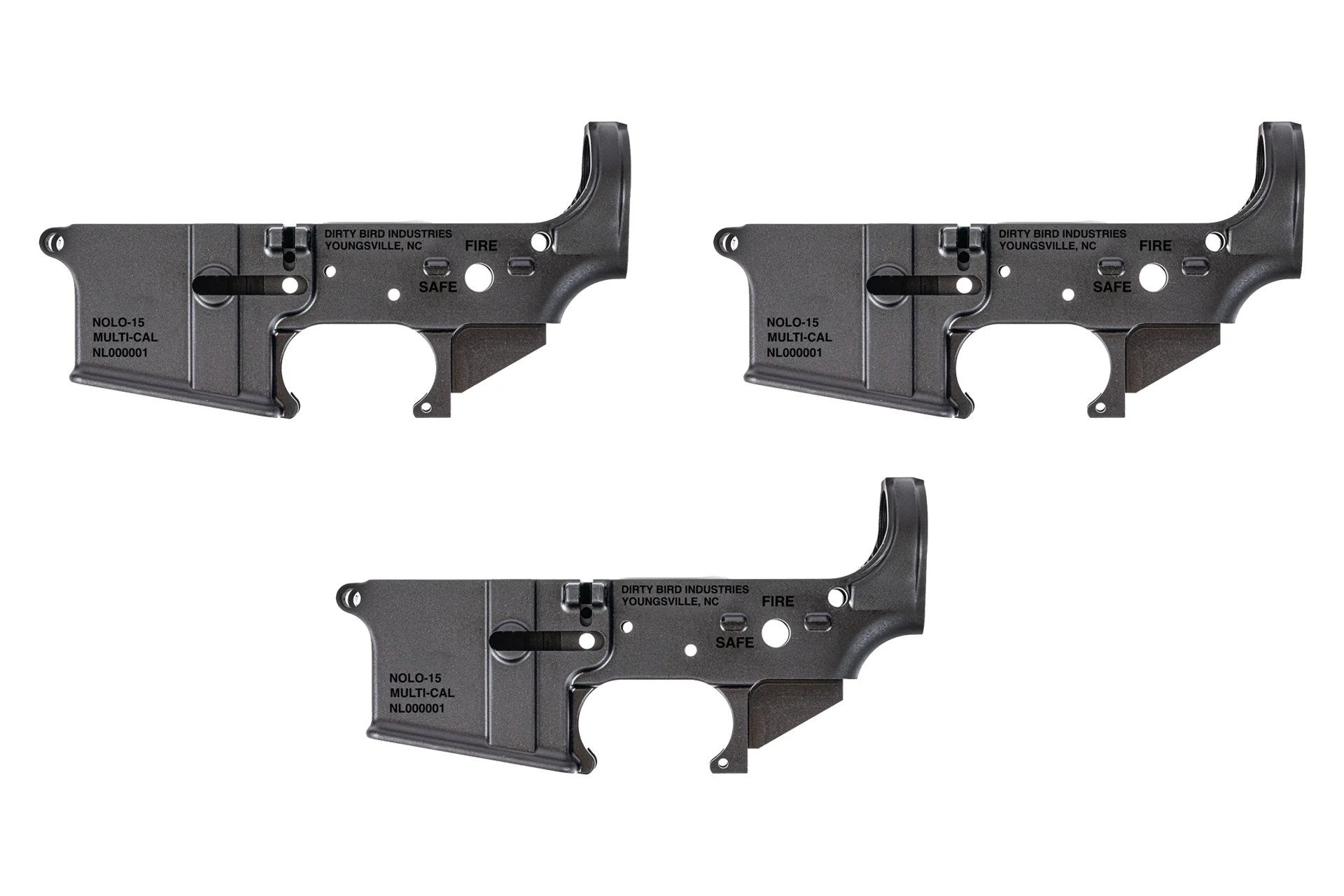
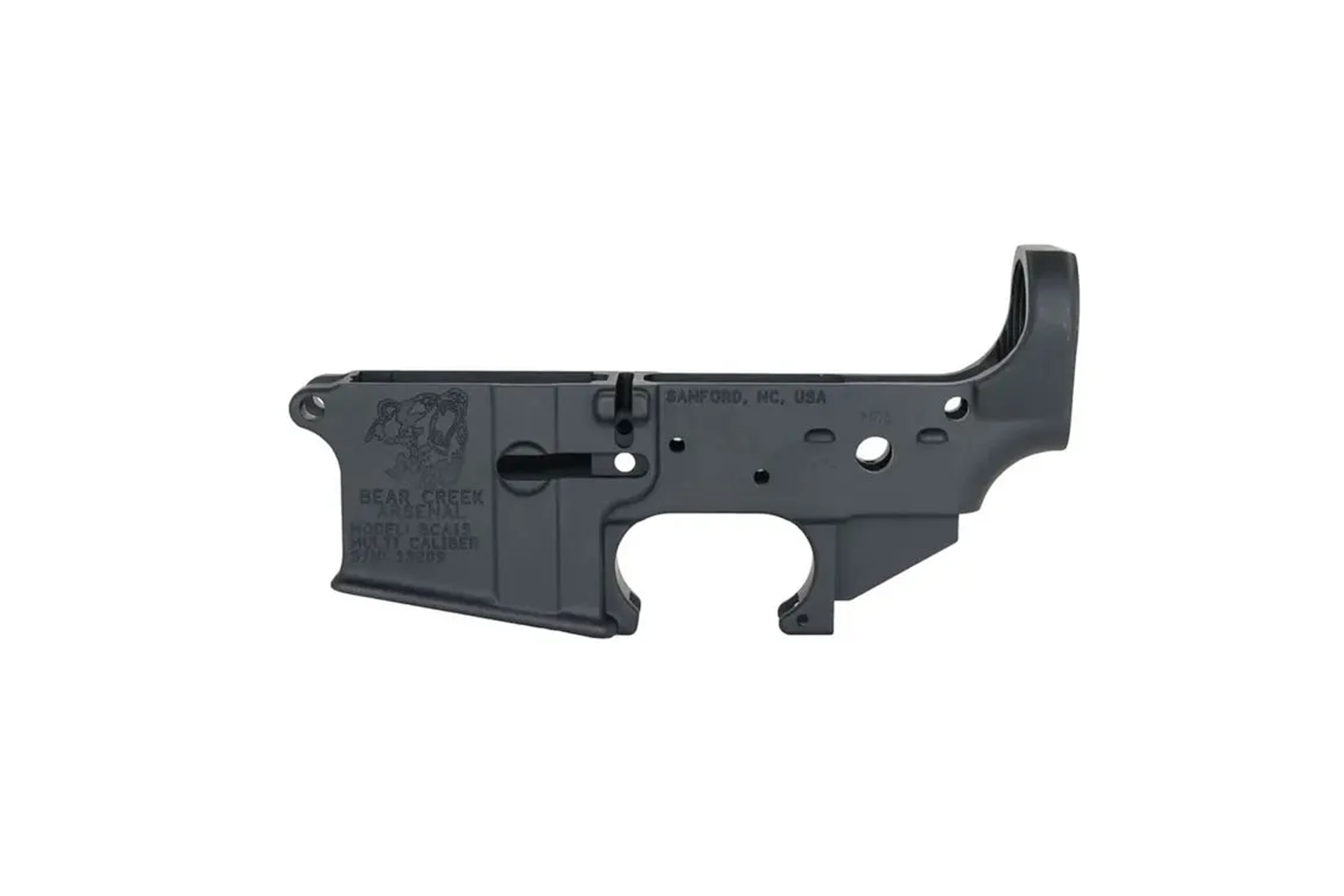
The Dirty Bird NOLO 3-pack is the value pick for builders who know they will finish more than one rifle. Each lower is machined from a 7075-T6 forging, hard-coat anodized to MIL-8625 Type III, Class 2, marked “MULTI” for caliber, and left blank on the left side for custom engraving. The BCA BC-15 is a forged 7075-T6 multi-caliber lower at the lowest single-lower price in our selection, and the Centurion Arms CM4 is a forged lower our listing describes as deburred by hand and dimensionally inspected.
Where Billet Earns Its Price
Billet makes the most sense when the builder wants features a forging cannot easily provide. The Franklin Armory Libertas blem is machined from 7075-T6 and adds an oversized integral trigger guard, a flared magazine well, ambidextrous QD sling mounts, and a tension screw to remove upper and lower play. Blems are typically sold over cosmetic imperfections, so a stripped lower receiver blem like this one is a sensible way into billet without paying full price.
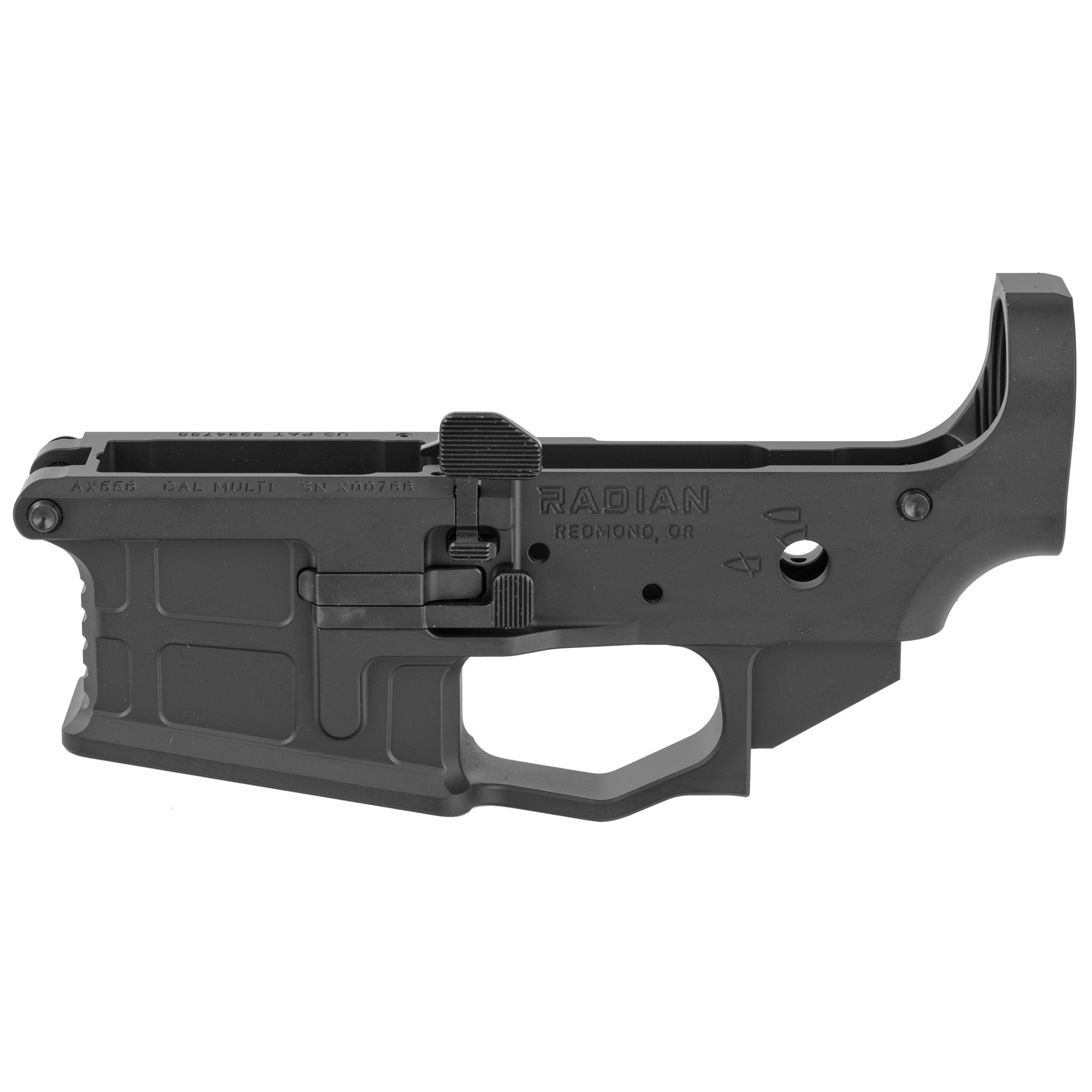
At the top of the range, the Radian AX556 is a fully ambidextrous billet lower. It includes Radian’s Talon safety selector, a left-side magazine release, a right-side bolt release, and the patented A-DAC system that lets a right-handed shooter lock the bolt to the rear without leaving the grip. The price reflects that engineering, but for a shooter who wants those controls built in from the start, it is hard to argue with.

Dirty Bird MCF-A: Forged Strength With Billet-Style Features
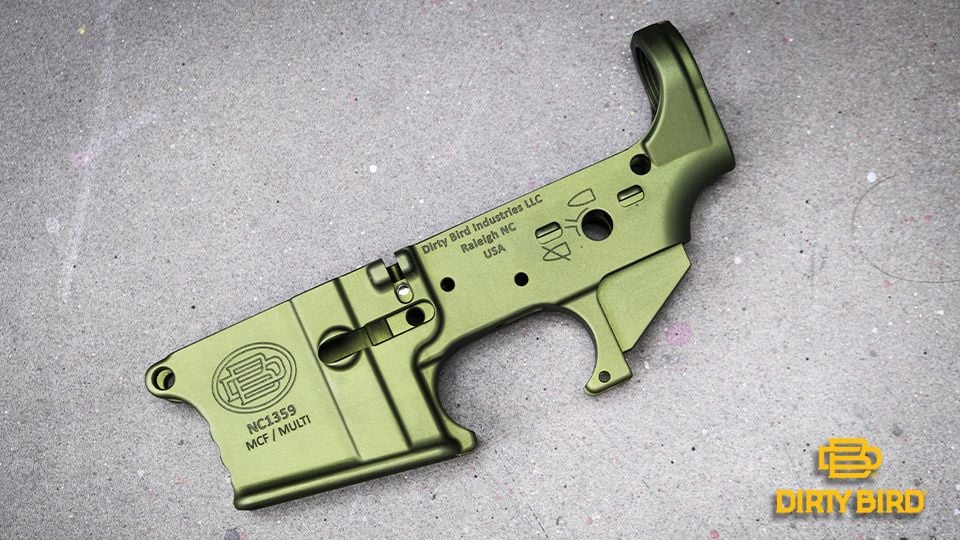
Not every feature-rich lower is billet. The Dirty Bird MCF-A is machined by MVB Industries from 7075 aluminum forgings supplied by Cerro Fabricated Products. Each receiver also carries a unique identifier near the grip area, which lets quality control trace any unit back to a specific machine and production batch.
The MCF-A uses MVB’s patented ambidextrous bolt catch and release, built from four proprietary parts in S7 tool steel with a QPQ nitride finish, and the standard bolt catch paddle still works on its own if that lever is ever damaged. It is backed by the Dirty Bird Limited Lifetime Warranty. Our post on ambidextrous lower receivers covers the controls in depth, but the point for this stripped lower receiver buying guide is that a forged receiver can carry modern controls without giving up forged strength and compatibility.

Machining and QC: The Part of the Stripped Lower Receiver Buying Guide Most Buyers Skip
A familiar forum claim holds that a few forging houses supply most of the industry’s lower forgings, so every lower is basically the same and the buyer is only paying for a roll mark. In ARBuildJunkie’s interview with Chad Albrecht of School of the American Rifle on common AR lower receiver questions, Albrecht explained why that logic fails. A shared forging source says nothing about how carefully the receiver was machined afterward, and he reported that some expensive lowers his students brought had oversized holes and threads.
The areas that matter most are the fire control pocket, the hammer and trigger pin holes, the takedown and pivot pin holes, and the receiver extension threads. A pocket milled too narrow can bind the trigger or hammer, and oversized pin holes leave the pins sloppy. Threads cut too large can keep even a staked castle nut from holding on a hard-used rifle. ARBuildJunkie’s guide to choosing an AR-15 lower makes the same case, that consistent QC is worth more than the label on the box.
What to Check When a Stripped Lower Arrives
No stripped lower receiver buying guide can replace a careful inspection, but a builder does not need government gauges to catch most problems. The takedown and pivot pins should install with firm hand pressure, and tight pins usually point to misaligned holes rather than a desirable zero-play fit. The receiver extension should thread in smoothly, and the castle nut should not rattle on the threads before staking.
Albrecht also encourages what he calls magazine diversity. Builders should run several brands, including a standard aluminum magazine and a polymer magazine, and confirm they all seat and drop free. Anyone planning to Cerakote a lower should ask the shop to mask the fire control pin holes and the magazine well, because coating thickness there can change critical dimensions.
What a Stripped Lower Costs in 2026
The AR-15 stripped lower receiver price in 2026 covers a wide range. At the time of writing in October 2026, the BCA BC-15 is listed at $79.95, the Centurion CM4 at $114, and the NOLO 3-pack at $169.95, or less than $57 per lower. The Libertas blem sits at $274.99, the black MCF-A at $295, and the Radian AX556 at $499.95. Prices and stock change often, so the product pages are the final word.
The lesson in those numbers is that the most expensive lower rarely makes the biggest difference in how a rifle shoots. A correctly machined forged lower paired with a better barrel, bolt carrier group, or trigger will usually do more for accuracy and reliability. That point comes up again and again in this stripped lower receiver buying guide because it is the advice we give most often at the counter.
Stripped Lower Receiver Buying Guide FAQ
What is the difference between a forged and billet lower receiver?
A forged lower is pressed into a rough shape from heated 7075-T6 aluminum and then machined to final dimensions. A billet lower is machined entirely from a solid block, which allows integral trigger guards, flared magazine wells, and other features that are difficult to produce from a forging. Both methods can produce an excellent receiver when the finish machining is done correctly.
Is a forged lower receiver better than a billet lower?
For strength, price, and parts compatibility, forged 7075-T6 is the proven standard and the better value for most builds. A well-made billet lower is still strong enough for normal AR-15 use, and its advantages are features and appearance. The quality of the machining matters more than which process started the part.
Are polymer lower receivers as durable as aluminum lowers?
Generally, not in the hard-use sense. Polymer lowers that copy the aluminum design have a history of cracking around the buffer tube and rear takedown area, while some designs engineered for polymer from the ground up are reported to hold up considerably better. Aluminum remains the safer choice for a rifle that will see real use, and the stripped lowers we currently stock are all aluminum.
What should I look for when buying a stripped lower receiver?
Start with 7075-T6 aluminum, mil-spec dimensions, and a maker with a reputation for consistent QC. Then check the fire control pocket, the pin holes, the extension threads, and the finish, and confirm the lower suits the build in terms of controls and caliber markings. Any good stripped lower receiver buying guide will put machining quality ahead of the logo.
Is 7075-T6 aluminum better than 6061 aluminum for a lower receiver?
For strength, yes. Typical published figures put 7075-T6 at roughly 73,000 psi yield strength compared with about 40,000 psi for 6061-T6, and 7075-T6 is the material used for mil-spec lowers. Some billet lowers are machined from 6061-T6 and work well when designed for it, but 7075-T6 remains the stronger default.
Are billet lower receivers worth the extra cost?
They are worth it for a builder who wants integrated features, ambidextrous controls, or a distinctive look and is willing to pay for them. For a straightforward general-purpose rifle, a forged lower and an upgrade elsewhere in the build is usually the better use of the money. A blem billet lower such as the Libertas can narrow the price gap.
Which type of lower receiver is the lightest?
Polymer lowers are typically the lightest. Among aluminum lowers, the specific design matters more than the process, since billet lowers with heavy integral trigger guards and thick walls run heavier while lean billet designs can weigh about the same as a forging. The listings in our own selection put typical forged and lean billet stripped lowers in the 8- to 9-ounce range, so weight rarely decides the purchase.
Will any stripped lower receiver fit a standard upper receiver?
Most mil-spec AR-15 uppers and lowers interchange across reputable brands, though a few exceptions apply. AR-10 and .308 lowers are a different size family, some older Colt lowers use a larger front pivot pin, and billet sets are often contoured to match their own uppers. Our AR upper compatibility guide covers the details.
What parts do I need to complete a stripped lower receiver?
A lower parts kit supplies the fire control group, safety selector, magazine catch, bolt catch, pivot and takedown pins, springs, detents, trigger guard, and usually a grip, though billet lowers with an integral guard skip that piece. The buffer system adds the receiver extension, end plate, castle nut, buffer, action spring, and buffer retainer, followed by a stock. Our guide to building an AR-15 with Dirty Bird Industries parts walks through the assembly.
Is a stripped lower receiver considered a firearm?
Yes. Under 18 U.S.C. § 921(a)(3)(B), the frame or receiver of a firearm is itself a firearm, and the AR-15 lower is the serialized receiver. A purchase from a dealer generally requires the ATF Form 4473 and a background check, and many states add their own rules, so buyers should confirm the law where they live.
Start the Build on Solid Ground
After years of talking with so many buyers, we have noticed that builders who regret their lower rarely regret the material. They regret the out-of-spec pin holes, the sloppy threads, or the receiver chosen only because it was cheapest that week. The best use of a stripped lower receiver buying guide is to move attention away from the forged versus billet debate and toward the machining that makes a lower last.
The rule of thumb at the end of this stripped lower receiver buying guide is straightforward. Buy a correctly machined forged 7075-T6 lower unless a specific feature is worth paying billet money for, and put the savings into the barrel, bolt carrier group, and trigger. The stripped lowers collection at Dirty Bird Guns & Ammo carries both, from budget forgings to fully ambidextrous billet, for builders ready to lay the foundation of the next rifle.