

 Dirty Bird Bakersfield
AR Parts and Accesories, AR-15, Rifle
Ambidextrous Lower Receivers: What They Are and Why They Matter
Sep
Table of Contents
For most of the AR-15’s history, shooters simply accepted the controls where Eugene Stoner put them. Magazine release on the right. Bolt catch on the left. Safety on the left. Learn the manual of arms, practice it enough, and the arrangement works extremely well.
But the AR-15 has never been a platform that leaves well enough alone.

TL;DR- Too Long Didn’t Read
The blog post discusses the advantages of ambidextrous lower receivers for AR-15 rifles, highlighting how they improve control and usability for both left-handed and right-handed shooters.
- Ambidextrous controls allow shooters to operate the rifle more naturally, regardless of which hand they use.
- This feature is particularly beneficial during reloads, malfunction clearing, and administrative handling.
- Receivers like the Dirty Bird MCF-A and Radian AX556 offer different approaches to ambidexterity, ranging from simple upgrades to integrated systems.
- Purpose-built ambidextrous receivers enhance usability without compromising the rifle’s integrity or complexity.
Ambidextrous lower receivers are a good example of the platform continuing to evolve without fundamentally changing what makes an AR an AR. Instead of forcing the shooter to work around controls that were originally designed primarily for right-handed use, a good ambidextrous lower puts more of those controls where they can be reached naturally from either side of the rifle.
That sounds like an obvious win for a left-handed shooter, and it is. What gets overlooked is how useful a properly designed ambidextrous lower can be for everyone else. Being able to lock the bolt open, release it, or drop a magazine without dramatically changing your firing grip can make the rifle feel considerably more natural during reloads, malfunction clearing, administrative handling, or shooting from the opposite shoulder.
The important part is separating a truly ambidextrous lower from a standard receiver with an extra lever or two bolted onto it. There is a pretty big difference.

What Makes an AR-15 Lower Truly Ambidextrous?
The word “ambidextrous” gets used pretty loosely in the AR world.
Installing an ambidextrous safety selector does not make the entire rifle ambidextrous. Neither does adding a left-side magazine release to an otherwise conventional lower. Those upgrades can absolutely make a standard receiver easier to run, but a purpose-built ambidextrous lower takes the idea much further.
Ideally, the shooter should have meaningful control over the magazine and bolt from both sides of the rifle. That generally means access to the magazine release from either side along with the ability to release the bolt from either side. The more complete designs also allow the shooter to lock the bolt to the rear from the right side of the receiver instead of merely dropping it once it has already been locked open.
That distinction between a bolt release and a bolt catch is important. A bolt release does exactly what its name suggests. It releases a bolt that has already been locked to the rear. A bolt catch can also be actuated to lock the bolt open. Receivers that provide both functions from either side give the shooter considerably more flexibility than designs that simply mirror the release function.
None of this means every AR needs a fully ambidextrous receiver. A conventional forged lower still does its job just fine, and millions of rifles prove that point. The appeal of an ambi lower is that if you are starting a build from scratch anyway, you can choose a receiver that gives you more control without having to retrofit the rifle later.
Ambidextrous Lower Receivers: Ambidextrous Controls Are Not Just for Left-Handed Shooters
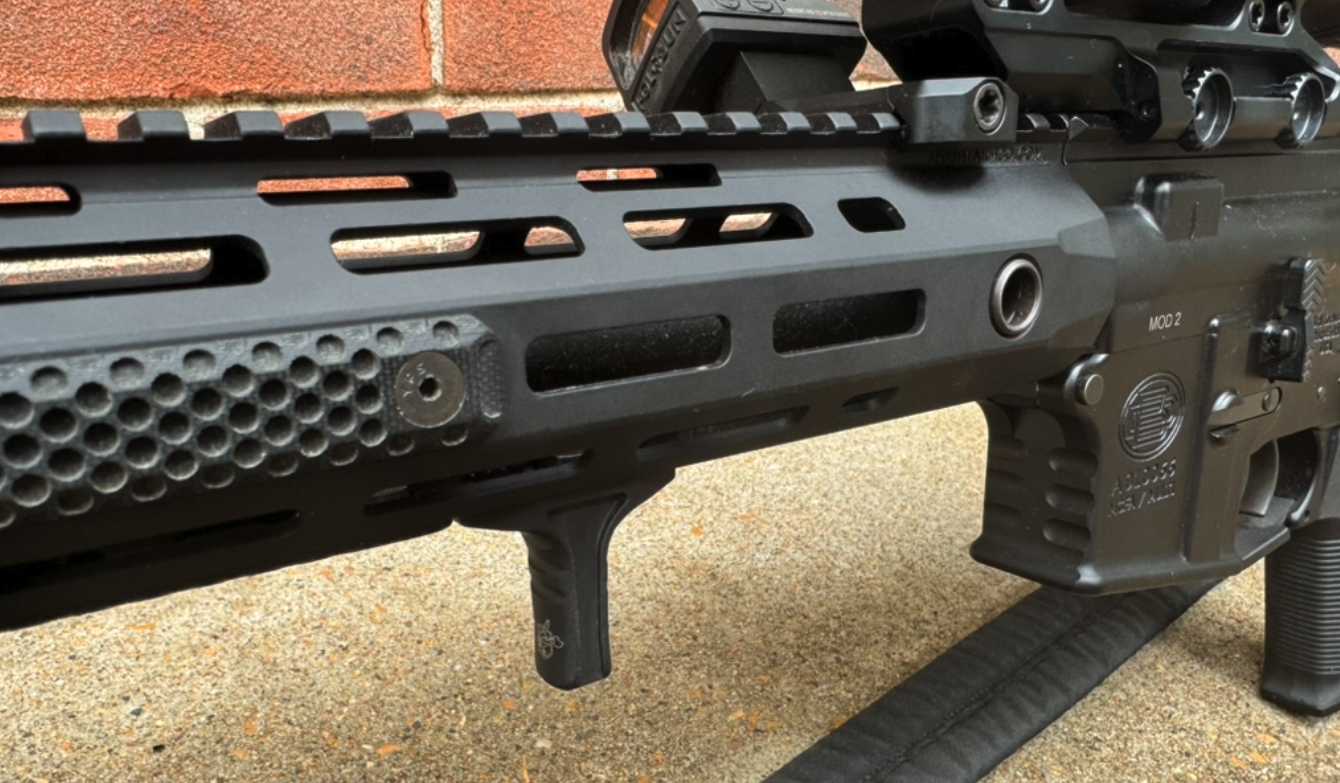
Left-handed shooters have the most obvious reason to look at ambidextrous lower receivers. The standard AR layout was never particularly friendly to them, which traditionally meant adapting techniques around controls located on the wrong side of the gun.
A purpose-built ambi receiver cleans much of that up.
The bigger surprise comes when right-handed shooters spend time with one. Being able to manipulate the bolt with the trigger hand while maintaining a normal grip can be incredibly convenient. The same controls become useful when transitioning to the support shoulder, working around cover, clearing certain malfunctions, or simply handling the rifle at the range.
There is also something to be said for consistency. Instead of having one procedure when the rifle is mounted on the right shoulder and another when it moves to the left, the shooter has access to the same basic controls from either side.
That does not automatically make someone faster or more capable. Training still matters far more than the receiver. What the hardware can do is remove unnecessary movement and give the shooter more options.
Dirty Bird MCF-A: Ambidextrous Without Overcomplicating the Lower
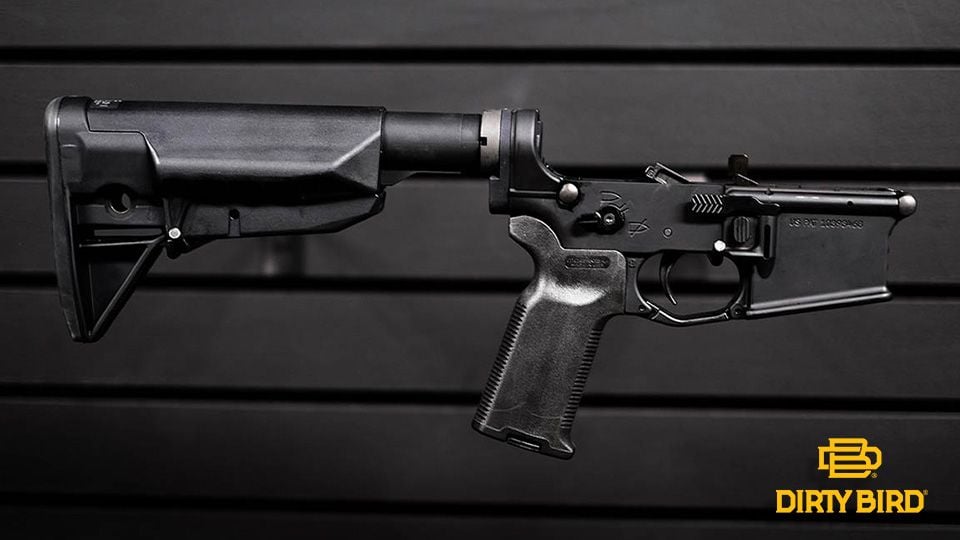
That brings us to the lower that prompted this discussion in the first place, the Dirty Bird MCF-A Ambidextrous Lower Receiver.
There are some spectacularly elaborate ambidextrous lowers on the market. Some are machined from billet, covered in proprietary controls, and shaped so aggressively that you can identify them from across the room. There is nothing inherently wrong with that approach, but it was not what Dirty Bird was after with the MCF-A.
MCF-A Ambidextrous Lower Receivers are much closer to the idea of taking a traditional forged AR lower and intelligently adding functionality where it actually helps.
It begins with 7075 aluminum forgings sourced from Cerro Fabricated Products. Dirty Bird then partnered with MVB Industries for the machining. Dirty Bird also adds an individual identifier near the pistol-grip interface that allows a particular receiver to be traced through production to its batch and machine, giving quality-control personnel considerably more information if a manufacturing issue ever needs to be investigated.
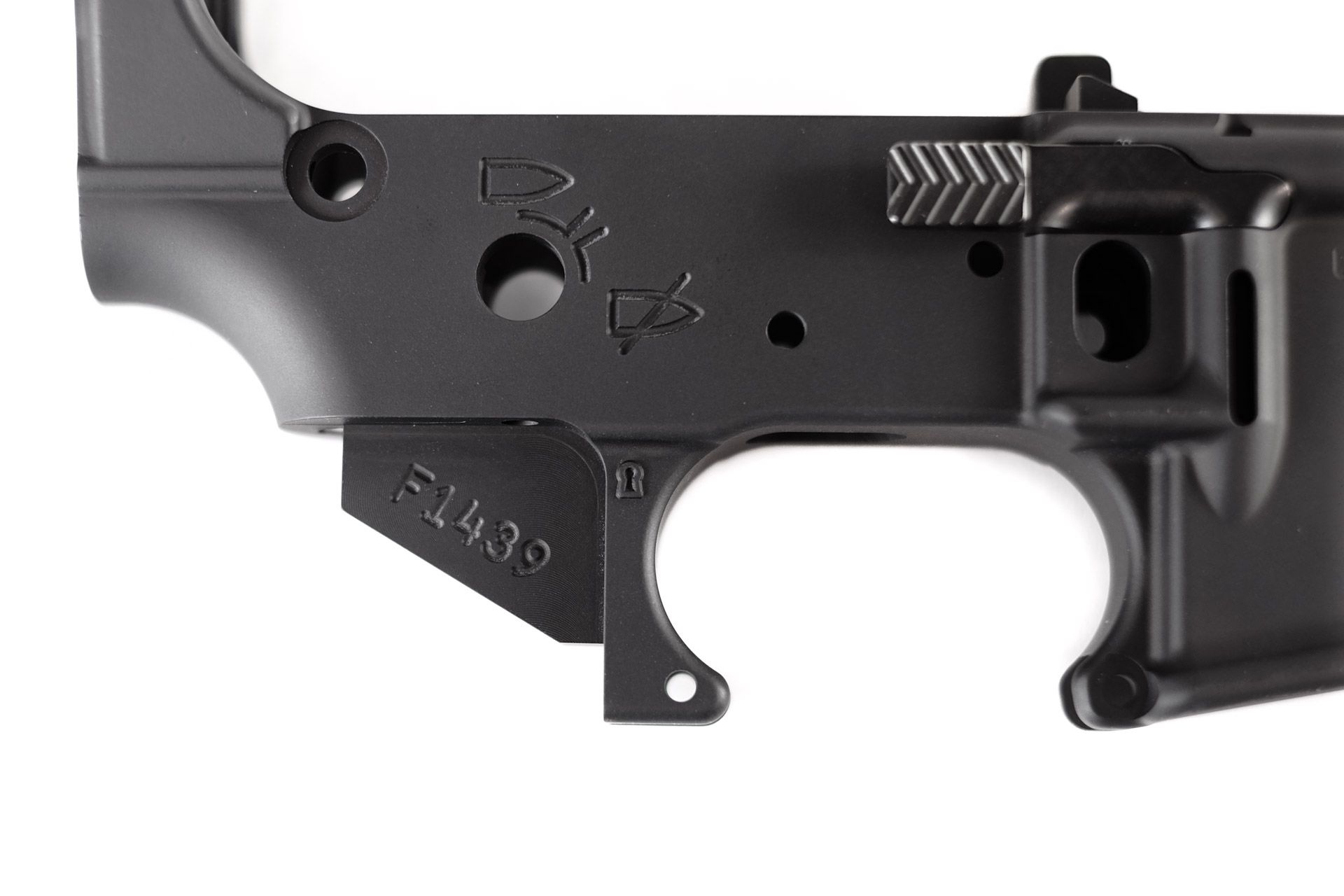
Those are good foundations, but the feature that really defines the MCF-A is its ambidextrous bolt catch and release.
MVB’s mechanism allows the additional lever to perform both jobs. If the bolt is forward, actuating the control raises the bolt catch so the shooter can pull the charging handle rearward and lock the action open. If the bolt is already locked back, operating the same control releases it.
That may sound like a small difference on paper. In the hands, it is what separates a genuine bolt catch/release system from a secondary paddle that can only send the bolt forward.
More importantly, Dirty Bird and MVB did not make the standard bolt catch dependent on the ambidextrous mechanism. The original control remains functional independently. If the additional ambi lever were damaged or its movement obstructed, the rifle’s traditional bolt catch and release can still be used normally.
That is the kind of detail we like.
Adding features is easy. Adding features without making the original design more complicated or more fragile is considerably harder.
The proprietary portion of the system is also kept relatively simple. Dirty Bird lists four proprietary components, manufactured from billet S7 tool steel and QPQ nitrided, and the ambidextrous bolt-catch lever installs using a conventional bolt-catch roll pin rather than relying on tiny hex screws.
For builders who appreciate forged receivers and traditional AR proportions but want a much more capable control layout, the MCF-A occupies an interesting middle ground. It does not try to reinvent the lower receiver. It improves the part of it that shooters interact with.
Radian AX556 Ambidextrous Lower Receivers: The Premium Approach to an Ambidextrous Lower
At the other end of the spectrum are Radian AX556 Ambidextrous Lower Receivers.
If MCF-A Ambidextrous Lower Receivers are an evolution of the traditional forged lower, the AX556 is what happens when a manufacturer approaches the receiver as an integrated ambidextrous system from the beginning.
Radian machines the AX556 from billet 7075-T6 aluminum and equips it with a left-side magazine release, right-side bolt release, Talon 45/90 ambidextrous safety, integral trigger guard, flared magazine well and Radian’s SART receiver-tensioning system. Proprietary controls and hardware are included with the receiver.
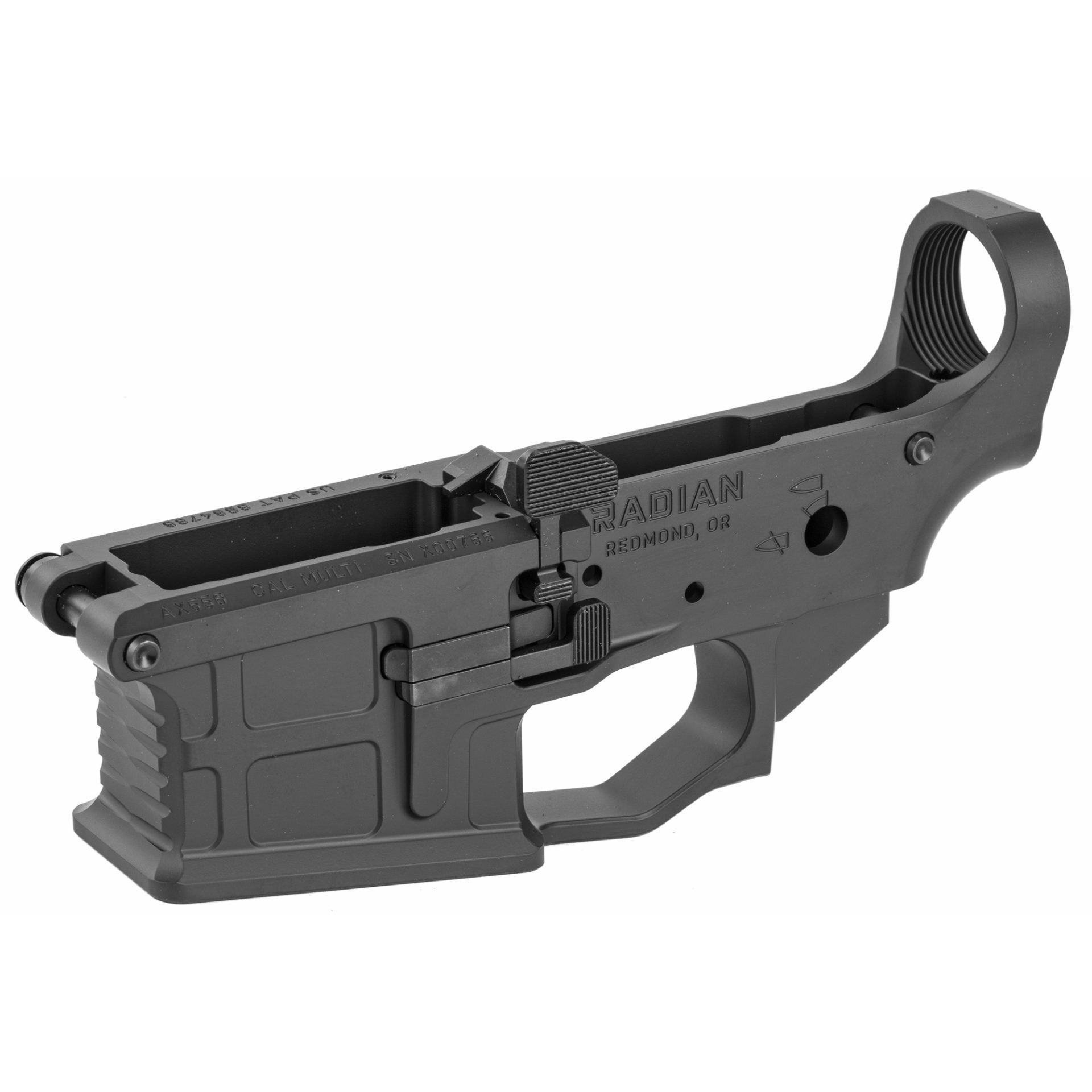
The feature most associated with the AX556 is Radian’s A-DAC, or Ambidextrous Dual Action Catch.
Instead of adding a separate right-side bolt-catch paddle, A-DAC allows a right-handed shooter to use the magazine-release control as part of the bolt-locking procedure. Pull the charging handle rearward, press the right-side magazine release and allow the charging handle forward, and the system holds the bolt open.
It is an elegant solution and part of the reason the AX556 has become one of the better-known premium ambi lowers.
It is also a different philosophy from the MCF-A. The Radian is a highly integrated billet receiver with a substantial amount of proprietary engineering built around it. The Dirty Bird keeps the shape and serviceability closer to a conventional forged AR lower. Which approach makes more sense depends on what you want the rifle to be.
Cross Machine Tool UHP15A Ambidextrous Lower Receivers
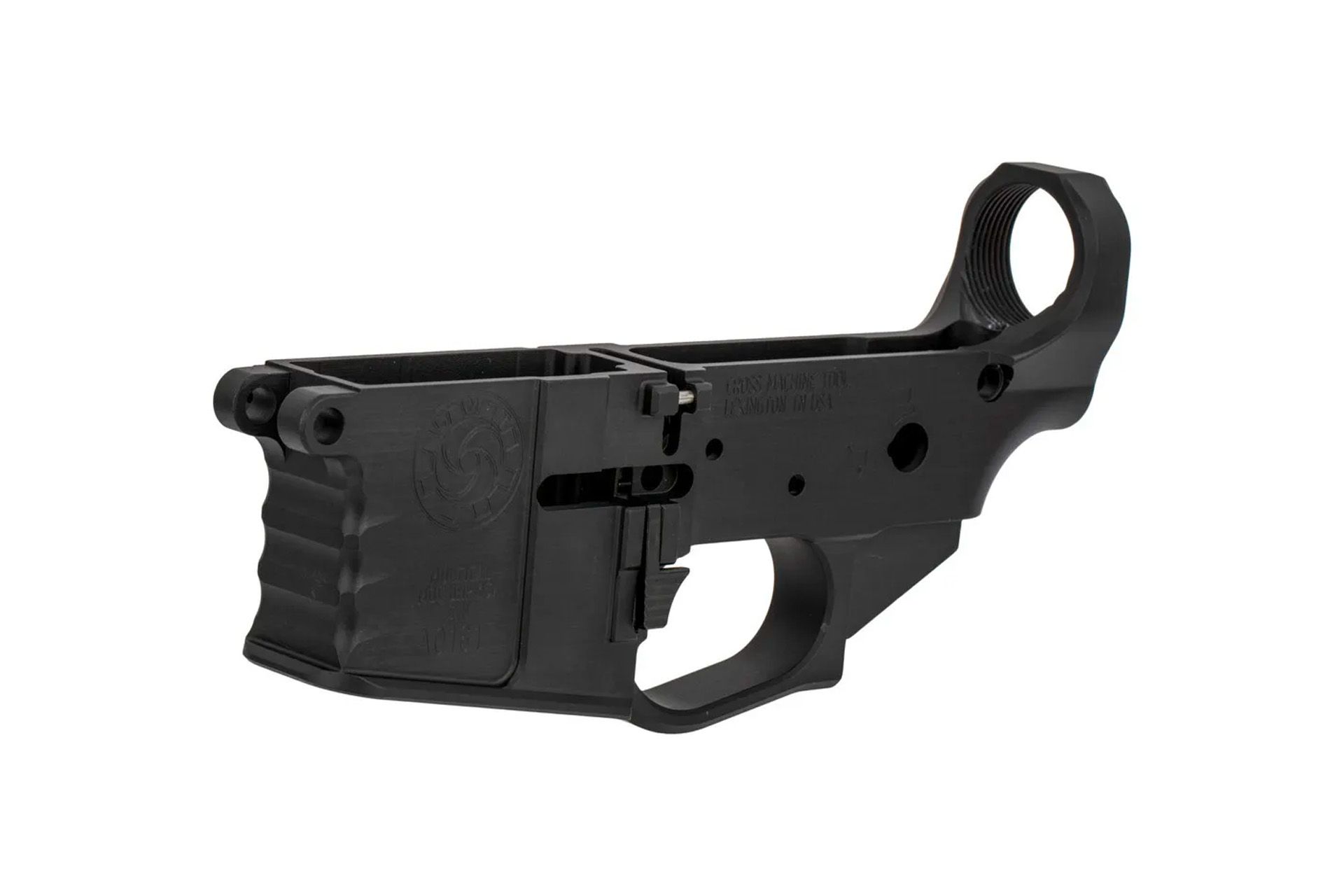
Cross Machine Tool takes another route with ambidextrous lower receivers with the UHP15A.
The UHP15A is machined from 7075-T6 billet aluminum on a 5-axis CNC and incorporates ambidextrous magazine and bolt-release controls directly into the receiver. CMT also adds several features common to higher-end billet lowers, including a flared magazine well, enlarged integral trigger guard, upper-receiver tensioning screw, threaded bolt-catch assembly screw and reinforced buffer-tube area.
CMT’s design is appealing for the builder who already wants a billet receiver and would rather have the ambidextrous controls designed into the lower than add aftermarket hardware later.
It also illustrates why shopping for ambidextrous lower receivers based entirely on the word “ambidextrous” does not tell you much. The MCF-A, AX556 and UHP15A all qualify, but the way each manufacturer approaches the controls and receiver construction is noticeably different.
Griffin Armament MK2
The Griffin Armament MK2 is another interesting option for ambidextrous lower receivers, particularly for builders who want a forged lower with a substantial ambidextrous control package.
Griffin machines the receiver from a 7075-T6 aluminum forging and equips the MK2 with left- and right-side bolt catch and release functionality along with a left-side magazine release and integrated trigger guard. Griffin’s own documentation describes the MK2 as its full-ambidextrous lower and lists a hardcoat Type III anodized finish and a standard mil-spec fire-control pocket.
That gives the MK2 a different personality than something like the AX556. It retains the general feel and weight of a forged lower while incorporating the controls many shooters are looking for when they begin shopping for a true ambi receiver.
Integrated Controls Versus Adding Ambidextrous Parts Later
There is nothing wrong with starting with a conventional lower and adding ambidextrous components.
For a shooter who simply wants a selector that can be manipulated from either side, an aftermarket ambi safety may be all that is necessary. Left-side magazine releases and secondary bolt-release devices can push the idea even further.
The advantage of a receiver such as the MCF-A, AX556, UHP15A or MK2 ambidextrous lower receivers are that the manufacturer designed the lower around those controls rather than asking the controls to work around an existing receiver.
That can mean cleaner placement, less hardware hanging from the outside of the gun and fewer compromises in how the controls are reached.
It also means builders need to pay attention to parts compatibility. Ambidextrous lowers do not universally require some completely different lower-parts kit, but receivers with integrated controls may use proprietary levers, pins, catches or other hardware in those specific locations. Use the components supplied or specified by the manufacturer rather than assuming every aftermarket ambi part needs to be added on top of what is already there.
Are Ambidextrous Lower Receivers Worth It?
This is where the answer becomes less technical and more personal.
If you already run a standard AR lower comfortably, never shoot from your support side and simply want the least expensive foundation for another rifle, there is nothing wrong with staying conventional.
But if you are already spending the money to build a rifle the way you want it, ambidextrous controls are one of the upgrades you interact with constantly. Unlike a cosmetic feature, these are controls used while loading, unloading, locking the action open, releasing the bolt and manipulating the rifle.
The value also extends beyond left-handed shooters. A right-handed shooter who becomes accustomed to locking the bolt open without substantially changing the firing-hand position may find it difficult to go back to a conventional receiver.
There are tradeoffs. Ambidextrous lower receivers usually cost more than basic forged lowers. Some depend on proprietary components. More controls also mean more parts, and poorly designed controls can occasionally create interference or be positioned where they are easier to activate accidentally.
That is why the design matters more than simply seeing “ambi” in the product name.
Common Questions About Ambidextrous Lower Receivers
What does “ambidextrous” mean on an AR-15 lower receiver? It means controls have been added or redesigned so important lower-receiver functions can be accessed from both sides of the rifle. How complete that capability is depends heavily on the particular receiver.
Which controls should a fully ambidextrous lower receiver have? At a minimum, look closely at magazine-release and bolt-control functionality. An ambidextrous safety is easily added, but the magazine and bolt controls are where purpose-built receivers tend to distinguish themselves.
What is the difference between a fully ambidextrous and partially ambidextrous AR-15 lower? A partially ambidextrous receiver might duplicate only one function, such as the magazine release or bolt release. A fully ambidextrous design provides meaningful operation of the major lower-receiver controls from either side.
Are ambidextrous lower receivers only useful for left-handed shooters? No. Left-handed shooters receive an obvious benefit, but right-handed shooters can also take advantage of the additional bolt controls and gain more options when shooting from the support shoulder.
What makes an AR-15 lower receiver truly ambidextrous? There is no single industry checklist that every manufacturer follows, so look beyond the label. Determine exactly which controls can be operated from each side and whether the right-side bolt control both catches and releases the bolt or only releases it.
Do ambidextrous AR-15 lowers require special lower parts kits? Not necessarily. Much of the receiver may still use standard AR-15 components, although integrated ambidextrous systems commonly include proprietary controls or hardware. Always check the receiver manufacturer’s compatibility information before ordering the rest of the build.
What is the difference between integrated ambidextrous controls and aftermarket ambidextrous controls? Integrated controls are designed as part of the receiver itself. Aftermarket controls modify a conventional lower to provide similar functionality. Both approaches can work, but purpose-built receivers generally allow the manufacturer greater freedom over control placement and geometry.
Are ambidextrous lower receivers worth the extra cost? For a shooter who regularly uses the additional controls, they can be. For a basic build where cost is the primary concern, a quality conventional forged lower remains perfectly functional.
What is the difference between an ambidextrous bolt release and an ambidextrous bolt catch? A bolt release allows the shooter to send an already locked bolt forward. A bolt catch can be actuated to help lock the bolt open as well. Some systems provide both functions while others only duplicate the release.
Are there any disadvantages to using an ambidextrous AR-15 lower receiver? Price is the most obvious one. Depending on the design, there may also be proprietary replacement parts or additional controls that require some familiarization. Those considerations make it worth comparing the actual mechanism instead of buying entirely on the ambidextrous label.
A Better Foundation for the Right Build
One of the best things about the AR-15 is that there is almost never a single correct way to build one.
A basic forged lower can become an outstanding rifle. An elaborate billet receiver can become an outstanding rifle. The serialized piece does not need to be complicated to work.
Ambidextrous lower receivers simply give builders another choice. Instead of accepting the original control layout and modifying technique around it, you can start the build with a receiver designed to give your hands more ways to operate the rifle.
That is where the Dirty Bird MCF-A makes the most sense to us. It does not add features simply so another line can be added to the specification sheet. It starts with a quality 7075 forging, puts considerable attention into machining and quality control, and adds an ambidextrous bolt catch and release in a way that leaves the conventional control intact and keeps the proprietary mechanism relatively simple.
Radian, CMT and Griffin all approach the same problem differently, and there are good reasons a builder might choose any of them. But if the goal is a forged lower that still looks, feels and services much like a traditional AR receiver while giving the shooter genuinely useful ambidextrous bolt control, the MCF-A deserves a hard look.
The AR-15 was built around modularity. A good ambidextrous lower simply brings that same philosophy to the controls your hands use every time you run the rifle.