

 Dirty Bird Bakersfield
California Compliant, Firearms, Glock, Handguns, Sig Sauer, Springfield Armory, Springfield Hellcat
Glock vs Sig Sauer vs Springfield Handguns: Which Handgun Fits You
Aug
Over the years, handguns have come and gone through my safe the same way they do for most of us who stay in this long enough. I started with Smith & Wesson M&Ps and put a lot of rounds through them. They were solid, the ergonomics worked for my hands, and the aftermarket was decent at the time. Eventually I switched over to HK VP9s. The trigger and the overall feel of those pistols hooked me for a stretch, and I still think highly of them. In time, I moved on again and settled on Glocks. The consistency across the line, the reliability that just never seemed to quit, and the simple fact that everything felt the same from one model to the next made them the ones that stuck. My wife trains on a Glock 19 and a 43X. I carry a G45 and a 43X. Same trigger, same grip angle, same manual of arms. That kind of familiarity is hard to walk away from once you have it.
Picking a handgun these days is less about finding one perfect pistol and more about settling into a system you can live with for years. Training, carry, spare magazines, holsters, and the occasional upgrade all add up.
Table of Contents
TL;DR- Too Long Didn’t Read
In light of new restrictions on Glock handguns in several states, the focus for buyers is shifting towards developing a consistent handgun system. The blog discusses popular alternatives, particularly SIG Sauer and Springfield models, that offer reliability and functional ecosystems for long-term use.
- SIG P365 provides modularity and extensive accessory options, benefiting new buyers.
- Springfield Hellcat appeals with high capacity and a more aggressive grip texture.
- Choosing one brand generally reduces costs and complexity for accessories and training.
- Glock remains a strong option where available, valued for its uniform control and reliability.
A Golden Age of Choices With New (California) Limits
We are living in what many of us see as a golden age for handguns. The number of solid, reliable options on the market has never been higher. Beyond the usual suspects you will find excellent pistols from HK, including the VP9 and the newer CC9, along with strong performers from Canik and several other makers that deliver real value and shootability. This article does not cover those platforms in detail. The focus here stays on the compact and micro-compact conversation that most everyday carriers are having right now, and even that field has narrowed in an unexpected way.
In 2026 the decision got simpler for a lot of people, though not in a way most of us wanted. New laws in California, Connecticut, Maryland, New York and a few other states have pulled Glock and most Glock-pattern pistols off dealer shelves. The laws target the cruciform trigger bar that can accept an illegal switch, and the practical result is that buying a new Glock is no longer realistic in those places. Existing owners can keep what they have. Building or expanding around fresh Glocks is off the table for many of us. For shooters in California the choice is especially straightforward. Glock simply is not around for new purchases, so the conversation moves quickly to the remaining options.
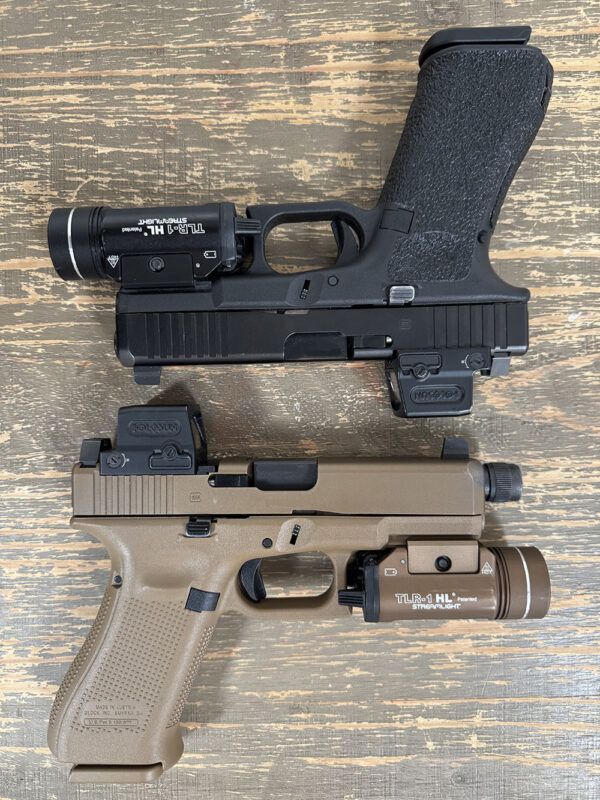
Glock handguns still deserve a place in the discussion because of what they offered and what many of us continue to run every day. The platform’s track record for reliability, the depth of the aftermarket, and the way every model feels familiar are the reasons so many people settled on it in the first place. Those strengths have not disappeared for current owners. They just no longer apply the same way for anyone shopping new in the restricted states.
That leaves the compact and micro-compact 9mm field largely to the SIG Sauer P365 series and the Springfield Hellcat family for the purposes of this discussion. Both put serious capacity into small frames that actually conceal. The numbers on length, height, width, and weight sit close enough that most people can carry either without much trouble. Capacity is where these newer designs pull ahead of older subcompacts. What matters over the long haul is how the rest of the system works once you start adding a second pistol, extra magazines, or an optic.
What the P365 Handguns Bring to the Table
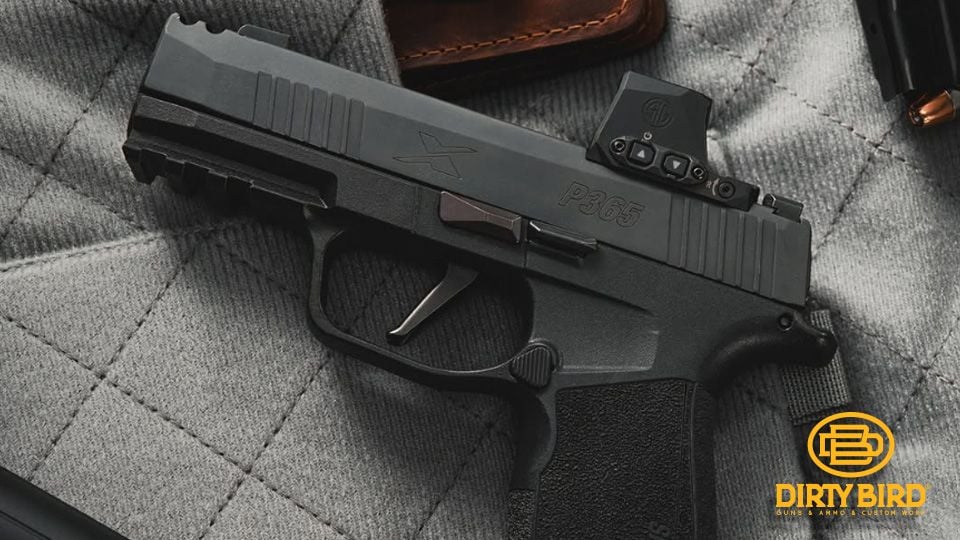
SIG’s P365 line of handguns changed the conversation when it showed up. High capacity in a true micro-compact package, modular grip frames, and optics-ready slides gave people options that felt modern. A lot of shooters find the ergonomics comfortable for all-day carry and the gun more shootable than its size suggests. Holster and accessory support has grown fast because the platform is popular. Magazine compatibility inside the P365 family is good enough that you can move between a deep-concealment gun and a larger training pistol without starting over on everything.
The downside (if you can call it that) of these handguns is the sheer number of models. Base P365, XL, X, Macro, and the specialty versions create a catalog that can feel like too much when you are trying to keep things simple. You can end up with more unique parts than you planned. The system works well, but it rewards careful choices if you want everything to stay streamlined.
Where P365 handguns set itself apart is in that modularity and the way the grip can be swapped to change both size and feel without buying a whole new gun. The flush-fit magazines start at ten rounds and climb from there with extended options, and the overall package tends to feel a bit more rounded in the hand compared with some of its competition. That flexibility is useful if your needs shift over time, but it also means you have to pay attention to which exact variant you are building around so the magazines and holsters stay consistent.
Hellcat Hanguns as a Real Contender
Springfield’s Hellcat and Hellcat Pro handguns showed up with high capacity and grip texture that a lot of people like right away. Optics-ready versions are easy to find, and the capacity numbers sit right next to the P365. The Pro stretches the size a little for better control while staying concealable. Accuracy and reliability have earned the line a solid following.
The wider ecosystem is still smaller. Holsters and parts exist, but the selection is narrower than what the P365 currently enjoys. Magazine commonality across Springfield’s other pistols is limited. Left-handed shooters will find some ambidextrous controls, yet the overall accessory market has not reached the same depth. The Hellcat is a strong individual pistol. Building a full collection around it simply takes more hunting for the right gear.
The Hellcat distinguishes itself with a more aggressive grip texture that runs higher on the frame and a slightly boxier overall shape that some shooters prefer for a locked-in feel. Standard magazines start at eleven rounds with thirteen and fifteen-round options readily available, and the Pro version adds a bit of barrel length and grip real estate that makes it easier to shoot well without giving up much in concealment. It feels less modular than the P365, which can be an advantage if you want a straightforward gun that does not require as many decisions up front.
Living with One System Once Glock Is Off the Menu
The easiest system to expand is the one with the deepest current support and the most consistent controls. With new Glock handguns restricted in key states, that conversation now centers on SIG and Springfield. SIG’s modular grip modules make later size changes relatively straightforward. Springfield offers good individual performance but less seamless scaling across sizes. Aftermarket parts, holsters, and magazines favor the platform with the larger present market, which leans toward the P365 in most places.
Consistency with handguns still matters. Shooters who train regularly benefit from similar trigger feel, grip angle, and controls across their pistols. Both companies deliver that inside their own lines better than mixing brands. Long-term costs for magazines, holsters, and upgrades tend to stay lower on the platform with broader third-party support. Changing grip size or adding an optic later is possible on both. SIG currently makes the modular route easier.
Staying inside one brand of handguns cuts training friction and gear duplication. Mixing SIG and Springfield works if you have specific reasons for each gun. Most people who train seriously find that one consistent set of magazines and controls saves time and money. The 2026 legal changes simply removed the previous default for a lot of buyers. Even with all the other strong options on the market today, from the HK VP9 and CC9 to the various Canik models, the compact ecosystem question still comes down to how well the parts work together over years of use.
The right choice of handguns still depends on how you train and what you value most. Capacity numbers and size charts matter, yet the daily reality of magazines that fit, holsters that work, and a trigger that feels the same every time you draw tends to decide the long game. Glock’s reliability, aftermarket depth, and handling consistency made it the easy default for years, including for those of us who still run the ones we already own.
With new dealer sales restricted in key states, the practical decision for many compact buyers now sits between SIG and Springfield. In California, that decision is simpler still because Glock handguns are not part of the new-purchase conversation. Plenty of other excellent handguns exist right now, from HK to Canik and beyond, but the ecosystem question remains the same. Handle the guns if you can. Pay attention to how the whole system of magazines, holsters, and controls feels rather than any single feature list. Pick the setup that will still make sense for the way you actually shoot and carry in the years ahead.
Which handgun ecosystem is easiest to build around now that Glock sales face restrictions in multiple states?
The SIG P365 series currently offers the most straightforward path for most new buyers because of its modularity and the volume of available accessories. In places where Glock remains fully available the original platform still holds strong advantages in simplicity and support.
Which brand makes it easiest to own both a concealed-carry pistol and a larger training handgun?
SIG’s grip-module system lets you change sizes within the same basic family, which gives it an edge for mixed-size ownership when new Glocks are not an option. Where Glock is still unrestricted the consistent controls across its line make that transition just as smooth.
How do SIG Sauer and Springfield compare for aftermarket parts and accessory availability in 2026?
SIG holds the broader current selection for the P365 line. Springfield support for the Hellcat is solid but remains narrower overall. Glock’s aftermarket remains the deepest for those who already own the platform or live in unrestricted areas.
Which handgun brand offers better magazine compatibility across its different pistol models?
SIG magazines work well inside the P365 family. Springfield magazines stay more model-specific. Glock continues to offer the broadest compatibility within its own lineup for owners who can still access it.
Which ecosystem has the lower long-term cost for magazines, holsters, replacement parts, and upgrades?
The larger current market for P365 parts and holsters generally keeps prices more competitive over time for new buyers. Glock still tends to win on long-term cost where the platform is fully supported.
Is it easier to find holsters and replacement parts for SIG Sauer or Springfield handguns under the new restrictions?
SIG options are more widely stocked in most markets. Springfield gear is available but often takes more targeted searching. Glock holsters and parts remain the easiest to source for current owners.
Which handgun ecosystem is best for shooters who expect to change grip size or pistol configuration later?
SIG’s modular grip modules make later changes simpler than most fixed-frame options. Glock aftermarket frames and backstraps also support adjustments for those who already own them.
Which of the remaining brands offers more consistent controls and handling across different handgun models?
Both SIG and Springfield deliver good internal consistency. SIG’s modular approach edges ahead for shooters who plan to own multiple sizes. Glock still sets the standard for uniformity across its full range.
Which handgun ecosystem is more convenient for left-handed shooters: SIG Sauer or Springfield?
Both offer improved factory ambidextrous or reversible controls on recent models compared with older designs. Glock solutions exist through the aftermarket and remain easy to find for current owners.
Is it better to stay with one handgun brand ecosystem or own pistols from both SIG Sauer and Springfield?
Staying inside one system usually reduces training time, magazine inventory, and holster costs. Mixing works when specific performance needs outweigh the convenience of uniformity. The same principle applies if Glock is still part of the picture in unrestricted areas.