

 Dirty Bird Bakersfield
AR Parts and Accesories, AR-15, Upper Receivers
Frequently Asked Questions About AR-15 Complete Uppers

Apr
Table of Contents
Everything You Need to Know About the AR-15 Complete Upper
Whether you’re an experienced shooter or just beginning your firearm journey, AR-15 Complete uppers are likely on your radar as one of the most versatile components available. An AR-15 complete upper provides an excellent starting point for customizing or building your rifle, featuring a pre-assembled upper receiver with all essential components, such as the barrel, bolt carrier group, and handguard. This convenience significantly reduces assembly time and guarantees compatibility. Whether your goal is tactical applications, competitive shooting, or recreational use, this guide covers everything you need to know about selecting the ideal AR-15 complete upper for your next build or upgrade.
What is an AR-15 Complete Upper?
Whether you’re an experienced shooter or just beginning your firearm journey, AR-15 Complete uppers are likely on your radar as one of the most versatile components available. An AR-15 complete upper provides an excellent starting point for customizing or building your rifle, featuring a pre-assembled upper receiver with all essential components, such as the barrel, bolt carrier group, and handguard. This convenience significantly reduces assembly time and guarantees compatibility. Whether your goal is tactical applications, competitive shooting, or recreational use, this guide covers everything you need to know about selecting the ideal AR-15 complete upper for your next build or upgrade.
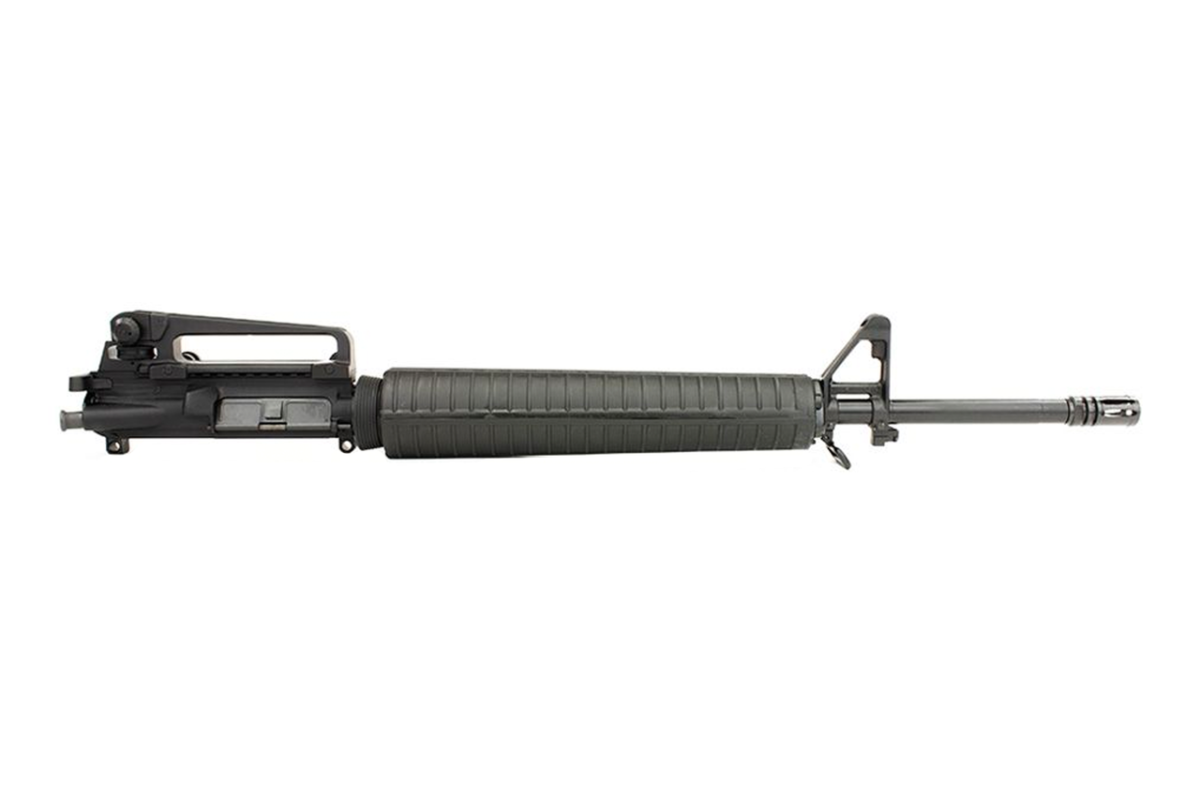
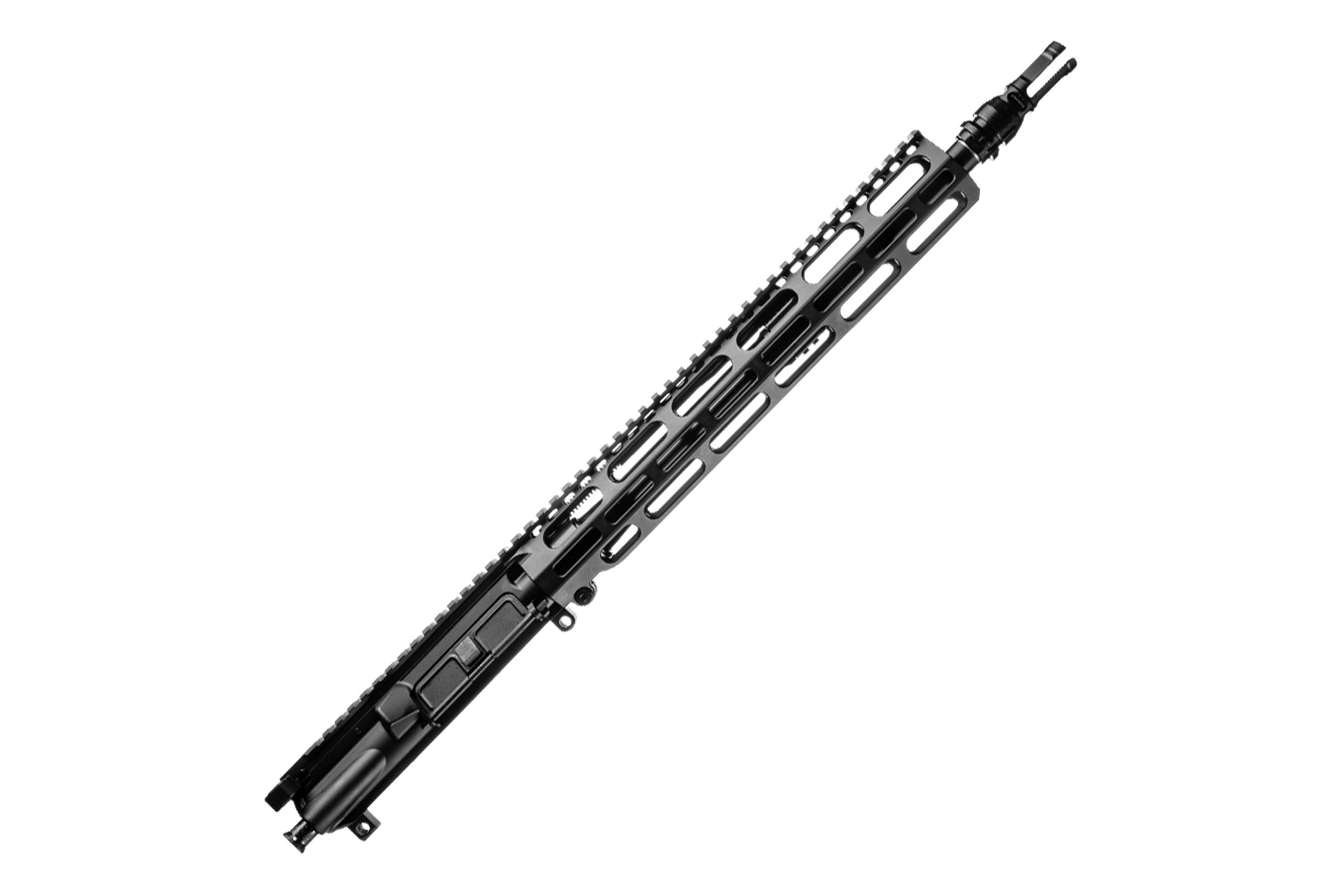
An AR-15 complete upper refers to a fully assembled upper receiver that includes essential components such as the barrel, bolt carrier group (BCG), charging handle (CH), gas system, handguard, and muzzle device. It pairs with a complete lower receiver, simplifying the build process and guaranteeing compatibility. Using a complete upper not only streamlines the assembly but also ensures that all parts function harmoniously, thereby improving reliability and safety. Additionally, complete uppers are available in various calibers and configurations, allowing users to effectively customize their AR-15 rifle to meet specific shooting needs and achieve their desired performance goals.
Components Included in a Complete Upper Receiver Assembly
A typical complete AR-15 upper assembly includes:
- Upper Receiver (forged or billet): Serves as the housing for all upper components; forged uppers offer strength and reliability, while billet uppers provide customizable aesthetics.
- Barrel (varying lengths and twist rates): Dictates bullet stability, velocity, and accuracy; barrel length and twist rate significantly impact performance, depending on the intended use.
- Bolt Carrier Group (BCG): Essential for chambering rounds, ejecting spent casings, and cycling the firearm efficiently.
- Charging Handle (CH): Enables manual cycling of the BCG, necessary for loading, unloading, or clearing malfunctions.
- Gas Block and Gas Tube: Regulates the gas necessary for cycling the rifle, with lengths influencing recoil and cycling characteristics.
- Handguard (free-float or drop-in): Protects your hand from barrel heat and provides mounting points for accessories; free-float handguards enhance accuracy by minimizing barrel interference.
- Muzzle Device (flash hider, compensator, or muzzle brake): Mitigates recoil, reduces muzzle rise, or suppresses flash to improve shooting comfort and precision.
Why Choose a Complete Upper?
Selecting a complete upper receiver simplifies your AR-15 build by eliminating compatibility concerns. Popular brands like Aero Precision and Ballistic Advantage offer reliable, performance-driven uppers perfect for all shooting disciplines. These trusted manufacturers utilize precision machining and high-quality materials to ensure durability, accuracy, and consistent performance. Additionally, complete uppers from these brands often include user-friendly features, such as enhanced ergonomics, improved gas management systems, and versatile accessory attachment options, making them a valuable choice for both novice builders and experienced firearm enthusiasts alike. Choosing from reputable brands also ensures excellent customer support, detailed documentation, and warranties for peace of mind.
Barrel Length and Performance
AR-15 complete uppers come in various barrel lengths:
- 10.5″–12.5″: Ideal for compact, close-quarters applications. Great for tactical setups, truck guns, or home defense, where mobility is crucial.
- 14.5″–16″: Optimal for general-purpose use, balancing accuracy and maneuverability. These are the most common lengths for duty rifles, training, and recreational shooting.
- 18″–20″: Best suited for precision shooting and long-range performance. Excellent for varmint hunting, competition, or designated marksman roles, where maximum velocity and accuracy are key.
Forged vs. Billet Upper Receivers
- Forged Uppers: Forged AR-15 uppers are created by hammering aluminum into shape using high-pressure dies, resulting in a dense, highly durable structure. This method enhances strength and impact resistance, making forged uppers ideal for hard-use applications such as duty rifles, tactical builds, and rugged field conditions. They are also typically more affordable than billet options.
- Billet Uppers: Billet uppers are precision-machined from a single solid block of aluminum, allowing for greater design flexibility and aesthetic customization. This process enables the inclusion of unique styling, enhanced tolerances, and added features, such as integrated trigger guards or flared magazine wells. While billet uppers tend to be more expensive and slightly heavier, they’re favored in custom builds where form, fit, and finish are paramount.
Understanding Gas Systems
The gas system length affects performance:
- Carbine-Length: Carbine-length gas systems feature a shorter gas tube, typically measuring around 7 inches, which results in a shorter dwell time—the duration during which gas pressure is applied to the bolt carrier. This setup increases felt recoil and causes a faster, more abrupt cycling action. It’s most commonly used with 10.5″ to 14.5″ barrels and is ideal for compact builds or tactical configurations where space is limited and quick handling is crucial. However, it may require tuning (e.g., adjustable gas blocks or heavier buffers) to improve reliability and longevity.
- Mid-Length: Mid-length gas systems utilize a gas tube approximately 9 inches long, providing a balanced middle ground between carbine and rifle-length systems. The increased dwell time compared to carbine systems reduces recoil and wear on internal components, leading to smoother operation and improved longevity. Mid-length systems are optimal for 14.5″ to 16″ barrels and are a popular choice for general-purpose AR-15 builds due to their reliable cycling and manageable recoil.
- Rifle-Length: Rifle-length gas systems extend the gas tube to approximately 12 inches, providing the longest dwell time and the softest recoil impulse. This system enables the smoothest cycling and optimal gas efficiency, making it ideal for precision or long-range rifles with barrels ranging from 18 to 20 inches in length. Rifle-length setups are commonly used in designated marksman rifles (DMRs) and competition platforms where control and consistency are prioritized over compactness.
Popular AR-15 Complete Uppers with BCG
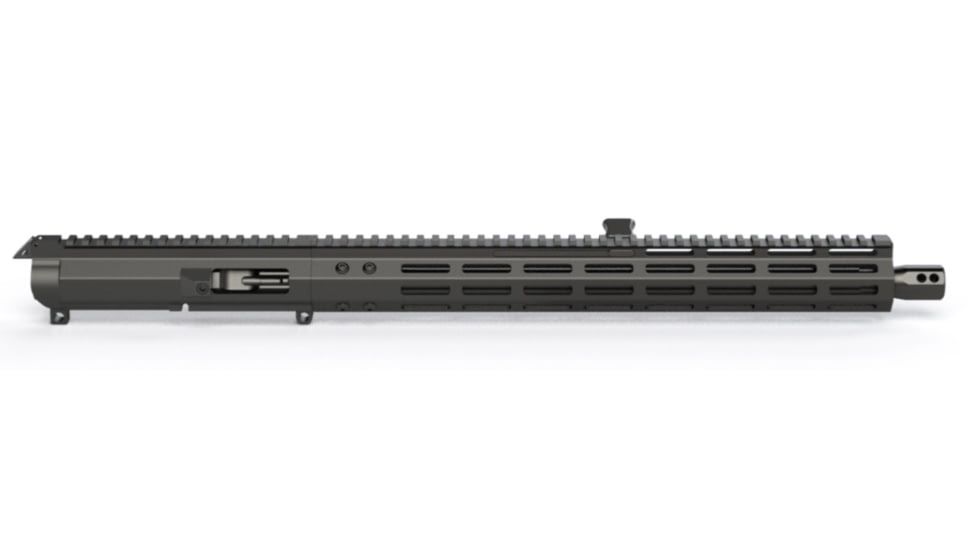
Purchasing a complete AR-15 upper with a bolt carrier group (BCG) saves time and ensures compatibility. Brands like Foxtrot Mike and Bravo Company Manufacturing (BCM) offer reliable, high-quality options with integrated BCGs and charging handles.
Selecting the Right Barrel Twist Rate
1:7 Twist:
A 1:7 twist rate means the rifling makes one complete turn every 7 inches. This faster twist rate is ideal for stabilizing heavier bullets, typically in the 62–77 grain range, which are often used for long-range shooting, barrier penetration, and military applications. It’s commonly found in duty rifles and builds optimized for accuracy with heavier, match-grade ammunition.
1:8 Twist:
The 1:8 twist offers a versatile middle ground, capable of stabilizing a broad range of bullet weights from around 55 to 77 grains. This makes it a popular all-purpose choice for shooters who use their rifle for multiple applications, including hunting, target shooting, and home defense. It delivers solid performance across most common bullet types without over- or under-stabilizing.
1:9 Twist:
A 1:9 twist rate is better suited for lighter bullets, typically in the 45–62 grain range. This slower twist is common in rifles designed for recreational or plinking use, where lighter, less expensive ammo is frequently used. While it may struggle to stabilize heavier bullets at long distances, it’s reliable and cost-effective for casual shooting.
Free-Float vs. Drop-In Handguard
Free-Float Handguards:
Free-float handguards attach directly to the upper receiver and do not make contact with the barrel, eliminating external pressure on the barrel and helping preserve its natural harmonics. This results in improved accuracy, especially for precision shooting or when using optics. Free-float systems also offer greater flexibility for accessory placement along the entire rail and often feature M-LOK or KeyMod slots for weight savings and customization. They are ideal for competition, long-range shooting, and custom builds where performance is a top priority.
Drop-In Handguards:
Drop-in handguards are designed to fit into the delta ring and front sight base (or end cap) of a standard AR-15 rifle, eliminating the need for special tools and making installation or replacement easy. While they’re more budget-friendly and suitable for casual or defensive use, they do apply some pressure to the barrel, which can slightly affect accuracy. Drop-ins are best suited for shooters seeking a simple, cost-effective solution or those looking to upgrade a traditional carbine without modifying the gas system.
Choosing a Muzzle Device
Flash Hiders:
Flash hiders are designed to disperse burning gases exiting the barrel, significantly reducing visible muzzle flash. This is particularly beneficial in low-light or night-time environments, as it preserves the shooter’s vision and reduces their visual signature, making flash hiders ideal for tactical, defensive, and military applications. Common types include A2 birdcage and pronged designs.
Muzzle Brakes:
Muzzle brakes redirect gases sideways or rearward to counteract recoil, helping to keep the rifle steadier after each shot. This makes them especially useful for competitive shooting, where quick follow-up shots and tight groupings are crucial. While effective at reducing felt recoil, muzzle brakes can be loud and produce noticeable side blast, especially on indoor ranges or near other shooters.
Compensators:
Compensators are engineered to vent gases upward, helping control vertical muzzle movement during rapid fire. By reducing muzzle rise, they allow for faster target reacquisition and tighter shot placement in dynamic shooting scenarios. Compensators are popular among 3-gun competitors, tactical users, and those running high-rate-of-fire setups. Some hybrid devices combine brake and compensator functions for dual benefits.
Maintaining Your AR-15 Complete Upper
Proper maintenance of your AR-15 complete upper is essential to ensure reliable performance, safety, and extended service life. Start by disassembling the upper to clean the bore using a quality bore brush, solvent, and patches to remove carbon fouling and copper deposits. Pay close attention to the bolt carrier group (BCG), particularly the bolt, cam pin, and firing pin. Clean and lubricate these components thoroughly to prevent malfunctions. The charging handle should also be wiped down and lightly lubricated.
Don’t overlook the gas system: while the gas tube itself is typically self-cleaning, check the gas block for carbon buildup if you’ve fired a high volume of rounds. Ensure your muzzle device is secure and free from excessive carbon buildup. Use only firearm-specific solvents and lubricants—avoid over-lubing, which can attract grit and fouling.
Perform inspections after cleaning to check for worn or damaged parts, such as extractor springs, gas rings, and feed ramps. Regular maintenance after each shooting session, especially after high round counts or harsh environments, keeps your upper running smoothly and ready for any application.

Frequently Asked Questions (FAQs)
Whether you’re new to AR-15 builds or refining your setup, understanding complete uppers is essential. Below, we answer the most common questions to help you make informed decisions when purchasing and assembling your AR-15.
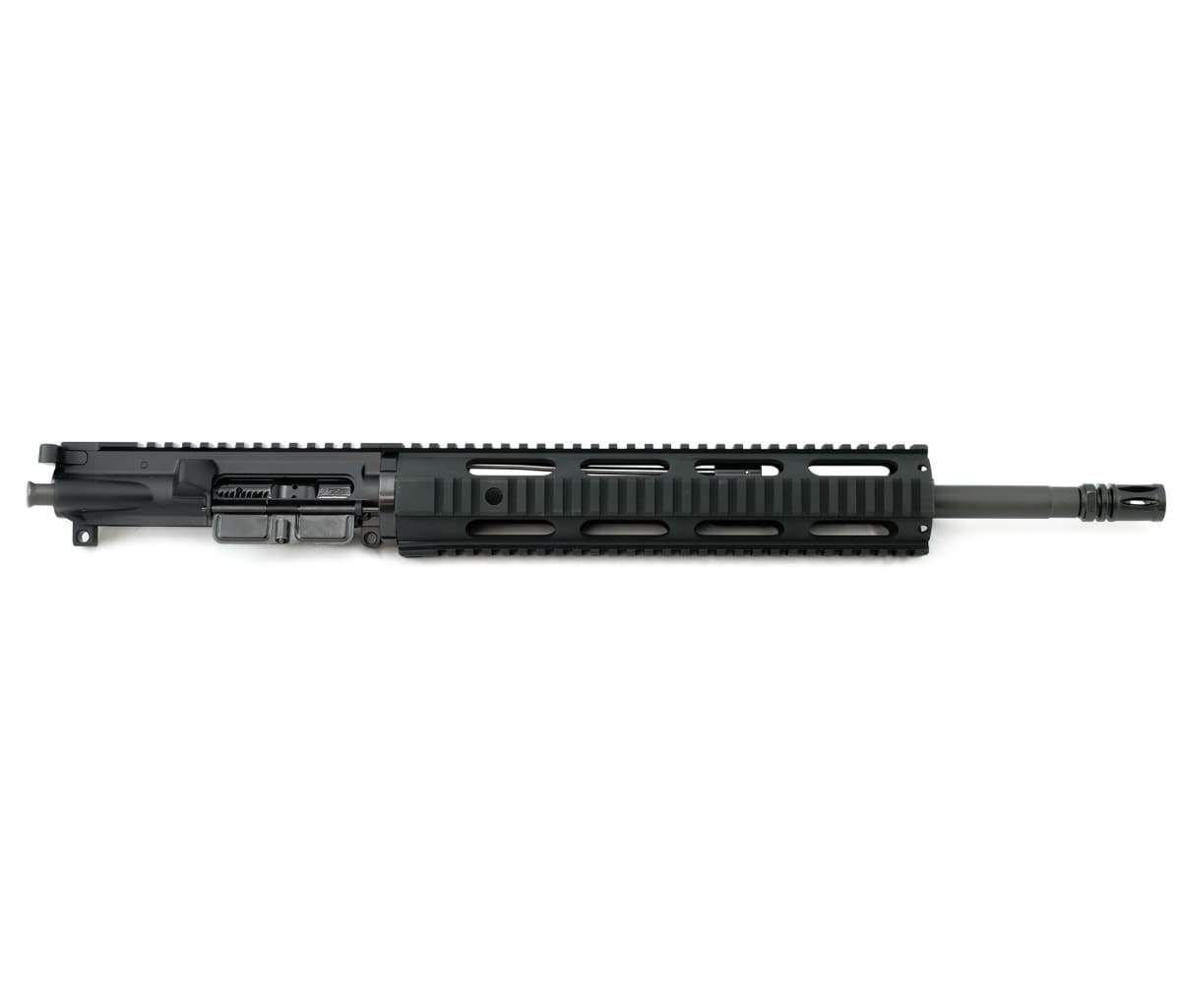
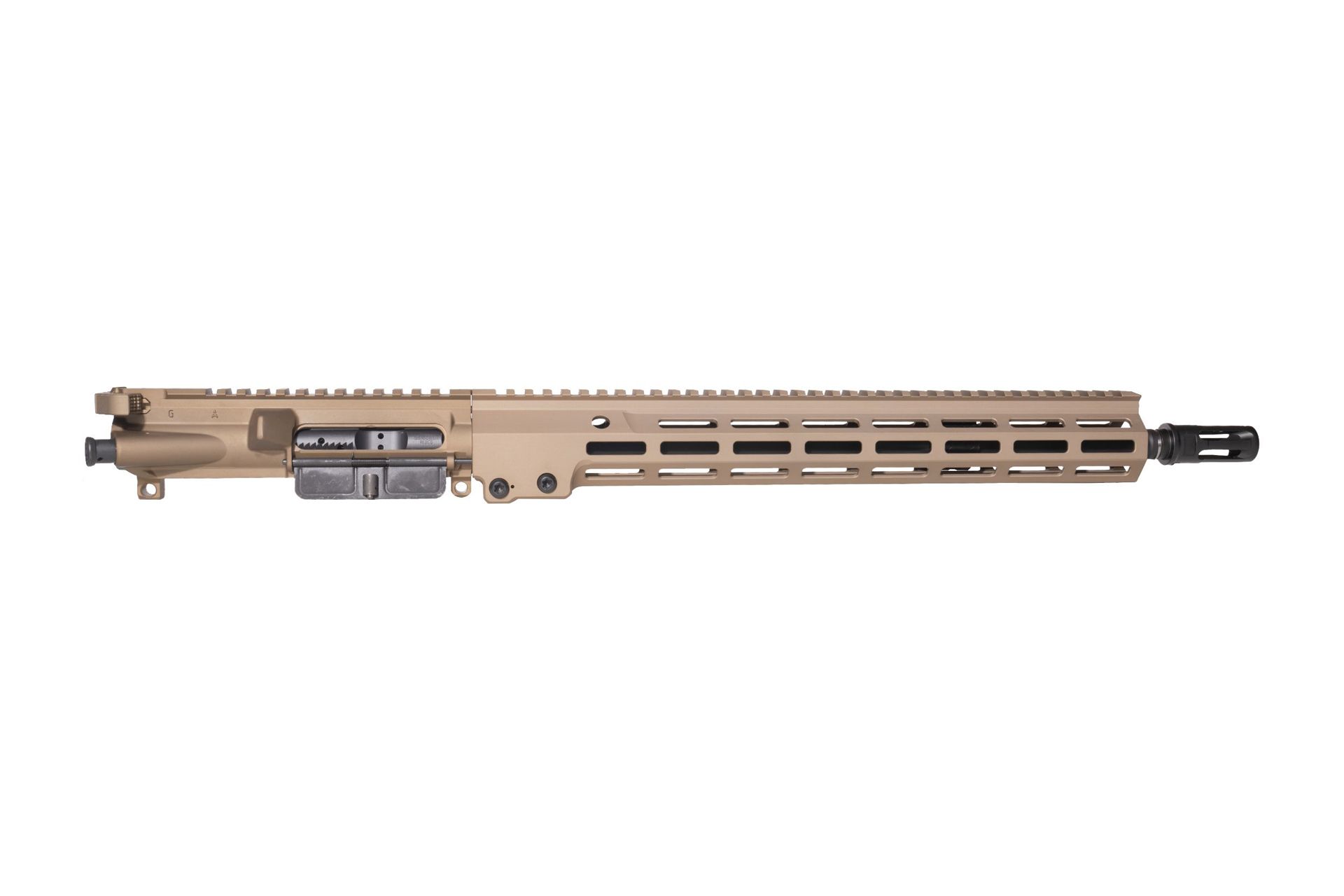
What is an AR-15 complete upper? An AR-15 complete upper is a fully assembled upper receiver group that includes the barrel, bolt carrier group (BCG), charging handle, gas block and tube, handguard, and muzzle device. It comes preassembled and ready to pin onto a compatible AR-15 lower receiver, streamlining the building process and ensuring component compatibility.
Can I legally purchase an AR-15 complete upper without a background check?
Yes, you can legally purchase an AR-15 complete upper without undergoing a background check. Since the upper receiver is not classified as a firearm by the ATF, it can be shipped directly to your home and does not require a Federal Firearms License (FFL) transfer.
Do I need a Federal Firearms License (FFL) to purchase a complete upper receiver?
No, a Federal Firearms License is not needed to purchase a complete AR-15 upper receiver. Unlike the serialized lower receiver, the upper is not regulated as a firearm, allowing for easy online purchases and shipping to your doorstep.
Can I mix and match AR-15 uppers and lowers from different manufacturers?
Yes, you can mix and match uppers and lowers from different manufacturers as long as both components adhere to mil-spec dimensions. This interchangeability is one of the key advantages of the AR-15 platform. However, it’s still recommended to verify fitment, especially when using billet receivers.
Can I use a complete upper chambered in .308 or 7.62x51mm on my AR-15 lower?
No, AR-15 lowers are not compatible with .308 or 7.62x51mm uppers. Those larger calibers require an AR-10 lower receiver due to different dimensions and pressure tolerances. Always match your upper caliber to a compatible lower platform for safe operation.
What is the difference between a mil-spec and commercial buffer tube?
Mil-spec buffer tubes have a slightly smaller external diameter (1.14 inches) and thicker walls compared to commercial tubes (1.17 inches). This difference affects which buttstock will fit the tube. Mil-spec is generally preferred for its tighter tolerances and broader compatibility with aftermarket parts.
Are Weaver and Picatinny rails the same?
No, Weaver and Picatinny rails are similar but not identical. Picatinny rails follow strict MIL-STD-1913 specifications with evenly spaced slots, while Weaver rails have inconsistent spacing. Some Weaver-compatible accessories may fit Picatinny rails, but not all Picatinny-mounted accessories will fit Weaver systems.
Can I build my AR-15 by purchasing the upper and lower parts separately?
Absolutely. Buying a complete upper and a full or stripped lower receiver is one of the simplest and most popular methods of building an AR-15. This approach allows for customization and often reduces the cost and complexity of assembly.
Are there any restrictions on the barrel length of an AR-15 upper receiver?
Yes, federal law requires that rifles have a minimum barrel length of 16 inches. Uppers with barrels shorter than 16 inches may only be legally used on AR-15 pistols or registered SBRs (Short-Barreled Rifles). A muzzle device permanently pinned and welded can bring a shorter barrel up to legal length.
Where can I find reputable manufacturers or retailers for AR-15 complete uppers?
Dirty Bird Guns & Ammo carries a curated selection of complete AR-15 uppers from trusted manufacturers like Aero Precision, Ballistic Advantage, and more. Whether you’re looking for a duty-grade setup or a budget-friendly build, you’ll find reliable, thoroughly tested options in our inventory.
Conclusion
Investing in a complete AR-15 upper simplifies your build and guarantees compatibility. Dirty Bird Guns & Ammo offers an extensive selection of top-tier AR-15 complete uppers to match any shooter’s needs and preferences. Explore our collection today and elevate your shooting experience. Whether you’re building for home defense, competition, or hunting, our uppers deliver unmatched reliability, precision, and performance. Choose from trusted brands, various calibers, and lengths—all rigorously tested for quality and function.
For additional resources, www.arbuildjunkie.com