

 Dirty Bird Bakersfield
AR Parts and Accesories, AR-15, AR-15 Triggers
What Is a Trigger Kicker? How It Works, vs FRT, and Legal Considerations
Oct
Table of Contents

TL;DR- Too Long Didn’t Read
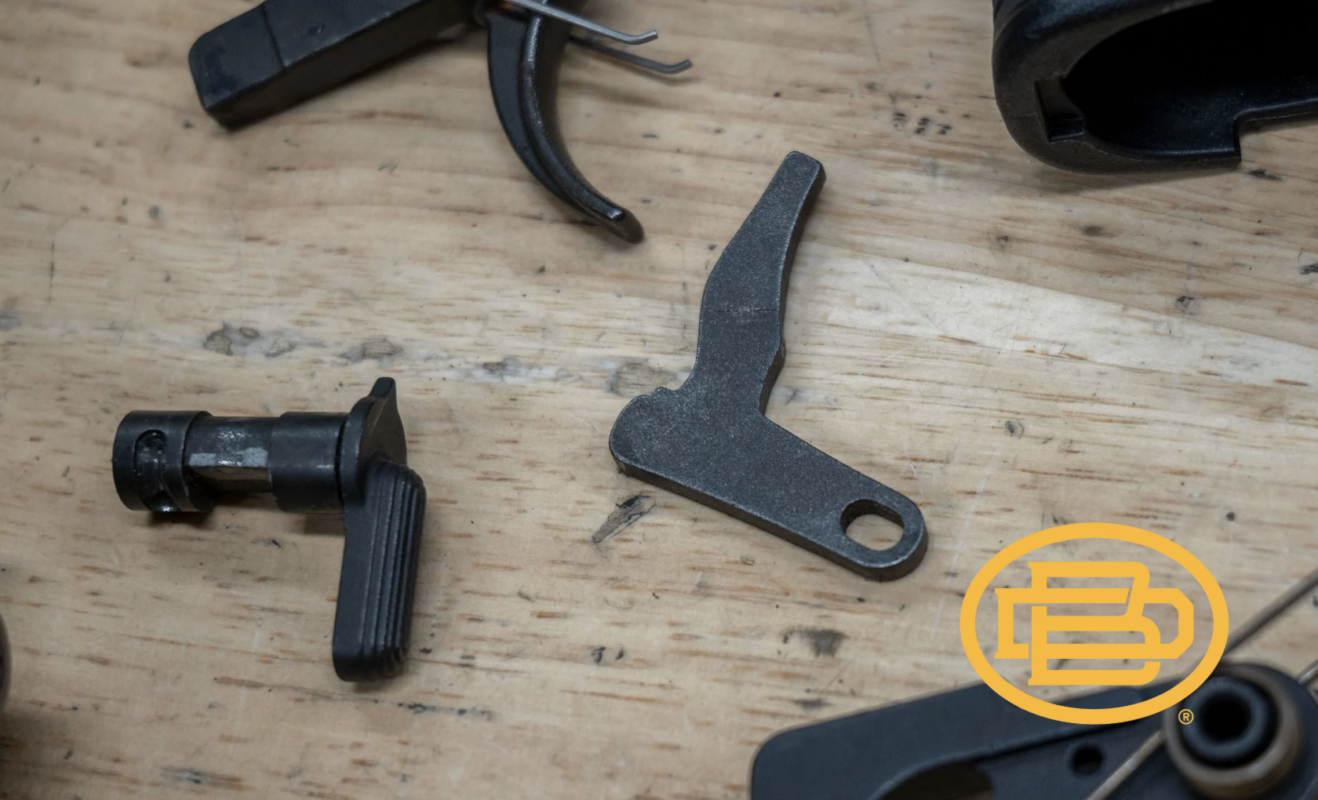
A trigger kicker, best known as the Hoffman Tactical TK-15, replaces the disconnector in a standard AR-15 fire control group and uses the rifle’s cycle to force the trigger forward into reset. It is a low-cost way into forced reset, but it comes with strict conditions.
- It keeps the factory trigger, hammer, and two-position selector, so the fire position always uses forced reset.
- The rifle needs a standard disconnector slot, a hardened 90-degree selector, a true semi-automatic hammer, and a full-profile mil-spec carrier.
- A drop-in FRT like the Partisan Disruptor costs more but adds a standard semi-automatic setting.
- California treats forced reset devices as illegal, and Dirty Bird does not ship the kicker there, to 14 other states, or to DC.
A trigger kicker is a small steel part that replaces the disconnector in a standard AR-15 fire control group and uses the rifle’s own cycle to push the trigger forward into reset. The best-known example is the Hoffman Tactical TK-15, which costs a fraction of a drop-in forced reset trigger because it works with the trigger, hammer, and selector already in the rifle. That low cost and simple swap are exactly why it gets so many questions. It also comes with a hard answer for our home state, which is that California treats forced reset devices as illegal and we do not ship this part to California.
Most of the confusion starts with the name. Shooters hear “kicker” and picture a new trigger, or they hear “forced reset” and assume it changes how the rifle fires. Neither is quite right, and the details matter for compatibility as well as the law. This post explains what the part is, how it resets the trigger, how it compares with a drop-in FRT and a binary trigger, and where it stands legally in 2026.
What Is a Trigger Kicker?
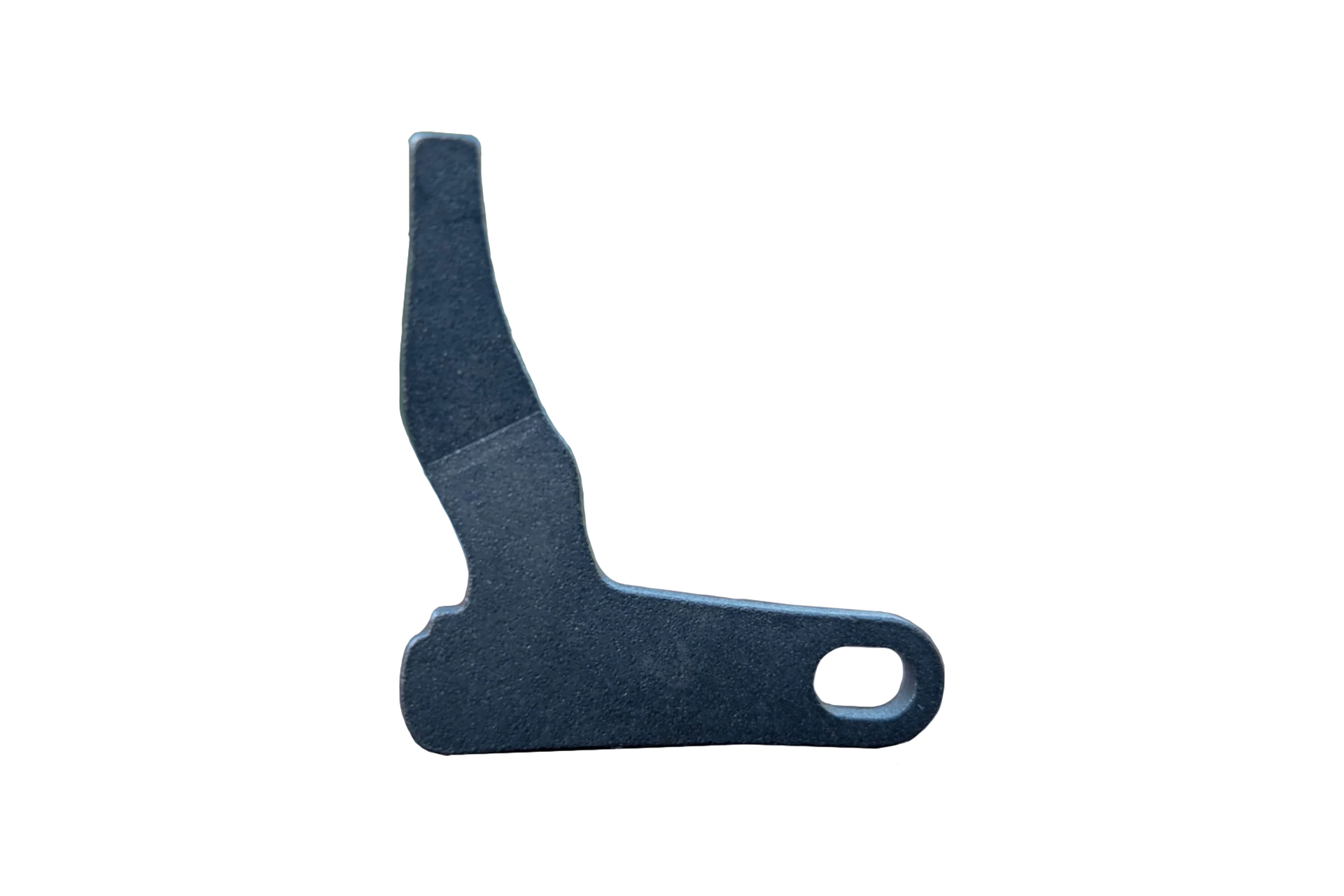
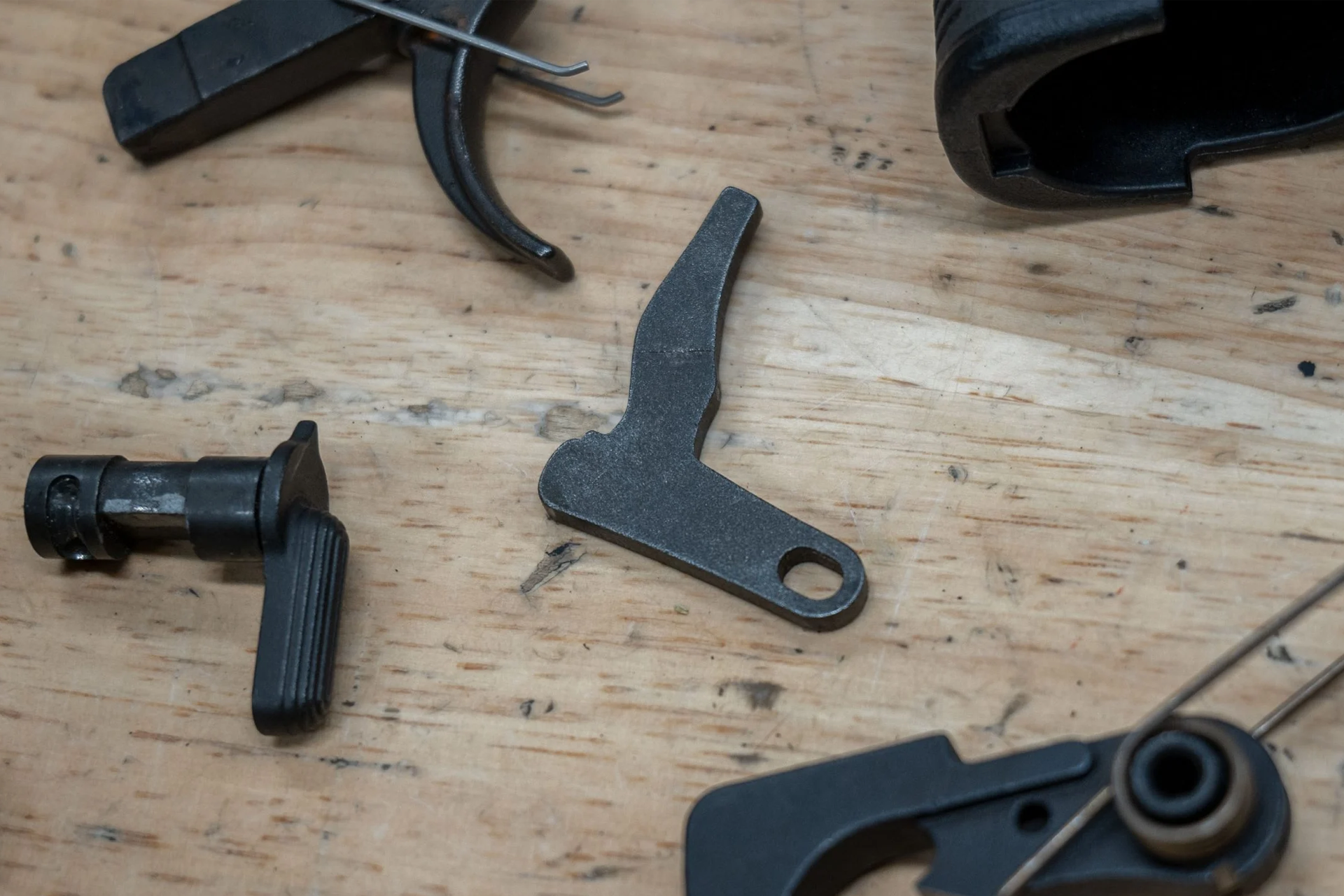
Think of the kicker as a category of part instead of a complete trigger. It adds forced reset to an existing AR-15 fire control group by replacing a single component, the disconnector, along with its spring. The original trigger, hammer, and safety selector all stay in the rifle. Most other forced reset designs ask the owner to replace something larger, either the whole trigger group or the selector.
That design choice explains why the part exists at all. Drop-in forced reset triggers can cost several hundred dollars, while a kicker sells for a small fraction of that and installs in the same space a disconnector already occupies. Hoffman Tactical makes its version from hardened 4130 alloy steel and sells it as a single part. For an owner who already has a rifle built from standard mil-spec components, it is the lowest-cost way into forced reset that we know of.
The tradeoff is that the part depends entirely on the rifle it goes into. A complete drop-in unit brings its own controlled geometry, but a kicker has to work with whatever trigger, hammer, selector, and bolt carrier the owner already has. That makes compatibility the first question to answer, ahead of price or installation time.
How a Trigger Kicker Resets the Trigger
The Standard AR-15 Reset
In a standard semi-automatic AR-15, pressing the trigger releases the hammer and fires one round. The bolt carrier travels rearward and recocks the hammer, and the disconnector holds it while the shooter keeps the trigger pressed. When the shooter lets the trigger move forward, the hammer passes from the disconnector to the trigger sear and the trigger is reset for the next press.
The Forced Reset Cycle
The Kicker changes the reset step and leaves the rest of the cycle alone. As the carrier drives the hammer back, the hammer strikes the Kicker, and that movement pushes the trigger forward into its reset position. The Kicker then slides beneath the factory selector’s drum and holds the trigger in place while the carrier is still out of battery. When the carrier returns forward, its trip surface moves the Kicker and releases the trigger, and only another press of the trigger fires the next round.
Because the part uses the factory selector, it offers two positions only. Hoffman describes them as safe and active, which means the fire position always uses forced reset. The rifle loses its ordinary spring-reset mode while the part is installed, so an owner who wants to switch between the two needs a different kind of system.
What the Rifle Needs
The host rifle has to meet four requirements, and each one is easy to overlook. The trigger needs the conventional disconnector slot, the selector needs a standard 90-degree drum made from properly hardened steel, the hammer has to be a true semi-automatic hammer instead of a demilled automatic one, and the bolt carrier has to be a full-profile mil-spec carrier with the correct trip surface. Hoffman treats non-standard platforms such as AR-9, LR-308, and bufferless designs as experimental at best. Our earlier closer look at the Hoffman Tactical TK-15 walks through each of those checks, and Hoffman’s own compatibility guide shows photos of compatible and incompatible parts.
Trigger Kicker vs FRT
The core difference is what gets replaced. A drop-in forced reset trigger is a complete cassette that takes the place of the trigger, hammer, and disconnector as one assembly. A kicker swaps only the disconnector and relies on the parts already installed. That is why a drop-in unit costs far more, and it is also why a drop-in unit tends to be more predictable across different rifles, since its internal geometry is controlled at the factory.
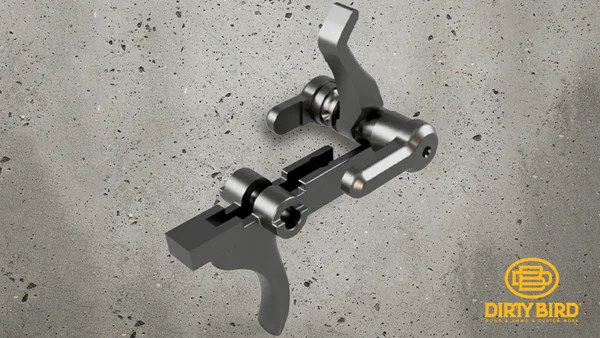
Selector layout is the other big difference. The Partisan Triggers Disruptor, which we carry, is a drop-in cassette with a three-position selector for safe, standard semi-automatic, and forced reset modes. The kicker keeps the factory two-position selector, so it gives up that standard semi-automatic setting. Some owners do not mind, while others want the option of a normal trigger at the range or for training.
Neither approach removes the need for a rifle that cycles well. Gas pressure, ammunition, buffer weight, and spring strength all affect how the carrier moves, and a rifle that short-strokes can fail to reset with either design. Our post on forced reset triggers in 2026 covers the wider category for readers comparing every option.

Kicker vs Binary Trigger
A binary trigger works on a different principle altogether. It fires one round when the trigger is pressed and a second round when the trigger is released, usually with a selector position that turns the release shot on or off. A forced reset device fires only on the press, and the shooter has to press the trigger again for each additional round.
That difference shapes how each one feels and how it is treated in some places, which is why the two should never be lumped together. A binary is a complete trigger group with its own design and its own set of state restrictions. A kicker is a small replacement part that changes how a standard trigger resets. Buyers comparing the two should read the manufacturer’s material and their state’s law for each device separately.
Federal Status in 2026
Federal law defines a machine gun in 26 U.S.C. 5845(b) as a weapon that shoots more than one round automatically by a single function of the trigger. Forced reset devices are built around that definition, since the shooter must press the trigger for every shot. Federal treatment of forced reset designs has shifted several times through court cases and agency positions since 2021, including a July 2024 federal court decision in Texas that the forced reset triggers in that case were not machine guns. Federal status can also turn on the specific product, so a ruling about one design does not settle every device that resets a trigger.
Federal law is also only one layer. State and local laws apply on top of it, and several states restrict forced reset devices regardless of how federal agencies treat them. Anyone considering one should confirm current federal and state law before buying, because both have moved more than once in the past few years.
Is a Trigger Kicker Legal in California?
In California, the answer is no. Penal Code section 16930 defines a “multiburst trigger activator” to include a device used with a semi-automatic firearm that increases its rate of fire, and Penal Code section 32900 makes it a crime to manufacture, import, keep for sale, offer for sale, give, lend, or possess one in the state. A violation can be charged as a misdemeanor or a felony. In a June 2, 2025 law enforcement bulletin and an April 23, 2026 statement, the California Attorney General’s office said that forced reset triggers are and will remain illegal under California law.
California’s statements name forced reset triggers as a category and do not single out the Hoffman part by name. Because the Kicker works by forcing the trigger to reset through the firing cycle, the same way the state describes forced reset triggers, California owners should treat it as covered. That is also why we do not ship it to California.
California shooters still have good options for a better trigger. Our single stage vs two stage trigger guide covers trigger upgrades that keep a rifle legal in the state, and our California compliant guns collection is the place to start for a new rifle or handgun. Both are good starting points for a California build.
States We Do Not Ship It To
Our product listing for the TK-15 states that we do not ship it to California, Colorado, Connecticut, Delaware, Florida, Hawaii, Illinois, Maryland, Massachusetts, Minnesota, Nevada, New Jersey, New York, Oregon, Rhode Island, or the District of Columbia. That list is our shipping policy for the product, and it is not a complete statement of every state, county, or city law. Restrictions can exist in places that are not on the list, and the list itself can change. Buyers outside those states still need to confirm their own state and local rules before ordering.
Kicker or Drop-In FRT?
For an owner with a rifle built from standard mil-spec parts, the Kicker makes the most sense when budget matters and the owner wants to keep a trigger that already feels right. It is a small purchase, it occupies the disconnector’s space, and it can come back out if the owner changes course. The catch is that the rifle has to meet every compatibility requirement, and the owner has to accept a fire position that always uses forced reset.
A drop-in FRT like the Partisan Disruptor is the better fit for an owner who wants a controlled, matched assembly and a standard semi-automatic setting alongside forced reset. A selector-based option such as the Atrius Super Selector, which Atrius describes as a semi-automatic trigger that fires one round per single function of the trigger, works through a replacement selector instead and has its own compatibility list and manufacturer disclaimer. All three are available in our forced reset triggers and devices collection for buyers in states where we ship them.
Whichever design an owner picks, it belongs on a range rifle. A defensive rifle should run a trigger with a conventional reset that the owner has trained on, and forced reset devices also burn through ammunition and heat a barrel quickly. Many ranges limit fast strings of fire as well, so it is worth checking the house rules before the first session.

Trigger Kicker FAQ
What is a trigger kicker?
It is a replacement for the disconnector in a standard AR-15 fire control group that uses the rifle’s firing cycle to push the trigger forward into reset. The Hoffman Tactical TK-15 is the best-known version. It keeps the owner’s existing trigger, hammer, and selector in place.
Is a trigger kicker the same as an FRT?
It uses the same forced reset principle, but it is a different type of part. A drop-in FRT replaces the whole trigger group, while the Kicker replaces only the disconnector. That makes the Kicker cheaper and more dependent on the rifle’s existing parts.
Does it make an AR-15 fully automatic?
Hoffman Tactical describes the part as semi-automatic, and the shooter must press the trigger again for every round. It speeds up the reset without changing that requirement. Federal and state treatment of forced reset devices is a separate question covered above, and it should be checked before buying.
Is the Hoffman TK-15 legal?
It depends on where the owner lives. Federal treatment of forced reset devices has changed several times, and many states restrict them under their own laws. We do not ship it to the states listed in our product listing, and buyers elsewhere should confirm their own state and local law first.
Are trigger kickers legal in California?
No. California Penal Code sections 16930 and 32900 prohibit multiburst trigger activators, and the California Attorney General’s office has said forced reset triggers remain illegal in the state. We do not ship the part to California.
Will it work in any AR-15?
No. It needs a trigger with a standard disconnector slot, a hardened 90-degree selector, a true semi-automatic hammer, and a full-profile mil-spec bolt carrier, plus a rifle that cycles reliably. Our earlier post and Hoffman’s guide cover how to check each part.
Trigger kicker vs binary trigger: what is the difference?
A binary trigger fires once on the press and once on the release. A forced reset device fires only on the press and pushes the trigger forward so the shooter can press it again. The two are different designs and can be treated differently under state law.
Can I own one in California if I bought it in another state?
No. Penal Code section 32900 makes possessing a multiburst trigger activator in California a crime, along with bringing one into the state. Anyone with questions about a specific situation should speak with a qualified California firearms attorney.
A Small Part With Big Conditions
The Hoffman part shows how much a single small component can change about a rifle. It is inexpensive, it keeps the owner’s trigger, and it fits in the space of a part most shooters never think about. It also depends on every surrounding component and on where the owner lives, and in California it is off the table entirely. A good rule of thumb is to check the parts, then the law, then the price, in that order. For owners in states where we ship it, the Kicker and the rest of our forced reset lineup are ready when the rifle and the rules line up.
This article is for general information and is not legal advice. Firearm laws change and vary by state, county, and city, so confirm current law where you live, or talk with a qualified firearms attorney, before buying, owning, or installing any forced reset device. Dirty Bird does not ship forced reset triggers or the TK-15 to California or the other restricted states listed on each product page.