

 Dirty Bird Bakersfield
AR Parts and Accesories, AR-15 Triggers, Rifle
Hoffman Tactical Trigger Kicker: A Closer Look at This Active Reset System
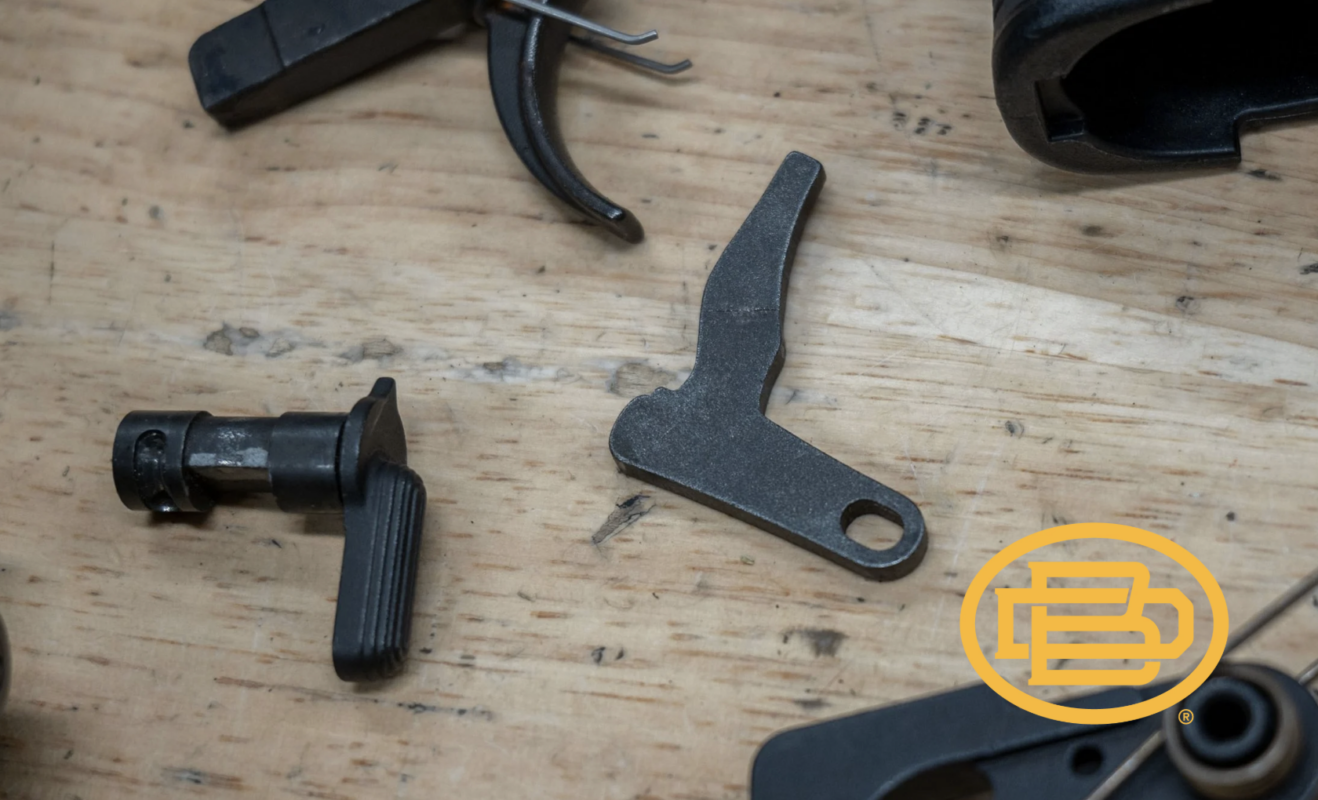
Aug
Table of Contents
Active reset systems have become increasingly popular among AR-15 owners who want faster follow-up shots without replacing the rifle with a different operating platform. These systems use movement from the rifle’s firing cycle to push the trigger forward into reset. The shooter must then move the trigger rearward again to fire the next round.
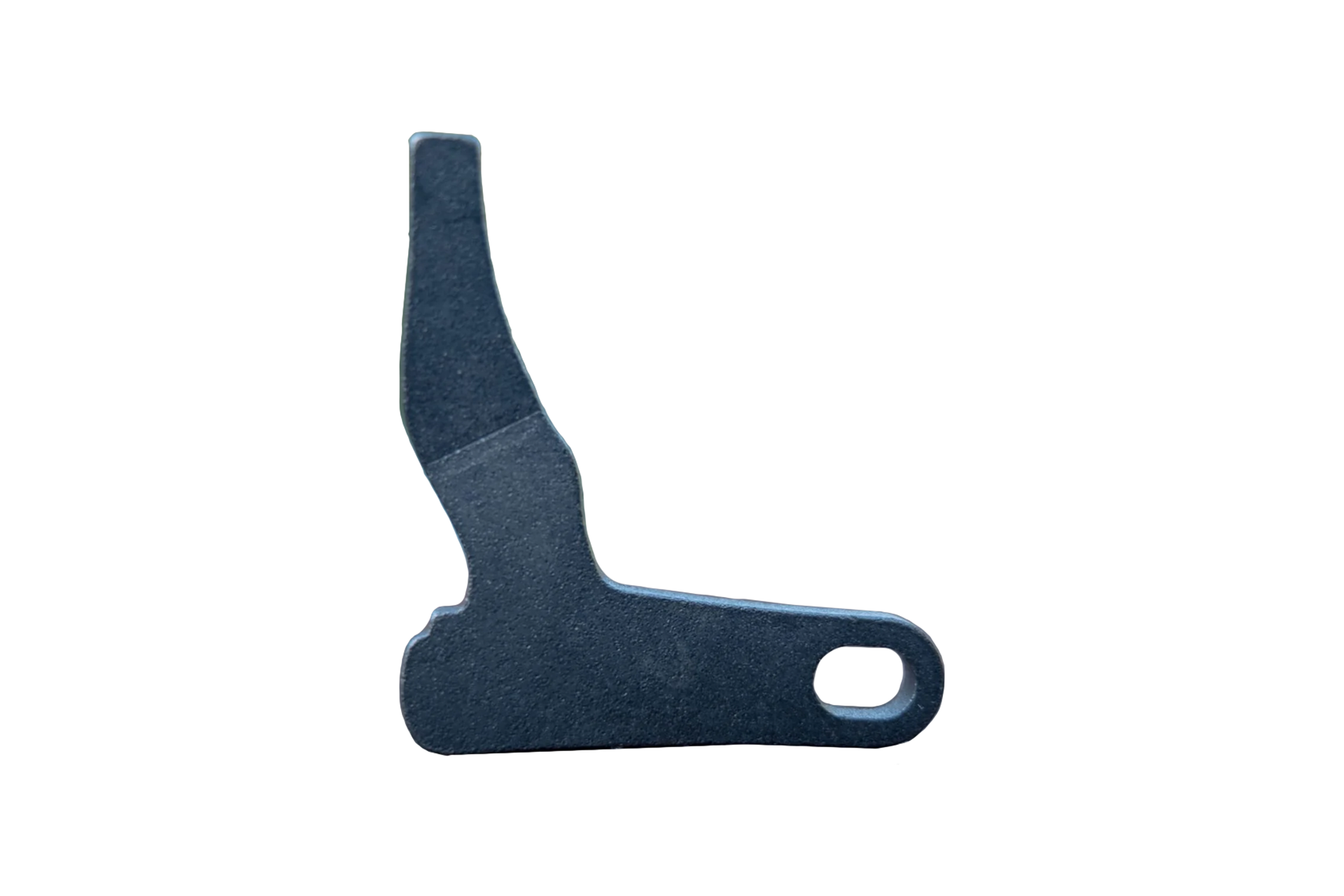
The Hoffman Tactical Trigger Kicker is a particularly compact approach to active reset. Rather than replacing the complete trigger assembly or using a specialized three-position selector, it takes the place of the disconnector in a standard AR-15 fire control group.
The small size and limited parts swap make the Trigger Kicker appear simple, but compatibility is critical. The system depends on the rifle’s existing trigger, hammer, safety selector, and bolt carrier. If any of those components have the wrong dimensions or profile, the Kicker may not operate correctly.
For buyers in eligible jurisdictions, the Hoffman Tactical Trigger Kicker is available from Dirty Bird Guns & Ammo under manufacturer part number TK-15.
Understanding Active Trigger Reset
In a conventional semiautomatic AR-15, pulling the trigger releases the hammer to fire one round. The bolt carrier then moves rearward and recocks the hammer.
When the shooter continues holding the trigger to the rear, the disconnector captures the hammer. Allowing the trigger to move forward transfers the hammer from the disconnector to the trigger sear. The trigger is then reset and ready for another press.
The Trigger Kicker changes that reset process by using movement from the hammer and bolt carrier to push the trigger forward. This active movement allows the trigger to reach its reset position more quickly than it would through the standard spring-assisted process alone.
What Happens During the Trigger Kicker Cycle?
The Trigger Kicker replaces both the original disconnector and its spring. As the rifle cycles, the hammer contacts the Kicker and drives the trigger into reset.
The Kicker then moves underneath the drum of the standard safety selector. In this position, it mechanically blocks the trigger while the bolt carrier is traveling. When the carrier returns to battery, it moves the Kicker forward and releases the trigger.
The shooter can then press the trigger again to fire the next round. The system is designed so that the trigger remains locked while the carrier is out of battery.
Hoffman Tactical describes the current Trigger Kicker as a two-position mechanism. It retains the original safe and fire positions, but the fire position always uses active reset. There is no separate setting for conventional spring-reset semiautomatic operation.
The part is manufactured from hardened 4130 alloy steel. The product contains the Trigger Kicker itself and does not include replacement fire control components for rifles with incompatible parts.
Trigger Kicker Versus Selector-Based Systems
Not every forced reset product works the same way. Some replace the complete fire control group with a cassette-style assembly. Other systems perform the reset through a replacement safety selector.
The Atrius Development 3-Position Super Selector Safety is one example of the selector-based approach. It replaces the factory safety and gives the shooter safe, conventional semiautomatic, and active-reset settings.
The Trigger Kicker leaves the standard safety selector in the rifle and works from the disconnector position. It provides only safe and active-reset settings.
That distinction matters for buyers who want to retain a traditional semiautomatic mode. The current Kicker does not offer that option. It is also not a complete replacement trigger with controlled internal geometry. Its performance depends on the shape and condition of the parts already installed in the rifle.
Which AR-15 Triggers Are Compatible?
Hoffman Tactical developed the Trigger Kicker around a standard semiautomatic AR-15 fire control group. The trigger must have the common disconnector slot used with a conventional mil-spec disconnector.
Some aftermarket triggers use different slot dimensions, rear profiles, or disconnector arrangements. The fact that an aftermarket trigger fits an AR-15 lower does not mean it will accept or function with the Kicker.
The trigger should be visually compared with the examples in the official Hoffman Tactical Trigger Kicker Guide. If the trigger does not match the compatible example, it should not be used without confirmation from the manufacturer.
Checking the Safety Selector
The Trigger Kicker works with a standard safety selector featuring a common central drum and 90-degree throw.
The selector must also be made from properly hardened material because the Kicker moves underneath it to lock the trigger during the operating cycle. Hoffman Tactical warns that some inexpensive or imported selectors may be too soft to handle these locking forces over time.
The manufacturer says this type of wear is uncommon with selectors from reputable manufacturers. Even so, the selector should be inspected periodically for deformation or unusual wear.
Specialty, short-throw, and other nonstandard selectors should not be assumed compatible unless their internal geometry matches the manufacturer’s requirements.
Why the Hammer Profile Matters
The hammer is one of the most important components to inspect before installing the Trigger Kicker. Hoffman Tactical specifies a true semiautomatic hammer rather than a demilled automatic hammer.
A demilled hammer has had its automatic sear surface ground away. The resulting rear surface is generally smoother and lower than the corresponding surface on an as-cast semiautomatic hammer. That difference can prevent the hammer from contacting the Kicker correctly.
A compatible semiautomatic hammer also has a full radius near its tip. A demilled hammer typically has part of that radius removed.
These differences can be difficult to identify without a direct comparison. Hoffman Tactical’s guide includes photographs showing the compatible and incompatible hammer profiles. Buyers who remain uncertain should replace the hammer with a known compatible model instead of attempting to modify the existing part.
Bolt Carrier Requirements
The Trigger Kicker requires a mil-spec, full-profile bolt carrier. The trip surface on the underside of the carrier operates the Kicker as the carrier returns forward.
Hoffman Tactical instructs users to compare the location of that lower trip surface with the opening on top of the carrier. Those features should align on a compatible carrier. If the lower trip surface has been cut farther toward the rear, the carrier will not operate the Kicker correctly.
Lightweight, cut-back, and demilled carriers may lack the required profile. Changing the trigger, hammer, or buffer cannot replace a missing carrier trip surface. An incompatible carrier must be replaced with one that has the proper geometry.
Not Every AR-Based Firearm Is Compatible
The use of AR-15 fire control parts does not automatically make another firearm compatible with the Trigger Kicker. The design was developed specifically for the standard AR-15 operating system.
Hoffman Tactical states that AR-9, LR-308, KF-5, and bufferless systems are not immediately compatible. The manufacturer says that some AR-9 configurations and other platforms may work, but considers those applications experimental.
Bolt shape, carrier travel, receiver dimensions, and fire control geometry can differ substantially between these platforms. A report that the Kicker worked in one nonstandard firearm does not establish that it will work in another example of the same general type.
Installation and Initial Inspection
Installing the Trigger Kicker involves removing the standard disconnector and disconnector spring and replacing them with the Kicker. The rifle’s existing safety selector remains in place.
Before beginning, the rifle must be completely unloaded and ammunition should be removed from the work area. The trigger, hammer, selector, and bolt carrier should be inspected against the official compatibility guide before the Kicker is installed.
Once installation is complete, the unloaded rifle needs a thorough function check. The safety must prevent the hammer from falling, and the Kicker should move through its reset and locking cycle without binding or creating unusual resistance.
A failed function check, dead trigger, carrier interference, or abnormal wear is a reason to stop. The rifle should not be live fired until the cause has been identified and corrected. When there is any uncertainty, the installation should be inspected by a qualified gunsmith.
Compatibility Does Not Eliminate Tuning
Correctly shaped fire control parts and a compatible carrier are essential, but the host rifle still needs to cycle reliably.
Forced reset systems should not be viewed as universal upgrades for every AR-15. Gas pressure, ammunition, buffer weight, action spring strength, and individual component tolerances can affect carrier movement and reset timing.
A rifle that short-strokes or cycles inconsistently may fail to reset even when the Kicker itself is installed correctly. Buyers should follow current manufacturer and retailer recommendations for their specific rifle rather than copying a buffer or spring combination from an unrelated build.
Repeated malfunctions should not be treated as part of a normal break-in period. The rifle should be unloaded and inspected before additional firing.
Preparing to Use the Trigger Kicker Safely
An active reset system can make it possible to fire follow-up shots much faster than with a conventional trigger. Shooters must be prepared to control the rifle throughout the entire string.
Initial testing should begin with a secure stance, firm grip, and safe backstop. The shooter should start slowly and confirm that the rifle cycles, locks, and resets properly before increasing the firing pace.
Faster shooting also consumes ammunition quickly and creates heat more rapidly. Shooters need to remain aware of the rifle’s temperature, muzzle direction, target, and surroundings.
It is also important to confirm the rules at the shooting facility. Many ranges limit or prohibit rapid fire even when the firearm and installed components are otherwise lawful.
Current Shipping and Legal Considerations
At the time of publication, the Trigger Kicker cannot be shipped to California, Colorado, Connecticut, Delaware, Hawaii, Illinois, Maryland, Massachusetts, Minnesota, Nevada, New Jersey, New York, Oregon, Rhode Island, or the District of Columbia.
That list reflects the current shipping restrictions provided for the product. It is not a complete legal analysis for every state, county, or municipality. Laws and seller policies can change, and restrictions may exist in locations not included on the list.
The federal treatment of forced reset triggers has also changed through litigation. According to the U.S. Department of Justice, a federal district court concluded in July 2024 that the forced reset triggers involved in that case could not be classified as machine guns under the federal statute. The Department of Justice announced a settlement with Rare Breed Triggers in May 2025 that resolved several related cases.
The DOJ announcement concerned Rare Breed and the litigation identified in the settlement. It did not specifically address the Hoffman Tactical Trigger Kicker or eliminate separate state and local restrictions.
Prospective buyers should verify the current laws where they live. Anyone with questions about the legality of purchasing, possessing, or installing the Trigger Kicker should consult a qualified firearms attorney.
Final Thoughts on the Hoffman Tactical Trigger Kicker
The Hoffman Tactical Trigger Kicker is a minimalist active reset system that replaces the AR-15 disconnector instead of the complete fire control group or safety selector.
That simplicity can make the Kicker appealing to owners of rifles with compatible mil-spec components. It also places greater importance on the host rifle. The trigger slot, hammer profile, safety drum, and bolt carrier trip surface all have to match the manufacturer’s requirements.
The current Kicker provides active reset whenever the selector is placed in the fire position. Shooters who want the ability to switch between conventional semiautomatic and active-reset modes will need a different type of system.
Before purchasing, compare the rifle’s components with Hoffman Tactical’s official guide and confirm that the Trigger Kicker can be legally owned where the rifle will be used. A small part can make a significant change to how the trigger operates, but only when the rifle is properly configured for it.