

 Dirty Bird Bakersfield
AR Parts and Accesories, AR-15, Firearm, Pistols, Rifle
Best Calibers for an AR Pistol (5.56 vs .300 Blackout vs 9mm)
Aug
Table of Contents
Picking the right cartridge for an AR pistol is one of those decisions that shapes the entire build. Barrel length, gas system, magazine choice, felt recoil, muzzle blast, and even how the gun performs in a hallway or at the range all hang on this single choice. Short ARs in a handful of chamberings keep coming up for pistol-length setups, and the three that stand out most often are 5.56 NATO, .300 Blackout, and 9mm. Each brings real strengths and clear trade-offs. What follows is a practical look at how these options sort out, especially when the goal is a compact home-defense gun intended for suppressed use that stays maneuverable without a full-length stock.
Best Calibers: How 5.56 Performs in Pistol Length
The 5.56 has earned its place as the default AR cartridge for good reason. It is one of the best calibers around as ammo is everywhere, prices stay lower than almost anything else in the rifle category, and the entire ecosystem of magazines, optics, and parts is built around it. When the barrel stretches past 10.5 inches, 5.56 becomes the clear choice without hesitation. At those lengths the powder has enough time to burn, velocity holds up, and the round still delivers the flat trajectory and terminal performance people expect from it.

Round selection makes a real difference with both 5.56 and .223. There is no need to stay limited to the familiar 55-grain or 62-grain green tip loads. Options like IMI Razorcore 5.56 and the 75-grain Speer Gold Dot .223 stand out because they handle different tasks effectively. The Razorcore delivers consistent expansion and reliable feeding across a range of conditions, while the heavier Gold Dot brings deeper penetration and controlled performance that works well for defensive use. These kinds of loads show how modern 5.56 and .223 ammunition can be tailored to specific needs rather than treating every box of ammo as interchangeable. Anyone considering 5.56 for home defense should research potential overpenetration if that is a concern in their specific situation, as different loads and barrier types can produce varying results.
Cut the barrel down into true pistol territory and the story changes. Unburnt powder produces more flash and sharper blast. Velocity drops enough that even quality expanding loads lose some of their edge. A short 5.56 still works for close-range work and range time, yet it never feels like the cartridge is operating in its happy place, even with a suppressor attached. That is why any AR pistol with a barrel shorter than about 10.5 inches and intended for suppressed home defense tends to move away from 5.56 and toward the other two options.
Best Calibers: Why .300 Blackout Fits Short Barrels So Well
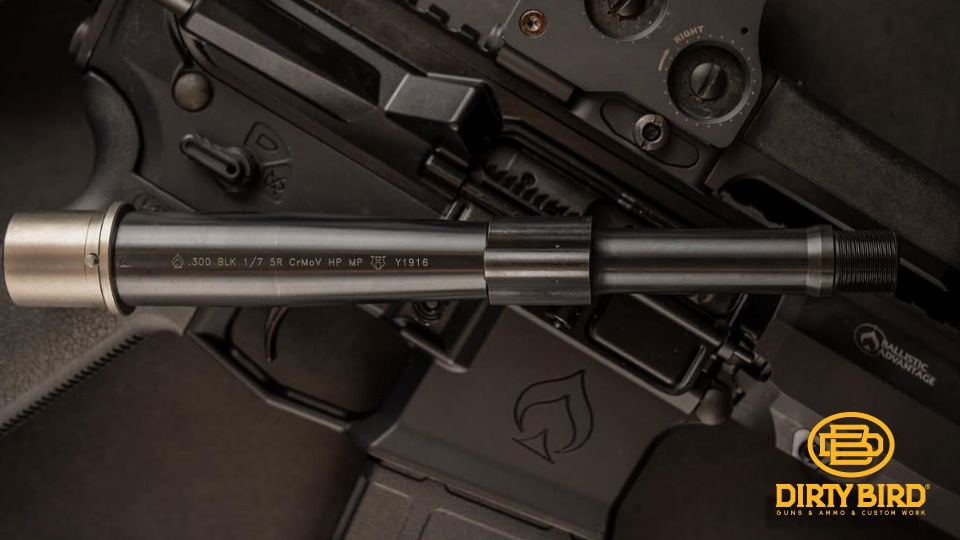
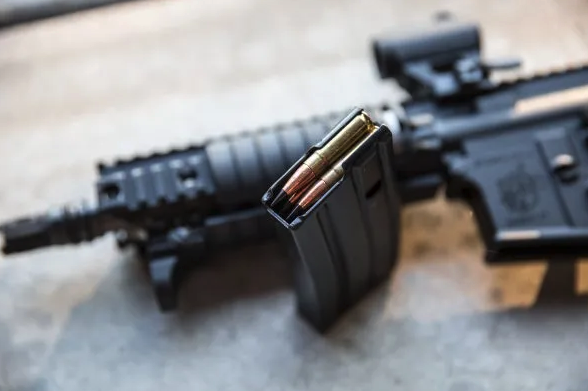
.300 Blackout was designed from the start to solve the exact problem 5.56 creates in short tubes. The case holds enough powder to do its work in seven to ten inches, so more velocity is retained and less excess blast is generated than a comparable 5.56. The cartridge uses the same bolt face and standard AR magazines as 5.56, which means an upper swap is all it takes to convert an existing lower. That modularity is a big reason so many end up with at least one .300 Blackout upper sitting on the shelf. For us, it is one of the best calibers available today.
For a compact home-defense rifle under a suppressor the edge goes to .300 Blackout over 9mm. Many shooters lean hard into subsonic loads in this exact setup because the combination of a short barrel, a quality can, and heavy 200-plus grain bullets produces one of the quietest centerfire packages available. The reduced report is appealing indoors, and the round still carries more mass than most handgun cartridges. Yet the effects of supersonic loads, typically in the 110-grain range, often prove more appealing for us.
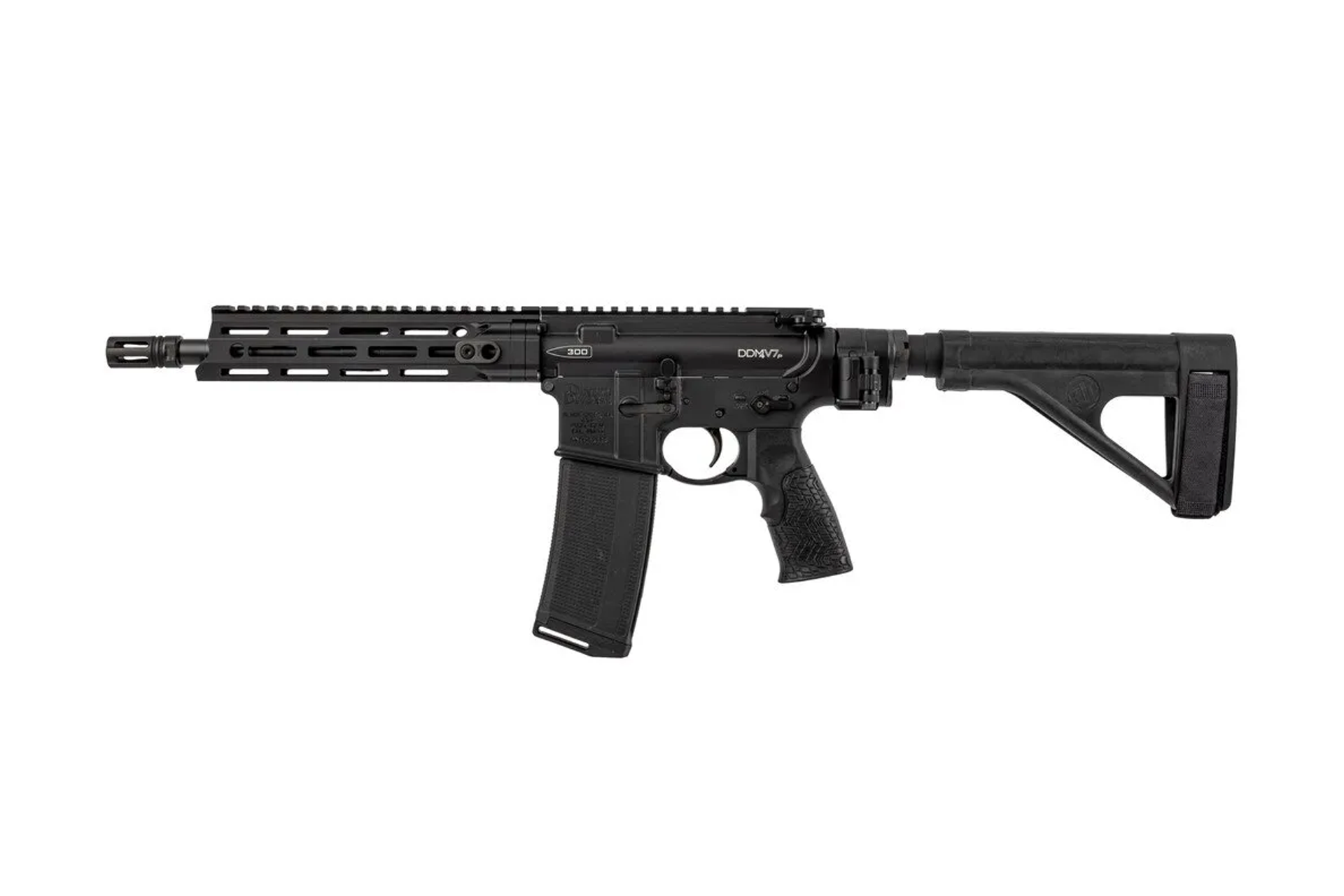
If a real threat appears, in our situation, our goal is to hit them with something harder than a glorified 45 ACP round. The supers deliver higher velocity, stronger expansion, and more decisive energy transfer at the distances that matter inside a house or around a vehicle, while still remaining manageable under a suppressor. The sound signature is louder than pure subs, but the terminal difference is worth it for many. Every shooter has to evaluate that trade-off for themselves. If absolute quiet is the top priority, the subsonic side of .300 Blackout remains a proven path. If more decisive terminal effects take priority, the lighter supers still outperform both short-barreled 5.56 and most 9mm loads in the same suppressed package. As with 5.56, research into potential overpenetration is wise if that factor matters in a specific home layout or neighborhood.
Ammo costs more than 5.56 and sometimes more than 9mm, and availability can tighten up during busy periods. Those are real considerations regarding best calibers. For the roles a short suppressed AR is asked to fill, the performance gains usually outweigh the price difference.
Best Calibers: The Appeal and Limitations of 9mm AR Pistols
9mm AR pistols and carbines have a strong following, and it is easy to understand why. The ammo is clearly one of the best calibers in the world due to the fact that it is inexpensive, recoil is soft, and the platform is easy to shoot quickly. Many builds accept Glock-pattern magazines, so if a 9mm handgun is already in the safe the magazine commonality is convenient. For pure range fun or a low-cost training gun the 9mm AR is hard to beat. It is simply fun and cheaper to shoot at the range, which encourages more practice and builds confidence over time. Under a suppressor the reduced report and minimal blast make extended sessions even more enjoyable.
Some people love a 9mm carbine for home defense and see it as the ideal option for good reasons. The soft recoil allows faster follow-up shots and better control under stress, especially for shooters who are smaller framed or less experienced with rifle cartridges. Over-penetration concerns are often lower with quality defensive hollow points compared to many rifle rounds, which can matter in apartments or homes with close neighbors. The lighter overall package is easier to maneuver in tight spaces, and the shared magazines with a common handgun simplify logistics. When the defensive loads have been thoroughly tested and proven reliable in that specific carbine, a 9mm AR can become a highly practical and confidence-inspiring choice for close-quarters protection.
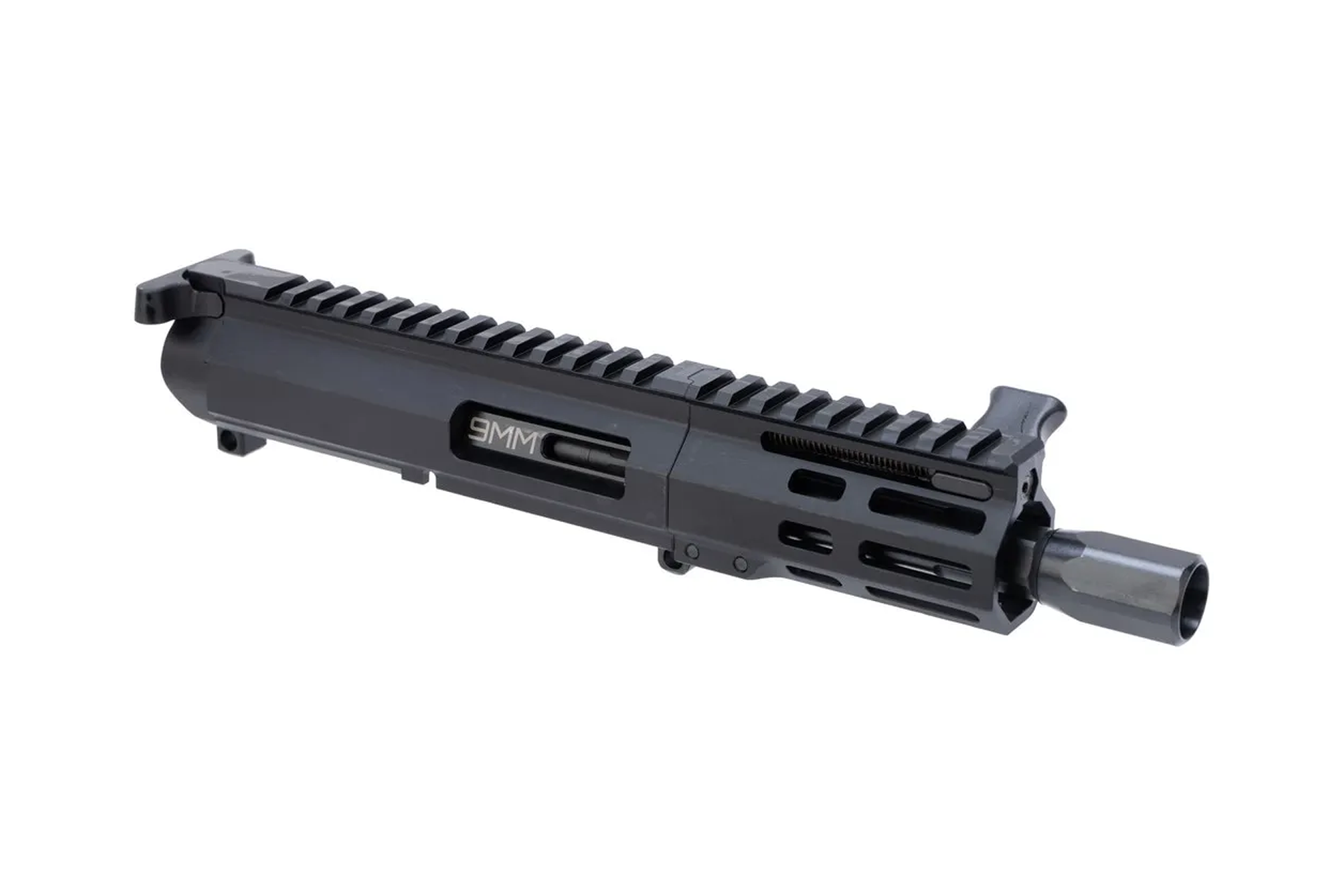
When the mission turns to home defense caution still becomes more common for others. Hollow-point defensive loads that run flawlessly in a handgun sometimes fail to feed or cycle reliably in a carbine-length blowback system. Some 9mm ARs love ball ammunition and choke on the defensive stuff. Before trusting any 9mm carbine as a primary defensive tool, extensive testing with the exact hollow-point load planned for use is essential. That extra verification step is a real cost in time and ammo. For that reason 9mm ARs often stay in the “nice to have” category rather than the “first choice for the nightstand” category for many, even when suppression is part of the plan. Yet for those who put in the work to confirm reliability, it remains a solid and sometimes ideal path.
Best Calibers: Putting the Choices Together for a Compact Build
When selecting a compact home-defense AR intended for suppressed use, the decision usually narrows to .300 Blackout versus 9mm, and .300 Blackout takes the nod. The combination of short-barrel efficiency, greater energy on target, and the ability to stay with standard AR parts makes it the more capable option for the distances and scenarios that matter most. 110-grain supers tend to be the preferred route because that is what works best in many practical setups. Plenty of others prefer the near-silent performance of heavy subsonics in the same suppressed configuration, and that choice makes sense if noise reduction is the absolute priority. The harder-hitting supers simply deliver more decisive terminal effects if a threat appears, so those loads often stay in the magazines. Individual situations may call for different bullet weights or a stronger focus on quiet operation. The important part is matching the load to the barrel, the suppressor, and the intended use rather than assuming one factory load will cover every need.
If the barrel grows past 10.5 inches, 5.56 comes back into the conversation and usually wins on cost and availability. Round selection still matters here. Quality loads such as IMI Razorcore 5.56 and 75-grain Speer Gold Dot .223 give the platform flexibility that basic 55-grain or 62-grain green tip ammo cannot match. That simple length threshold has served well across multiple builds. It keeps the short guns in the calibers that were designed for them and lets the longer guns take advantage of the inexpensive, widely available 5.56 ecosystem with better ammunition choices. In both 5.56 and .300 Blackout setups, taking time to research potential overpenetration remains a smart step whenever that issue is a concern in a particular living situation.
Building around these preferences also means paying attention to the supporting parts. A quality barrel with the right twist rate, a properly tuned gas system that handles the extra back pressure of a suppressor, and magazines that feed the chosen loads reliably all matter more once the standard 5.56 comfort zone is left behind. Complete uppers and matched components from trusted sources help ensure the finished gun runs the first time it hits the range.
Final Thoughts on Finding Your Best Caliber
There is no universal winner among 5.56, .300 Blackout, and 9mm for every AR pistol. The best caliber is the one that matches the barrel length, the intended role, the suppressor planned for use, and the amount of testing willing to be put in. For short, maneuverable home-defense guns under a can, .300 Blackout with 110-grain supers has proven itself the most practical choice. Many shooters will stay with subsonics for the quietest possible signature, and that path is valid. The harder-hitting supers simply align better when the stakes are high. 9mm stays in the rotation for inexpensive practice and can become the ideal home-defense option for those who value soft recoil, shared magazines, and lower over-penetration risk once defensive loads have been verified to run cleanly. Anything with a barrel longer than 10.5 inches stays in 5.56 so training can continue without watching the ammo budget as closely, especially when better loads like IMI Razorcore or Speer Gold Dot are chosen over basic 55-grain or 62-grain green tip.
Whatever direction is taken, time on the range with the exact configuration planned for use, suppressor included, remains essential. Reliability with the chosen defensive ammunition is the one factor that cannot be compromised. Once that box is checked, the rest of the build falls into place more easily. The modularity of the AR platform gives the freedom to experiment and refine. Used wisely, that freedom produces a pistol in the best caliber for you that feels purpose-built rather than compromised.