

 Dirty Bird Bakersfield
AR Parts and Accesories, AR-15, AR-15 Barrels
Why the 12.5-Inch AR-15 Barrel Deserves More Attention
Sep
Table of Contents
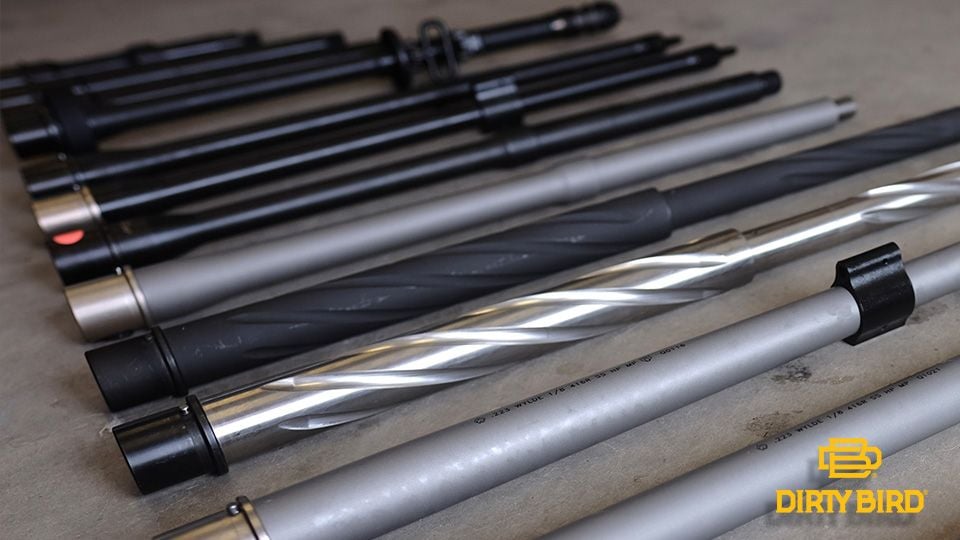
Most AR-15 barrel conversations end up in familiar territory. The 10.3-inch barrel has history behind it, the 11.5 has become a favorite for compact builds, the 14.5 remains closely tied to the M4, and the 16-inch barrel is still the default choice for shooters who want a straightforward rifle without stepping into short-barreled rifle territory. The 12.5-inch AR-15 barrel sits between all of them, and that middle ground is exactly why it deserves more attention.
It is not dramatically longer than an 11.5, but it gives the cartridge a little more barrel to work with. It is still noticeably shorter than a 14.5 or 16, which becomes even more important once a suppressor is mounted. It can also change the way the rifle balances, especially on setups carrying a light, laser, suppressor, or other equipment toward the muzzle. There is no single perfect AR-15 barrel length, and 12.5 inches should not be treated like one, but it offers a useful combination of compactness, velocity, balance, and manageable overall length that makes a lot of sense for modern suppressed rifles.
Why This AR-15 Barrel Length Stands Out
The difference between an 11.5-inch and a 12.5-inch AR-15 barrel sounds almost meaningless on paper, but once the entire rifle is assembled, small changes begin to add up. That extra inch affects barrel length, handguard options, gas-system setup, muzzle placement, and overall balance. At the same time, 12.5 inches is still short enough that the rifle retains the compact feel people are usually looking for when they move below traditional carbine lengths.
This is one reason the 12.5-inch AR-15 barrel has become more appealing as short rifles have matured. The goal is no longer simply to make an AR as short as possible. Shooters are paying more attention to how the complete rifle behaves once all of the accessories are installed, and that changes the way barrel length should be evaluated. A rifle that is technically shorter but badly balanced can feel worse in the hands than one that is an inch longer and carries its weight in a better place.
Overall Rifle Length Matters More Once a Suppressor Is Added
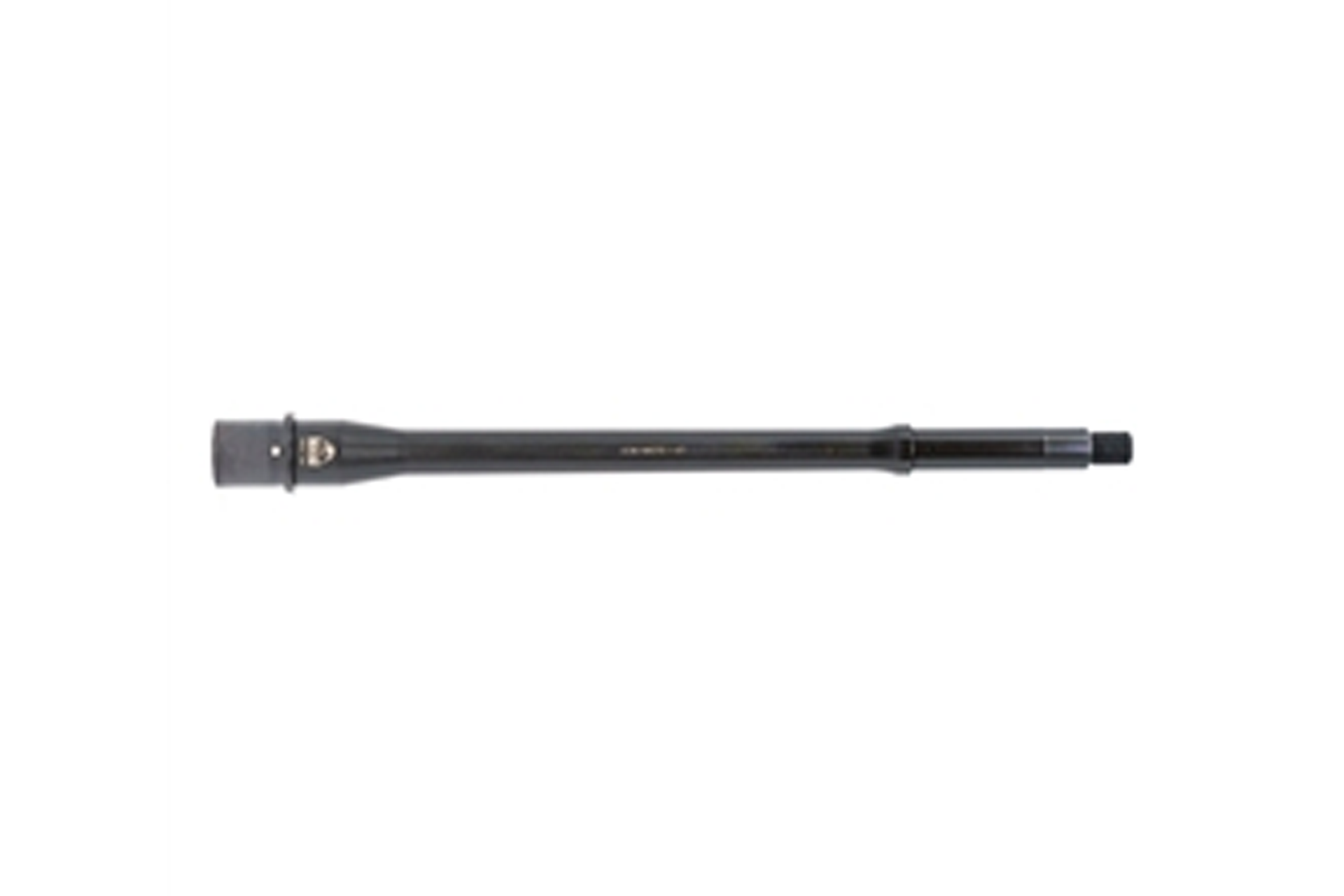
A 16-inch AR can feel compact when it is bare, but once a muzzle device and suppressor are added, the rifle can become much longer than expected. The same thing happens with a 14.5-inch setup, although the shorter starting point helps. A 12.5-inch AR-15 barrel begins with several inches already removed from the front of the gun, and that difference becomes much more noticeable when a suppressor stays mounted most of the time.
This is where AR-15 barrel selection has changed for a lot of shooters. It used to be common to choose the barrel first, finish the rifle, and then decide whether to add a suppressor later. Now it makes more sense to think about the AR-15 barrel and suppressor as one package. If the suppressor is going to live on the rifle, its length and weight should be part of the decision from the beginning rather than something considered after the rest of the build is already finished.
A 12.5-inch AR-15 barrel with a moderate-length suppressor can produce an overall package that remains very manageable. Move up to a 16-inch barrel with the same suppressor and the rifle starts to feel considerably longer, especially indoors, around vehicles, or in confined shooting positions. The difference is not just about measurement. It changes how quickly the rifle moves, how naturally it comes onto target, and how much of the gun is hanging out in front of the support hand.
Balance Is Just as Important as Weight
AR builders spend plenty of time talking about total rifle weight, but the number on the scale only tells part of the story. A rifle can be relatively light and still feel awkward if too much of that weight is hanging in front of the support hand. A heavier rifle can feel surprisingly lively if more of its mass stays close to the receiver and the shooter.
Suppressors make this especially obvious because they add weight at the far end of the AR-15 barrel. A light, laser, front sight, and other accessories can make the front of the rifle even busier, and if the barrel itself is longer or heavier, all of that weight begins stacking up in the same area. A 12.5-inch AR-15 barrel gives the builder another way to control that by removing some length and weight from the front of the rifle before a suppressor is ever mounted.
Barrel profile still matters just as much as barrel length. A heavy-profile 12.5 can still feel nose-heavy, while a lighter 14.5 can feel very quick. Nothing about AR-15 barrel length works in isolation, but the advantage of the 12.5 is that it gives the builder more room to manage the complete package once all of the other components are factored in.
Weight Distribution Changes How the Rifle Handles
The difference between a balanced rifle and a front-heavy rifle becomes more noticeable the longer you spend shooting it. A front-heavy setup can feel fine for the first magazine, but after working through positions, shooting around barricades, or simply keeping the rifle shouldered for longer periods, the extra weight at the muzzle starts becoming harder to ignore.
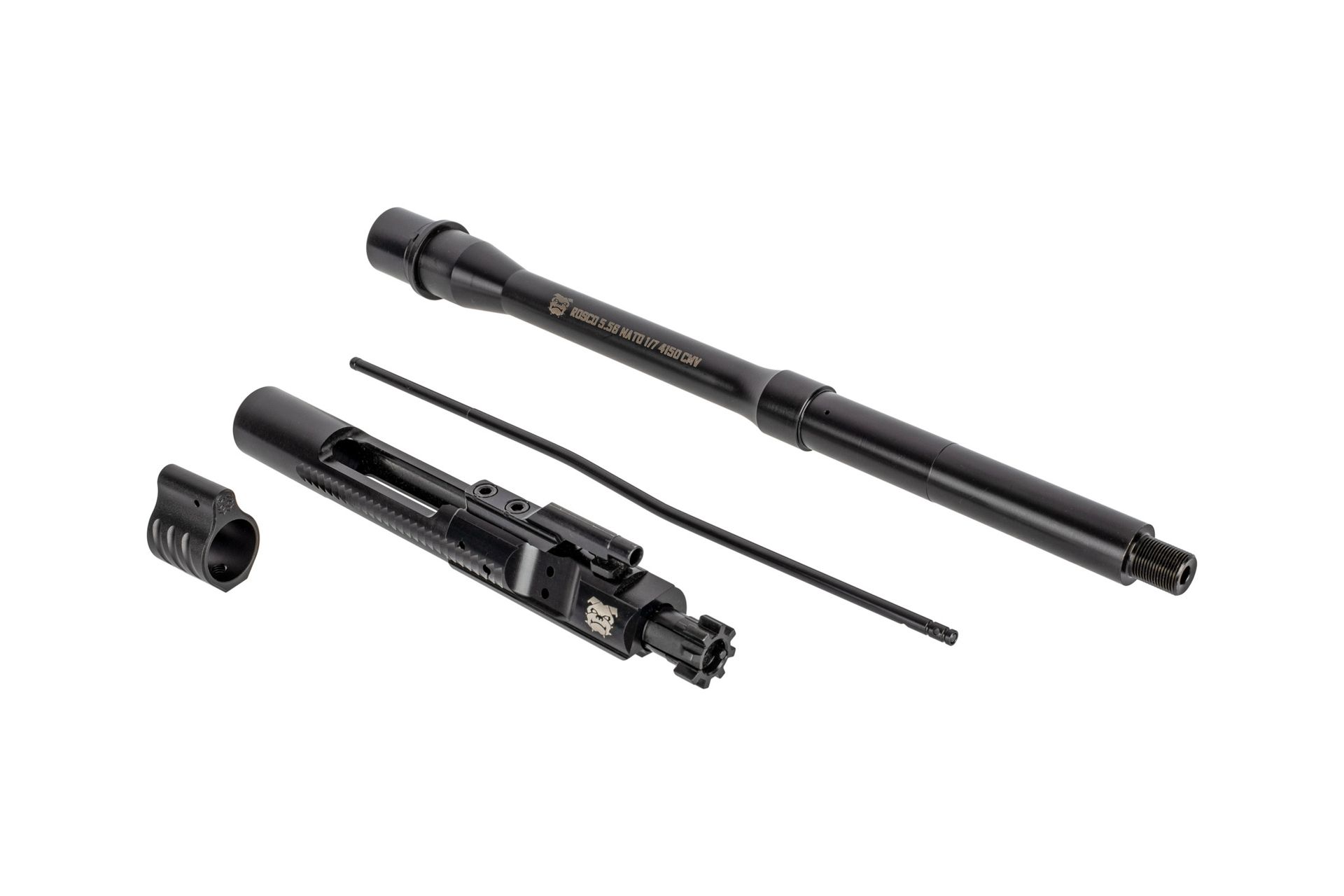
This is one area where a 12.5-inch AR-15 barrel starts showing its value in a way that does not show up on a spec sheet. The shorter barrel helps keep more of the rifle’s mass closer to the shooter’s body, which can make transitions feel quicker and help the rifle move more naturally between targets. It can also reduce the feeling that the support hand is constantly holding up the far end of the gun. None of this means a longer rifle is automatically slow or awkward, because plenty of 14.5 and 16-inch rifles handle extremely well, but 12.5 inches gives builders another option when balance and overall handling are high priorities.
What About Velocity?
The obvious tradeoff with any shorter AR-15 barrel is velocity. A 5.56 NATO cartridge generally loses velocity as barrel length decreases, although the exact amount depends on the ammunition, bullet weight, powder, barrel, and conditions. There is no single velocity number that applies to every 12.5-inch setup, which is why AR-15 barrel discussions based around one chronograph result can be misleading.
A 12.5-inch AR-15 barrel gives the cartridge more room than an 11.5 or 10.3 while keeping the rifle compact. That extra length can provide some additional velocity without adding much bulk to the finished gun, which is one reason the 12.5 makes sense for someone who does not need the absolute shortest setup possible. The shooter gets much of the compact handling advantage of the shorter options while retaining a little more barrel for the cartridge to work with.
If maximum velocity is the goal, a longer AR-15 barrel still makes more sense. If minimum overall length is the priority, shorter barrels still have the advantage. The 12.5 sits between those two extremes, and that is where most of its appeal comes from.
12.5-Inch AR-15 Barrel Versus 11.5
The 11.5-inch barrel has become one of the most popular short AR lengths for good reason. It is compact, proven, and well supported by modern components. The 12.5-inch AR-15 barrel does not make the 11.5 obsolete. It simply approaches the same problem from a slightly different direction.
A shooter who values minimum length may still prefer the 11.5, especially on a rifle where every inch matters. Someone building a rifle that will spend most of its life suppressed, however, may decide the additional inch of barrel is worth having if the complete package still remains compact. At that point the decision becomes less about which number looks better on a spec sheet and more about how the rifle will actually be used.
12.5-Inch AR-15 Barrel Versus 14.5
The 14.5-inch barrel is one of the best general-purpose AR lengths available, particularly when paired with the right muzzle device and configured correctly. It gives the shooter more barrel, more velocity, and a familiar carbine feel, while also offering a path to a non-SBR rifle when the muzzle device is permanently attached and the finished barrel meets the required legal minimum.
The 12.5-inch AR-15 barrel becomes more appealing when overall size matters more. Two inches does not sound dramatic, but once the same suppressor is added to both rifles, the difference becomes much easier to feel. The 12.5 starts shorter and stays shorter, which can make it a better fit for a rifle designed around suppressed use from the beginning. The tradeoff is that a 12.5-inch rifle brings additional legal considerations that a properly configured 14.5 may avoid.
The Legal Side Still Matters
A 12.5-inch AR-15 barrel does not become a conventional rifle simply because it is close to 16 inches. Under federal law, a rifle with a barrel under 16 inches generally falls under short-barreled rifle regulations unless it is configured in another lawful way. A removable suppressor does not count toward barrel length for purposes of reaching the 16-inch minimum, so the legal configuration needs to be part of the build plan from the start rather than something figured out after the parts are already assembled.
This is another reason the 12.5-inch AR-15 barrel is not the automatic answer for everyone. The handling advantages are real, but so are the additional legal requirements that can come with a short-barreled rifle. For some shooters, the simplicity of a 14.5 or 16-inch setup will outweigh the benefits of going shorter.
Why the 12.5-Inch AR-15 Barrel Makes Sense
The appeal of a 12.5-inch AR-15 barrel is not that it dominates every other barrel length. It gives up less barrel than the shortest 5.56 setups while remaining significantly more compact than traditional 14.5 and 16-inch rifles. It can improve weight distribution, keep a suppressed rifle from becoming excessively long, and give builders more control over how the finished rifle balances in the hands.
That matters more now because modern ARs rarely stay bare. A suppressor, weapon light, optic, sling, laser, and other accessories all change how the rifle feels, and the best AR-15 barrel length is not necessarily the one that looks ideal when the gun is stripped down on a workbench. It is the one that still makes sense once the entire package is assembled.
For a shooter building a compact AR that will spend much of its time suppressed, a 12.5-inch AR-15 barrel deserves a serious look. It keeps the rifle short enough to move well, leaves enough barrel to avoid going all the way to the shortest 5.56 configurations, and helps keep the finished gun from carrying too much length and weight out front. It may not have the history of the 10.3, the popularity of the 11.5, or the simplicity of a 16-inch rifle, but its strength is how naturally it fits into a modern AR that is being built as a complete system rather than a collection of individual parts.