

 Dirty Bird Bakersfield
Suppressor
Tuna Cans Suppressors & Mounts: Affordable Modular Silencers Reviewed
Nov
Table of Contents
Suppressors have traditionally been one of the more expensive firearm accessories, with many established manufacturers offering models that cost several hundred dollars or more. Although premium suppressors come with different materials, designs, and performance characteristics, spending a substantial amount isn’t necessarily appealing to every buyer. That makes newer manufacturers offering budget-friendly alternatives worth examining, particularly when they introduce features commonly associated with higher-priced products.
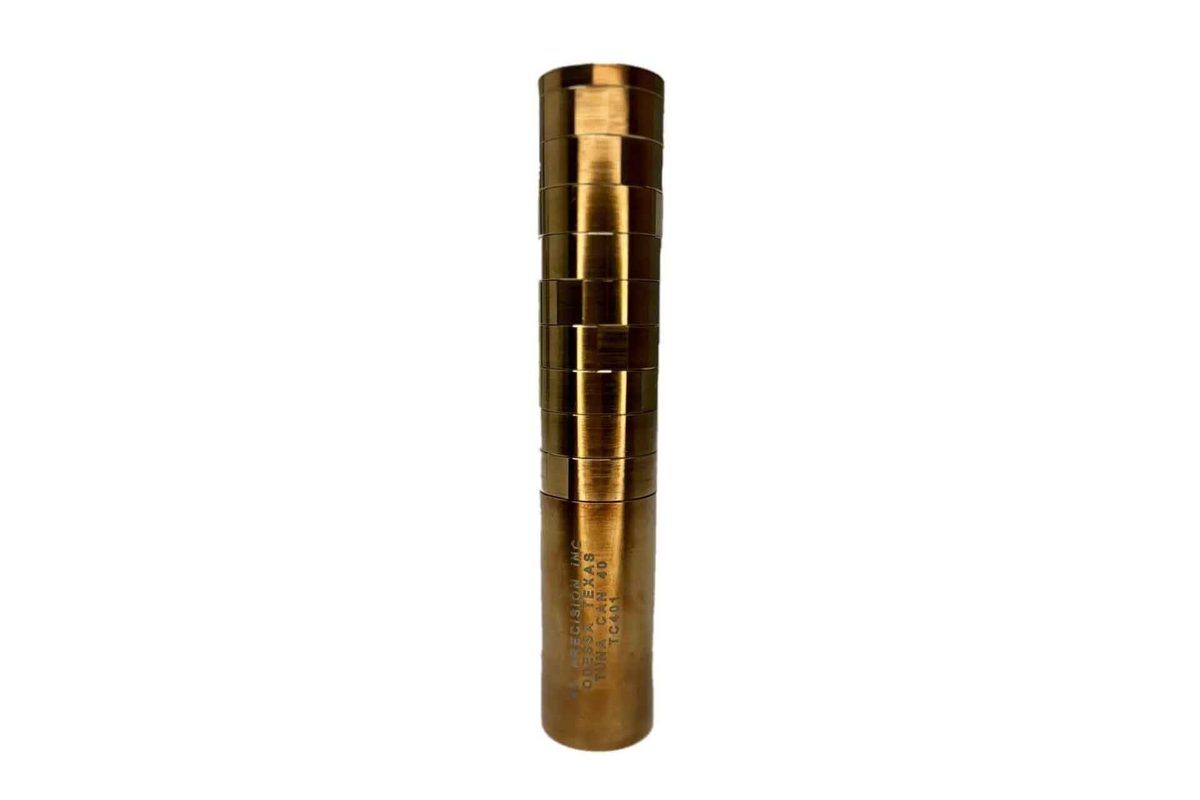
Tuna Cans suppressors stand out because the company combines affordable pricing with modular construction, multiple material options, and a surprisingly broad product lineup. Rather than concentrating on a single suppressor design, Tuna Cans offers different configurations for rimfire, centerfire rifle, and pistol applications. The company also offers mounting options worth considering when comparing suppressor systems.
The most notable part is how Tuna Cans approaches affordability without relying exclusively on lightweight aluminum construction. Its lineup includes aluminum, stainless-steel, and hybrid designs, each with different characteristics. This review covers those differences, walks through the manufacturer’s published specifications, and explains what buyers should know about Tuna Cans mounts before deciding.
What Is Tuna Cans?
Tuna Cans USA is an American suppressor manufacturer focused on producing affordable silencers through domestic manufacturing. According to the company, it designs and machines its products in-house using equipment it owns and operates. This approach lets Tuna Cans control production while pursuing pricing that competes with other budget suppressor manufacturers.
The company offers suppressor families covering .22 LR, 5.56mm, .30 caliber, 9mm, .40/10mm, and .46-caliber applications. Within those categories, buyers can find different lengths, construction materials, and configurations. Some models prioritize lightweight construction, while others use heavier stainless-steel components intended for more demanding operating conditions.
This variety matters because suppressor design involves trade-offs. A lightweight rimfire suppressor and a stainless-steel centerfire suppressor serve different purposes, even when they come from the same manufacturer. Understanding those differences provides a better starting point than simply comparing prices.
What Makes Tuna Cans Suppressors Different?
One of the more interesting aspects of Tuna Cans is its emphasis on modular designs and material selection. The manufacturer offers multiple suppressor lengths, including S, L, XL, and certain XXL configurations, depending on the product family. These options give buyers different combinations of overall length, weight, and internal volume, though available configurations and adjustment capabilities vary by model.
Material selection also plays a significant role in the lineup. Tuna Cans uses 7075 aluminum in several lightweight suppressor families and heat-treated 17-4 stainless steel in its heavier-duty centerfire models. Its BlackFin series combines the two materials, using stainless steel in the blast chamber and initial baffle while incorporating aluminum components elsewhere.
This approach provides more variety than a lineup built around a single material. Aluminum can help reduce overall weight, while stainless steel provides different strength and heat-resistance characteristics. However, neither material automatically guarantees superior suppression or durability. The complete design, manufacturer ratings, and intended application remain important when evaluating individual models.
Tuna Cans Suppressor Models and Caliber Options
Tuna Cans has developed several suppressor families, each offering different construction and dimensional characteristics. Looking at the individual models helps illustrate how the company approaches budget modular suppressors across different firearm categories.
Tuna Cans .22 Suppressors
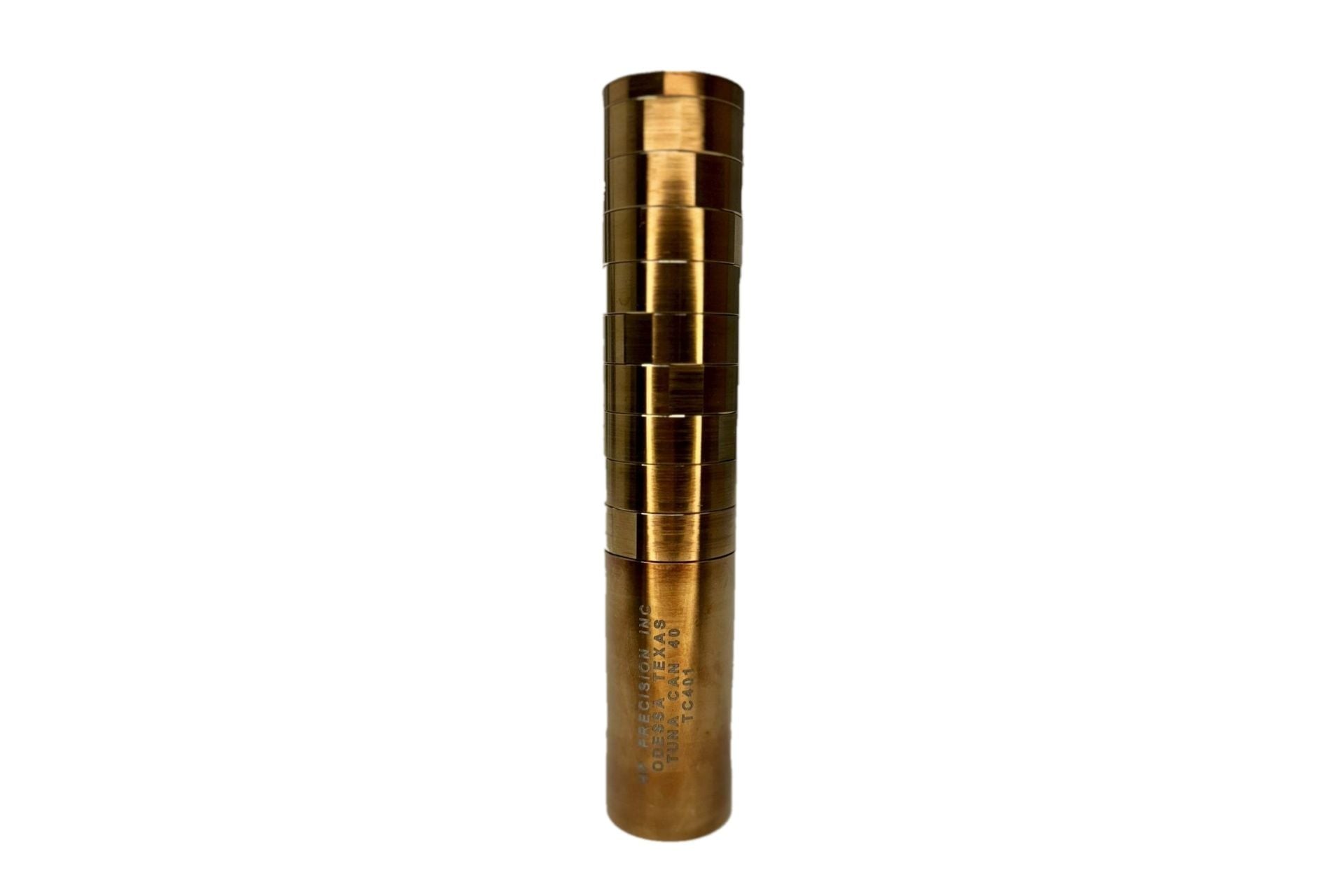
The company’s .22-caliber suppressors use 7075 aluminum construction and are available in multiple configurations. According to the manufacturer’s published specifications, the .22 S measures approximately 3 inches long and weighs 2.5 ounces. Longer XL and XXL variations incorporate additional baffles, giving the product family different length and weight options.
These models stand out for their compact dimensions and lightweight construction. Rimfire suppressors also have different maintenance considerations from many centerfire models because .22 LR ammunition can produce significant fouling. Buyers should consider the manufacturer’s cleaning instructions, approved ammunition, and published ratings when evaluating the available configurations.
Tuna Cans 5.56 Suppressors
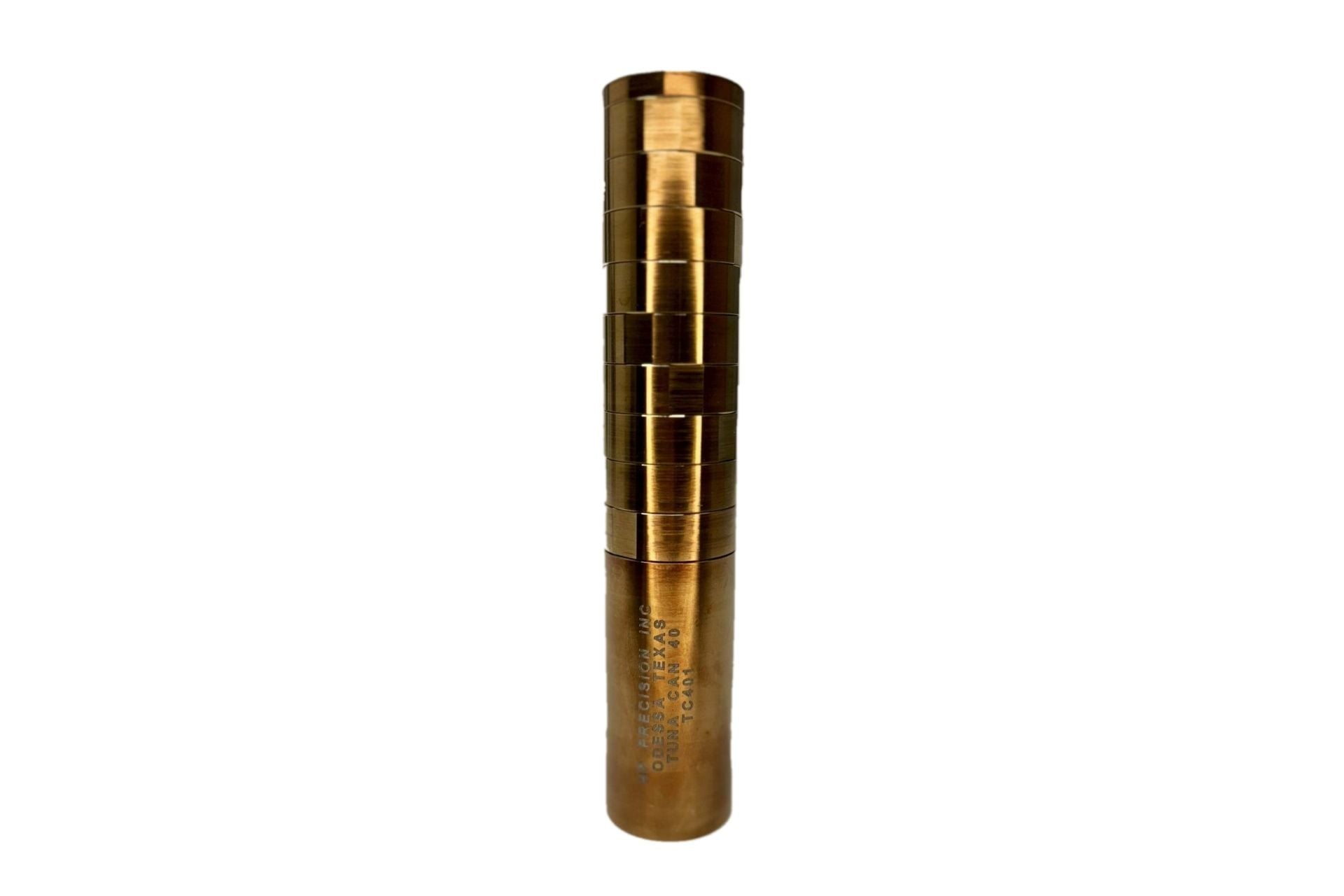
The dedicated Tuna Cans 5.56 lineup uses heat-treated 17-4 stainless steel in its standard S, L, and XL configurations. The manufacturer lists the 5.56 S at approximately 6.25 inches long and 16 ounces, while the 5.56 L measures 7.76 inches and weighs 20 ounces. These specifications illustrate the size and weight differences within the same product family.
Unlike the lightweight aluminum models, these suppressors emphasize stainless-steel construction. Tuna Cans publishes firing ratings for applicable products, including certain models rated for more demanding firing schedules. Always evaluate those ratings individually because barrel-length restrictions, caliber limitations, and operating requirements can differ between suppressors.
Tuna Cans .30-Caliber Suppressors
The company’s .30-caliber lineup includes both traditional stainless-steel models and the hybrid BlackFin series. Standard .30 Cal S, L, and XL suppressors use heat-treated 17-4 stainless steel; the .30 Cal S measures about 6.24 inches and weighs 16 ounces, according to Tuna Cans.
The BlackFin series takes a different approach by combining a stainless-steel blast chamber and first baffle with 7075 aluminum components. The manufacturer lists the BlackFin L at 8.5 inches long and 12.5 ounces. That makes the construction difference particularly noticeable when comparing weight and overall dimensions.
The BlackFin stands out because it demonstrates how material selection can change a suppressor’s physical characteristics without relying entirely on shorter dimensions. Still, buyers should consult the manufacturer’s caliber and firing restrictions rather than assuming a hybrid design carries the same ratings as an all-stainless model.
Tuna Cans 9mm Suppressors
Tuna Cans offers several 9mm suppressor families, including SLIM9, FAT9, and dedicated stainless-steel models. The SLIM9 series uses 7075 aluminum and emphasizes compact dimensions; the SLIM9 S measures about 3 inches and weighs 2.5 ounces. The FAT9 family also uses aluminum construction but incorporates a larger-diameter body.
For buyers who prefer heavier construction, the stainless-steel 9mm series offers another option. Tuna Cans lists its stainless 9mm S at 16 ounces, creating a substantial weight difference compared with the compact SLIM9 S.
These differences make it difficult to discuss Tuna Cans 9mm suppressors as a single interchangeable product. Consider dimensions, material composition, mounting requirements, and approved firearm applications separately. The company also offers dedicated .40/10mm and .46-caliber families for buyers researching additional caliber categories.
Tuna Cans Mounts: Direct Thread and HUB Compatibility
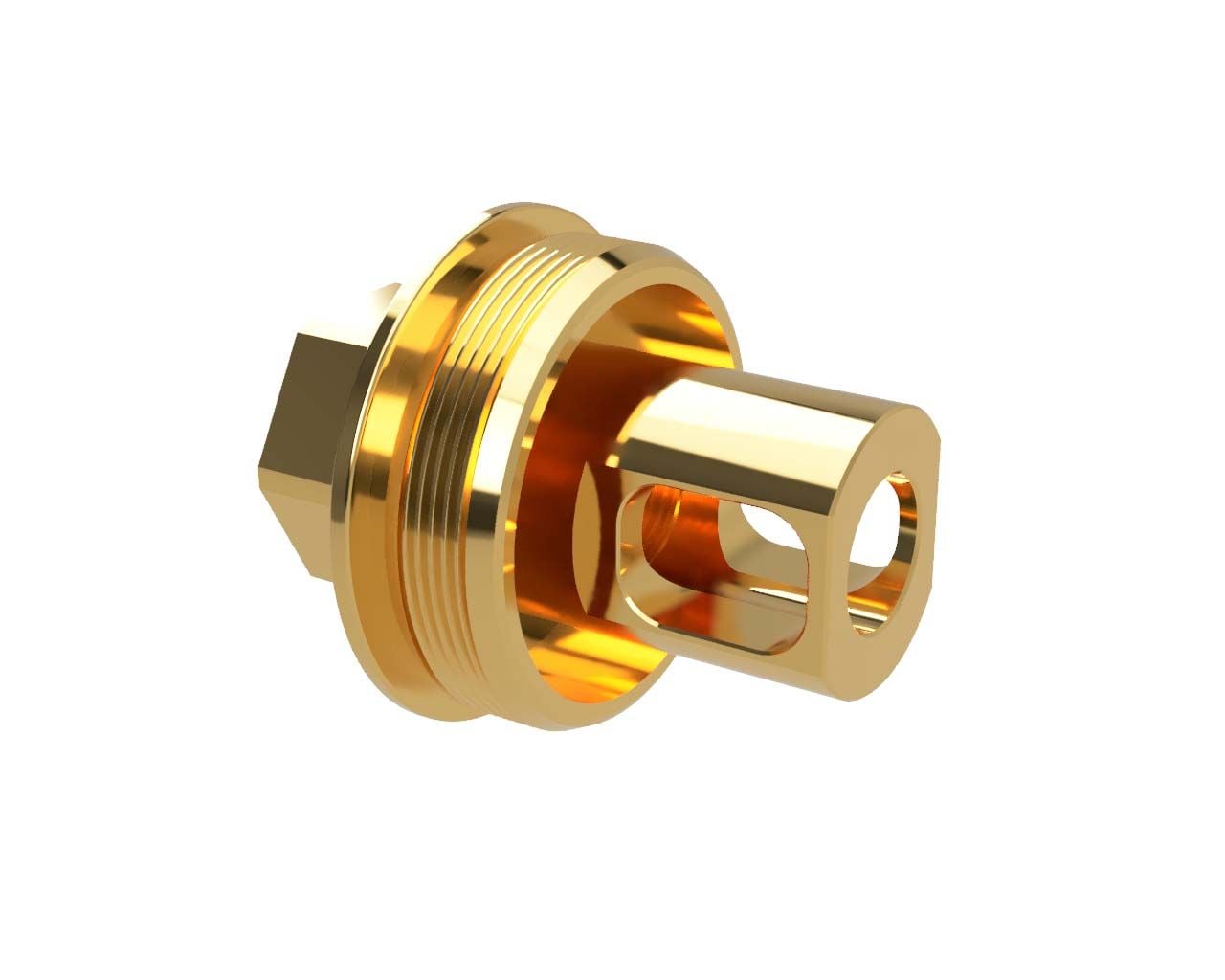
A suppressor’s mounting interface is an important part of its overall design. Even when two suppressors are intended for the same caliber, their mounting requirements may differ significantly. Tuna Cans uses different interfaces across its product lineup, with many centerfire models incorporating the common 1.375×24 HUB mounting standard.
HUB compatibility is useful because it provides a shared thread interface used by various suppressor manufacturers and accessory makers. However, having the same HUB thread specification doesn’t establish that every adapter or mounting component will work with every suppressor. Internal clearances, component dimensions, and manufacturer restrictions can still affect compatibility.
Tuna Cans Direct Thread Mounts
Direct-thread mounting uses a compatible threaded connection between the suppressor assembly and the firearm’s muzzle. Compared with systems that require a separate quick-detach muzzle device, direct-thread arrangements generally involve fewer mounting components. However, simplicity doesn’t eliminate the need to verify the specifications of the firearm, suppressor, and mounting hardware.
When researching a Tuna Cans direct-thread mount, prioritize the manufacturer’s published compatibility information over general product descriptions. Buyers should also confirm whether a particular suppressor includes the necessary mounting hardware or requires separately purchased accessories.
HUB Adapters and Mounting Systems
The 1.375×24 HUB interface has become common among centerfire suppressor manufacturers, providing a standardized connection for certain mounting accessories. Tuna Cans identifies HUB compatibility on many of its centerfire models, making the interface an important specification when comparing its products.
However, HUB compatibility should not be confused with universal firearm compatibility. Two products sharing an interface can still have different application restrictions. Check official manufacturer documentation, especially when considering accessories from different manufacturers.
Are Tuna Cans Suppressors Really Affordable?
Price is central to Tuna Cans’ marketing, and the company has promoted certain 5.56 and 9mm suppressors for under $300. That places some of its products in a relatively affordable segment of the suppressor market, although exact prices depend on the model, configuration, and current availability.
The more useful question is what buyers receive at those prices. Tuna Cans offers aluminum, hybrid, and stainless-steel construction, along with multiple suppressor configurations and common mounting interfaces on applicable models. Those features make the brand worth comparing with other manufacturers competing in the budget modular suppressor category.
The advertised purchase price also isn’t necessarily the full cost of ownership. Compatible accessories, dealer fees, and applicable transfer requirements can affect the final expense. A lower retail price may be appealing, but it doesn’t establish that a product offers better value without considering its specifications, approved applications, warranty terms, and independent performance information.
How Do Tuna Cans Suppressors Perform?
Sound suppression is one of the most important considerations when evaluating a silencer, but it’s also an area where marketing claims deserve scrutiny. A suppressor’s sound signature depends on the firearm, ammunition, barrel configuration, suppressor design, and testing conditions. That makes casual comparisons between different products difficult without consistent testing methods.
Tuna Cans has published information referencing independent performance analysis from PEW Science, including discussions of its 5.56 XL, WRMFZY, BlackFin L, and BlackFin XL models. PEW Science conducts suppressor sound-signature research and provides technical information that can be useful when comparing products under documented testing conditions.
Independent testing is more meaningful than broad claims that a suppressor is exceptionally quiet or outperforms expensive competitors. However, the existence of testing doesn’t mean every Tuna Cans model has been evaluated under identical conditions. Buyers should examine the specific results, firearm configurations, and methodology before drawing conclusions about performance.
Durability deserves similar consideration. Materials and manufacturer firing ratings offer useful insight into intended applications, but long-term reliability requires evidence beyond construction specifications. It would be premature to conclude that Tuna Cans performs better or worse than established manufacturers without comparable testing and documented results.
What to Consider When Comparing Budget Modular Suppressors
The appeal of affordable modular silencers is understandable, especially when manufacturers offer different configurations without premium pricing. However, modularity can mean different things depending on the product. Some suppressors offer alternative factory configurations, while others have manufacturer-authorized removable components or serviceable designs. Buyers should understand exactly what the manufacturer supports.
Weight is another consideration. An aluminum suppressor may be considerably lighter than a stainless-steel model, but buyers should weigh the difference against manufacturer ratings and intended use. Similarly, a longer suppressor may offer additional internal volume while adding length and weight to the firearm. Neither configuration is automatically preferable for every application.
Mounting hardware, warranty coverage, maintenance requirements, and available independent testing complete the picture. These factors matter whether the suppressor costs $300 or considerably more. The strongest value comparison comes from looking at the complete product rather than focusing only on its advertised price.
Final Thoughts on Tuna Cans Suppressors and Mounts
Based on the manufacturer’s published information, Tuna Cans deserves attention as an affordable option in the suppressor market. Its lineup includes lightweight aluminum models, durable stainless-steel designs, and hybrid configurations, giving buyers several options based on their needs and preferences. With multiple lengths, caliber options, and HUB-compatible centerfire models, Tuna Cans offers a versatile selection without the premium pricing associated with many established manufacturers.
What stands out most is the company’s commitment to providing different construction options at competitive prices. While affordability is an important selling point, factors such as material quality, mounting compatibility, manufacturer specifications, and independent performance testing should also influence purchasing decisions.
For anyone considering Tuna Cans suppressors and mounts, the best next step is to review the available models and compare their features to find the option that best fits the firearm and intended application. Whether you’re interested in a lightweight rimfire suppressor or a stainless-steel centerfire model, understanding these differences can help narrow your choices.
You can find the full lineup of Tuna Cans suppressors at Dirty Bird Guns & Ammo, making it easy to explore the manufacturer’s selection of budget modular suppressors in one place. With affordable pricing, multiple configurations, and a growing product lineup, Tuna Cans is a brand worth considering when shopping for your next suppressor.
Frequently Asked Questions About Tuna Cans Suppressors
Tuna Cans offers several suppressor families, making it understandable that buyers may have questions about construction, compatibility, and available configurations. The following answers address some of the most common considerations.
Are Tuna Cans suppressors made in the USA?
Yes. Tuna Cans USA states that its suppressors are designed and manufactured in-house in the United States using its own machining equipment.
What calibers does Tuna Cans manufacture suppressors for?
The manufacturer offers suppressor families covering .22, 5.56/6mm, .30 caliber, 9mm, .40/10mm, and .46-caliber categories. Individual cartridge ratings and restrictions vary by model, so consult the product’s published specifications.
Are Tuna Cans suppressors modular?
Many Tuna Cans suppressors feature modular or serviceable designs, and the manufacturer offers multiple length configurations. Features vary by model, and not every suppressor offers the same configuration options.
What materials are used in Tuna Cans suppressors?
Tuna Cans uses 7075 aluminum, heat-treated 17-4 stainless steel, and hybrid combinations of those materials. Construction depends on the specific suppressor family and its intended application.
What is a HUB suppressor mount?
HUB refers to a common suppressor mounting interface with 1.375×24 threads. Many Tuna Can centerfire suppressors use this interface, although adapter compatibility must be confirmed individually.
Does Tuna Can offer direct-thread mounting options?
Tuna Can describes direct-thread mounting arrangements and HUB-compatible suppressor systems. Buyers should verify current accessory availability, supported models, and published specifications before purchasing.
Are Tuna Can suppressors legal to own?
Federal, state, and local laws regulate suppressor ownership and transfers. Legal requirements vary by jurisdiction and can change through legislation or court decisions. Buyers should consult current government guidance and qualified professionals when determining applicable requirements.
For more on Tuna Cans Suppressors, including the Tuna Cans .22 Silencer (5 Baffle), visit our sister site, AR15Discounts.com.
Disclaimer
This article is provided for informational and editorial purposes only and does not constitute legal advice. Firearm suppressors are subject to federal, state, and local laws, which may vary by jurisdiction and change over time. Readers are responsible for verifying applicable laws, ownership requirements, and transfer regulations before purchasing or possessing a suppressor. Product specifications and availability are subject to change. Dirty Bird Guns & Ammo recommends consulting a qualified legal professional or the appropriate regulatory authority with questions about legal compliance.