

 Dirty Bird Bakersfield
AR Parts and Accesories
Are Dirty Bird Industries Parts Worth It? How Our AR-15 Components Stack Up (2026)
Nov
Table of Contents
When comparing AR-15 components, brand recognition often influences purchasing decisions, but a familiar name doesn’t always tell the full story about materials, construction, or quality. Evaluating products with similar specifications helps you understand how different manufacturers approach design, performance, and manufacturing standards.
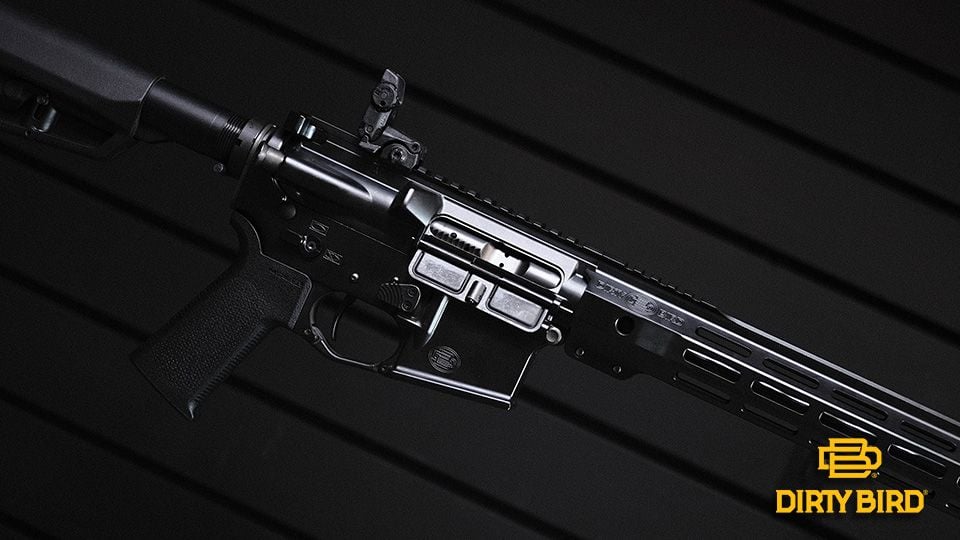
Dirty Bird Industries parts include triggers, bolt carrier groups, receivers, handguards, and lower parts kits that compete in many of the same categories as established brands. Comparing these components with comparable products from other manufacturers helps identify similarities in materials and construction, differences in design features, and factors that contribute to overall quality.
Dirty Bird vs ALG Defense and BCM: Enhanced Mil-Spec Triggers
Dirty Bird Industries’ Single Stage Nickel Teflon Trigger Group competes in the same general category as the ALG Defense Advanced Combat Trigger (ACT) and BCM PNT Trigger. All three retain conventional AR-15 fire control geometry while incorporating surface treatments intended to improve trigger characteristics. Dirty Bird’s version features honed engagement surfaces, a nickel-Teflon finish, and reduced-power springs, with an advertised pull weight of approximately 5–5.5 pounds. ALG’s ACT maintains a conventional trigger design with specialized surface treatments and a pull weight intended to meet the standard M4/M16 minimum, while BCM’s PNT uses polished and nickel-Teflon-treated components.
The main differences lie in the finishing processes, spring configurations, and advertised pull characteristics. Neither uses a cassette-style trigger, and each maintains a design closer to a conventional factory fire control group than a specialized competition trigger. Although their construction methods share similarities, comparing actual pull consistency and long-term wear would require testing rather than relying on surface treatment descriptions alone.
Dirty Bird vs Geissele and LaRue: Two-Stage Triggers
Two-stage triggers provide another useful comparison. Dirty Bird Industries offers a Two-Stage Trigger Group that you can evaluate alongside the Geissele G2S, Geissele SSA, and LaRue Tactical MBT-2S. Dirty Bird specifies approximately 1.5 pounds of first-stage resistance with its standard spring, increasing to roughly 2 pounds with the included extra-power spring. The second stage breaks at about 2.5 pounds, for a total advertised pull weight of 4 to 5 pounds. Geissele’s SSA and G2S are both advertised with a nominal 4.5-pound combined pull, while LaRue’s MBT-2S uses its own two-stage geometry and spring configurations.
Although these triggers operate on the same two-stage principle, their internal geometry, materials, and manufacturing processes differ. Geissele has developed several distinct two-stage designs with different pull characteristics, while LaRue offers its MBT-2S with a machined tool-steel construction. Dirty Bird provides curved and flat trigger configurations within its two-stage lineup. The important distinction is that a similar advertised pull weight doesn’t guarantee identical take-up, break characteristics, or reset feel. Evaluate each product based on its own specifications.
Dirty Bird vs RISE Armament: Cassette Drop-In Triggers
Dirty Bird’s Single Stage Quick Reset Drop-In Trigger and the RISE Armament RAVE 140 are closer comparisons because both use self-contained cassette assemblies and advertise a nominal 3.5-pound single-stage pull. Dirty Bird’s trigger features S7 tool-steel internal components with a nitride finish and a 6061 aluminum housing. The RAVE 140 uses RISE Armament’s internal design and manufacturing specifications, focusing on a crisp single-stage break and short reset.
The cassette design distinguishes both products from conventional mil-spec-style fire control groups. Their self-contained construction houses the primary operating components together, but similarities in the general design don’t establish equivalent internal geometry or manufacturing standards. RISE also produces additional trigger models with different features, while Dirty Bird offers conventional single-stage and two-stage designs alongside its cassette trigger. Comparing these specific models is more informative than treating every trigger from either manufacturer as the same type of product.
Dirty Bird vs Toolcraft and Microbest: Bolt Carrier Groups
Dirty Bird Industries, Toolcraft, and Microbest offer bolt carrier groups in configurations that use familiar AR-platform materials and finishes. Dirty Bird’s lineup includes phosphate/chrome-lined and nickel-boron BCGs, as well as Enhanced and Sand-Cut configurations. Toolcraft and Microbest also offer conventional BCGs with different bolt materials, carrier finishes, and inspection specifications. Because each manufacturer’s lineup includes several variations, meaningful comparisons should match products with similar construction rather than comparing an enhanced model against a basic configuration.
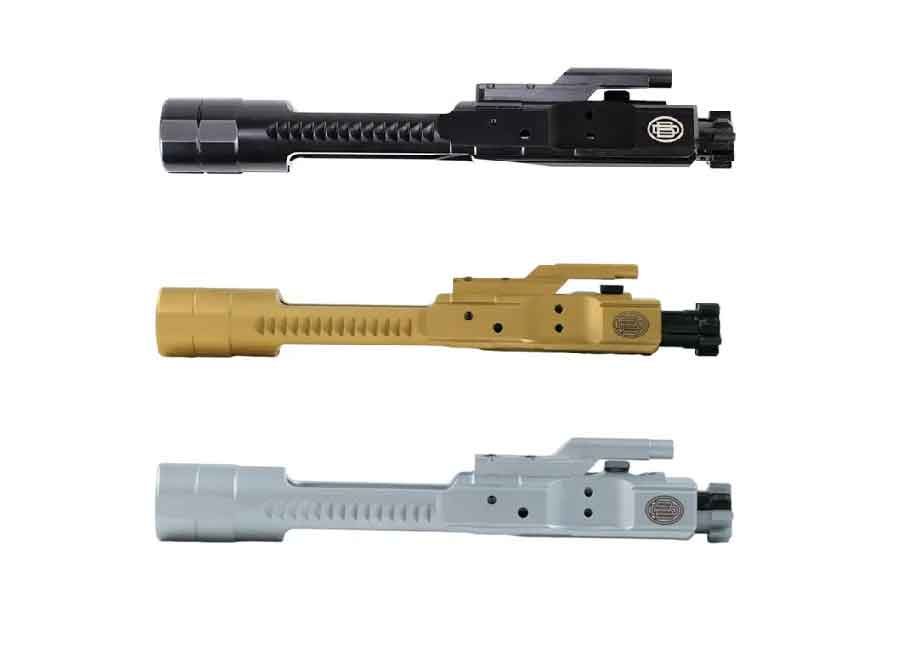
Dirty Bird’s Enhanced .223/5.56 BCG provides an example of a more specialized design. It uses a heat-treated 9310 steel bolt that the manufacturer specifies as High-Pressure Tested (HPT) and Magnetic Particle Inspected (MPI). Its carrier also features modified bearing surfaces and additional material around the gas exhaust ports. Toolcraft and Microbest offer BCG configurations using materials such as Carpenter 158 and 9310 steel, depending on the specific product. The differences extend to individual carrier designs, surface finishes, and documented inspection procedures.
Finishing methods are another consideration. Phosphate, chrome, nickel boron, and nitride have different surface characteristics and maintenance requirements, but no single coating independently establishes superior BCG quality. Machining accuracy, bolt heat treatment, gas-key construction, and assembly consistency remain important. Dirty Bird’s conventional products can be compared with similarly configured Toolcraft and Microbest offerings, while its Enhanced BCG represents a different design category with additional features.
Dirty Bird vs Aero Precision: Upper and Lower Receivers
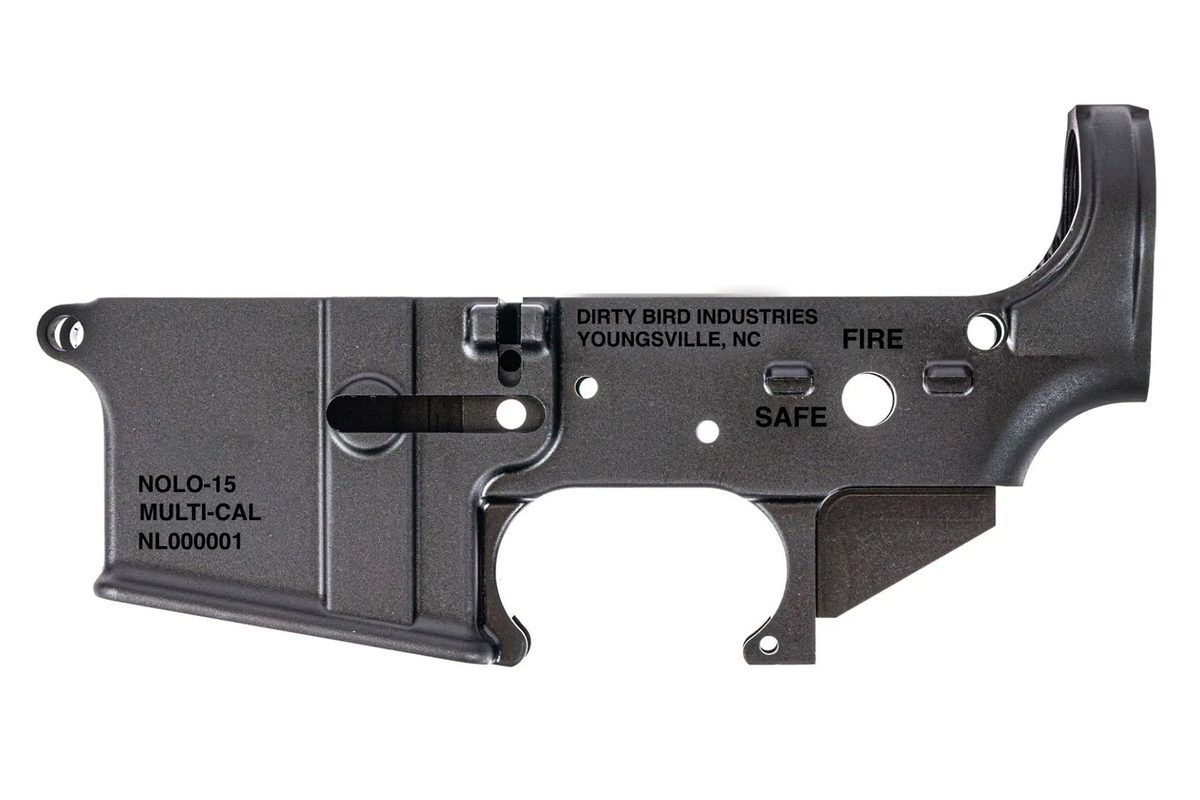
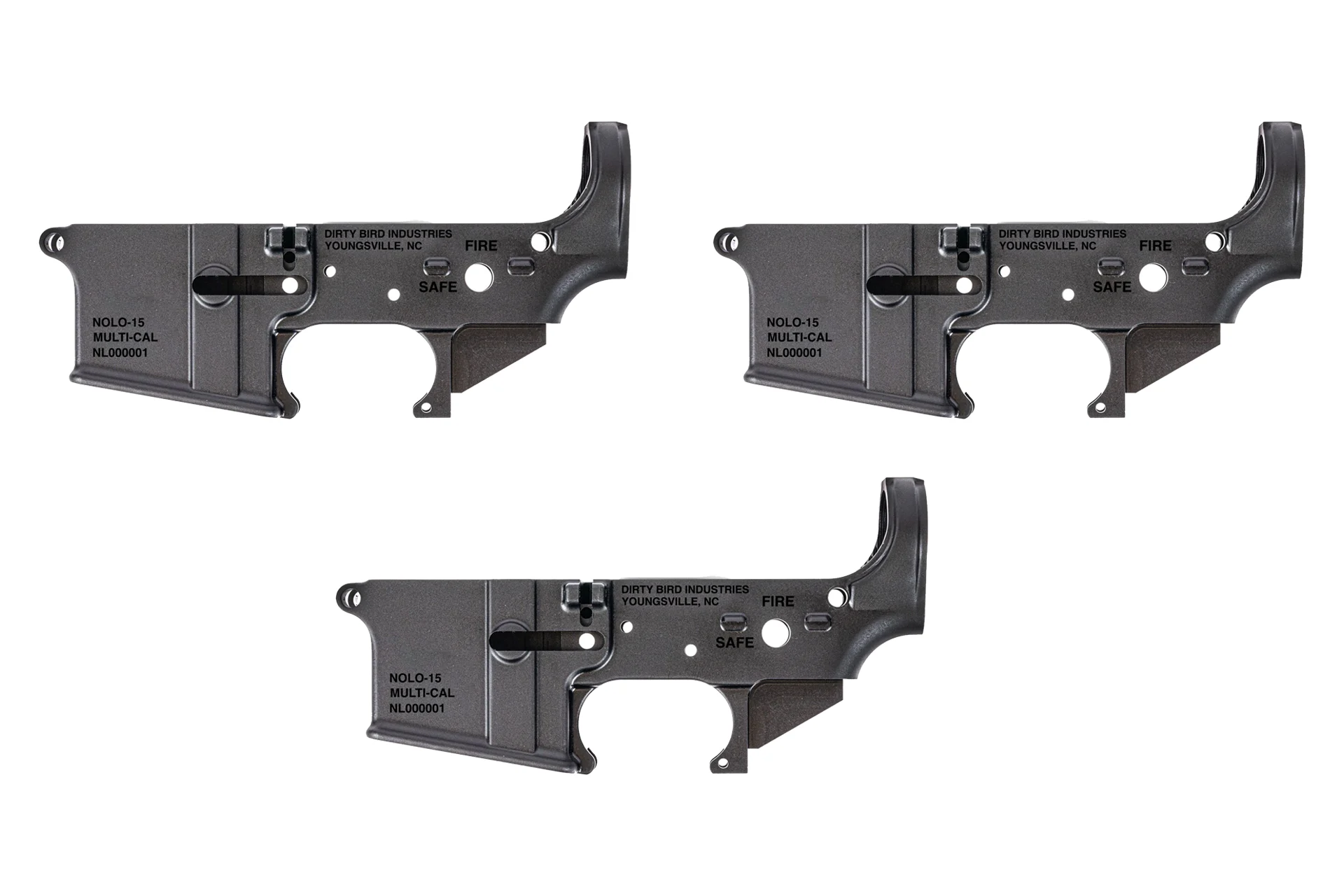
Aero Precision and Dirty Bird Industries both offer conventional forged AR-15 receivers, making their standard receiver products relevant comparisons. The Dirty Bird NOLO Stripped Forged Lower Receiver uses 7075-T6 aluminum with Type III Class 2 hardcoat anodizing. Aero Precision’s standard forged AR-15 lower receivers also use 7075-T6 aluminum and hardcoat-anodized finishes. These similarities establish that both products use common industry materials and finishing methods, although their exterior machining, markings, and other specifications differ.
Aero Precision’s M4E1 series introduces additional features that distinguish it from conventional forged receivers, while Dirty Bird offers traditional forged and billet receiver configurations. Billet manufacturing provides additional flexibility in exterior geometry, but it doesn’t automatically produce a stronger or more accurately machined receiver. The same principles apply to upper receivers, where material selection, finish, dimensions, and component compatibility provide the most relevant comparison points. You can’t determine the quality of either manufacturer’s finished receiver from its aluminum grade alone.
Dirty Bird vs Geissele and Midwest Industries: M-LOK Handguards
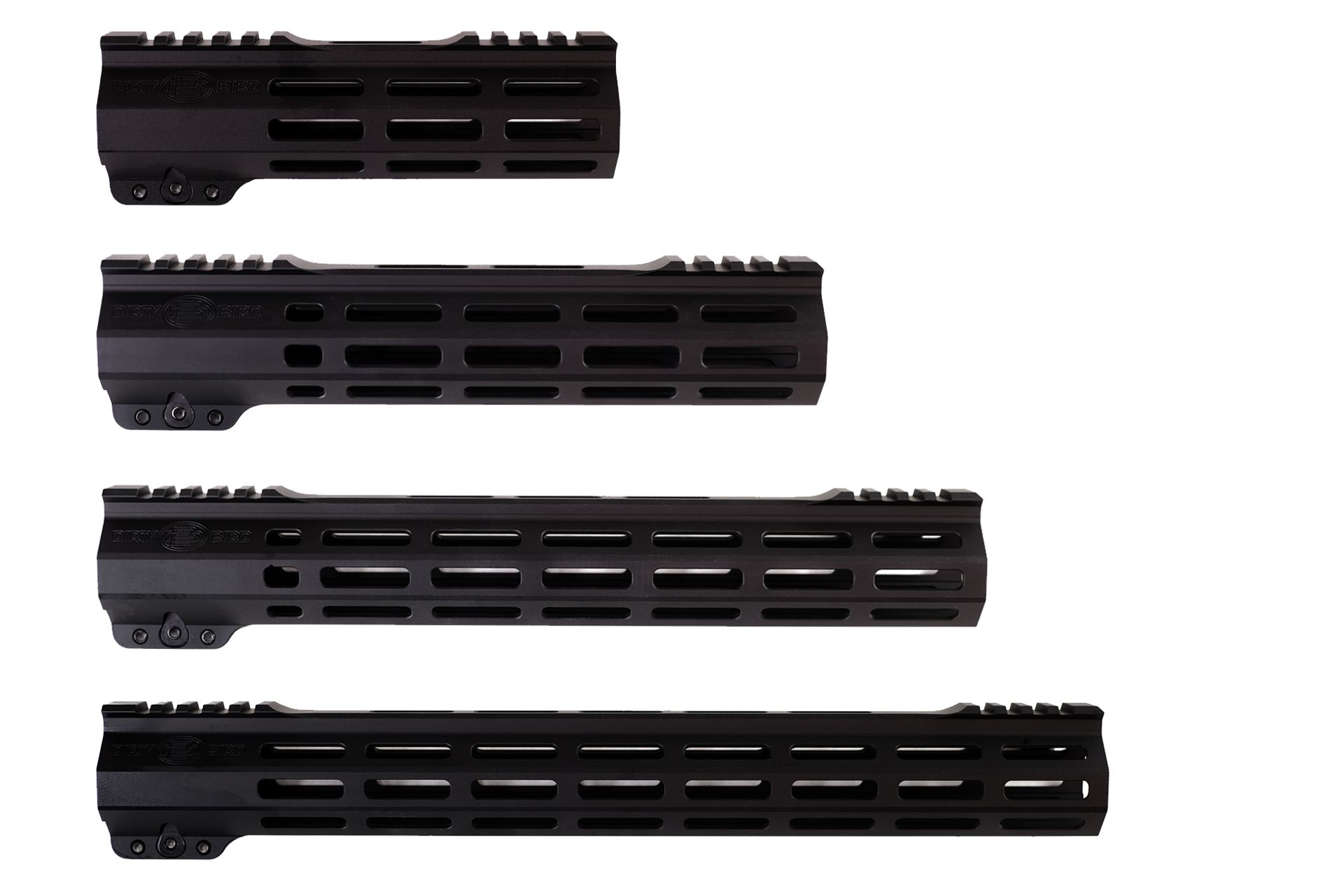
Dirty Bird Industries’ SMRS V2 handguard can be compared with free-float M-LOK handguards from Geissele Automatics and Midwest Industries. The SMRS V2 uses 6061-T6 aluminum construction and features M-LOK attachment positions, an upper Picatinny rail, and Dirty Bird’s proprietary ASAL anti-slip and anti-lift attachment system. It is available with hardcoat-anodized and Cerakote finishes. Geissele’s Super Modular Rail family and Midwest Industries’ Combat Rail series also include aluminum free-float handguards, although their individual dimensions, profiles, and attachment mechanisms vary.
One of the most significant differences among these handguards is how each design secures the rail to its mounting hardware. Dirty Bird uses its ASAL system, while Geissele and Midwest Industries employ their own retention arrangements. These differences affect product construction and installation requirements, but published descriptions alone don’t establish which system provides greater rigidity or resistance to movement. Handguard length, weight, internal clearance, and available mounting surfaces also vary by model, making direct specification comparisons more useful than general brand rankings.
Dirty Bird vs Aero Precision: Lower Parts Kits
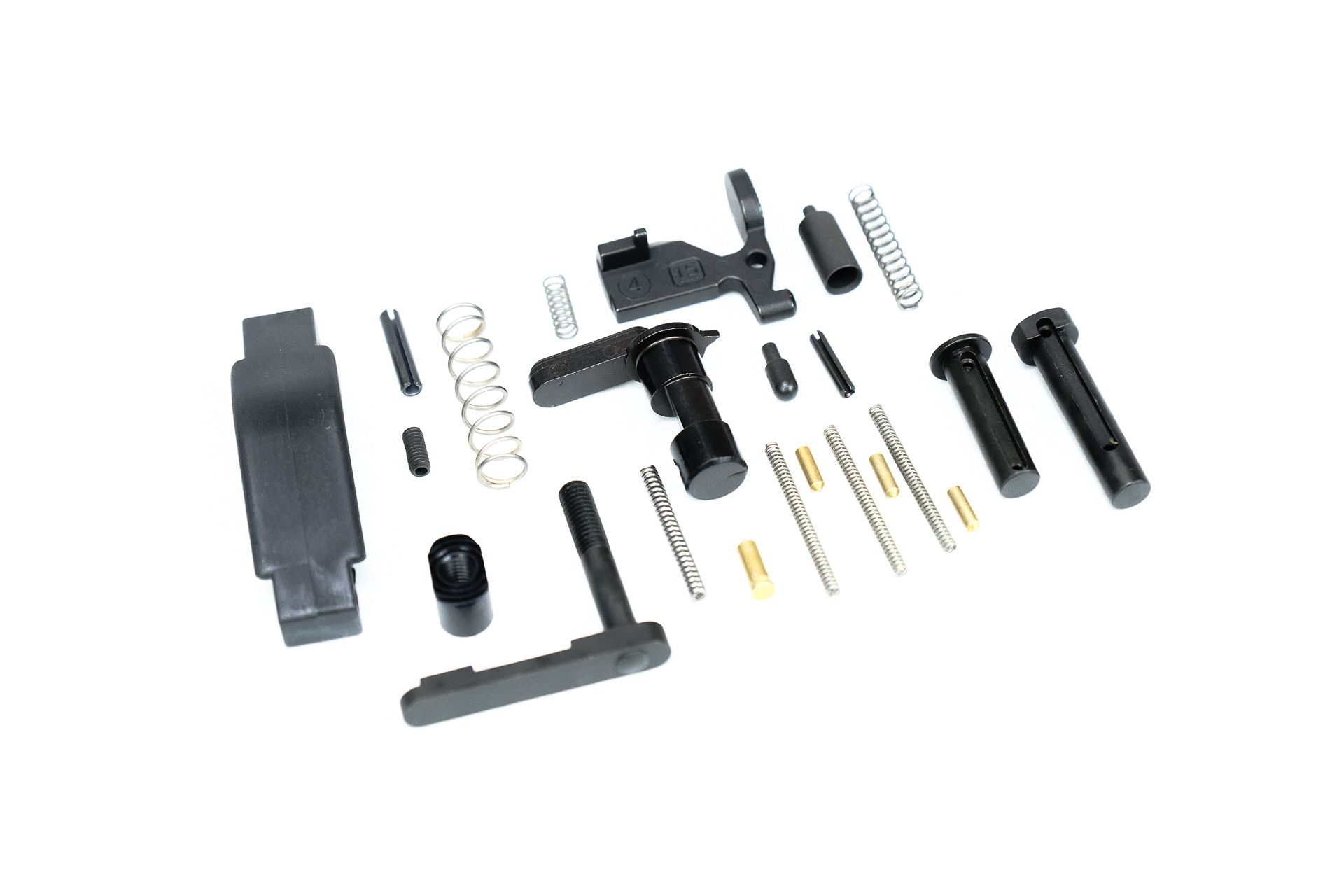
Lower parts kits are another category where Dirty Bird Industries and Aero Precision offer closely related products. Both brands provide kits containing conventional AR-15 lower receiver components, with configurations that include or omit the fire control group and pistol grip. Dirty Bird also offers an enhanced lower parts kit, allowing you to evaluate its standard and upgraded kits separately. Aero Precision similarly offers different kit packages, so match the included components when comparing the two.
The quality of a lower parts kit depends on the individual pieces, not the kit’s name. Springs, pins, detents, selectors, and other small components must meet their intended dimensional and material specifications. A kit with a conventional trigger also differs from one with an enhanced fire control group, so comparing prices without accounting for the contents can be misleading. When evaluating equivalent configurations, the most relevant distinctions are the included components, their specifications, and the manufacturer’s published quality information.
How Does Dirty Bird Industries Compare in Manufacturing and Value?
Dirty Bird Industries works with domestic manufacturing partners to produce components under its own brand. Other manufacturers use varying combinations of in-house production, specialized suppliers, and outside manufacturing services. These arrangements can affect production costs and product availability, but using manufacturing partners doesn’t, by itself, establish higher or lower quality. Finished components still need to meet their specified materials, dimensions, and inspection requirements.
Price differences among similar AR-15 components can reflect manufacturing volume, proprietary designs, finishes, included features, and distribution arrangements. A conventional forged receiver and a receiver incorporating additional machining or features may use the same base material but have different production costs. The same applies to triggers, bolt carrier groups, and handguards. Comparing specifications alongside current pricing provides useful context, although price alone cannot establish which product offers greater durability or more consistent performance.

Final Thoughts: Comparing the Parts, Not Just the Brands
Dirty Bird Industries offers several quality AR-15 components that can be compared directly with products from established manufacturers. Its enhanced triggers, two-stage trigger groups, cassette triggers, bolt carrier groups, receivers, handguards, and lower parts kits overlap with familiar product categories across the industry. In many cases, the products share common materials or operating principles, while differences appear in their manufacturing details, finishes, and individual design features.
Brand reputation remains useful when researching firearm components, but it shouldn’t replace a comparison of actual specifications. Dirty Bird, Aero Precision, Geissele, Toolcraft, Microbest, and other manufacturers each offer products with different characteristics. Understanding those distinctions provides a more accurate basis for evaluating quality than assuming that a familiar name, higher price, or particular finish automatically determines performance.
Frequently Asked Questions About Dirty Bird Industries
When comparing Dirty Bird Industries with established AR-15 manufacturers, several questions concern materials, manufacturing standards, and differences between similarly configured products. These answers address the most common points of comparison.
Are Dirty Bird Industries parts comparable to Aero Precision?
Dirty Bird Industries and Aero Precision offer several similar product categories, including forged receivers and lower parts kits. Dirty Bird’s NOLO lower and Aero Precision’s conventional forged AR-15 receivers both use 7075-T6 aluminum. Other features, machining details, and specifications vary by model.
How do Dirty Bird two-stage triggers compare with Geissele?
Dirty Bird’s Two-Stage Trigger Group and Geissele models such as the SSA and G2S share the same general two-stage operating principle. Dirty Bird advertises a combined pull weight of approximately 4–5 pounds, depending on the spring configuration, while the Geissele SSA and G2S have nominal 4.5-pound pulls. Their internal designs and individual trigger characteristics differ.
Are Dirty Bird BCGs comparable to Toolcraft and Microbest?
All three brands offer AR-pattern bolt carrier groups using established materials and protective finishes. Dirty Bird sells conventional and enhanced configurations, including an Enhanced .223/5.56 BCG with an HPT/MPI-tested 9310 bolt. Toolcraft and Microbest offer their own material, coating, and inspection combinations, which vary by product.
Does Dirty Bird make different types of AR-15 triggers?
Yes. Dirty Bird Industries offers enhanced mil-spec-style single-stage triggers, two-stage triggers, and cassette-style drop-in triggers. These products have different internal designs and advertised pull characteristics, so compare each with the corresponding trigger category from another manufacturer.
Is a more expensive AR-15 part necessarily better?
Not necessarily. Higher prices can reflect proprietary features, additional machining, different materials, specialized finishes, or manufacturing costs. These differences may matter, but a higher price doesn’t automatically mean better reliability, machining consistency, or durability.
Are Dirty Bird Industries parts made in the USA?
Yes, all Dirty Bird parts and accessories are made in the United States.
Do Dirty Bird Industries parts come with any type of warranty?
Yes, all Dirty Bird Industries branded products are backed by the Dirty Bird Limited Lifetime Warranty.
For additional support and the best deals online, check out our sister site at www.ar15discounts.com.