

 Dirty Bird Bakersfield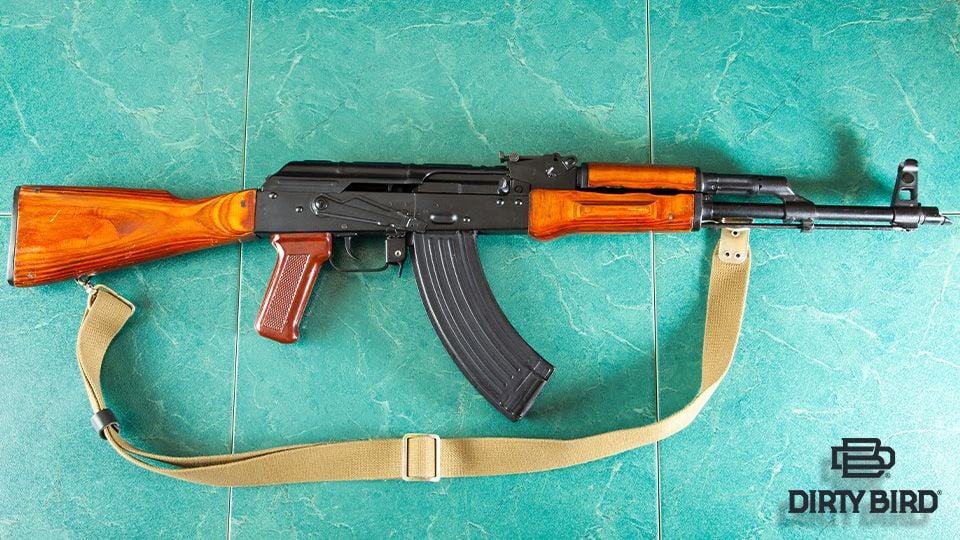
Sep
Table of Contents
The AK has a way of sitting in the back of a shooter’s mind until the day it finally becomes the next rifle in the safe. Maybe it is the unmistakable silhouette. Maybe it is the reputation for durability. Or maybe, after owning enough AR-15s, you simply want something with a completely different personality.
In 2026, however, choosing an AK-pattern rifle is less romantic than it used to be. Cheap surplus 7.62×39 is no longer the automatic bargain it once was, American-made AK quality can still vary considerably between manufacturers, and a 5.56 AK has become a genuinely practical option for shooters who already keep piles of AR ammunition on hand.
That changes the question. Instead of simply asking whether an AK-47-style rifle belongs in the safe, buyers now have to decide which rifle is built well enough to trust and which caliber they can realistically afford to shoot.
Technically, rifles such as the Zastava ZPAP M70 and M90 are descendants of the Kalashnikov family rather than literal Soviet AK-47s. In the American market, however, “AK-47” remains the common shorthand buyers use when shopping for this style of rifle, and the same basic appeal remains intact.
What Still Makes an AK Feel Like an AK
The Kalashnikov design earned its reputation through simplicity, generous operating tolerances, and a long-stroke gas piston system built around dependable cycling rather than mechanical delicacy. The action has considerable operating energy, field stripping is straightforward, and the platform was designed around military conditions rather than bench-rest precision.
That does not mean every rifle wearing an AK-shaped receiver automatically inherits that reliability. Build quality still matters enormously. Rivet work, trunnion quality, headspace, barrel construction, receiver dimensions, and assembly all determine whether a particular rifle lives up to the reputation of the design.
That is especially important in the American AK market, where rifles can come from established foreign factories, domestic manufacturers, parts-kit builders, or companies assembling rifles from a mixture of imported and US-made components.
Modern AR-15s have also erased much of the old idea that the AK is reliable while the AR is fragile. A properly assembled AR-15 from a reputable manufacturer is an extremely dependable rifle, while generally offering better ergonomics, easier optics mounting, lighter weight, and a much larger domestic parts ecosystem.
The AK remains appealing for different reasons. It offers a distinct manual of arms, a long-stroke piston operating system, a substantial mechanical feel, and a rifle experience that is noticeably different from another AR hanging on the rack.
Why 5.56 Makes More Sense in an AK-47 Than It Used To
For decades, buying an AK in the United States almost automatically meant buying 7.62×39 ammunition alongside it. Cheap imported steel-case ammunition made that an easy decision.
That market has changed.
Bulk 7.62×39 remains available, but it no longer enjoys the overwhelming price advantage it once had. Current ammunition listings show plentiful 5.56 NATO availability, with bulk pricing that can compare favorably with 7.62×39 depending on brand, quantity, and shipping.
For someone who already owns several AR-15s, that makes a factory-built 5.56 AK considerably easier to justify. The shooter can keep stocking one primary rifle cartridge instead of building an entirely separate ammunition reserve just for the AK.
There are also ballistic benefits. The 5.56 cartridge typically produces a flatter trajectory and less recoil than 7.62×39, which can make the rifle easier to shoot quickly and easier to use at intermediate distances.
That is one reason the Zastava ZPAP M90 has become such an interesting option.
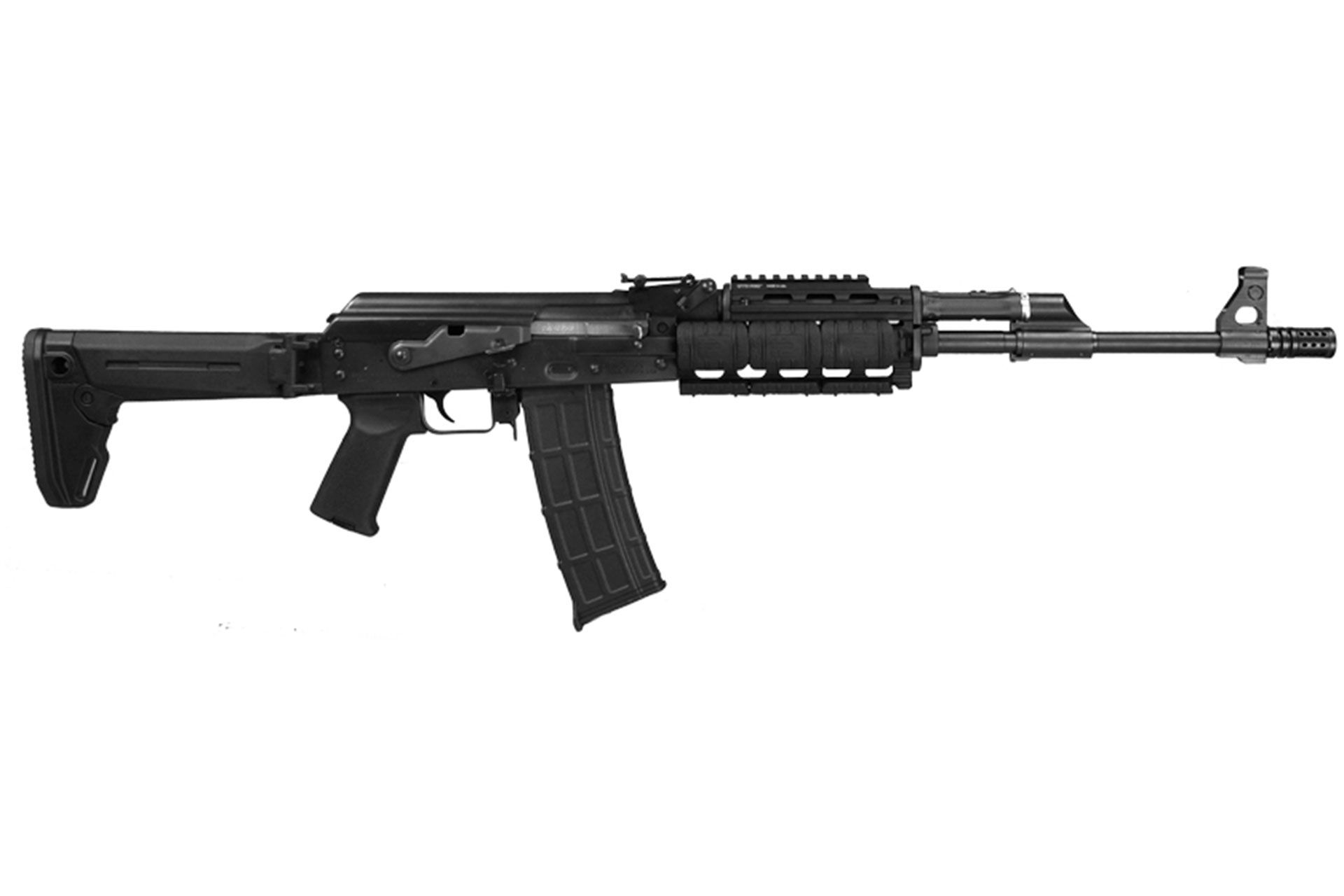
The M90 is built around 5.56/.223 and includes an adjustable gas system from the factory, giving shooters some control over how aggressively the rifle cycles. Zastava continues to identify the M90 as part of its heavier-duty ZPAP family alongside rifles using 1.5mm receivers and the company’s reinforced Yugo-pattern construction.
For an AR owner who wants the Kalashnikov experience without adding another major rifle cartridge to the ammunition closet, that combination makes a lot of sense.
Zastava Versus US-Made AK Rifles
American manufacturers have made significant progress with the AK platform. There are now domestically produced rifles with good machining, good finishes, modern furniture, and readily available factory support.
There are also enough differences between manufacturers that the name on the receiver still deserves research.
The Kalashnikov design may look simple, but building one correctly is not as easy as assembling an AR-15 from standardized components. Proper pressing, riveting, headspacing, alignment, and heat treatment all matter. That is why the track record of the manufacturer remains especially important with an AK-pattern rifle.
Zastava approaches the problem from the opposite direction. The company was founded in Kragujevac, Serbia, in 1853 and has more than 170 years of firearms manufacturing history. Its modern civilian ZPAP rifles descend from Yugoslav and Serbian military rifle designs rather than from a US commercial AK program created from scratch.
Current ZPAP M70 rifles use a 1.5mm receiver, bulged front trunnion, and cold hammer-forged chrome-lined barrel. That construction gives the rifle a noticeably stout feel compared with lighter AKM-pattern guns.
The tradeoff is compatibility.
Zastava rifles follow the Yugoslav or “Yugo” pattern rather than standard AKM dimensions in several areas, particularly furniture. That means a handguard or stock advertised for a conventional AKM may not automatically fit an M70 or M90.
Fortunately, that is far less restrictive than it once was. The popularity of Zastava rifles has created a substantial aftermarket for Yugo-pattern stocks, handguards, optic mounts, and accessories.
For many buyers, the decision therefore comes down to priorities. A US-made AK may offer easier domestic service, standard AKM-pattern compatibility, or a particular modern configuration straight from the factory. Zastava offers a factory-built Serbian rifle with a long manufacturing history and unusually robust construction for its price category.
The ZPAP M70 Still Makes the Case for 7.62×39
If the goal is a more traditional AK experience, the Zastava ZPAP M70 remains one of the easiest rifles to recommend in the current market.
The M70 chambers 7.62×39 and uses the heavier Zastava receiver and bulged-trunnion construction. Current production rifles also use cold hammer-forged, chrome-lined barrels, addressing one of the features buyers frequently wanted from older imported variants. Zastava lists current M70 rifles at roughly eight pounds depending on configuration, which reflects the platform’s heavier construction.
That weight gives the rifle a solid, planted character. It also means an M70 is not going to feel as light or lively as some stamped AKM-pattern rifles.
For many buyers, that is part of the attraction.
The harder part of choosing the M70 in 2026 is ammunition rather than the rifle itself. The 7.62×39 cartridge remains widely available, but shooters should no longer assume that inexpensive imported steel-case ammunition will always make it dramatically cheaper to feed than a 5.56 rifle. Current bulk listings illustrate how much that old pricing relationship has narrowed.
If the buyer specifically wants 7.62×39, the M70 remains an excellent way to get it. If caliber flexibility matters more than tradition, the M90 becomes harder to ignore.
The ZPAP M90 Makes a Strong Case for the AR Owner
The M90 fills an increasingly important niche because it offers an AK-pattern rifle without forcing the owner to commit to 7.62×39.
That matters most for shooters who already own AR-15s.
An ammunition supply built around 5.56 can feed both platforms, simplifying bulk purchases, range preparation, and long-term storage. At the same time, the shooter still gets the reciprocating mass, long-stroke piston operation, controls, and overall mechanical feel that make an AK distinctly different from an AR.
The factory adjustable gas system adds another advantage. Gas regulation gives the shooter more ability to tune how the rifle cycles under different conditions, something traditional fixed-gas AKs generally do not provide from the factory. Zastava specifically highlights the M90’s adjustable system in its current material.
That makes the M90 more than an AK chambered in the “wrong” cartridge. For many American shooters in 2026, it may actually be the most practical version of the platform.
US-Made AKs Still Have Their Advantages
None of this means an imported Zastava automatically beats every American-made AK.
Domestic rifles can offer advantages that matter to certain buyers, including easier warranty service, wider use of standard AKM-pattern furniture, more modern configurations, and manufacturers that already include upgraded triggers, rails, stocks, or muzzle devices.
Some American companies have also built strong reputations specifically by addressing weaknesses that plagued earlier generations of domestic AKs.
The important distinction is that “US-made” should not be treated as one category of quality.
A rifle from an established manufacturer with correctly manufactured trunnions, proper heat treatment, good barrel components, and consistent assembly deserves to be judged on its own merits. The same applies to imported rifles.
Country of origin matters less than who made the gun and how they made it.
Do Not Buy an AK Based on the Receiver Thickness Alone
The M70 and M90’s 1.5mm receivers and bulged trunnions are legitimate selling points, but they should not become the entire argument.
A thicker receiver does not automatically make a rifle better for every shooter. It makes the rifle heavier and contributes to the sturdy feel of the Zastava pattern, but standard military AKM rifles successfully used thinner stamped receivers for decades.
What matters is the complete package.
Receiver construction, trunnion quality, barrel quality, headspace, rivet installation, alignment, magazines, and quality control all contribute to whether the rifle is worth buying.
The Zastava argument is strong because those features come together in a factory-produced rifle with an established manufacturing history, not simply because one piece of sheet metal happens to be thicker.
What About Accuracy?
One area where the AK’s reputation occasionally gets exaggerated in the wrong direction is accuracy.
A good AK-pattern rifle is not inherently inaccurate, but it also should not be purchased with the expectation that it will routinely outshoot a quality AR-15 built around precision.
Mechanical accuracy varies by rifle, ammunition, sights, and shooter. Zastava itself has published examples of M70-pattern rifles producing respectable groups, but those results should not be treated as a guarantee for every rifle and every ammunition combination.
For most owners, practical accuracy matters more than chasing a specific MOA number. A good AK should keep rounds where they need to go at realistic carbine distances while delivering the reliability and handling characteristics buyers expect from the platform.
If producing tiny groups is the primary objective, there are better rifles for the job.
Which AK Should You Buy in 2026?
Start with ammunition.
If 5.56 already fills the shelves in your gun room, the Zastava M90 deserves serious consideration. It gives you the AK operating system and handling experience without requiring another major ammunition stockpile, while its adjustable gas system adds a genuinely useful modern feature.
If the goal is the traditional Kalashnikov experience, the ZPAP M70 remains difficult to argue against. The combination of 7.62×39, reinforced Yugo-pattern construction, a cold hammer-forged chrome-lined barrel, and established factory production makes it a strong entry point into the platform.
A well-built US-made rifle can also be an excellent choice, particularly for someone who values domestic support or standard AKM-pattern compatibility. Just evaluate the manufacturer rather than assuming every American AK is built to the same standard.
Ultimately, the best AK-47-style rifle in 2026 is the one that matches the shooter’s actual priorities. The days when the answer automatically meant buying the cheapest imported 7.62 rifle and feeding it cases of bargain steel ammunition are largely behind us.
For some shooters, the answer is still a stout 7.62×39 M70. For an increasing number of AR owners, it may be a 5.56 M90 that uses ammunition they already buy by the case.
Dirty Bird Guns & Ammo carries AK-pattern rifles and related components for shooters looking to add something different to the safe. Compare the available rifles, decide whether traditional 7.62×39 or practical 5.56 makes more sense for how you actually shoot, and choose the rifle based on construction and intended use rather than the flag stamped on the box.