

 Dirty Bird Bakersfield
AR Parts and Accesories, AR-15, Bolt carrier Groups
The Role of the AR-15 Bolt Carrier Group: Supporting Accuracy Through Reliable Function
Jun
Table of Contents
At Dirty Bird Guns & Ammo, we talk to a lot of builders and shooters who are chasing better accuracy out of their AR-15. Whether they’re tuning a rifle for competition, dialing in a setup for long-range shooting, or simply trying to get tighter groups at the range, one question that often comes up is: how much does the bolt carrier group actually affect accuracy?
It’s a good question—and one that deserves a thoughtful answer. While most shooters know the BCG is essential for reliable operation, the connection between the bolt carrier group and a rifle’s accuracy isn’t always clear. In this guide, we’ll take an honest look at what the BCG does, how it indirectly influences accuracy, and what to look for when selecting one for your build.
What the Bolt Carrier Group Does
The bolt carrier group is one of the most critical moving parts in an AR-15. Housed in the upper receiver, it performs several essential functions every time the rifle fires. As the rifle cycles, the BCG is responsible for:
- Chambering a round from the magazine
- Locking the bolt in place so the round can be safely fired
- Striking the primer via the firing pin
- Extracting and ejecting the spent casing
- Resetting the hammer for the next shot
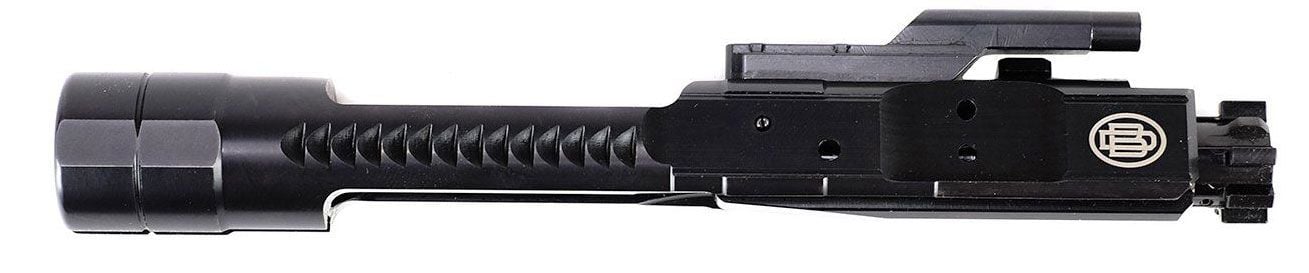
This cycle happens in fractions of a second. For it to run smoothly, all components in the BCG have to function in harmony. A typical BCG includes:
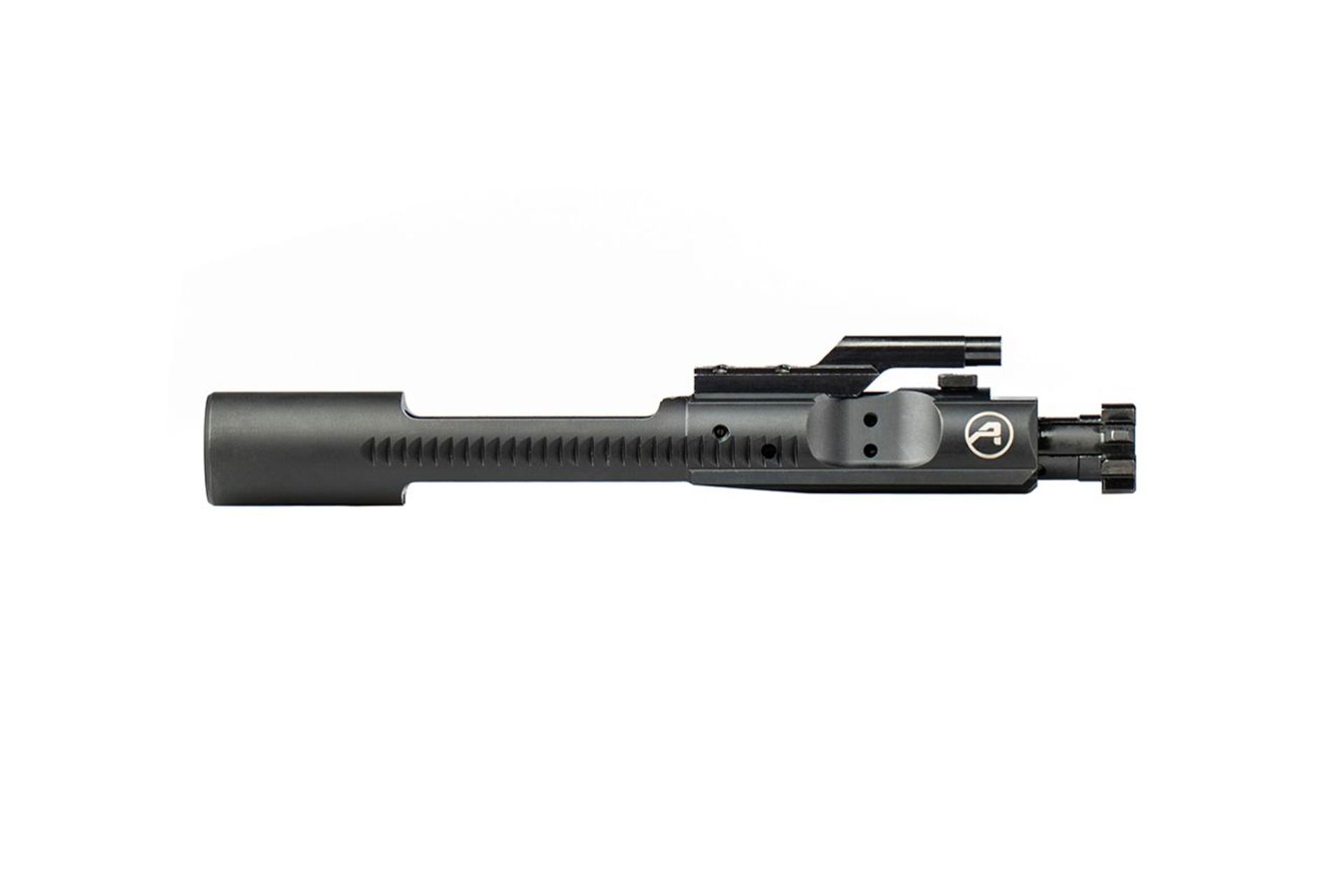
- Bolt Carrier – Holds the bolt and rides inside the upper receiver, driven by gas pressure from the fired round.
- Bolt – Engages the barrel extension to lock and unlock, chambers the round, and contains the extractor and ejector.
- Cam Pin – Controls the rotation of the bolt, allowing it to lock and unlock during cycling.
- Firing Pin – Strikes the primer to ignite the cartridge.
- Gas Key – Directs gas from the gas tube into the carrier to drive the action.
Because each of these parts plays a vital role in the rifle’s function, any weakness in design, material, or assembly can cause problems. A cracked bolt, improperly staked gas key, or worn extractor spring can all lead to malfunctions—and malfunctions, especially in the middle of a string of fire, are where accuracy and consistency begin to fall apart.

How the BCG Supports Accuracy (and Where It Doesn’t)
When people talk about improving the accuracy of an AR-15, they’re often referring to mechanical accuracy—the rifle’s ability to shoot tight groups under controlled conditions. This is largely determined by the quality of the barrel, ammunition, optic, and trigger. Those components have a direct impact on how precisely the rifle places rounds downrange.
The bolt carrier group does not change the inherent mechanical accuracy of a rifle. However, it does play a supporting role in helping you realize that accuracy more consistently. Here’s how:
Consistent Headspacing
Proper headspacing—the precise fit between the bolt and barrel extension—is crucial for both safety and repeatability. A well-manufactured BCG helps maintain that spacing within spec, which ensures that each round seats the same way every time. That consistency helps eliminate minor variables in bullet alignment and chamber pressure, which, over time and distance, can add up to shifts in point of impact.
While a small variation in headspacing might not matter much at 50 yards, it becomes more noticeable when shooting at longer distances or in a competition setting where consistency is everything. This is why headspacing should always be checked with go/no-go gauges when building or upgrading a rifle with a new BCG.
Reliable Cycling
A quality bolt carrier group helps ensure the rifle cycles the same way every time. This is especially important in situations where the shooter is firing quickly or repeatedly, such as in 3-gun competitions or tactical training. If the bolt doesn’t lock consistently or the carrier bounces at the rear of its stroke, cycling can become inconsistent—and that can impact the shooter’s rhythm and lead to missed follow-ups.
Heavier, full-auto-profile carriers can provide slightly more stability in cycling, especially when shooting suppressed or with over-gassed systems. They don’t make your rifle more accurate in a mechanical sense, but they can promote more consistent function under varying conditions, which supports better performance from shot to shot.
Clean Extraction and Ejection
Another way the BCG contributes to functional accuracy is by reliably extracting and ejecting spent casings. Failures to extract, stove pipes, or double feeds all interrupt your shooting cadence and can throw off your focus. Worse, they can cause feeding issues that damage rounds or lead to out-of-battery conditions.
A good BCG uses a strong extractor spring, quality materials, and proper staking on the gas key to keep things running smoothly. By reducing the chances of a malfunction mid-string, it helps maintain shooter confidence and consistency.
Durability and Fouling Resistance
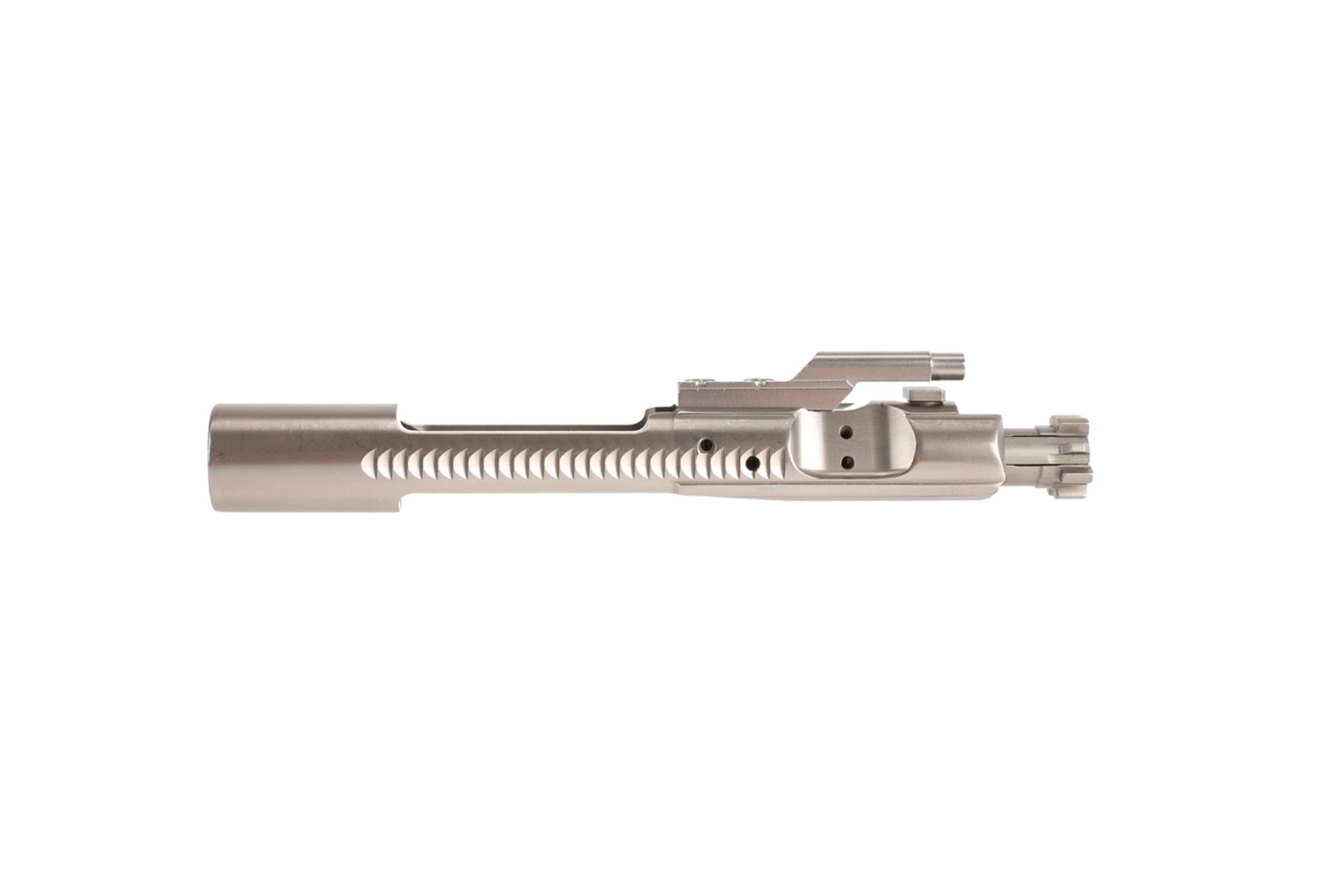
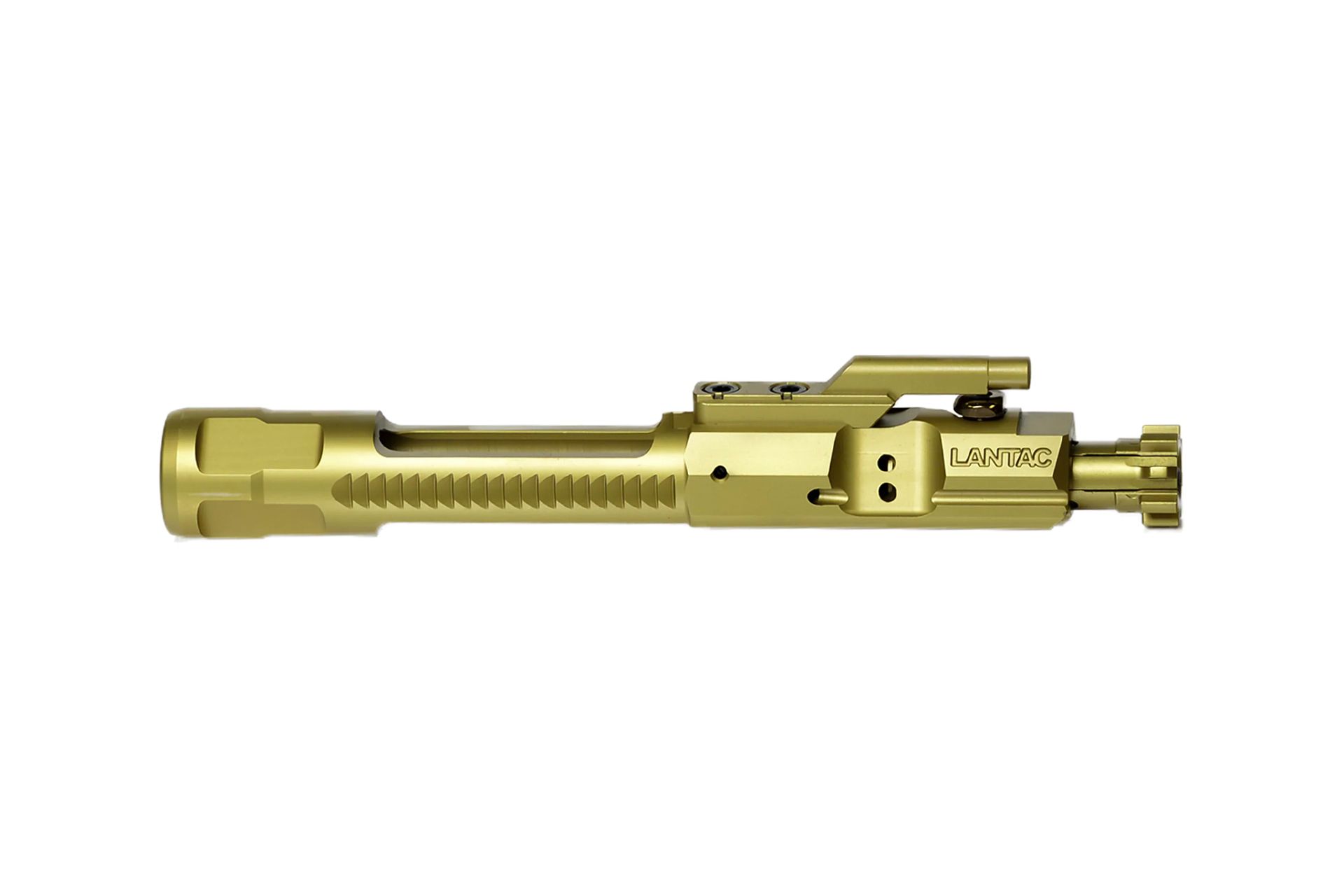
Over time, carbon fouling and heat buildup can affect how smoothly your rifle cycles. BCGs with high-quality coatings—like nitride, phosphate, or nickel boron—help resist corrosion and fouling buildup. Nitride is particularly popular for its low maintenance and smooth surface, which makes cleaning easier and cycling more reliable.
While fouling doesn’t directly reduce group size, excessive buildup can slow down the BCG or cause timing issues, especially in rifles that see high round counts or long strings of fire. The smoother and more durable your BCG, the more consistently it will perform under stress.
What to Look for in a BCG If Accuracy Matters to You
If your goal is to get the most consistent performance from your rifle—whether for precision shooting, competition, or just reliable range time—there are a few key things to look for when choosing a bolt carrier group:
Materials
- Bolt – Look for Carpenter 158 or 9310 steel, both known for their high strength and pressure resistance.
- Carrier – Typically made from 8620 steel, which balances strength and toughness.
- Gas Key – Should be 4130 steel, torqued and staked properly to stay secure under heat and pressure.
Testing
A quality BCG should be high pressure tested (HPT) and magnetic particle inspected (MPI). These tests help ensure that the steel is free from microfractures or inclusions that could lead to failure over time.
Finish
- Phosphate – Tried and true. Holds lubrication well and provides good corrosion resistance.
- Nitride – Slicker, easier to clean, and more wear resistant. Great for high-volume shooting.
- Nickel Boron – Extremely smooth and low-friction, though some shooters find it less reliable in very dusty environments due to the slick surface.
Weight and Profile
- Full-auto profile – Slightly heavier, improves cycling stability. Good for suppressed or tactical setups.
- Standard profile – Suitable for most builds and shooting styles.
- Lightweight/low mass – Popular in competition rifles. Requires careful tuning of the gas system and buffer setup.
Adjustable Gas Bolt Carrier Groups
Adjustable gas bolt carrier groups, exemplified by the Bootleg Inc. Four-Position Adjustable Carrier, enable shooters to control gas flow directly at the carrier, serving as an effective alternative to adjustable gas blocks. The Bootleg carrier offers a side-mounted dial with four distinct settings: full gas, reduced gas, minimal gas, and no gas, adjustable with a simple flathead screwdriver. To set the desired gas level, shooters remove the bolt carrier group, adjust the dial, and reinstall it, typically fine-tuning the setting through range testing to achieve optimal performance. This feature minimizes gas blowback in suppressed rifles, reduces recoil for competitive shooting, and enhances reliability across a range of ammunition types, including subsonic .300 AAC Blackout and high-pressure 5.56x45mm rounds.
When It’s Worth Upgrading
If you’re just plinking at the range a few times a year, a basic Mil-Spec bolt carrier group may suit your needs just fine. But if you’re pushing your rifle in any serious way—through high round counts, suppressor use, competitive shooting, or extended range sessions—you’ll notice the benefits of a well-built BCG.
Reliable function translates into consistent performance, and consistent performance allows the shooter to focus on fundamentals. That’s where true accuracy comes from.
Final Thoughts
While the bolt carrier group isn’t the magic key to tighter groups, it plays a vital role in supporting everything else that contributes to accuracy. A rifle that runs smoothly, cycles consistently, and extracts cleanly is a rifle that lets the shooter stay focused and in rhythm.
At Dirty Bird Guns & Ammo, we believe that choosing a high-quality bolt carrier group isn’t about chasing gimmicks—it’s about building a system that performs reliably shot after shot. For those trying to get the most out of their AR-15, that kind of consistency matters. Whether you’re putting rounds on steel at 500 yards or shooting drills at 10, a solid BCG helps keep everything working the way it should.
If you’re ready to upgrade your bolt carrier group or just want help finding the right one for your setup, our team is always here to help you make an informed decision.