

 Dirty Bird Bakersfield
AR-15 Barrels
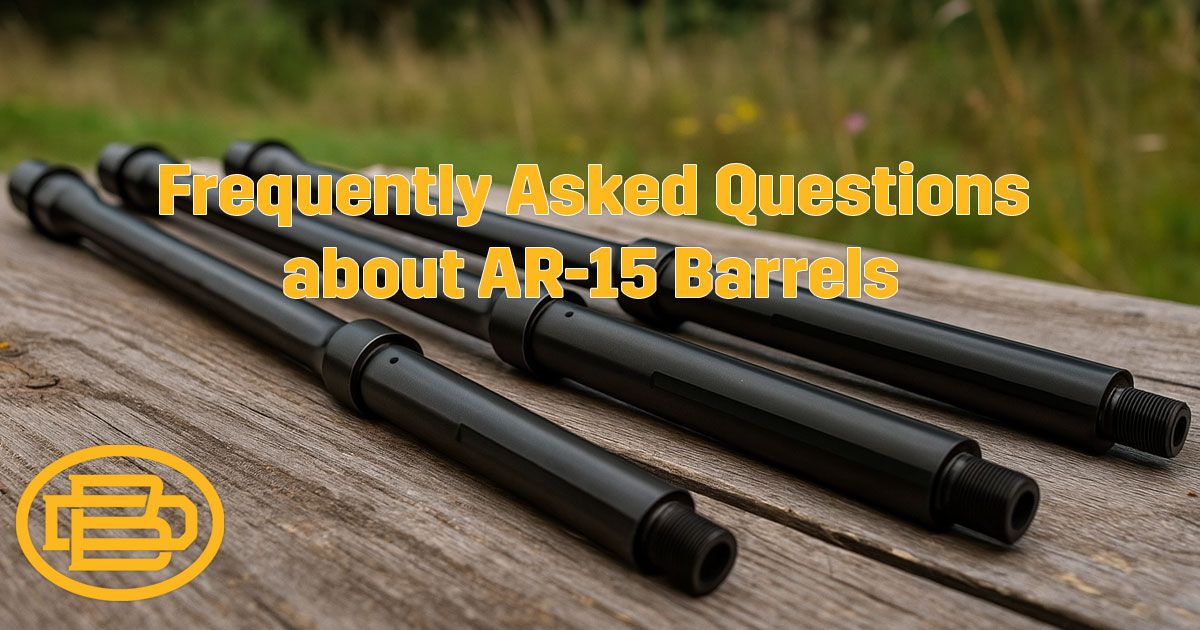
Frequently Asked Questions about AR-15 Barrels
Jul
Table of Contents
AR-15 Barrels FAQ: What You Need to Know Before Buying or Maintaining Your Barrel
When it comes to performance, few AR-15 components are as critical as the barrel. From barrel length and twist rate to materials, profiles, and threading, every detail plays a crucial role in determining accuracy, reliability, and suitability for specific applications. Whether you’re looking for the best AR-15 barrel for hunting, defense, or long-range shooting—or just trying to understand your options before browsing AR-15 barrels for sale—this FAQ is your go-to guide.
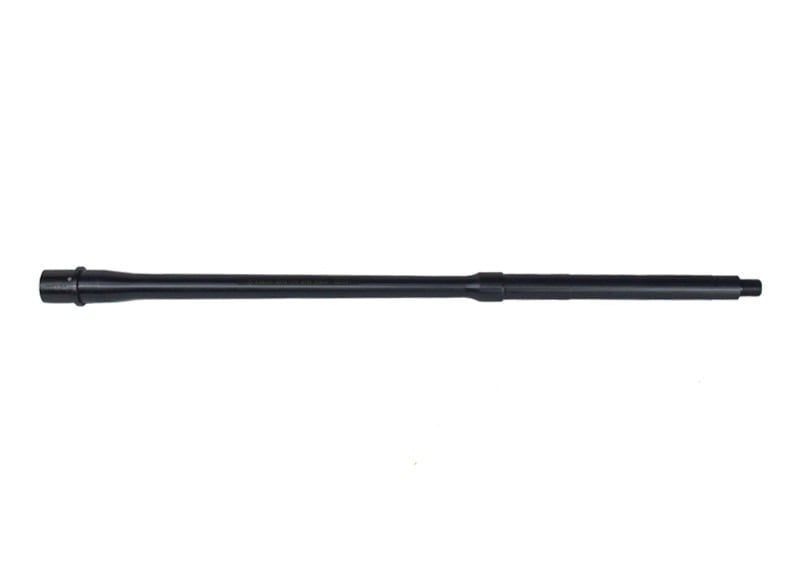
We cover everything from government vs. pencil profiles to the impact of gas system length on recoil and cycling. Plus, we break down threading standards and material types to help you make an informed decision.
Explore our full lineup of AR-15 Barrels at Dirty Bird Guns & Ammo.
How does barrel length affect performance and handling?
Barrel length directly impacts muzzle velocity, recoil, noise, and maneuverability.
Shorter AR-15 barrels (7.5″–11.5″): Compact and ideal for close quarters. Reduced velocity and louder report.
Standard length (14.5″–16″): Good balance of velocity, range, and handling. Common for general-purpose builds.
Long barrels (18″–20″+): Better ballistic performance at a distance. Heavier, with increased dwell time and reduced recoil impulse.
Your build’s purpose determines the optimal AR-15 barrel length—short for CQB and SBR setups and longer for precision and reach.
What is the best barrel length for my needs?
Home defense/Truck gun: 10.3″ to 11.5″
General-purpose/Do-it-all: 14.5″ pinned or 16″
Hunting/Long-range: 18″ to 20″ AR-15 barrel
Longer barrels offer better velocity and accuracy potential, while shorter barrels prioritize weight and maneuverability. The best AR-15 barrel strikes a balance between your intended range, legal compliance, and handling comfort.
What is barrel twist rate, and how does it affect bullet stability?
Twist rate (e.g., 1:7, 1:8, 1:9) refers to how fast the rifling spins the bullet. A 1:7 twist means one full rotation every 7 inches.
1:7 twist: Ideal for heavier bullets (62–77gr).
1:8 twist: Versatile; stabilizes most bullet weights.
1:9 twist: Suited for lighter bullets (40–62gr).
If you shoot mixed loads, 1:8 is a balanced choice. For heavier match ammunition, opt for a 1:7 twist.
Can I shoot 5.56 NATO in a .223 Remington barrel?
No. A .223 Remington chamber cannot safely handle the higher pressure of 5.56 NATO rounds.
If you want to shoot both safely, choose a barrel chambered in:
5.56 NATO
.223 Wylde (optimized for both .223 and 5.56 with better accuracy potential)
Avoid running 5.56 in a .223-only chamber, as it risks overpressure and potential damage.
What is the difference between a carbine, mid-length, and rifle-length gas system?
Gas length affects reliability, recoil, and wear on parts.
Carbine: Shortest system, used on 10.5″–14.5″ barrels. Snappier recoil.
Mid-length: Better gas impulse for 14.5″–16″ barrels. Smoother cycling.
Rifle: Longest dwell time. Best for 18″–20″ setups and match guns.
Ensure your barrel’s gas system matches the purpose and buffer setup of your build. For example, mid-lengths pair well with 16″ barrels for balance and reliability.
How long does an AR-15 barrel typically last?
Chrome-lined/Phosphate barrels: 15,000+ rounds with proper care.
Stainless steel barrels: 5,000–10,000 rounds, depending on use.
Nitride-treated barrels: Up to 10,000+ rounds with extended corrosion resistance.
Shooting frequency, maintenance, and ammo choice all influence longevity. For maximum life, avoid excessive heat and clean regularly.
What are common problems with AR-15 barrels, and how can they be fixed?
Accuracy drop: Check for copper fouling, worn rifling, or damage to the crown.
Gas issues: Caused by loose gas blocks, leaks, or improper port sizing.
Overgassing: Use an adjustable gas block or heavier buffer.
Muzzle device misalignment: Fix with proper shims and torque.
Routine inspection and use of quality parts help avoid these issues. Consider carbon fiber AR-15 barrel options if you’re experiencing barrel whip or heat concerns in precision builds.
How do I clean and maintain my AR-15 barrel?
Use a bore brush with solvent (e.g., Hoppe’s or CLP).
Run patches until clean.
For copper fouling, use a copper-specific cleaner.
Use a bore guide to avoid damaging the crown.
Finish with a light coat of oil.
Maintenance every 300–500 rounds prevents accuracy loss and corrosion. A clean AR-15 barrel is a consistent barrel.
What is barrel dwell time, and why is it important?
Dwell time is the interval between the bullet passing the gas port and exiting the muzzle. Too short = undergassed; too long = overgassed.
It affects cycling, reliability, and wear.
Influenced by gas system length and barrel length.
Optimizing dwell time ensures smooth recoil and reliable cycling. It’s essential when using suppressors or subsonic ammo.
What is the ideal barrel material for my intended use?
4150 CMV (Chrome Moly Vanadium): Best for general-purpose builds.
Stainless Steel: Precision builds and varmint hunting.
Carbon Fiber Barrel AR-15: Lightweight with excellent heat resistance.
Match material to your use case—don’t overpay for SS if you’re not chasing sub-MOA groups.
How does barrel profile (lightweight, government, heavy, etc.) affect performance?
Lightweight: Great for speed and handling. It can overheat quickly.
Government (Gov’t): Military standard; balanced durability and weight.
Heavy/Bull Barrel: Stiff for accuracy; adds weight. It’s ideal for benchrest or DMR builds.
Your shooting style determines whether weight savings or rigidity is more important.
What is the effect of adding a suppressor on barrel performance and the gas system?
Increases back pressure, which may lead to faster cycling.
Causes carbon buildup near the chamber.
Use an adjustable gas block to tune the setup.
Suppressor-ready barrels often have threaded muzzles (ensure proper AR-15 barrel threading).
Suppressors enhance recoil control but require tuning to avoid overgassing and wear.
Are there legal restrictions on AR-15 barrel length?
Yes. Barrels under 16” must be used on a:
Registered SBR (Short-Barreled Rifle), or
AR pistol platform (with brace, where legal)
Adding a short barrel to a rifle lower without proper NFA registration is a violation of the law. Always check federal and local laws.
How does the quality of the barrel crown affect accuracy?
The crown is where the bullet exits the barrel. Any imperfection here affects gas release and bullet trajectory.
A clean, concentric crown ensures consistent accuracy.
Damaged crowns can cause flyers or stringing.
Protect the crown during cleaning. A precision-machined crown, such as a recessed target crown, is preferred for accuracy-focused barrels.
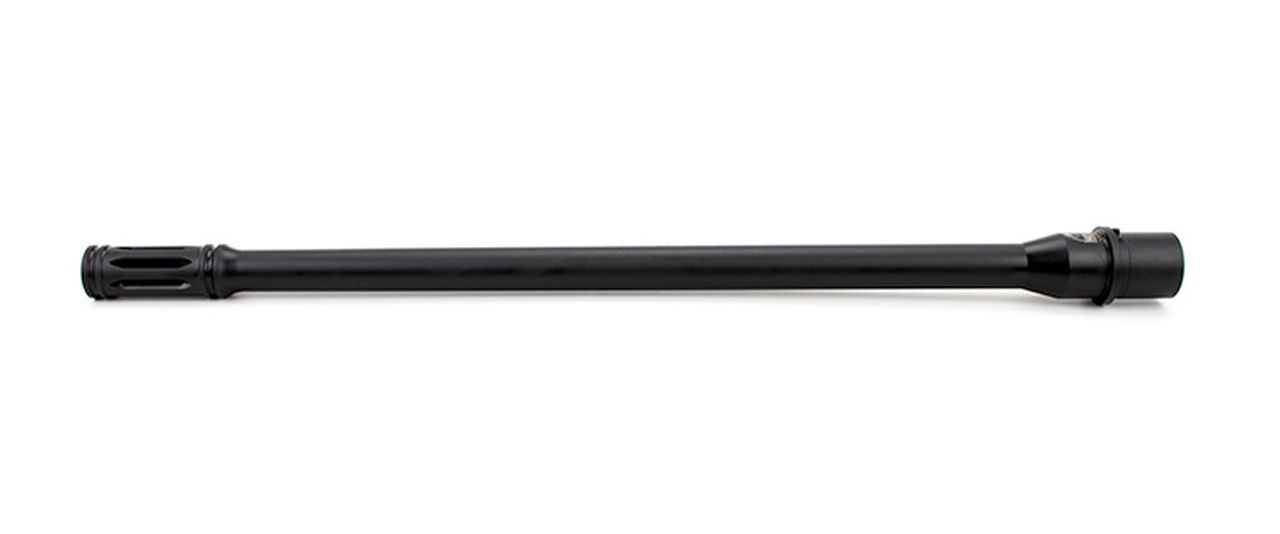
Popular AR-15 Barrel Brands for Sale at Dirty Bird USA
- Ballistic Advantage – Ballistic Advantage barrels are a trusted choice for builders who want mid-tier to high-performance results. Their precision engineering and consistent accuracy make them ideal for duty or competition builds.
- Dirty Bird Industries Barrels – Dirty Bird barrels are built for shooters who demand accuracy, reliability, and value. Perfect for range days or serious training, they offer premium specs at a more affordable price.
- Faxon Firearms Barrels – Faxon barrels are highly regarded for their match-grade precision, lightweight profiles, and innovative designs. They’re a go-to for competition shooters and advanced custom builds.
Final Thoughts on AR-15 Barrels
Whether you’re upgrading an existing rifle or planning your first build, the AR-15 barrel you choose defines your firearm’s performance. Consider your shooting needs, barrel profile, gas system, and materials carefully to maximize performance, reliability, and legal compliance.
Ready to take the next step? Shop high-performance AR-15 barrels for sale at Dirty Bird Guns & Ammo. Explore trusted brands, custom profiles, and threaded options for every application.
Additional resources, www.ar15discounts.com