

 Dirty Bird Bakersfield
AR Parts and Accesories, AR-15, Optics, Red Dot
Why Athlon Optics Make an Excellent Choice for Your AR-15
Mar
Table of Contents
Athlon Optics offer a strong mix of performance, durability, and value that makes them an easy recommendation for most AR-15 owners. You’re getting clear, fully multi-coated glass, solid aircraft-grade aluminum construction, and optics that hold up under recoil without constant re-zeroing. Everything is nitrogen purged, so they’re waterproof, fogproof, and built for real-world use.

TL;DR- Too Long Didn’t Read
Athlon Optics is recognized for delivering performance, durability, and value, making it a solid choice for AR-15 owners. They offer clear optics, robust construction, and reliability under recoil, further enhanced with a lifetime transferable warranty.
- Price Performance: Athlon outperforms in affordability and quality, offering features typically found in more expensive brands.
- Optic Type: Choosing between red dots, LPVOs, or prism scopes depends on specific use needs and shooting distances.
- Prism Optics: Underrated for their etched reticles, which are reliable and ideal for those with astigmatism.
- Manufacturing: Designed in the USA with overseas production, maintaining quality with strong control measures.
- Product Lines: Midas line offers the best value, with the Argos and Helos lines tailoring to different user demands.
Athlon is highlighted for its strong value proposition in the optics market, making it a practical choice for non-extreme use scenarios.
What really stands out is the lifetime transferable warranty. It covers normal use without requiring a receipt or registration, which removes a lot of the risk when buying in this price range.
For most shooters, Athlon hits that sweet spot where you’re getting near-premium performance without paying premium prices.
How Athlon Compares to Other Brands
Athlon tends to outperform expectations in its price bracket, especially when compared to other entry-to-mid-tier optics. The glass is often clearer with better contrast, builds feel solid, and tracking tends to be consistent with fewer real-world complaints about zero shift. While other brands may lean heavily on reputation, Athlon backs things up with performance and a warranty that is just as easy to work with.
If your shooting stays inside typical AR distances, you’re not really giving anything up by going with Athlon.
Choosing the Right Optic Type
Picking the right optic isn’t about what looks best on paper. It comes down to how you actually use your rifle. Most people overbuy magnification and end up with a setup that’s slower and heavier than it needs to be.
If your rifle is primarily for home defense or close-range shooting, a red dot is hard to beat. It’s fast, intuitive, and extremely forgiving. You don’t have to worry about eye relief or lining things up perfectly. You bring the rifle up, and the dot is there. Inside 100 yards, it’s still the most efficient option.
If you want more flexibility, that’s where LPVOs come in. They’ve become popular because they let you do a little bit of everything. At 1x, they can function similarly to a red dot with some practice. Dial them up, and you gain the ability to make more precise shots at distance. They shine in that 100 to 400 yard range where a red dot starts to feel limited.
Prism optics are a bit more specialized, but they solve a real problem for a lot of shooters. Instead of projecting a dot, they use an etched reticle, which means the aiming point stays crisp even if you have astigmatism. They’re also compact and don’t rely entirely on battery power, which adds a layer of reliability.
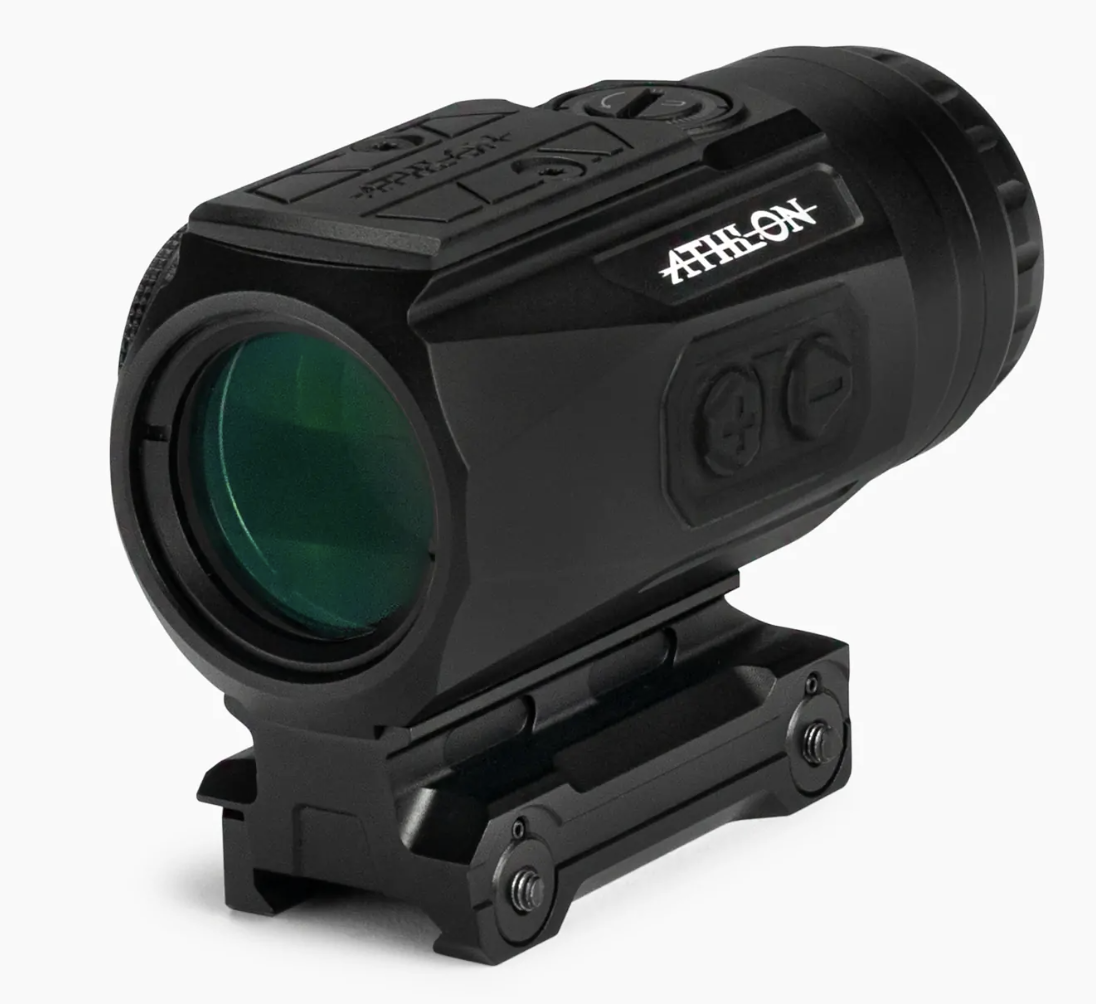
There’s also a hybrid approach that’s worth considering. Pairing a red dot with a flip-to-side magnifier gives you speed most of the time, with the option to add magnification when you need it. It’s a very practical setup that keeps the rifle fast and adaptable without committing to a heavier optic.
Another piece people often overlook is balance. A heavier optic like an LPVO can change how the rifle handles, especially on lighter builds. A compact red dot or prism optic keeps things quick and easy to manage, which matters more than people think when shooting on the move or transitioning between targets.
It also helps to be honest about distance. Most real-world shooting happens well under 200 yards. If that’s your reality, you probably don’t need as much magnification as you think. A simple setup that you can run well will always outperform a more complex one that slows you down.
Why Prism Optics Are Underrated
Prism optics don’t get talked about as much, but for the right shooter, they can be the best choice. The etched reticle gives you a sharp, consistent aiming point that doesn’t rely on electronics. That alone makes them appealing for reliability.
They’re also one of the best solutions for shooters who see red dots as blurry or distorted. Instead of dealing with a starburst effect, you get a clean, defined reticle. On top of that, they tend to be more compact than LPVOs while still offering some level of magnification.
For someone who wants clarity, simplicity, and a bit more capability than a standard red dot, prism optics are an easy option to overlook but a strong one to consider.
Focal Plane and Magnification
This is an area where people tend to overcomplicate things. For most AR-15 setups, second focal plane optics make more sense. The reticle stays bold and easy to see at low magnification, which is exactly where most shooting happens.
First focal plane optics have their place, especially for precision work where you need accurate holds at any magnification. But for general-purpose use, they often introduce more complexity than benefit.
When it comes to magnification, less is usually more. A true 1x handles everything up close. A 1-4x or 1-6x setup covers the majority of real-world shooting scenarios out to a few hundred yards. Going higher than that can help with target identification, but it also narrows your field of view and slows you down.
A red dot paired with a magnifier remains one of the most practical setups available, giving you flexibility without adding unnecessary bulk.
Athlon Product Lines Explained
Athlon keeps its lineup straightforward, which makes it easier to find what fits your needs. The Argos line covers the basics and works well for budget builds. Helos steps things up with better features and controls. The Midas line sits in the sweet spot, offering noticeably better glass and overall performance without a major jump in price.
For most AR-15 owners, Midas is where the value really shows. It delivers the kind of clarity and reliability that you would normally expect to pay more for.
Where Athlon Optics Are Made
Athlon is based in the United States, with design and development handled in Kansas. Manufacturing is done overseas under strict quality control standards, with some higher-end models incorporating Japanese components.
At the end of the day, performance matters more than origin. Athlon has built a strong reputation by delivering consistent quality across its lineup, regardless of where individual parts are produced.
Best Budget Athlon Optics Under $300
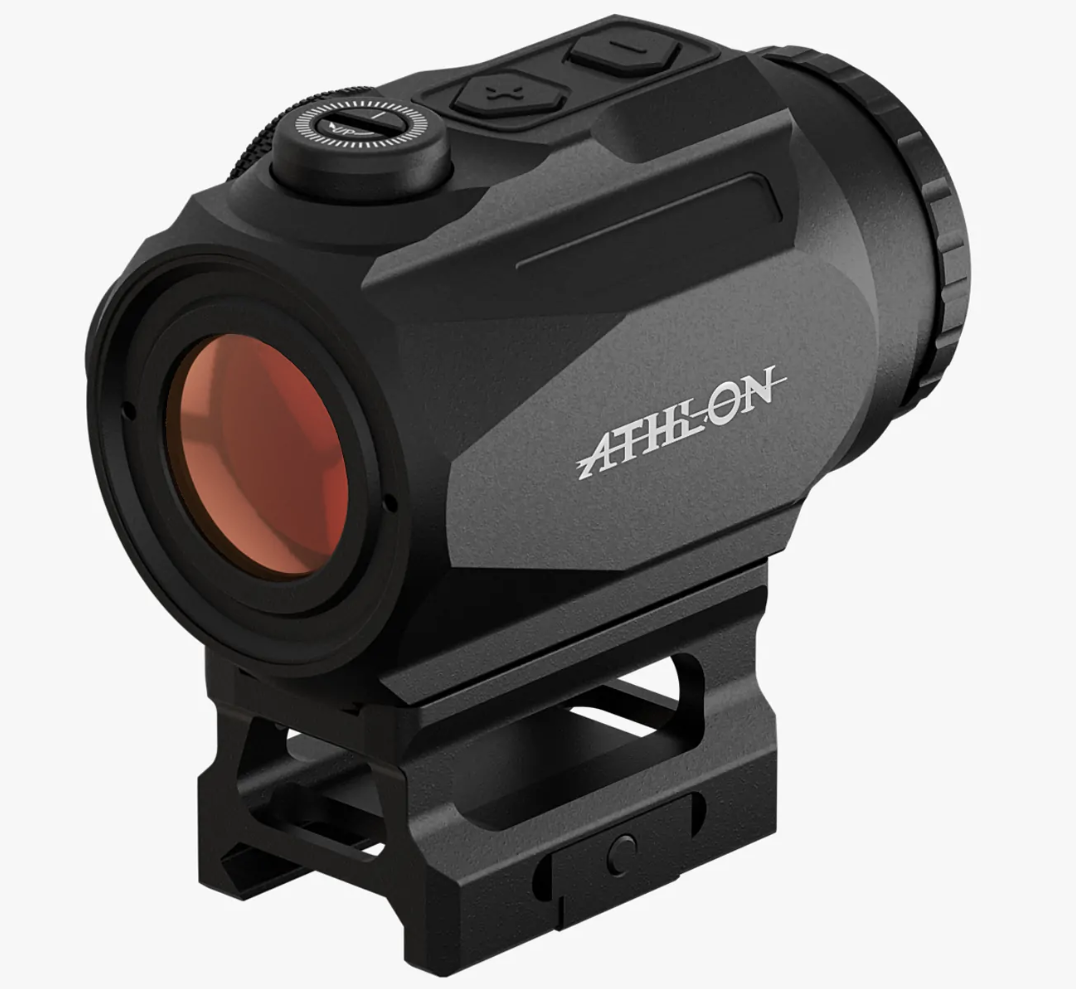
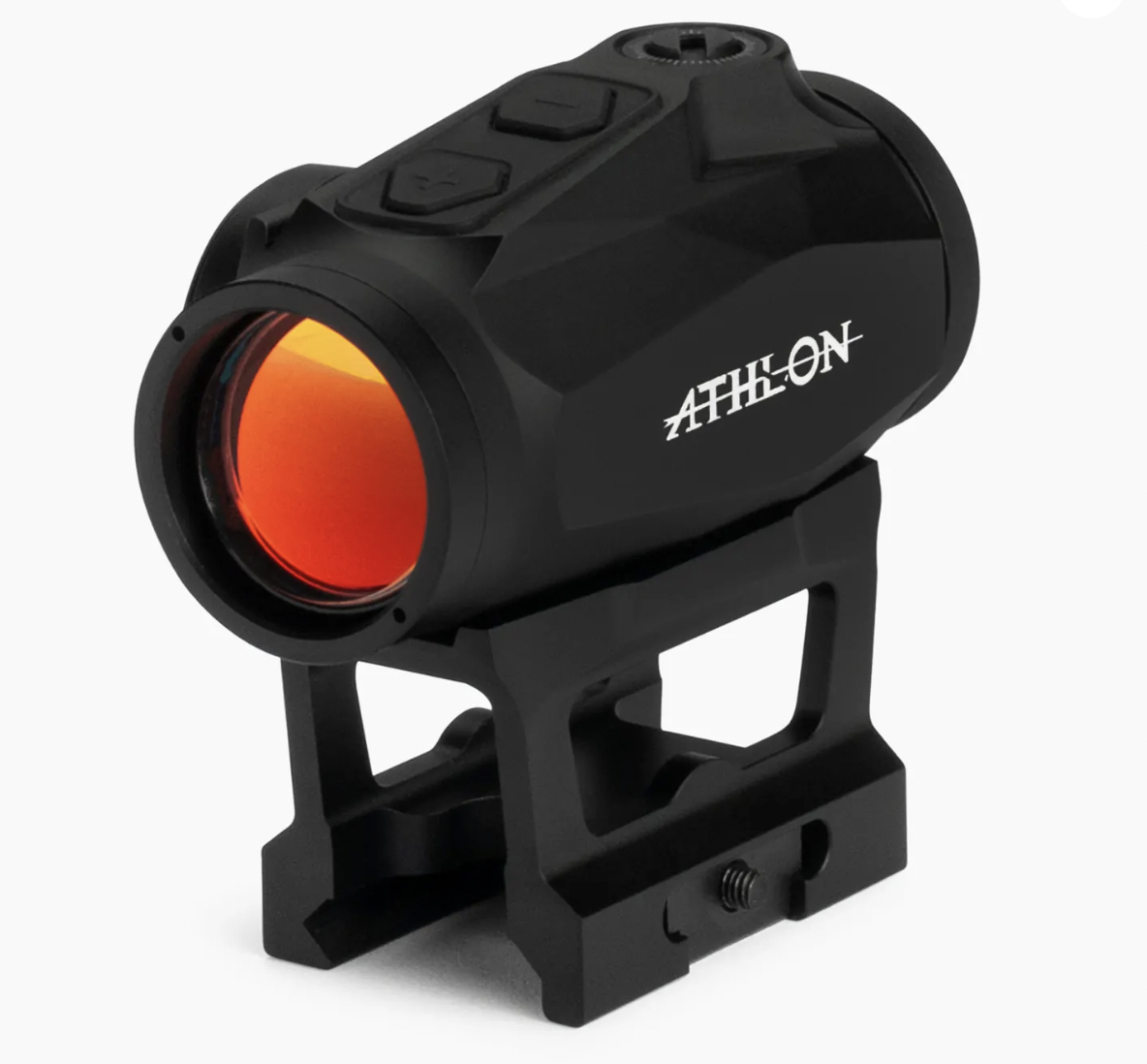
If you’re working within a tighter budget, Athlon still offers strong options. The Midas Blaze TSR2 is a closed-emitter red dot that’s built for speed and durability, with a crisp dot and long battery life. It’s a great fit for defensive or general-purpose rifles.
The Talos BTR 1-4×24 Gen2 LPVO gives you a more versatile setup, combining true 1x performance with enough magnification to stretch your effective range. It’s a solid all-around optic that doesn’t feel like a compromise.
Featured Athlon Optics Worth a Look
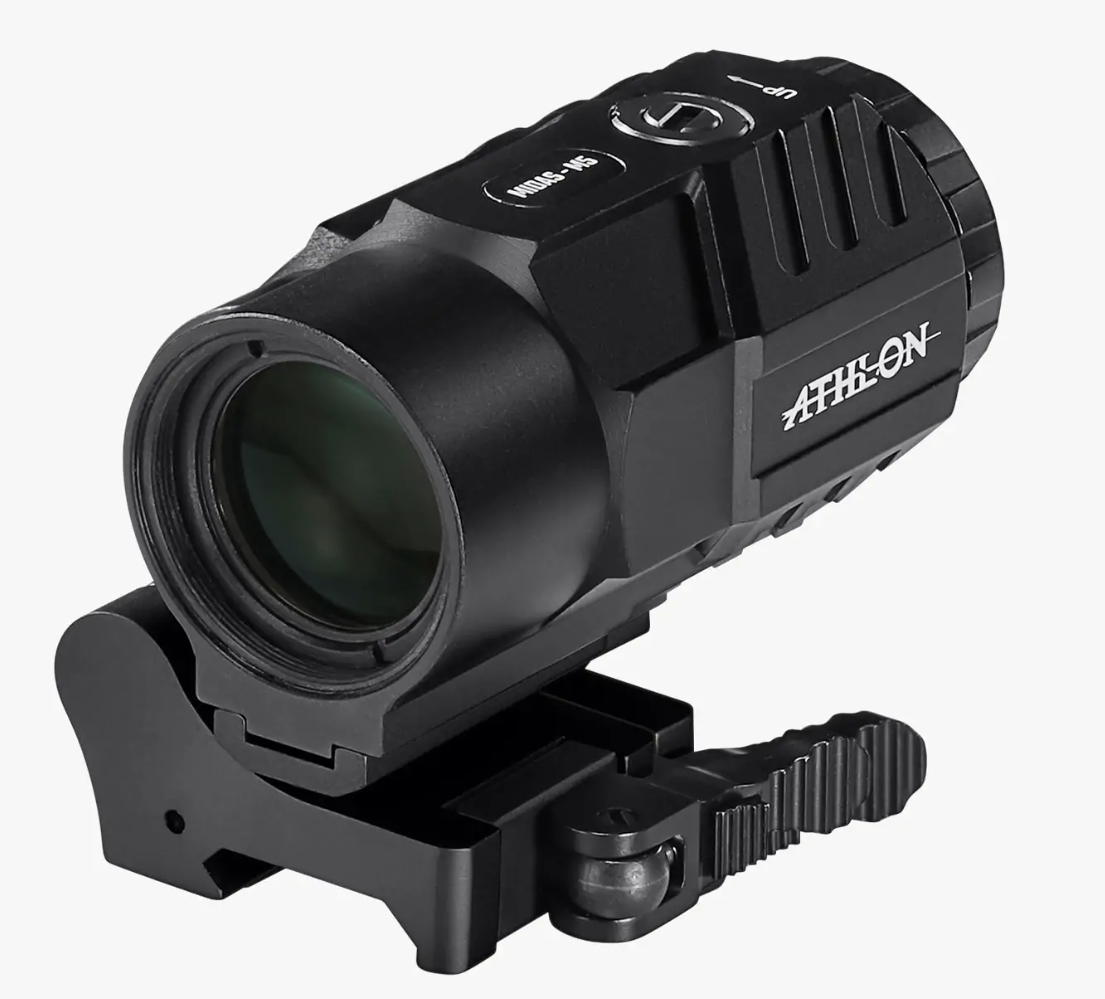
Athlon’s lineup includes a few standout options depending on how you plan to run your rifle. The Midas M5 magnifier pairs well with red dots for added range without adding much bulk. The Midas Flare prism series offers compact, durable optics with crisp etched reticles in multiple magnification levels. The Midas Blaze TSR2 remains a top choice for fast, close-range shooting, while the Talos BTR 1-4×24 continues to be one of the better entry-level LPVO options available.
Final Thoughts
Athlon has built its reputation by focusing on what actually matters: clear glass, reliable performance, and durable construction. You’re not paying for branding or hype. You’re getting optics that hold zero, perform consistently, and give you the capability most AR-15 shooters actually need.
If you want a dependable setup without overspending, Athlon is one of the safest choices you can make right now.
Are Athlon Optics good enough for an AR-15, or should I spend more?
Athlon optics are absolutely capable on an AR-15, especially for general use. For range shooting, training, hunting, and even moderate-distance work, they deliver strong performance for the price. Where they begin to fall short is in extreme use cases—hard-duty rifles, high-round-count training, or precision shooting beyond about 500–600 yards. In those situations, stepping up in price typically gets you better glass clarity, more consistent tracking, and improved durability. For most shooters, though, Athlon sits comfortably in the “smart value” category rather than a compromise.
What is the best Athlon Optics scope for an AR-15 in 2026?
The safest recommendation for most AR-15 setups is the Midas TAC 1-6×24 or 1-8×24. That line strikes the best balance between clarity, durability, and usability. It’s a noticeable step above entry-level options without pushing into premium pricing. If you’re trying to stay on a tighter budget, the Argos BTR line still works, but you’ll give up some glass quality. If you want to move up, the Helos and Ares lines add better features and refinement, but for most people, the Midas TAC remains the practical sweet spot.
How do Athlon Optics compare to Vortex Optics for the price?
Athlon tends to offer more features for the money, while Vortex generally delivers more consistency and long-term reliability. In comparable price ranges, Athlon often includes things like first focal plane reticles or higher magnification where Vortex may not. However, Vortex has a longer track record and tends to be more consistent across units, especially in their mid-tier lines. In real-world terms, Athlon competes very well with Vortex’s entry-level and lower mid-tier optics, while Vortex still holds an edge once you move into higher-end offerings.
What type of optics should I put on my AR-15 — red dot, LPVO, or prism scope?
The right choice depends entirely on how the rifle is used. A red dot is the simplest and fastest option for close-range shooting and defensive use, especially inside 100 yards. An LPVO, typically in the 1-6× or 1-8× range, is the most versatile choice and has become the default recommendation for a general-purpose AR-15 because it handles both close and mid-range shooting effectively. A prism scope fills a more specific role, usually for shooters with astigmatism who struggle with red dot clarity, offering a crisp etched reticle at a fixed magnification. If you’re unsure, an LPVO is usually the safest and most flexible starting point.
Does Athlon Optics offer a lifetime warranty on its rifle optics?
Athlon offers a lifetime transferable warranty on its optics, and it is one of the brand’s strongest selling points. It is comparable in structure to other major optics companies and does not typically require proof of purchase. That said, while the warranty is strong on paper, turnaround times and service experiences can vary, so it’s not quite at the level of the very best in the industry, but still solid and reliable overall.
What is the difference between Athlon Midas, Argos, and Helos optics?
The Argos line represents Athlon’s entry-level offerings, built to hit a lower price point with some tradeoffs in glass clarity and refinement. The Midas line is a clear step up and is widely considered the best value in their lineup, offering better glass, improved turrets, and a more polished overall feel. The Helos line sits above Midas and introduces more advanced features such as improved reticles and additional durability enhancements. In practical terms, the jump from Argos to Midas is significant, while the move from Midas to Helos is more incremental and depends on how much you value those added features.
Are first focal plane or second focal plane optics better for an AR-15?
Neither is universally better, but they serve different purposes. First focal plane optics scale the reticle with magnification, which allows for accurate holdovers at any zoom level and is useful for precision shooting. Second focal plane optics keep the reticle size consistent, which makes them easier to see at low magnification and often simpler for general use. For most AR-15 owners, second focal plane optics are more intuitive and practical, while first focal plane optics appeal more to shooters who prioritize precision and advanced shooting techniques.
What magnification range do I need in optics for an AR-15?
The most useful magnification range for a general-purpose AR-15 is typically 1-6×. It provides true 1x performance for close-range shooting while still offering enough magnification for targets out to 300 yards or more. A 1-8× optic can extend that range further, but often comes with added weight and complexity. If your shooting is mostly inside 100 yards, a red dot or low magnification is more than enough. As distances increase beyond 300 yards, higher magnification becomes more helpful, but for most shooters, 1-6× remains the most balanced option.
Where are Athlon Optics made, and does it affect quality?
Athlon is a U.S.-based company, but its optics are manufactured overseas, primarily in China, with some higher-end models produced in Japan. Manufacturing location does have some impact on quality, particularly at the lower end, where consistency can vary more. However, Athlon’s mid-tier and higher-end optics perform well relative to their price, and the company has done a good job balancing cost and performance. In practice, quality is driven more by design and quality control than by country of origin alone.
What are the best budget optics for an AR-15 under $300?
In the under-$300 category, several options stand out as reliable choices. Athlon’s Argos line offers strong features for the price, especially if you want more magnification or a first focal plane option. Primary Arms has built a strong reputation in this range, particularly with their SLx series and prism optics. Vortex remains a safe and consistent choice with models like the Crossfire II, while the Sig Sauer Romeo5 continues to be one of the most dependable budget red dots available. Each of these options balances affordability with proven performance, making them solid entry points without feeling disposable.