

 Dirty Bird Bakersfield
AK-47, AR-15, California Compliant, California Hunting, California Roster Guns, Handguns, Rifle
First Gun in California? Here Is Everything You Actually Need

Jun
Table of Contents
Buying a first gun in California in 2026 is a straightforward but highly regulated process. California enforces some of the strictest firearm laws in the country, including background checks, a mandatory waiting period, safety certification, and feature restrictions on certain firearms. At Dirty Bird Guns and Ammo, we help first-time buyers navigate these rules every day so every purchase is safe, legal, and informed.
This guide covers exactly what a new California gun owner needs to know.

TL;DR- Too Long Didn’t Read
Buying a firearm in California is a regulated process requiring several steps and adhering to specific legal requirements. This guide outlines initial steps for purchasing a firearm in 2026, considering stringent regulations to ensure safe and lawful acquisition.
- Acquire a Firearms Safety Certificate, necessary for most buyers unless exempt.
- Select a California-compliant firearm from a licensed dealer and complete necessary paperwork.
- A 10-day waiting period applies, starting after the DOJ accepts the DROS application.
- Proper identification, such as a REAL ID, is crucial; if marked “Federal Limits Apply,” supporting documents are needed.
- Secure storage solutions and understanding of legal transportation and storage laws are essential.
The Steps to Buy a First Firearm in California in 2026
The process follows a clear sequence. Obtain a Firearms Safety Certificate if required. Choose a California-compliant firearm from a licensed dealer. Complete the Dealer Record of Sale paperwork and background check. Pay fees and wait the mandatory 10-day period. Pick up the firearm after approval and the waiting period ends, bringing valid ID.
All purchases or transfers must go through a licensed California dealer. Private party transfers also require a dealer-facilitated DROS.
Documents Needed for a First Gun Purchase
A valid California Driver’s License or California ID card is required. REAL ID is preferred. Cards marked “Federal Limits Apply” require supplemental identification such as a U.S. passport or birth certificate for the FSC test and DROS. For handgun purchases, proof of California residency beyond the driver’s license is also required, such as a utility bill, lease agreement, or vehicle registration. Non-citizens must provide documentation showing legal presence in the United States, such as an Alien Registration number or I-94. Military ID with California duty orders is acceptable in some cases.
California REAL ID Versus Standard Driver’s License
A standard valid California Driver’s License or ID works for most purchases. If the card says “Federal Limits Apply,” supplemental identification is required to take the FSC test or complete DROS. A REAL ID marked with the golden bear or an older card without restrictions is the cleanest option for avoiding delays at the counter.
The California Firearms Safety Certificate
The FSC is a DOJ-issued certificate proving the holder understands basic firearm safety and California laws. It is required for nearly all buyers unless a specific exemption applies. Exemptions cover active or honorably retired peace officers, certain military members, and valid CCW holders. A valid hunting license exempts buyers for certain long guns only and does not apply to handgun purchases.
To obtain the FSC, the applicant must be at least 18 years old, visit a DOJ-certified instructor (often at a licensed dealer like Dirty Bird), pay $25 covering the test and up to two attempts, and pass a 30-question written test with a score of at least 23 out of 30, or 75 percent. The FSC is valid for five years.
The official DOJ Firearms Safety Certificate Study Guide covers safe handling, storage, California law, and firearm operation. Most buyers review it and take the test on-site at the dealer.
The California 10-Day Waiting Period
Every firearm purchase includes a mandatory 10-day waiting period, measured as ten 24-hour periods, that begins when the DROS is accepted by the DOJ and a number is issued. No exceptions exist for first-time buyers. The dealer cannot release the firearm until the period ends and the background check clears.
The waiting period is a good time to purchase ammunition, 10-round magazines where required, a secure storage solution, cleaning supplies, and eye and ear protection.
Best First Gun for a New California Gun Owner
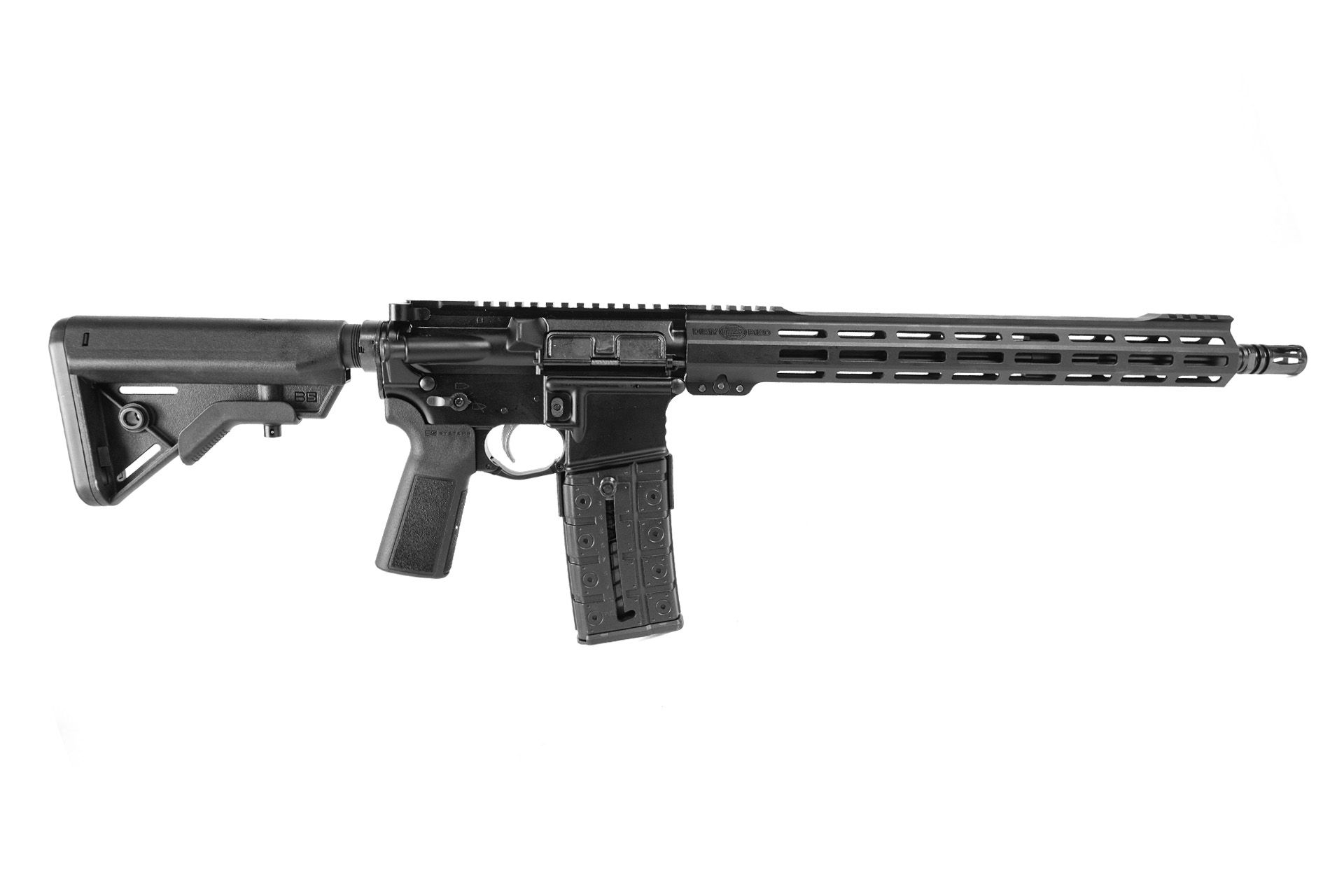
Many first-time buyers at Dirty Bird start with a handgun for self-defense or a California-compliant AR-15 for versatility and range training. Handguns must be on the California DOJ Handgun Roster and are popular options for concealed carry with a CCW permit or home defense. Shotguns tend to be simpler for beginners with fewer feature restrictions than rifles. California-legal rifles including featureless or fixed-magazine AR-15 and AK configurations work well for range use and home defense but must comply with assault weapon rules.
The right choice depends on the primary use, recoil tolerance, and storage situation. Handling options in person at the store before deciding is always the best approach.
Age Requirements for Firearm Purchases in California
California generally requires buyers to be 21 or older to purchase any firearm from a licensed dealer. Limited exemptions exist for buyers between 18 and 20 for specific non-semiautomatic long guns only, meaning standard shotguns without pistol grips and non-semiautomatic centerfire rifles. These exemptions apply to active military, law enforcement, and holders of a valid California hunting license. The hunting license exemption does not cover semiautomatic centerfire rifles, pistol grip shotguns, or handguns of any type. Handguns remain restricted to buyers 21 and older with no hunting license exemption available.
The California DROS Process and Possible Delays
DROS is the state’s electronic background check and registration system. The dealer submits the buyer’s information and the DOJ runs the check. The total state fee is $37.19, which includes the $31.19 DROS fee, a $1.00 Firearms Safety Act Fee, and a $5.00 Safety and Enforcement Fee. Dealer transfer fees are separate and vary by store.
Delays occur when records match the buyer’s descriptors and require additional verification. Most resolve within the 10-day window, but some cases go to undetermined status after 30 days, at which point the dealer may release the firearm or issue a refund depending on the circumstances. Planning ahead is always wise. As of April 1, 2026, buyers are limited to three firearms per 30-day period.
Essential Accessories to Have Ready at Pickup
Secure storage is required under 2026 California law. A DOJ-certified cable lock, trigger lock, or gun safe is necessary for legal storage. California-compliant 10-round magazines are required for many firearm configurations. Quality ammunition, a cleaning kit and gun oil, eye and ear protection, and a range bag round out the essentials for a new gun owner.
Laws for Transporting and Storing Firearms Legally
As of 2026, California requires firearms to be securely stored in a locked container, safe, or disabled with a certified device when not under direct control or being carried. Criminal storage penalties apply when a firearm is accessible to unauthorized persons, particularly minors.

For transport, handguns must be unloaded and in a locked container or placed in the vehicle trunk. Long guns must generally be unloaded and in a case or the trunk. Specific rules vary by firearm type and situation, so confirming with the dealer or a qualified attorney for the exact configuration being transported is always recommended. Firearms should never be left visible or accessible in a vehicle.
At Dirty Bird Guns and Ammo
Dirty Bird Guns and Ammo stocks a wide selection of California-compliant handguns, AR-15s, AKs, shotguns, and accessories. Our team walks first-time buyers through every step from FSC testing to DROS completion and pickup. Stop by, call, or shop online at dirtybirdusa.com. Stay safe, train often, and follow the law.
This article reflects California law as of mid-2026 and is for informational purposes only. It is not legal advice. Always verify current requirements with the California DOJ or a licensed dealer before purchasing.
What are the exact steps to buy your first firearm in California in 2026?
The process follows five steps in order. Obtain a Firearms Safety Certificate unless exempt. Choose a California-compliant firearm from a licensed dealer. Complete the Dealer Record of Sale paperwork and background check. Pay the required fees and wait the mandatory 10-day period. Return with valid ID to pick up the firearm after the waiting period ends and the background check clears. All purchases must go through a licensed dealer, including private party transfers.
What documents do I need to purchase a gun in California for the first time?
A valid California Driver’s License or ID card is required for all purchases. Handgun buyers must also provide a secondary proof of California residency such as a utility bill, lease agreement, or vehicle registration. A Firearms Safety Certificate is required unless the buyer qualifies for an exemption. Non-citizens must provide documentation showing legal U.S. presence such as an Alien Registration number or I-94. Military ID with California duty orders is acceptable in some cases.
Do I need a California Real ID to buy a firearm, or will a standard driver’s license work?
A standard valid California Driver’s License or ID works for most purchases. The problem arises when the card is marked “Federal Limits Apply,” which requires supplemental identification such as a U.S. passport or birth certificate to complete the FSC test or DROS process. A REAL ID marked with the golden bear or an older card without restrictions avoids that complication entirely.
What is the California Firearm Safety Certificate (FSC), and how do I get one?
The FSC is a DOJ-issued certificate proving the holder understands basic firearm safety and California law. It is required for nearly all firearm purchases. To obtain one, visit a DOJ-certified instructor, typically at a licensed gun dealer, pay the $25 fee which covers up to two test attempts, and pass a 30-question written test with a score of at least 23 out of 30. The FSC is valid for five years. Studying the official DOJ Firearms Safety Certificate Study Guide beforehand is strongly recommended as every test question comes from that material.
How long is the California 10-day waiting period, and when does it start?
The waiting period is 10 full 24-hour periods and begins the moment the DROS application is accepted by the DOJ and a number is issued. No exceptions exist for first-time buyers or experienced gun owners. The dealer cannot release the firearm until the full period has elapsed and the background check has cleared. Use the time to purchase storage, ammunition, and protective gear so everything is ready at pickup.
What is the best first gun for a new California gun owner: handgun, shotgun, or rifle?
It depends on the primary use. Handguns on the California DOJ Handgun Roster work well for home defense or concealed carry with a CCW permit. Shotguns tend to be the most beginner-friendly option with fewer feature restrictions than rifles. California-compliant AR-15s and AK-style rifles in featureless or fixed-magazine configurations offer versatility for range training and home defense but require careful attention to assault weapon compliance rules. Handling options in person before deciding is the best approach.
What additional requirements apply to first-time gun buyers under age 21 in California?
California generally requires buyers to be 21 or older to purchase any firearm from a licensed dealer. Limited exemptions exist for buyers between 18 and 20, but only for specific non-semiautomatic long guns such as standard shotguns without pistol grips and non-semiautomatic centerfire rifles. These exemptions apply to active military, law enforcement, and holders of a valid California hunting license. The hunting license exemption does not cover semiautomatic centerfire rifles, pistol grip shotguns, or handguns of any type. Handguns remain restricted to buyers 21 and older without exception.
What happens during the California DROS process, and why can a firearm purchase be delayed?
The dealer submits the buyer’s information electronically and the DOJ runs a background check through the DROS system. The total state fee is $37.19, covering the $31.19 DROS fee, a $1.00 Firearms Safety Act Fee, and a $5.00 Safety and Enforcement Fee. Delays occur when the buyer’s personal information matches records in the DOJ system that require additional verification. Most delays resolve within the 10-day waiting period. Cases that remain unresolved after 30 days may result in the dealer releasing the firearm or issuing a refund depending on the circumstances.
What accessories should every first-time California gun owner buy before taking their firearm home?
Secure storage is legally required under 2026 California law, so a DOJ-certified cable lock, trigger lock, or gun safe must be in place before the firearm arrives home. California-compliant 10-round magazines are required for many firearm configurations. Quality ammunition suited to the specific firearm, a cleaning kit and gun oil, eye and ear protection, and a range bag complete the essential starter setup.
After buying my first gun in California, what are the laws for transporting and storing it legally?
Storage as of 2026 requires firearms to be kept in a locked container, safe, or disabled with a certified locking device whenever not under direct control or being carried. Criminal storage penalties apply when a firearm is accessible to unauthorized persons, particularly minors. For transport, handguns must be unloaded and in a locked container or placed in the trunk. Long guns must generally be unloaded and in a case or the trunk. Firearms should never be left visible or accessible in a vehicle. Specific rules vary by firearm type, so confirming transport requirements with the dealer or a qualified attorney for the exact configuration is always recommended.