

 Dirty Bird Bakersfield
Rifle, Uncategorized
Fightlite SCR vs Traditional AR-15: Which One Should You Buy?
May
Table of Contents
The AR-15 is one of the most popular rifle platforms in America for a reason. It is modular, accurate, easy to support, and backed by a massive aftermarket. Shooters use it for range days, training, hunting, competition, and home defense.
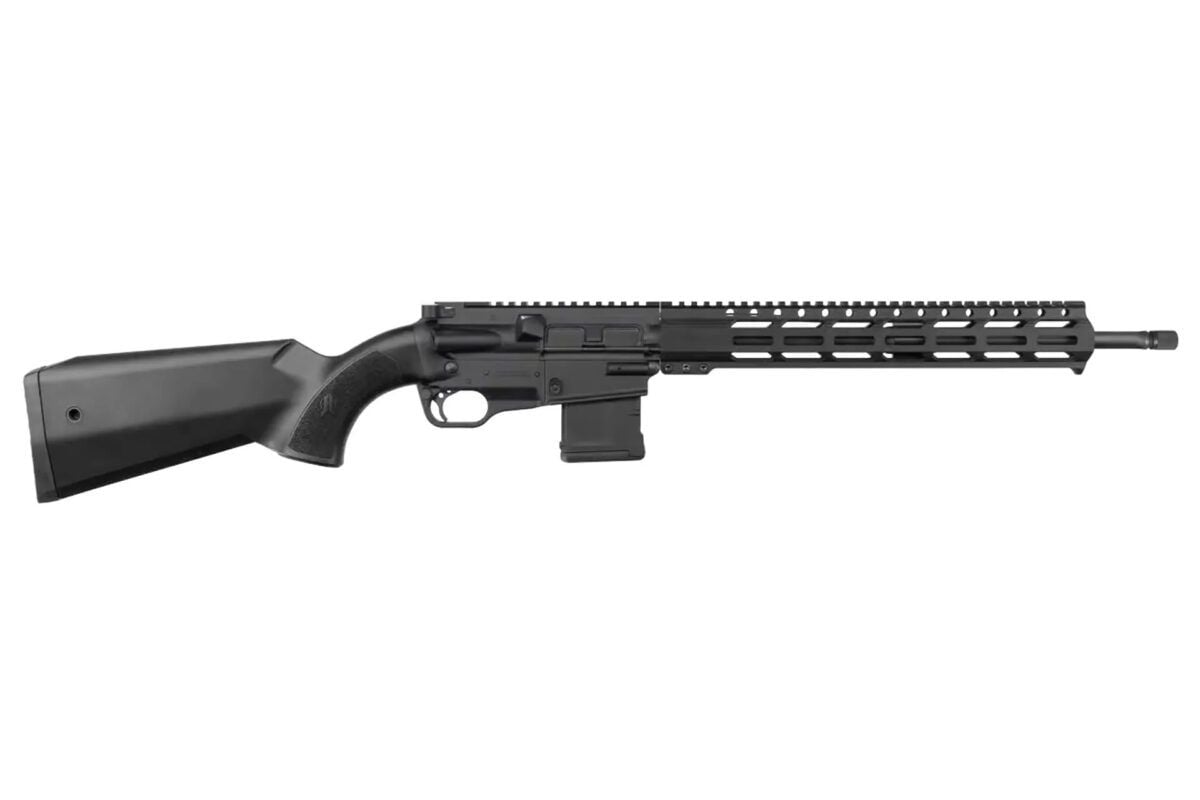
The FightLite SCR takes a different approach.
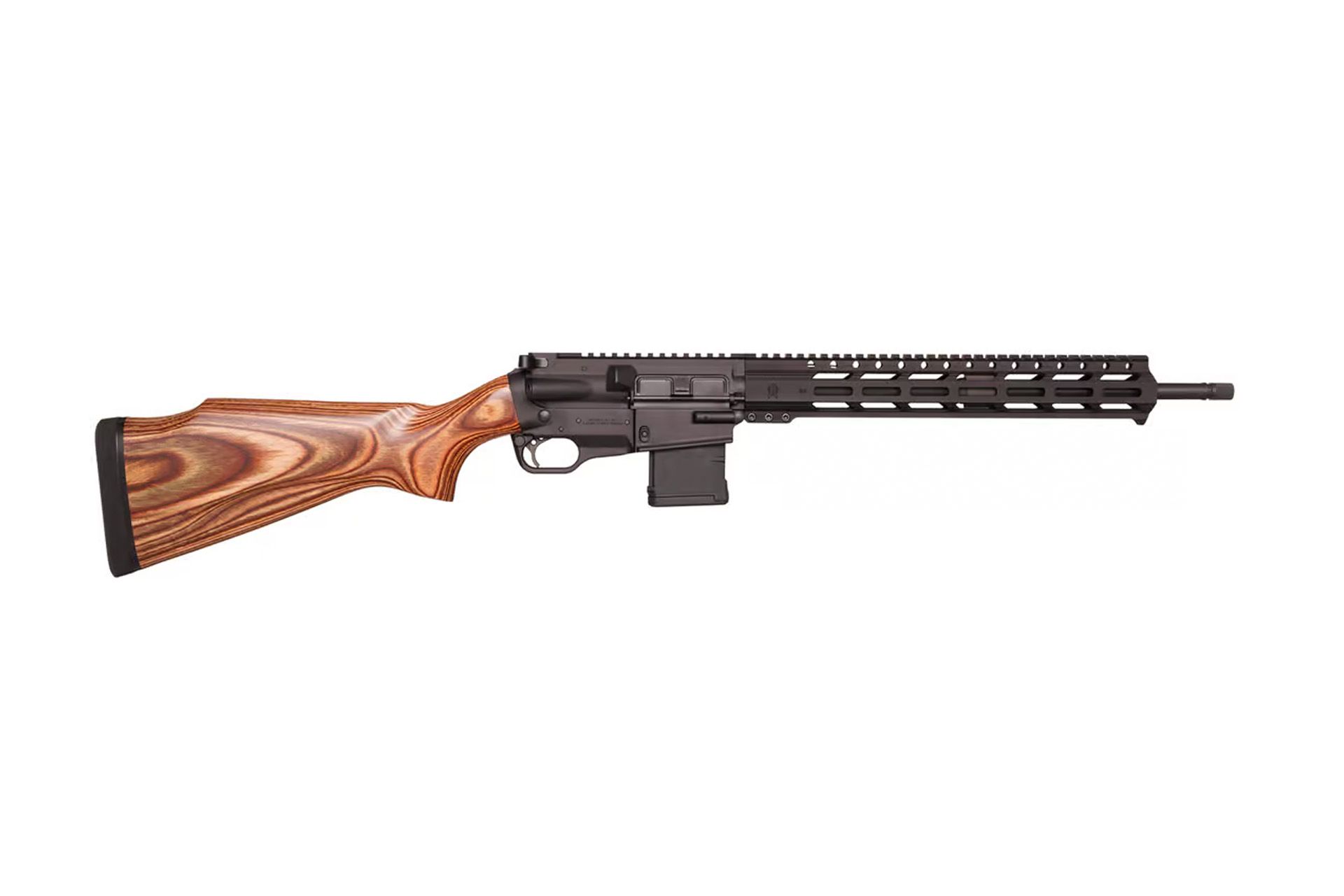
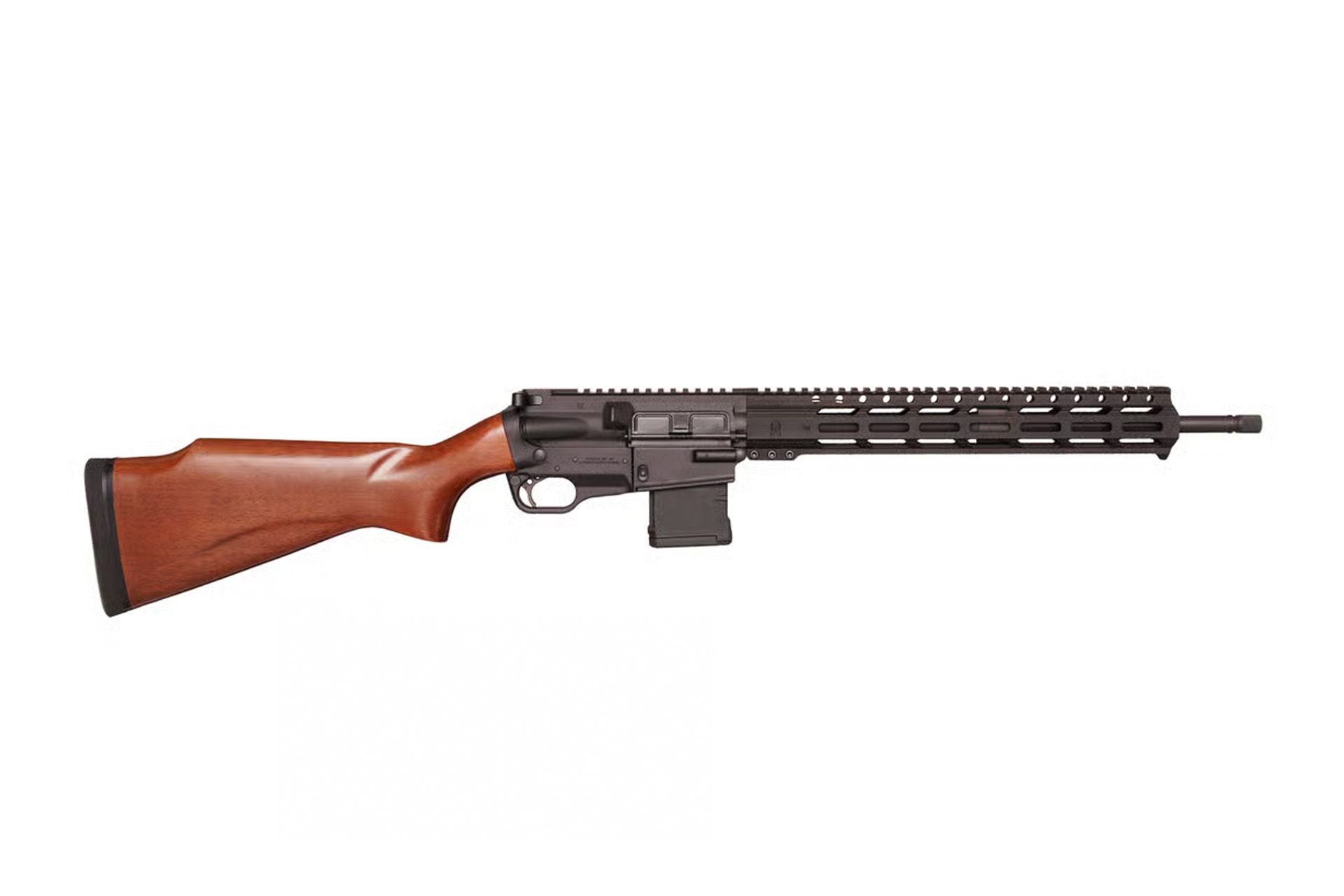
Instead of the traditional AR-15 pistol grip, buffer tube, and adjustable stock layout, the FightLite SCR uses a sporter-style stock that feels more like a traditional hunting rifle or shotgun. At the same time, it can accept many AR-style upper receiver assemblies and standard AR-pattern magazines.
That gives the SCR a unique place in the market. It is not simply an AR-15 with different furniture. It is a purpose-built rifle for shooters who want AR compatibility in a more traditional package.
So, which one should you buy? The answer depends on where you live, how you shoot, and what you want the rifle to do
What Is the FightLite SCR?
The FightLite SCR, short for Sport Configurable Rifle, is a semi-automatic rifle built around a proprietary lower receiver and a traditional stock. Its biggest advantage is that it blends AR-style upper compatibility with a more classic rifle profile.
That matters for two main reasons.
First, the SCR feels familiar to shooters who grew up using hunting rifles or shotguns. The grip angle, stock shape, and overall profile are less tactical and more traditional.
Second, the SCR may be easier to configure for certain restrictive states because it does not use the same pistol grip and adjustable stock layout found on many standard AR-15 rifles. That does not mean every SCR is automatically legal everywhere, but it does make the platform attractive to buyers who need to think carefully about compliance.
The SCR uses several proprietary components, including its lower receiver, recoil system, and bolt carrier. However, its ability to work with AR-style uppers provides useful flexibility.
What Is a Traditional AR-15?
A traditional AR-15 uses a lower receiver with a pistol grip, buffer tube, and fixed or adjustable stock. This design gives the AR-15 much of its famous modularity.
With an AR-15, shooters can change stocks, grips, handguards, triggers, optics, barrels, upper receivers, muzzle devices, and small parts. That makes it one of the easiest rifles to tailor to a specific purpose.
Want a lightweight range rifle? Easy. A precision-oriented setup? No problem. A defensive carbine with a light, sling, and optic? The AR-15 ecosystem supports it.
The downside is that some common AR-15 features may create legal issues in restrictive states. Depending on where you live, features such as a pistol grip, telescoping stock, flash suppressor, or detachable magazine configuration may be regulated. Always check the current state and local laws before buying or modifying any rifle.
The Main Difference: Lower Receiver and Stock Design
The most important difference between the FightLite SCR and a traditional AR-15 is the lower receiver.
A standard AR-15 lower is designed around a pistol grip and buffer tube. The FightLite SCR lower uses a sporter-style stock and a different recoil system. This changes the way the rifle feels, handles, and operates.
The SCR still keeps some AR-style familiarity. Depending on the configuration, it can use AR-pattern magazines and compatible AR upper receiver assemblies. However, the lower receiver, stock system, and some internal parts are not standard AR-15 parts.
That means the SCR is modular, but not as modular as a standard AR-15.
If you want the widest possible range of upgrades, the AR-15 has the advantage. If you want AR-style utility in a traditional rifle format, the SCR makes a strong case.
Legal and Compliance Considerations
One of the biggest reasons shooters compare the FightLite SCR to the AR-15 is compliance.
In states with feature-based firearm restrictions, a standard AR-15 can require special attention. Certain combinations of features may be restricted depending on state law. The SCR’s sporter-style stock helps avoid some of the features commonly associated with traditional AR-15 configurations.
That said, buyers should be careful. No rifle is legal everywhere in every configuration. Magazine capacity, muzzle devices, barrel length, overall length, fixed magazine rules, and local regulations can all matter.
The safest way to view the FightLite SCR is this: it can be a strong foundation for a compliant rifle build, but you still need to verify the exact setup before purchasing, transferring, or modifying it.
This is especially important for buyers in states such as California, New York, New Jersey, Connecticut, Massachusetts, Maryland, Illinois, and other restrictive jurisdictions.
When in doubt, confirm with current state law, your local FFL, or qualified legal guidance.

Ergonomics and Handling
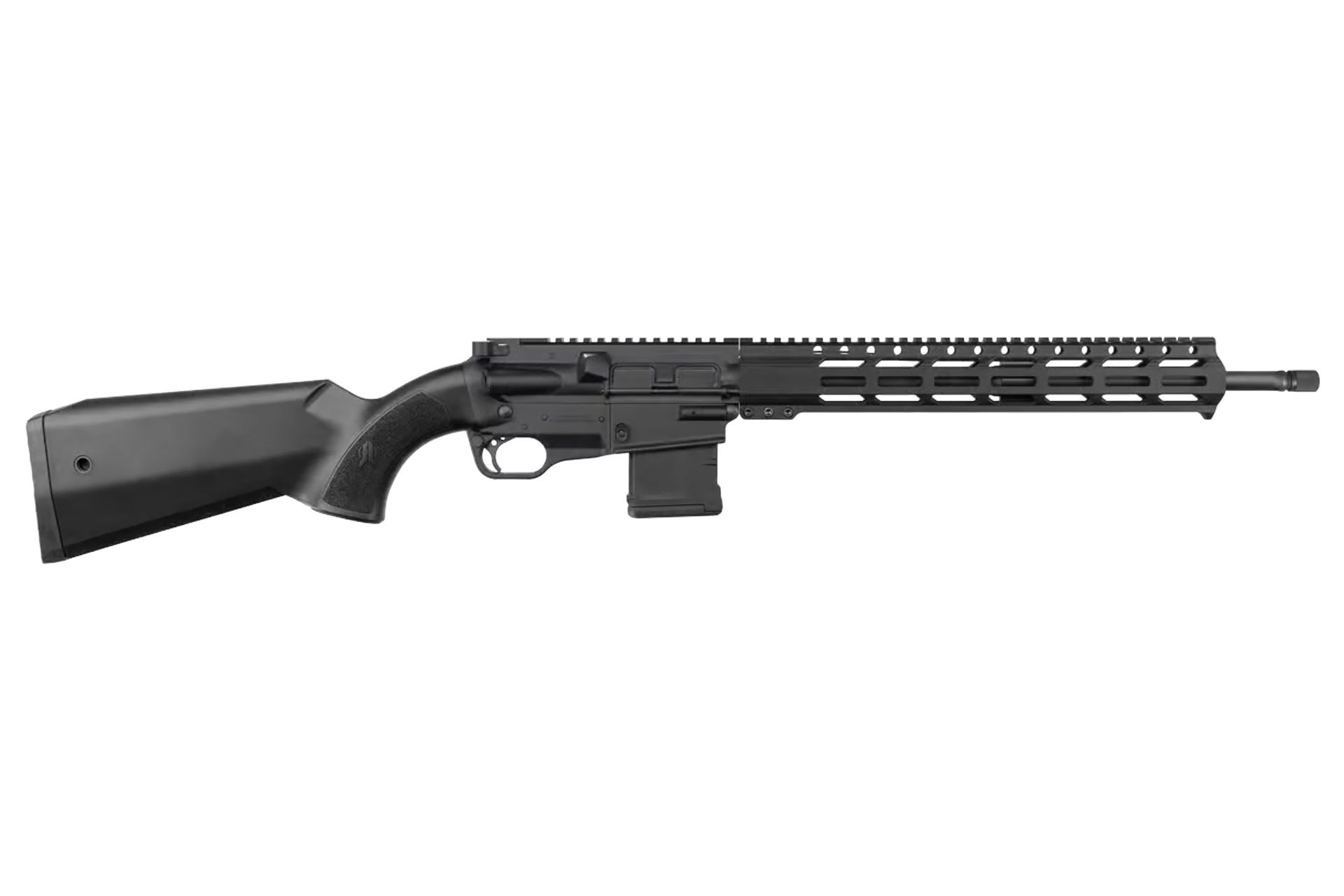
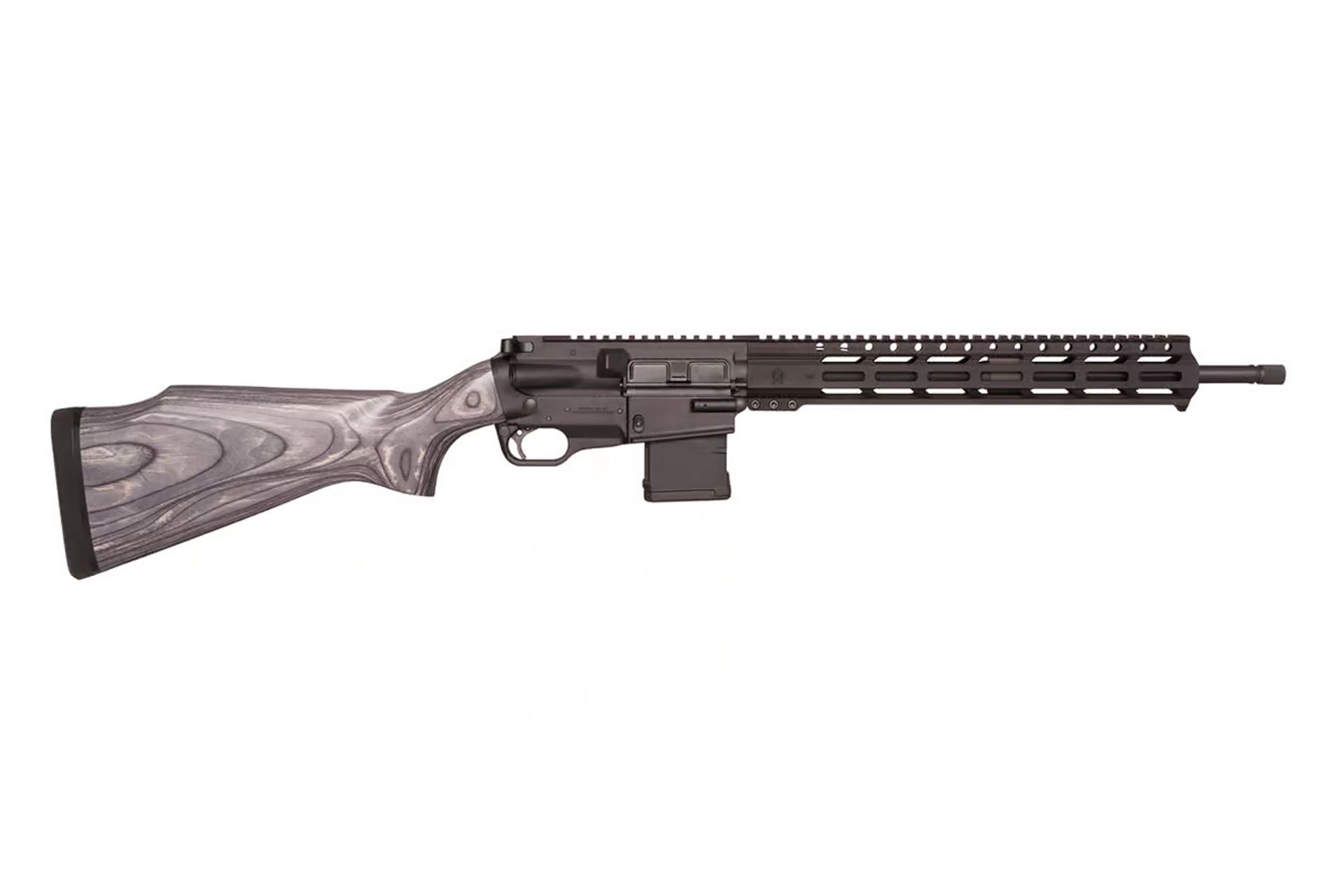
The FightLite SCR and AR-15 feel noticeably different.
A traditional AR-15 places your firing hand on a pistol grip. The controls are familiar to many modern rifle shooters, and the straight-line stock design aids recoil management and rapid follow-up shots.
The FightLite SCR feels more like a traditional rifle. The stock shape and grip angle will be familiar to hunters, shotgun shooters, and anyone who prefers a classic shoulder-fired feel. It also has a less aggressive appearance, which some buyers prefer for field use, transportation, or general ownership.
However, the SCR’s controls are not identical to a standard AR-15. Shooters used to AR-style safeties and grip angles may need time to adjust. For fast carbine drills or high-volume training, the AR-15 usually feels more natural.
For hunting, casual range use, and general-purpose shooting, the SCR’s traditional ergonomics can be a major advantage.
Recoil and Shooting Experience
In common chamberings like .223 Remington or 5.56 NATO, both rifles are easy to shoot. Recoil is light, follow-up shots are manageable, and most shooters can get comfortable quickly.
The difference is in the recoil feel.
The AR-15’s buffer system sends recoil straight back into the shoulder. This helps reduce muzzle rise and supports fast, controlled shooting.
The FightLite SCR uses a different recoil system inside its sporter-style stock. It still shoots softly, but the impulse may feel more like a traditional semi-auto sporting rifle.
For most shooters, the difference is not dramatic. At the range or in the field, both rifles are comfortable. For competition-style shooting or defensive training, the AR-15’s control layout and recoil geometry may offer an edge
Accuracy Comparison
The FightLite SCR can be very accurate when paired with a quality upper, barrel, optic, and ammunition. Because the SCR can accept compatible AR-style upper receiver assemblies, much of its accuracy potential comes from the same components that matter on an AR-15.
A traditional AR-15 may have a slight advantage for precision-focused builds because shooters have more options for triggers, stocks, grips, rests, and rear support. It is easier to fine-tune an AR-15 for a specific accuracy goal.
Still, the SCR is more than capable of practical accuracy. For range shooting, hunting, predator control, and general use, a well-built SCR can perform very well.
Accuracy comes down less to the name on the lower and more to the quality of the upper, ammunition, optic, and shooter
Parts Compatibility and Customization
The FightLite SCR offers useful AR compatibility, but it is not a one-for-one AR-15 substitute.
In general, the SCR can work with compatible AR upper receiver assemblies and standard AR-pattern magazines. This gives owners access to different barrel lengths, handguards, optics, and calibers, depending on the configuration and local laws.
However, several SCR components are proprietary. These may include the lower receiver, stock system, recoil system, bolt carrier, and certain lower parts.
That is the main tradeoff.
The AR-15 gives you maximum customization. The FightLite SCR offers selective customization on a more traditional foundation.
Choose the AR-15 if you want to build, rebuild, tune, and accessorize every part of the rifle. Choose the SCR if you want a cleaner, sporter-style setup that still benefits from AR upper compatibility
Hunting and Field Use
The FightLite SCR makes a strong case as a hunting and field rifle.
Its traditional stock feels natural when carried outdoors. Its profile is understated, and its compatibility with AR-style uppers gives shooters room to configure the rifle for different roles. For varmint hunting, predator hunting, ranch use, and general field carry, the SCR can be an excellent option.
A traditional AR-15 is also a capable hunting rifle when legal and properly configured. It offers more accessory options, adjustable stocks, and familiar controls.
The SCR stands out for shooters who want modern semi-auto performance without the full tactical layout of a standard AR-15.
Home Defense Use
Both rifles can be used for home defense when legally owned, safely stored, and properly trained with.
The traditional AR-15 has the advantage here for most buyers. It offers more weapon light options, sling setups, adjustable stocks, ambidextrous controls, and training resources. Its manual of arms is also widely taught.
The FightLite SCR can still be practical, especially for owners in restrictive states or those who prefer traditional ergonomics. However, users should train specifically with the SCR’s controls and safety system.
For unrestricted buyers, the AR-15 is usually the more straightforward defensive platform. For buyers working around feature restrictions, the FightLite SCR may be a smart alternative
Pros and Cons of the FightLite SCR
Before deciding whether the FightLite SCR is the right fit, it is worth considering where the platform shines and where it has limitations. The SCR stands out for its traditional feel, lower-profile design, and AR upper compatibility, but it does not offer the same level of customization as a standard AR-15.
Pros
The FightLite SCR offers a traditional rifle feel, AR-style upper compatibility, standard magazine compatibility in many configurations, and a lower-profile appearance. It may also be easier to configure for restrictive states compared to a traditional AR-15.
It is especially appealing for hunters, compliance-focused buyers, and shooters who want a practical rifle without the standard AR look.
Cons
The SCR is not as customizable as an AR-15. It uses proprietary components, has a different control layout, and has less aftermarket support. Shooters who want maximum modularity may find it limiting
Pros and Cons of a Traditional AR-15
Before choosing between the FightLite SCR and a traditional AR-15, it helps to look at what the AR-15 does best and where it may fall short. Its biggest strengths are flexibility, familiarity, and aftermarket support, but buyers in restrictive states may need to consider compliance carefully.
Pros
The AR-15 offers unmatched customization, broad availability of parts, familiar controls, and strong support for training, optics, lights, slings, triggers, and accessories. It is the more flexible platform overall.
Cons
A standard AR-15 may create compliance challenges in restrictive states. It also has a more tactical appearance, which may not appeal to every shooter or suit every use case.
FAQ About The Fightlite SCR
Have questions about the FightLite SCR and how it compares to a traditional AR-15? This section covers the most common buyer questions, including legality, parts compatibility, customization, recoil, accuracy, hunting use, home defense, and who the SCR is best suited for.
What is the difference between a FightLite SCR Rifle and a traditional AR-15?
The FightLite SCR uses a proprietary lower receiver with a sporter-style stock, while a traditional AR-15 uses a pistol grip, buffer tube, and AR-style stock. The SCR can accept compatible AR-style uppers but is not fully interchangeable with a standard AR-15.
Is the FightLite SCR Rifle legal in California and other restrictive states?
The FightLite SCR may be easier to configure for restrictive states, but legality depends on the exact setup and current law. Always verify state and local requirements before buying or modifying one.
Why would someone choose a FightLite SCR Rifle over a standard AR-15?
Shooters may choose the FightLite SCR for its traditional stock, lower-profile appearance, AR upper compatibility, and potential compliance advantages in restrictive jurisdictions.
Does the FightLite SCR Rifle use standard AR-15 parts and magazines?
It uses some AR-compatible parts, including compatible AR-style upper receiver assemblies and standard AR-pattern magazines in many configurations. However, the lower receiver, recoil system, bolt carrier, and some lower components are proprietary.
How does the recoil and shooting experience compare between the FightLite SCR Rifle and an AR-15?
Both are soft-shooting rifles in common .223/5.56 configurations. The AR-15 has a straighter recoil path and more familiar carbine controls, while the SCR feels more like a traditional sporting rifle.
Is the FightLite SCR Rifle as accurate as a traditional AR-15?
Yes, it can be. Accuracy depends largely on the upper receiver, barrel, ammunition, optic, and shooter. A quality SCR build can deliver strong practical accuracy.
Can you customize or upgrade a FightLite SCR Rifle like an AR-15?
You can customize the SCR through compatible uppers, optics, handguards, and accessories. However, it is not as customizable as a traditional AR-15 because several major components are proprietary.
What are the pros and cons of the FightLite SCR Rifle compared to an AR-15?
The SCR offers traditional handling, AR upper compatibility, and a lower-profile design. Its drawbacks are reduced customization, proprietary parts, and different controls. The AR-15 offers more flexibility but may face more compliance issues in restrictive states.
Is the FightLite SCR Rifle good for home defense or hunting?
Yes, depending on configuration and training. The SCR is especially appealing for hunting and field use. For home defense, the AR-15 usually offers more accessories and training support, but the SCR can still be practical.
Who should buy a FightLite SCR Rifle instead of an AR-15?
The FightLite SCR is best for shooters who want AR-style performance in a traditional rifle layout, especially hunters, buyers in restrictive states, and owners who prefer a less-tactical profile.
Conclusion: Which One Should You Buy?
The FightLite SCR and the traditional AR-15 both bring real value, but they serve different buyers.
Choose a traditional AR-15 if you want maximum customization, familiar controls, broad aftermarket support, and the easiest path to building a rifle around a specific role. It remains the most flexible platform for unrestricted buyers who want full control over parts, accessories, and configuration.
Choose the FightLite SCR if you want AR-style performance in a traditional, sporter-style rifle layout. It is especially appealing for hunters, restrictive-state buyers, and shooters who prefer a cleaner, less tactical profile while still benefiting from compatible AR uppers and magazines.
For many shooters, the AR-15 is the standard. For the right buyer, the FightLite SCR is the smarter fit.
Ready to compare options? You can shop FightLite SCR rifles, SCR lowers, compatible AR uppers, magazines, optics, and compliant rifle parts at Dirty Bird USA.
For additional resources, check out our sister site at www.ar15discounts.com.