

 Dirty Bird Bakersfield
Pistols
Everything You Need to Know about Sig P365
Jan
Table of Contents
A Platform That Changed the Conversation
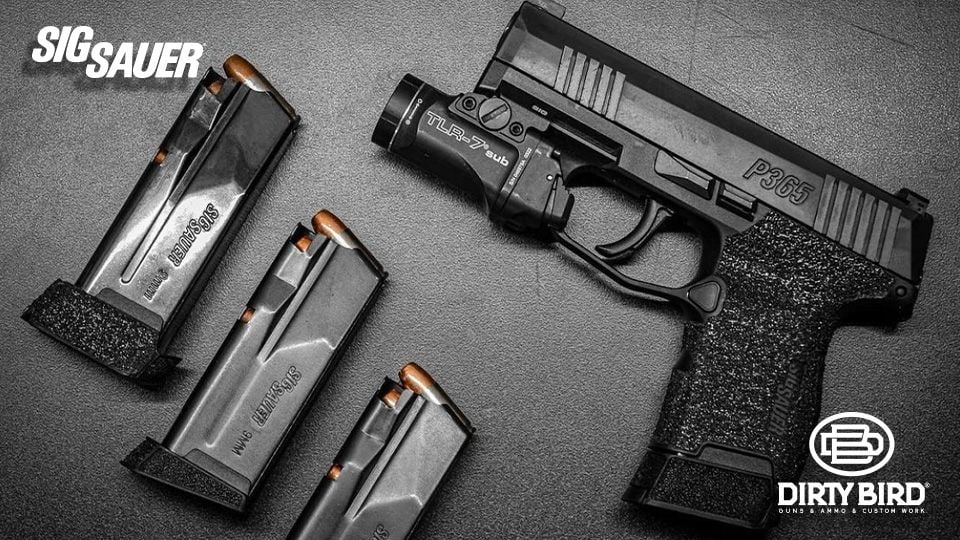
Few handguns have shifted the concealed carry market as dramatically as the Sig P365. When it debuted, shooters immediately took notice—not because it was small (plenty of pistols were), but because it delivered something new: true double-stack capacity in a footprint previously reserved for single-stack designs.
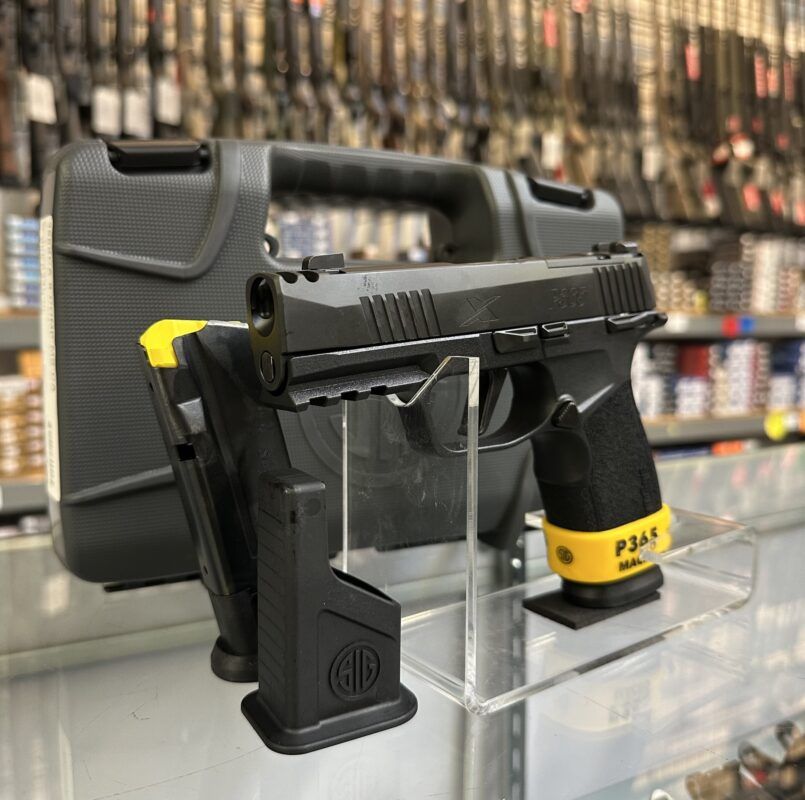
Built by Sig Sauer, the P365 was engineered to solve a long-standing problem. Concealed carriers often had to choose between capacity, comfort, or shootability. The P365 challenged that compromise, offering a compact, shootable handgun with a capacity that rivaled much larger pistols.
Years later, the P365 is no longer just a single model—it’s a complete ecosystem. From minimalist carry guns to full-capacity, competition-ready builds, the platform continues to evolve. This guide explores how it all works, what sets each variant apart, and why the P365 remains a cornerstone of modern concealed carry.
The Origins of the P365
Before the P365, the concealed carry market was dominated by slim, low-capacity pistols. While easy to hide, many left shooters wanted more rounds on tap—especially without carrying spare magazines.
Sig Sauer approached the problem differently. Instead of thinning the grip, engineers redesigned the magazine itself, creating a staggered-stack system that increased capacity without significantly widening the grip. The result was a pistol that felt compact in the hand but carried significantly more ammunition.
The original P365 shipped with 10-round magazines and immediately set a new benchmark. It didn’t take long for competitors to respond, but the P365 had already secured its place as a reference point for micro-compact performance.
Understanding the P365 Platform
Size and Ergonomics
At its core, the P365 balances concealability and control. The grip angle, undercut trigger guard, and textured grip module all contribute to a secure feel despite the compact dimensions. Shooters with smaller hands often appreciate the ergonomics right out of the box, while those with larger hands can opt for extended magazines or larger grip modules.
Caliber Options
Most P365 models are chambered in 9mm, which remains the most popular choice due to its balance of recoil, terminal performance, and availability. Some variants have been offered in .380 ACP, primarily for shooters prioritizing reduced recoil.
A common question is whether a .380 P365 can be converted to 9mm. In practice, caliber changes are not as simple as a barrel swap and are generally not recommended without proper factory components.

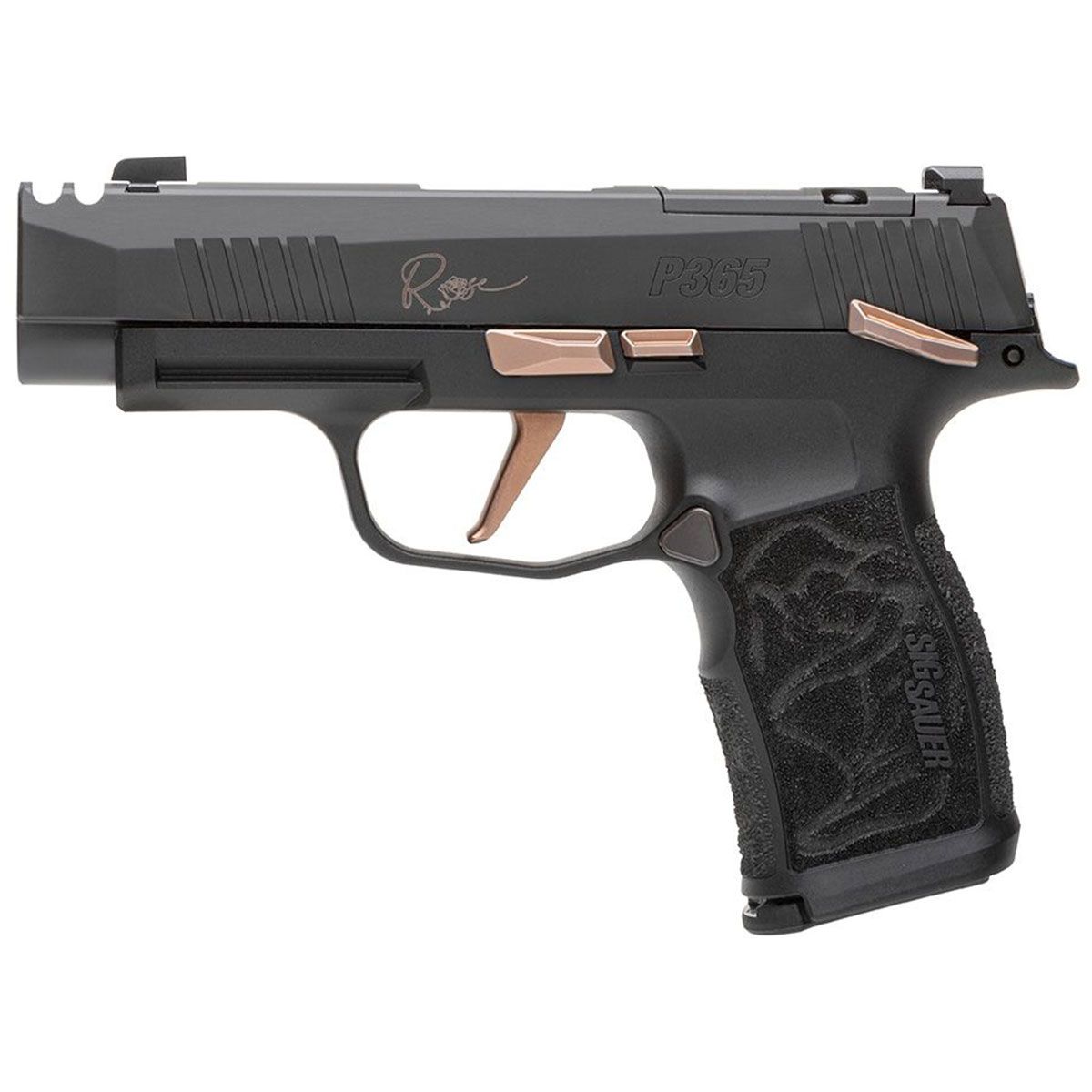
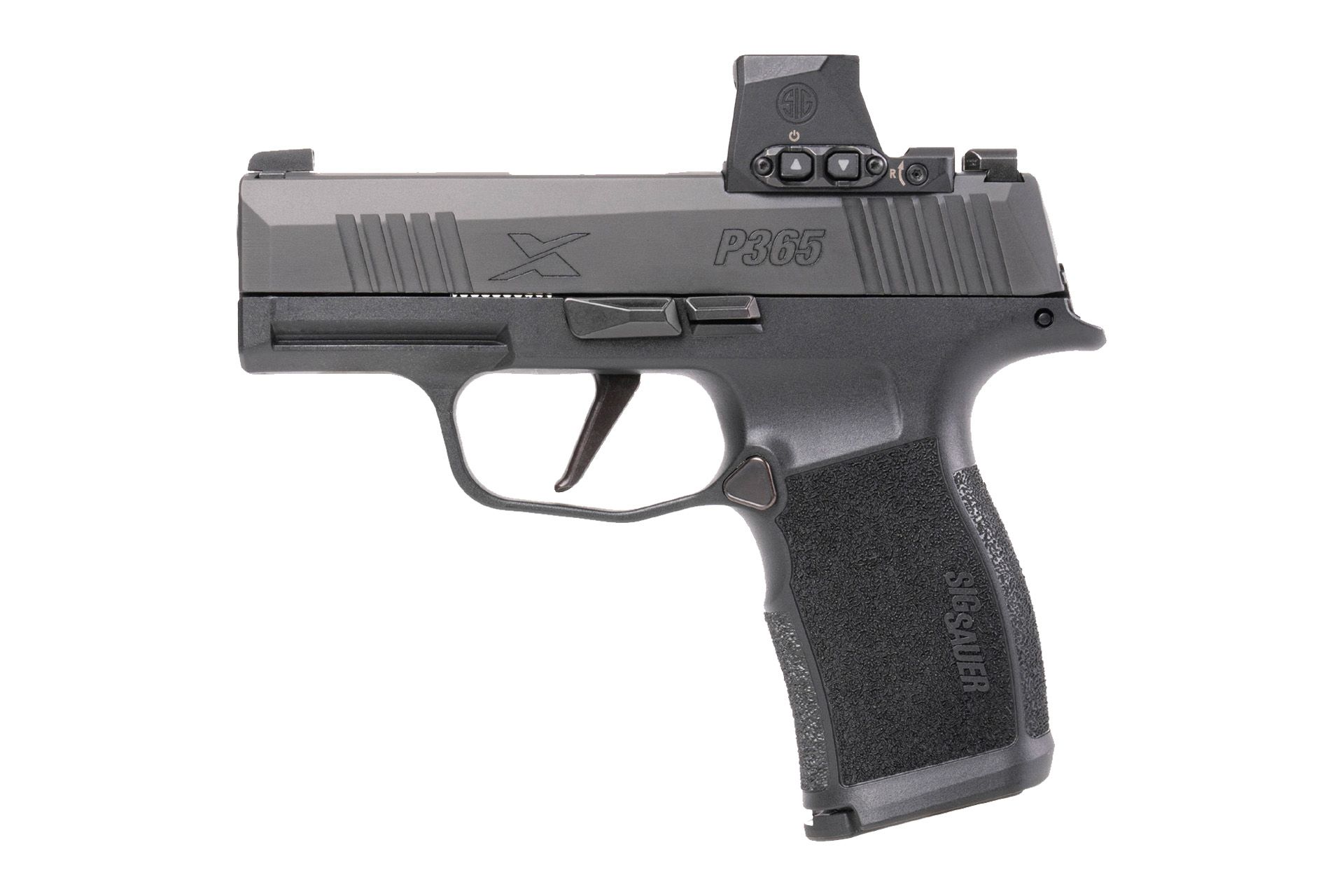
The P365 Family: Model-by-Model Breakdown
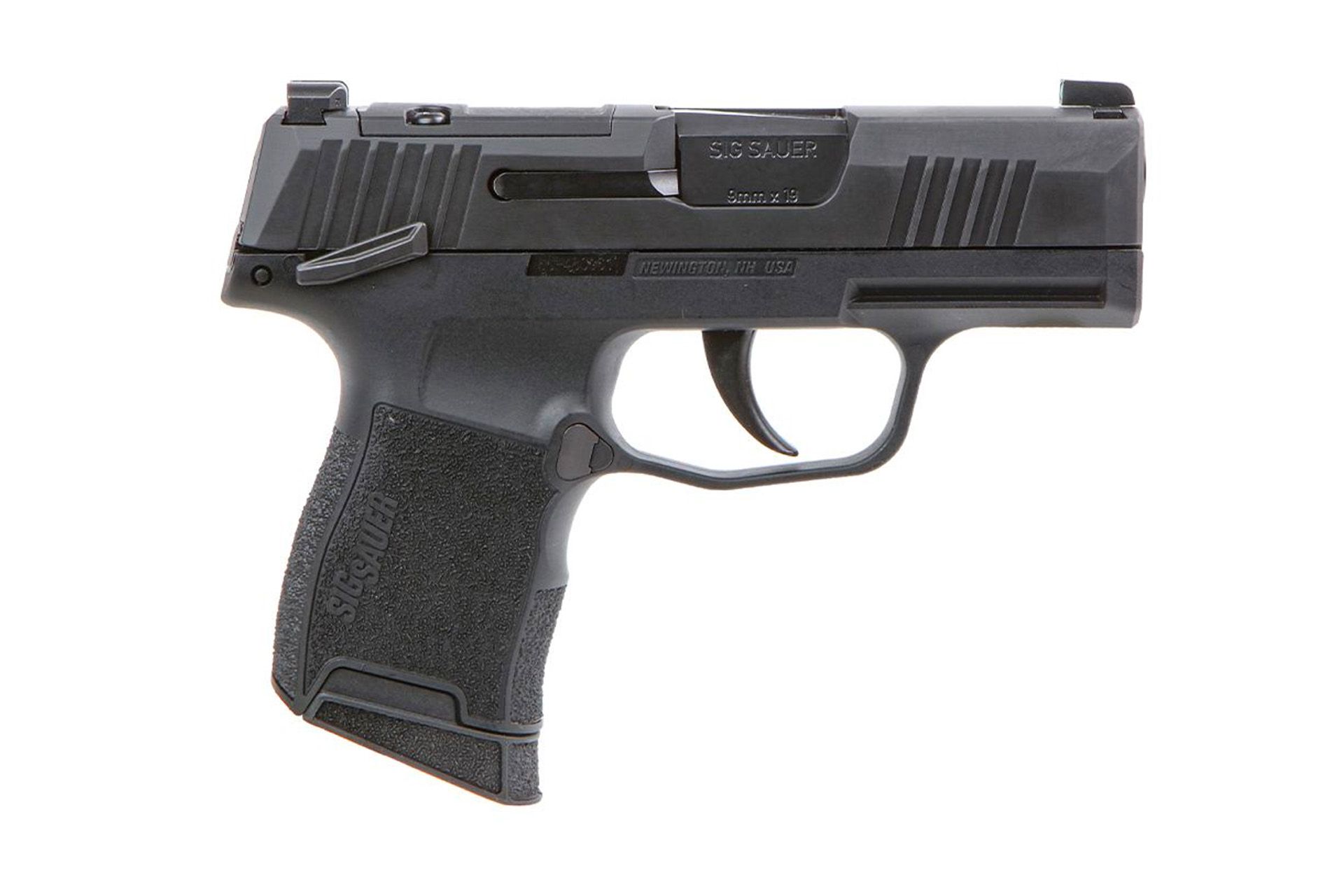
P365 (Standard)
The original P365 remains a favorite for deep concealment. Its shorter grip and slide make it ideal for inside-the-waistband carry, ankle carry, or other low-profile setups. While compact, it still offers respectable shootability for its size.
Best for:
- Everyday concealed carry
- Shooters prioritizing minimal footprint
- Backup or secondary carry roles
P365 XL
The P365 XL was a natural evolution. By extending the slide and grip slightly, Sig Sauer improved recoil management and sight radius without dramatically increasing bulk.
The XL quickly became popular among shooters who wanted a “do-it-all” pistol—something comfortable to carry daily but easier to shoot at longer ranges.
Best for:
- Appendix carry
- Shooters with medium to large hands
- Those wanting improved control without going full-size
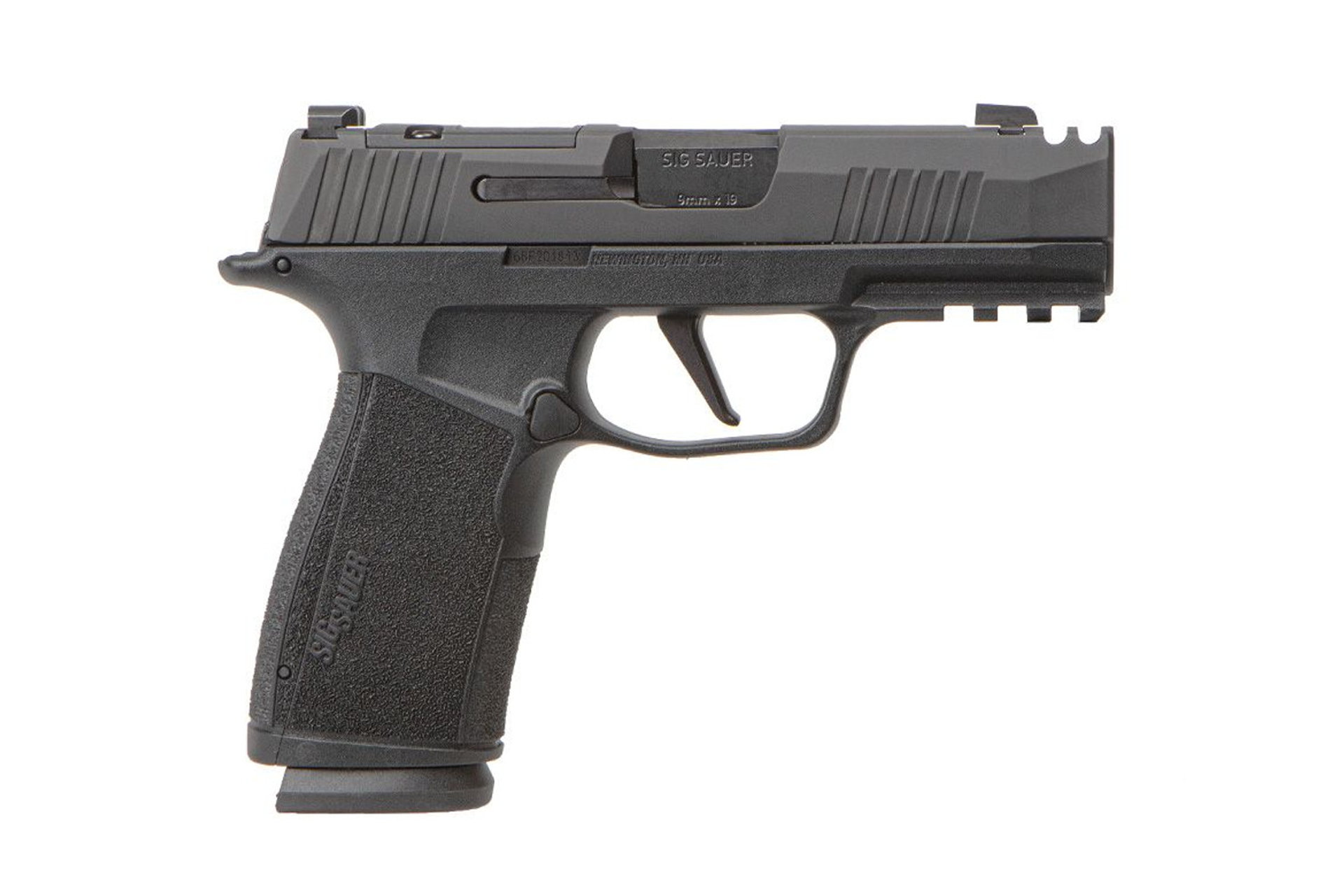
P365 X-Macro
The X-Macro marked a significant shift in the lineup. Featuring a full-length grip and 17-round magazines, it effectively bridges the gap between concealed carry and duty-sized pistols.
With a built-in accessory rail and flat trigger, the X-Macro appeals to shooters who want maximum capacity and control while staying within the P365 ecosystem.
P365 X-Macro Comp
The compensated variant adds slide ports designed to reduce muzzle rise. This results in flatter shooting and faster follow-up shots, especially noticeable during rapid fire.
While slightly louder and flashier than non-compensated models, many shooters find the tradeoff worthwhile for performance gains.
Spectre Comp, AXG Legion, and Legion Variants
These premium models elevate the platform with upgraded finishes, tuned triggers, enhanced grip modules, and refined aesthetics. The AXG Legion, in particular, adds a metal grip module, offering a different balance and recoil impulse compared to its polymer-frame counterparts.
Best for:
- Enthusiasts seeking premium features
- Shooters who want performance out of the box
- Those who appreciate refined fit and finish
Modularity: How Flexible Is the P365?
One of the most appealing aspects of the P365 is its modular design philosophy. While not identical to the P320 system, the P365 still allows significant customization.
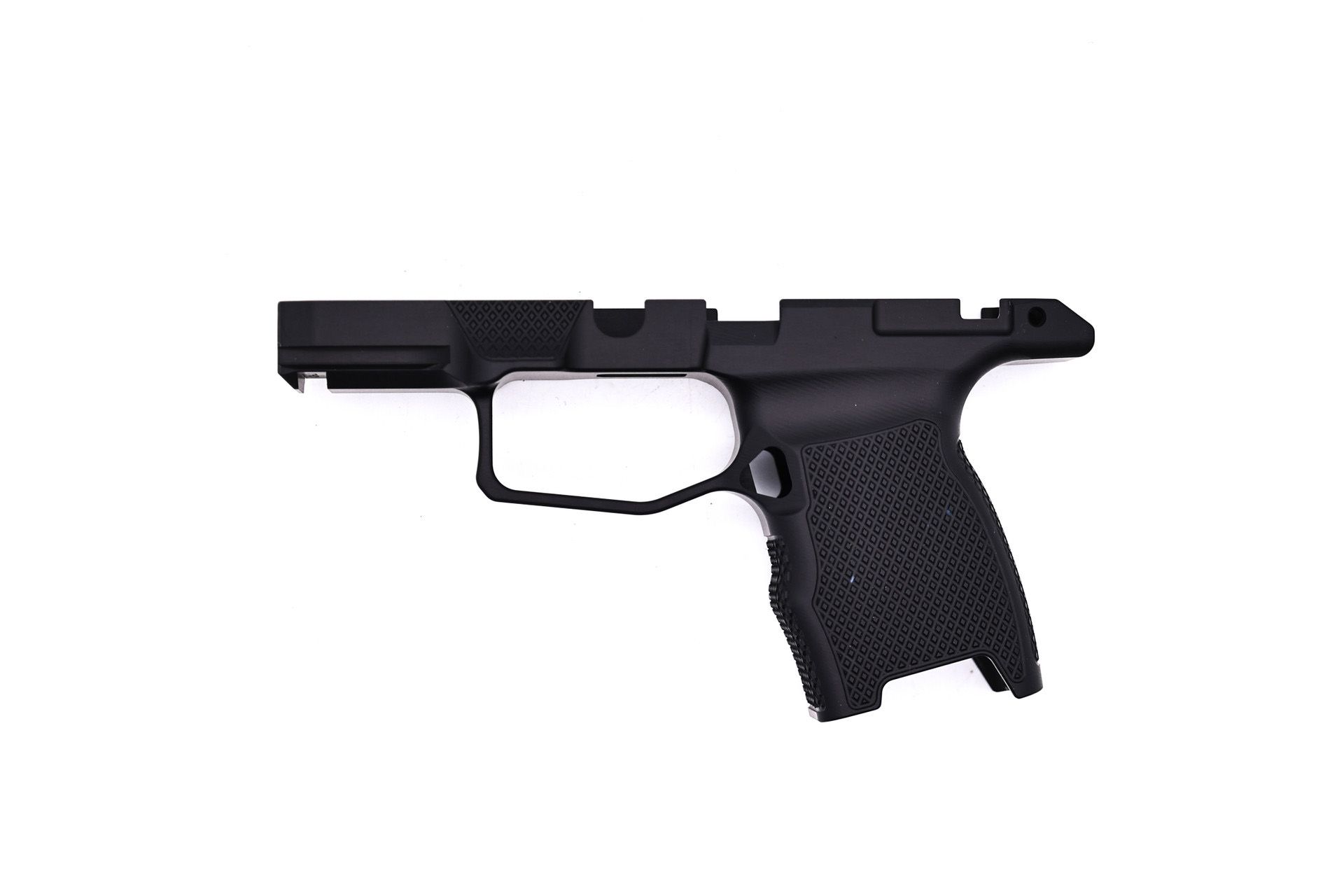
Grip Modules
Swapping grip modules is one of the easiest ways to change how the pistol feels and handles. Different sizes, textures, and materials allow shooters to tailor grip length and circumference to their preferences.
Slides and Barrels
Slides are available in standard, XL, optics-ready, and compensated configurations. This allows owners to fine-tune recoil characteristics and sighting options.
Magazines
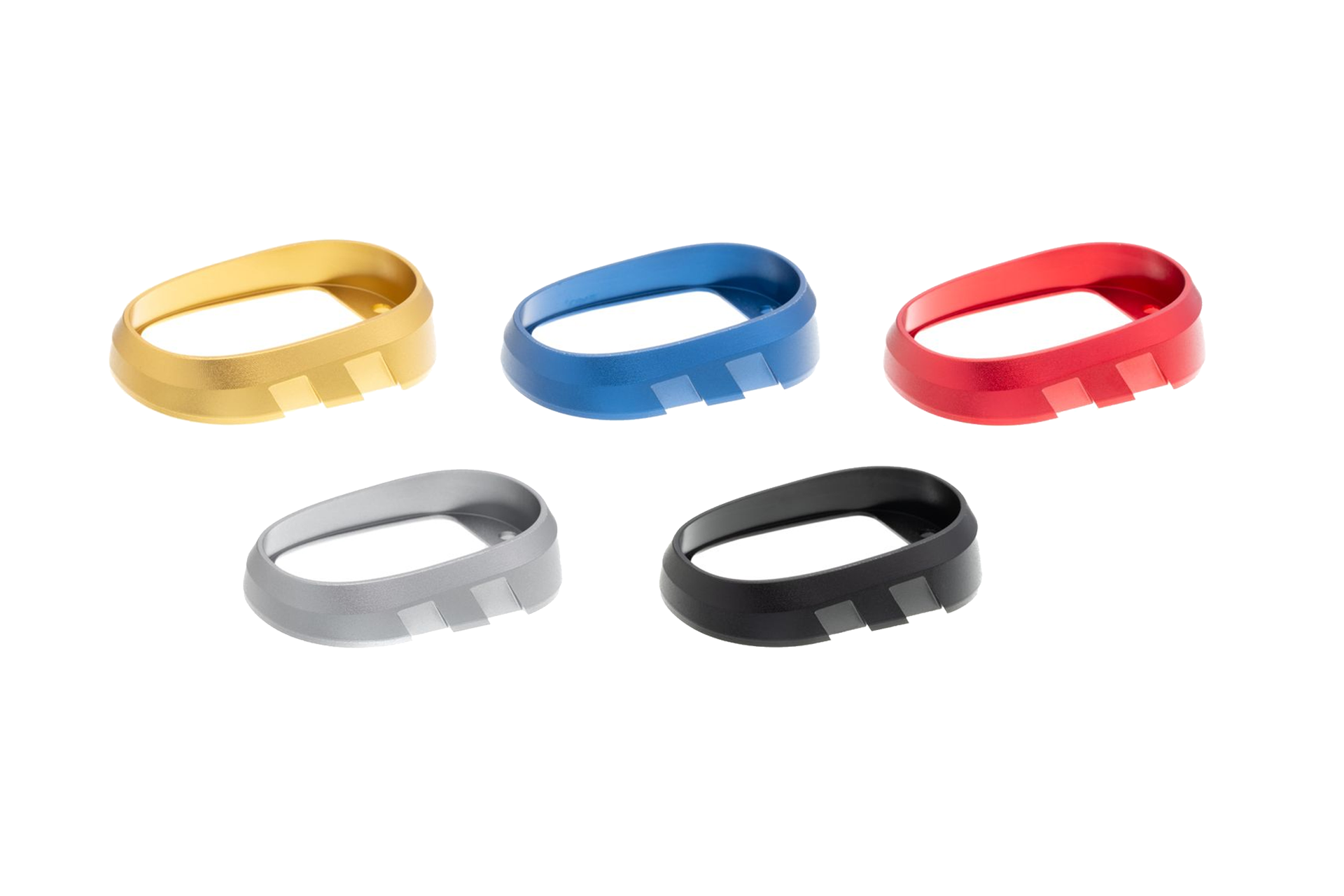
Magazine compatibility is one of the platform’s strengths. Standard, extended, and high-capacity magazines give shooters flexibility depending on carry method and capacity needs.
Optics and Accessories
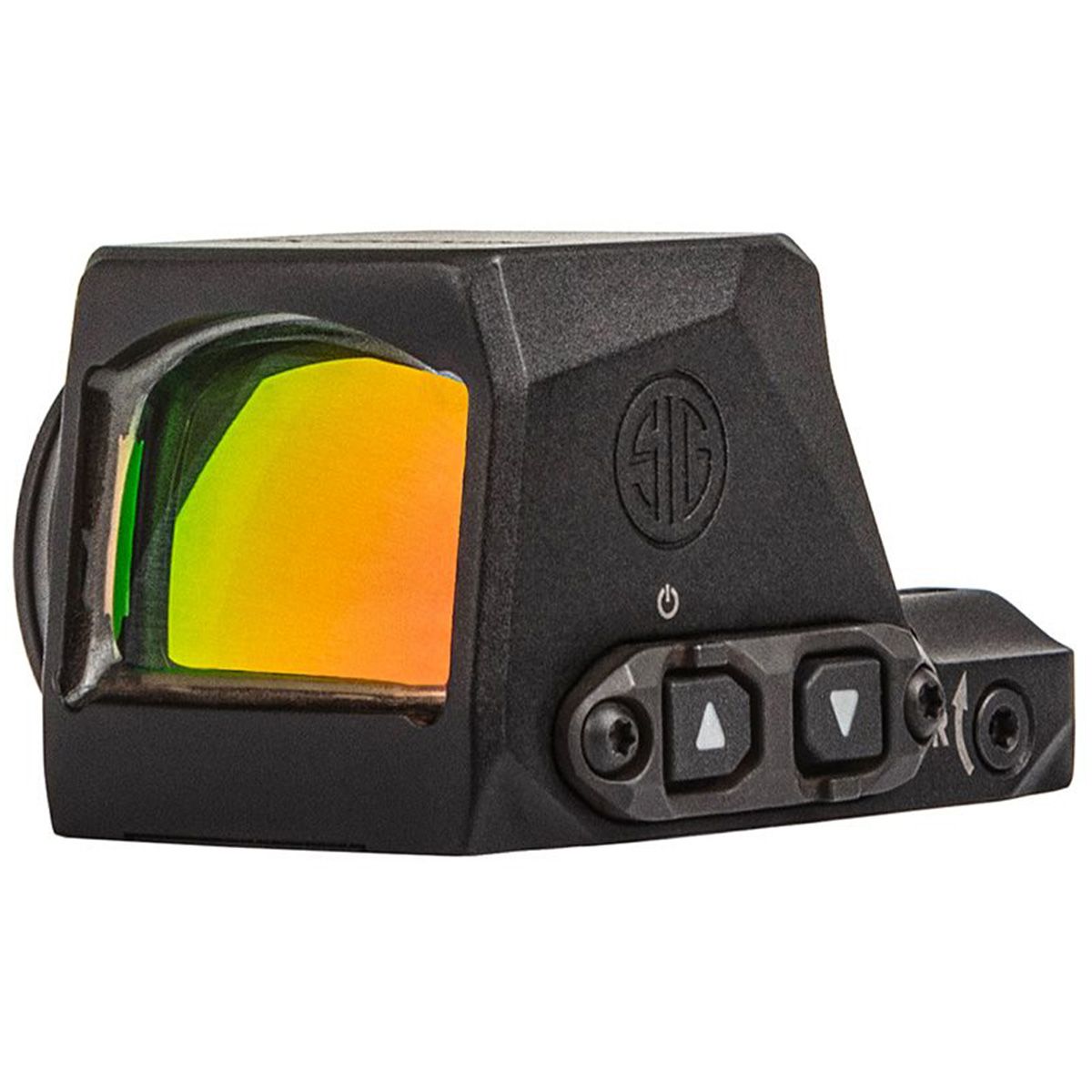
Modern defensive pistols increasingly rely on red dot optics, and the P365 platform has embraced this trend. Many models come optics-ready from the factory, supporting popular micro-red-dot footprints.
Adding a red dot can improve target acquisition and accuracy, particularly under stress or in low-light conditions. Combined with suppressor-height sights or co-witness setups, the P365 becomes a capable modern defensive tool.
Accessory rails on models like the X-Macro also allow for weapon-mounted lights, further enhancing versatility.
Safety, Reliability, and Confidence
Internal Safeties
The P365 uses a striker-fired system with multiple internal safeties designed to prevent accidental discharge. It is widely regarded as drop safe when used as intended.
Manual Safety Options
Some P365 models are offered with a manual thumb safety. This is a matter of personal preference and training philosophy. Shooters should choose the configuration that aligns with their comfort level and carry habits.
Reliability Track Record
Early production models experienced minor growing pains, but subsequent iterations addressed these concerns. Current-generation P365 pistols have earned a reputation for reliability when properly maintained.
Carrying the P365: Practical Considerations
Concealment
The P365 excels at concealment across a wide range of body types. Its slim profile and adaptable grip lengths allow it to disappear under light clothing with the right holster.
Shootability
Despite its size, the P365 is surprisingly controllable. Extended grips and compensated models further enhance shootability, making it accessible to both new and experienced shooters.
Maintenance
Regular cleaning is essential, especially for pistols carried daily. Sweat, lint, and debris can accumulate quickly. A simple maintenance routine helps ensure consistent performance.
Frequently Asked Questions
What is the difference between the Sig P365, P365XL, and X-Macro?
The primary differences are a ported slide, grip length, and capacity. The standard P365 is the most compact, the XL adds length for control, and the X-Macro offers full-size capacity and features.
Is the Sig P365 modular like the P320?
Yes, within the P365 family. Grip modules, slides, and magazines can be swapped, but P365 parts are not compatible with P320 components.
Can a P365 shoot +P ammunition?
Most models can handle +P ammunition occasionally. However, frequent use may accelerate wear.
How many rounds does a Sig P365 hold?
Capacity ranges from 10 rounds up to 17 rounds, depending on the magazine and model.
Does the Sig P365 have a manual safety?
Some variants do, while others rely solely on internal safeties.
Can I put an optic or red dot on my Sig P365?
Yes. Many models are optics-ready and designed for micro-red-dot sights.
What are the most common problems with the Sig P365?
Early models had minor issues, but modern versions are generally reliable with routine maintenance.
Will P365 X-Macro magazines fit in a standard P365?
They can, but they extend beyond the grip unless used with an adapter sleeve.
What is the “SAS” version of the P365?
The SAS features a ported slide and bullseye-style sighting system for snag-free carry.
How often should I clean and service my P365?
Clean after every range session or at least monthly if carried daily.
Final Thoughts: Why the P365 Still Leads
The Sig P365 platform didn’t just enter the market—it changed the standard. By delivering serious capacity in a compact, easy-to-carry design, it proved that shooters no longer have to choose between concealability, control, and confidence.
From the original P365 to the balanced XL and the full-capacity X-Macro, the platform scales effortlessly to match your carry style and shooting priorities. That adaptability is exactly why the P365 continues to stand out—and why it remains a top choice for everyday carry.
When you’re ready to make the move, get your next Sig P365 at Dirty Bird Industries and build a setup that fits your mission from day one.
For additional resources, check out our Rumble Channel.