

 Dirty Bird Bakersfield
AR Parts and Accesories, AR-15
What Do You Need to Complete Your Upper Receiver: Compatible and Non-Compatible Components

Apr
Table of Contents
The upper receiver forms the heart of an AR-15’s upper assembly, serving as the critical hub that integrates the barrel, bolt carrier group, charging handle, and optics. For builders shopping at Dirty Bird Guns & Ammo, completing an upper requires selecting compatible components while maintaining strict quality standards to prevent tolerance stacking, where minor manufacturing variances combine to cause fitment or function issues. A single mismatched or low-quality part can lead to unreliable performance, making careful selection essential. This guide outlines the components needed to complete an AR-15 stripped upper receiver, identifies compatible and non-compatible parts, highlights necessary tools, and stresses the importance of quality control to ensure a dependable, high-performing firearm.
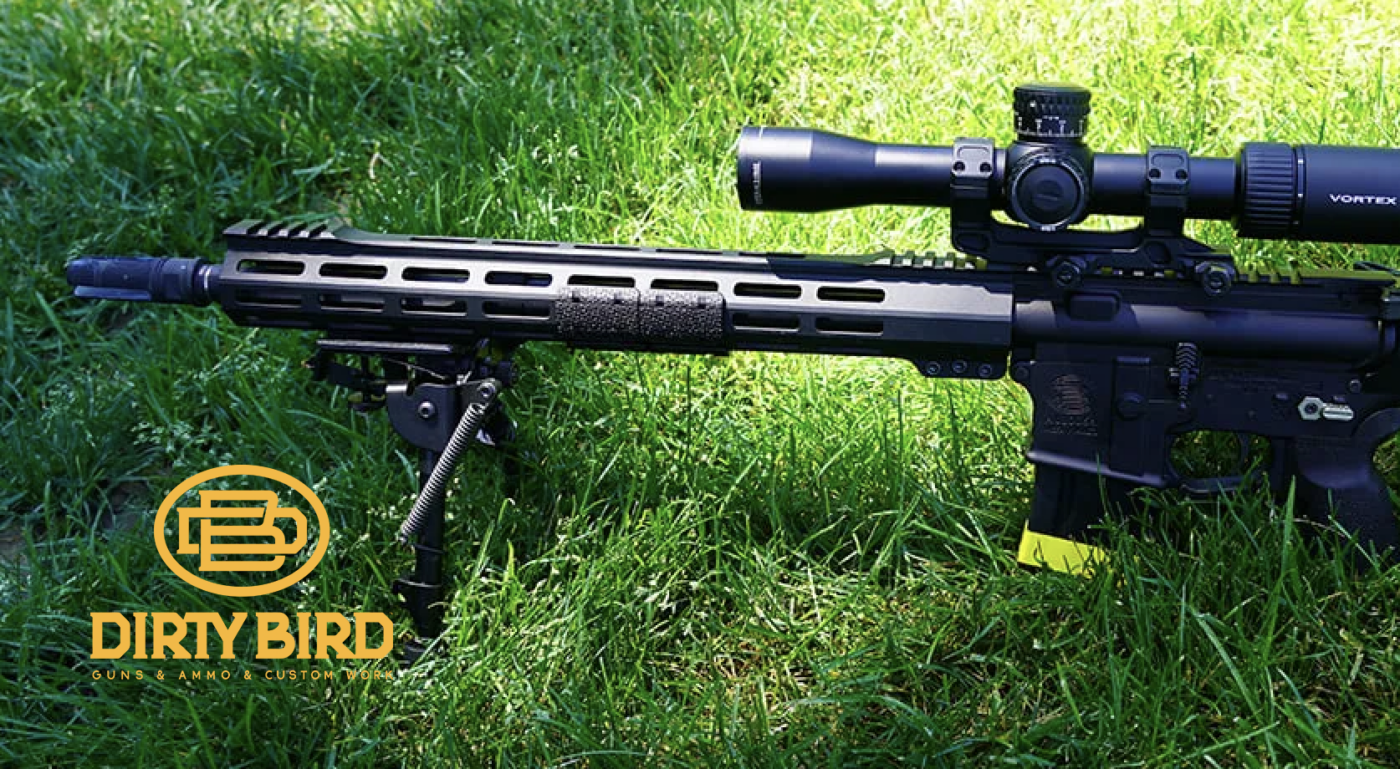
The Upper’s Critical Role
The upper provides the structural foundation for the AR-15’s upper assembly, threading to the barrel, housing the bolt carrier group, and supporting the gas system and sights. Whether opting for an AR-15 stripped upper receiver or an AR-15 assembled upper receiver, builders must ensure seamless integration of all components. Websites like AR15Discounts and Dirty Bird Guns & Ammo offers top-tier options, such as the BCM upper receiver or FDE upper receiver, machined to mil-spec standards. Completing the upper demands precision to avoid tolerance stacking, which can result in cycling failures, poor accuracy, or unsafe operation.
Components Needed to Complete an Upper Receiver
To transform a stripped upper into a functional unit, builders need several key components. Each must align with the receiver’s specifications, the rifle’s caliber, and the intended use, such as a 300 blk upper receiver for subsonic rounds or a 5.56 NATO configuration.
- Barrel
The barrel threads into the upper’s front port, setting the rifle’s caliber and performance. Compatible barrels must match the receiver’s mil-spec AR-15/M16 threading and support the chosen caliber, such as 5.56 NATO, .223 Wylde, or 300 Blackout. A 300 blk upper receiver requires a dedicated 300 Blackout barrel, as a 5.56 barrel is unsafe and incompatible due to chamber differences. Barrel length and gas system (pistol, carbine, mid-length, or rifle) must suit the build, with 10.5-inch barrels often using pistol gas for compact setups. Non-compatible barrels, like those for AR-10s, have different threading and won’t fit. High-quality barrels ensure precise headspace and alignment for safety and accuracy. - Bolt Carrier Group (BCG)
The BCG, housed within the upper receiver, cycles the action. It must match the barrel’s caliber—a 5.56 BCG suits .223 Wylde but may need adjustment for a 300 blk upper receiver to handle subsonic rounds reliably. Mil-spec BCGs fit all AR-15 stripped uppers, featuring standardized dimensions and full-auto durability. Non-compatible BCGs, such as AR-10 or non-standard caliber bolts (e.g., 6.5 Grendel), won’t function or fit. A quality BCG, like those paired with a BCM upper receiver, undergoes rigorous testing for reliability.
https://dirtybirdusa.com/mil-spec-bolt-carrier-group-hard-use-ar-15/ - Gas System (Gas Tube and Gas Block)
The gas system powers the BCG by redirecting barrel gases. The gas tube, inserted into the upper receiver’s gas port, must match the barrel’s gas system length—pistol for 10.5-inch barrels, carbine for 14.5 inches, mid-length for 16 inches, or rifle for 20 inches. A 300 blk upper receiver typically uses a pistol-length gas tube for optimal cycling. The gas block, clamped to the barrel’s gas port (usually 0.750-inch diameter), must align with the receiver’s gas tube port. Non-compatible gas tubes, like a rifle-length tube on a carbine barrel, cause misalignment and cycling failures. Dirty Bird’s upper receivers feature precisely machined gas ports for flawless gas tube fitment. - Charging Handle
The charging handle slots into the upper for manual BCG operation. Standard AR-15 charging handles fit all mil-spec upper receivers, including an FDE upper receiver or blemished upper receiver. Ambidextrous handles enhance usability but remain compatible if AR-15-spec. Non-compatible handles, like AR-10 models, have incorrect dimensions and won’t seat. - Handguard
The handguard mounts to a barrel nut threaded onto the upper receiver post-barrel installation. Compatible handguards must match the barrel nut type (mil-spec or proprietary) and clear the gas block. Free-floating M-LOK handguards require a low-profile gas block for compatibility. Non-compatible handguards, such as drop-in models for delta-ring systems, won’t pair with free-float nuts, causing fitment issues. - Forward Assist and Ejection Port Cover
An AR-15 assembled upper includes these pre-installed, but a stripped upper requires separate components. AR-15-standard forward assists and dust covers are universally compatible, even with an upper receiver with carry handle. AR-10 or non-AR-15 parts are oversized and incompatible. - Optics or Sights
Flat-top upper receivers feature a Picatinny rail for optics or sights, while an upper receiver with carry handle has a fixed A2 sight, limiting optic options. Standard Picatinny-compatible optics fit seamlessly, but non-AR mounts may misalign.
Tools Needed for Assembly
Assembling an upper requires specialized tools to ensure proper installation and avoid damaging components. Dirty Bird Guns & Ammo recommends the following:
- Upper Receiver Vise Block: Secures the upper in a vise without crushing it, providing stability for barrel installation.
- Torque Wrench: Applies precise torque (15-20 ft-lbs for barrel nuts, 30-80 ft-lbs for muzzle devices) to prevent over-tightening, which can distort parts and exacerbate tolerance stacking.
- Armorer’s Wrench: Fits barrel nuts, muzzle devices, and other fittings for secure installation.
- Headspace Gauges: Go/no-go gauges verify barrel-BCG headspace, critical for safety, especially in a 300 blk upper receiver.
- Punch Set: Installs pins for the forward assist and ejection port cover without marring the receiver.
- Gas Tube Alignment Tool: Ensures the gas tube aligns with the receiver’s port, preventing binding or leaks.
- Bench Block: Supports the receiver during pin installation, reducing stress on the frame.
Using improper tools, like generic wrenches or pliers, risks damaging components or misaligning parts, leading to tolerance issues. If assembly proves challenging, do not force parts together, forced fits can deform threads, crack receivers, or misalign critical components, rendering the rifle unsafe. Instead, consult a qualified gunsmith. A professional can diagnose fitment issues, correct machining errors, and ensure the build meets safety standards, saving time and preventing costly mistakes.
Quality and Preventing Tolerance Stacking
Quality is non-negotiable when completing an upper. Tolerance stacking occurs when slight dimensional variances in components, like a barrel with loose headspace, a BCG with oversized lugs, or an upper receiver with an off-spec gas port, combine to cause binding, cycling failures, or unsafe pressures. Dirty Bird Guns & Ammo’s uppers, including blemished uppers with only cosmetic flaws, are machined to exacting tolerances to minimize these risks.
To prevent tolerance stacking:
- Choose Reputable Brands: Manufacturers like BCM or Dirty Bird maintain strict quality control. A BCM upper receiver, for example, is inspected to ensure precise fitment.
- Adhere to Mil-Spec Standards: Mil-spec parts reduce variance, ensuring compatibility across components.
- Test-Fit Components: Check that the barrel seats flush, the BCG moves freely, and the gas tube aligns smoothly before final assembly.
- Verify Headspace: Use gauges to confirm safe barrel-BCG alignment, particularly for a 300 blk upper receiver.
- Inspect for Imperfections: Examine the upper receiver’s interior and gas port for burrs or machining flaws, especially in budget models.
Non-Compatible Components to Avoid
Certain components are incompatible with an AR-15 upper:
- AR-10 Parts: AR-10 barrels, BCGs, or handguards use larger threading and dimensions.
- Caliber Mismatches: A 5.56 BCG with a 300 Blackout barrel risks feeding issues; non-matching bolt faces (e.g., 6.8 SPC) won’t chamber correctly.
- Incorrect Gas System Lengths: A mid-length gas tube on a pistol-length barrel disrupts cycling.
- Proprietary Barrel Nuts: Some handguards require specific nuts incompatible with mil-spec receivers.
Final Thoughts
Completing an upper requires selecting compatible components: barrel, BCG, gas system, charging handle, and handguard, while avoiding incompatible parts that compromise reliability. For Dirty Bird Guns & Ammo customers, starting with a quality AR-15 stripped upper receiver or AR-15 assembled upper receiver, like a BCM upper receiver or FDE upper receiver, ensures a solid foundation.
Use specialized tools, prioritize precision machining, and test-fit parts to prevent tolerance stacking. If challenges arise, never force components; instead, seek a qualified gunsmith to ensure safety and optimal performance. With careful assembly, builders can create a dependable AR-15 ready for any task.