

 Dirty Bird Bakersfield
AR-15, AR-15 Complete Uppers, Rifle
Understanding the AR-15 Rifle: A Versatile Platform
Dec
Table of Contents
The AR-15 rifle has earned its place as one of the most adaptable and widely used firearms available today. Designed in the late 1950s by Eugene Stoner, it built upon the earlier AR-10 and quickly gained recognition for its lightweight materials, modular construction, and user-friendly features. Many associate the AR-15 rifle with a single cartridge, but its true strength lies in supporting numerous calibers, allowing it to serve in roles from recreational shooting to hunting and precision work. At Dirty Bird Guns & Ammo, we frequently guide customers through these choices to create builds that match their specific interests.
The Standard AR-15 Rifle Caliber: 5.56x45mm NATO and .223 Remington
The most common chambering for the AR-15 rifle remains the 5.56x45mm NATO round, with its civilian counterpart, the .223 Remington, offering nearly identical performance in many cases. These cartridges propel lightweight bullets, usually weighing between 55 and 77 grains, at high speeds, producing flat trajectories and low recoil that make them ideal for extended sessions. As we’ll discuss later, for most, we think this is the best option out of the AR-15 rifle.
The bottom line is that this setup excels in plinking, training exercises, and controlling small varmints across moderate ranges, not to mention self defense. This author runs Speer Gold Dot 75-grain for those purposes, and think anyone would be hard pressed to have a more manuverable and capable fight stopper, outside of perhaps a shotgun. The 5.56 NATO specification generates higher pressures for added velocity, while many barrels use the .223 Wylde chamber to accommodate both safely and improve precision. Ammunition stays plentiful and affordable, supporting regular practice without breaking the bank. While other calibers might seem more attractive on paper, none has outclassed the 5.56, and with new loads on the horizon pushing insane FPS, we think the 5.56 will be used seriously for a few more decades to come.
Suppressed and Short-Range AR-15 Rifle Options: .300 AAC Blackout
Shooters looking for quiet operation or enhanced performance at closer distances often choose the .300 AAC Blackout. Created in the early 2000s, this round modifies the .223 case by necking it up to hold .30 caliber bullets. While it truly excels with subsonic loads that pair seamlessly with suppressors for minimal noise, the cartridge offers much more versatility through its supersonic configurations.
Lighter bullets in the 110 to 125 grain range achieve velocities around 2,200 to 2,300 feet per second, delivering flatter trajectories, greater energy downrange, and superior terminal effects compared to subsonics. Heavier projectiles in subsonic form retain momentum effectively in thick brush or confined spaces, but supersonic loads provide the punch needed for broader applications.
Switching to this caliber usually involves only a barrel replacement, keeping the original bolt and magazines functional.
One compelling build focuses on compact setups optimized for supersonic ammunition. An 8-inch barrel personal defense weapon configuration shines in tight quarters, offering maneuverability while pushing 110-grain projectiles to impressive speeds for reliable expansion and penetration. This setup proves ideal for home defense or vehicle use, balancing compactness with authoritative performance.
On the other end, a 16-inch AR-15 rifle barrel chambered in .300 Blackout loaded with 110-grain supersonic rounds creates an excellent deer hunting rifle. The increased velocity from the longer tube enhances energy transfer and trajectory, making it suitable for ethical harvests on medium game at practical woodland distances. Hunters appreciate the moderate recoil and AR-platform familiarity in these configurations.
Pistol Caliber Carbines in the AR-15 Rifle Platform
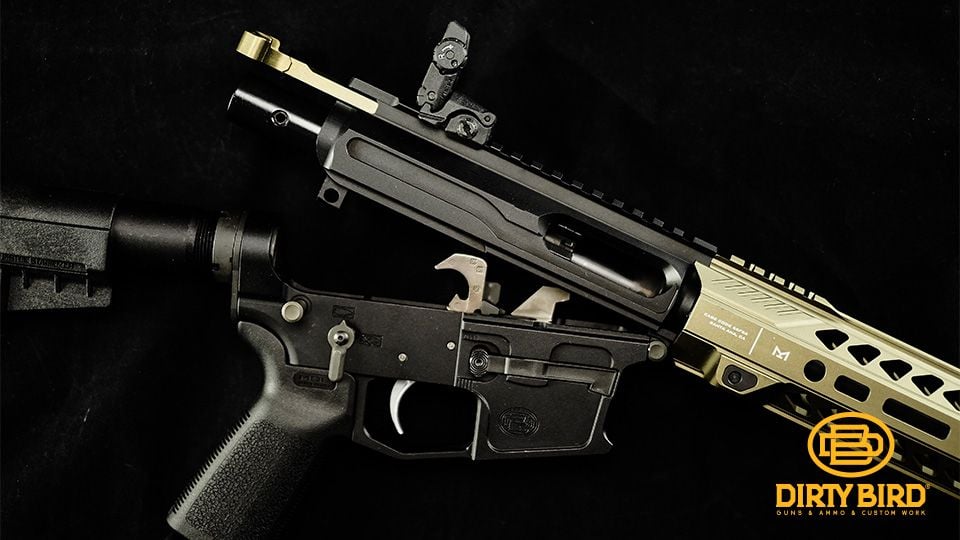
The AR-15 rifle eadily accepts pistol cartridges, turning it into a controllable carbine with gentle recoil. Popular selections include 9mm Luger, .45 ACP, and 10mm Auto, often through dedicated uppers that utilize common handgun magazines like those for Glock pistols.
Longer barrels increase velocity and power beyond typical handguns, boosting accuracy and range suitability while complying with facility rules against centerfire rifles. Mild kick allows rapid follow-ups, and suppression integrates easily, especially with subsonic ammunition. These builds appeal to those unifying ammo inventories or pursuing inexpensive practice.
Big Bore Calibers for Serious Power
For pursuing substantial game or needing decisive impact, larger options fit within the AR-15 rifle design. Rounds such as .450 Bushmaster, .458 SOCOM, and .50 Beowulf launch heavy projectiles with energy rivaling traditional big-game cartridges.
Straight-walled choices like .350 Legend meet regulations in certain areas while delivering reliable results on deer or hogs up close. These require more changes, including specific bolts and lower-capacity magazines, yet they expand the rifle’s role into domains usually occupied by other action types.
Exploring the Versatility of the 6mm ARC in AR-15 Rifle Builds
A standout newer cartridge gaining traction is the 6mm Advanced Rifle Cartridge, or 6mm ARC, developed by Hornady to push the AR-15’s boundaries. It begins with the 6.5 Grendel case, repositioning the shoulder and necking down for 6mm bullets, capitalizing on modern high-BC projectiles in the 100 to 108 grain class for superior long-range traits.
This round preserves energy and precision far beyond usual AR-15 expectations, with gentle recoil and prolonged barrel durability. Typical factory ammunition from an 18-inch barrel sends 108-grain match bullets at about 2,600 feet per second, yielding minimal drop and excellent wind resistance. Lighter bullets from 55 to 90 grains suit varmint hunting, achieving speeds comparable to specialized small calibers. Handloaders enjoy simple processes with common parts to customize performance.
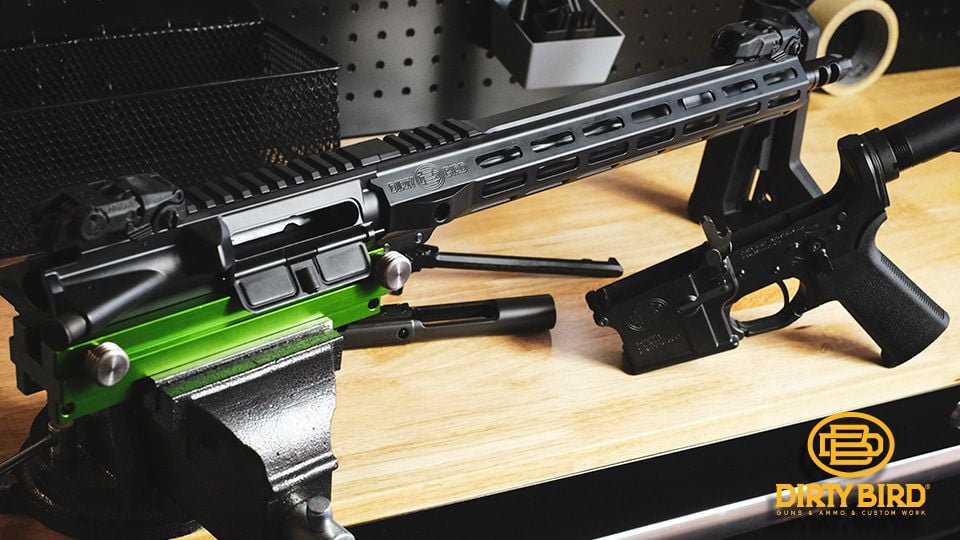
Assembling a 6mm ARC AR-15 rifle involves straightforward steps. Essential parts feature a matched barrel, often 16 to 22 inches long for best speeds, combined with a compatible bolt for the case dimensions. Regular carriers and 6.5 Grendel magazines function without issue. Twist rates around 1:7 or 1:7.5 stabilize the varied bullet weights effectively across conditions.
Hunters value the 6mm ARC for ethical takes on deer, antelope, and pigs, thanks to bullets that penetrate deeply and expand reliably. Precision competitors leverage its ballistics in matches requiring distant accuracy. Recreational shooters appreciate its balanced nature for targets or fun days. Factory ammo options continue expanding, covering accuracy, hunting, and everyday needs.
The 6mm ARC distinguishes itself by offering wide-ranging utility in a compact package. It tackles varied scenarios without heavy penalties in weight or kick, revitalizing the platform for contemporary uses.
The .224 Valkyrie: Promise, Challenges, and Current Status in 2025
Introduced by Federal Premium in late 2017, the .224 Valkyrie arrived with bold claims of transforming the AR-15 into a legitimate long-range performer. Built on a necked-down 6.8 Remington SPC case to accept .224-inch bullets, it aimed to deliver supersonic velocities past 1,300 yards using heavy-for-caliber projectiles like 90-grain Sierra MatchKings.
Early enthusiasm ran high, with promises of flat trajectories, strong wind resistance, and match-grade accuracy. However, the launch encountered hurdles including inconsistent brass quality, stabilization issues requiring fast twist rates, and limited ammunition selection. These growing pains slowed adoption.
Looking back in 2025, the .224 Valkyrie occupies a specialized role rather than a dominant one. Newer options, particularly the 6mm ARC, have captured much of the long-range AR-15 market. That said, dedicated enthusiasts still achieve excellent results in tuned builds, and ammunition availability has improved.
Additional Intermediate and Specialized Calibers
Other intermediates include the 6.5 Grendel, known for its proven extended-range effectiveness. Its heavier bullets with high sectional density hold velocity well, fitting larger game or long-distance work. Component sharing with the 6mm ARC simplifies experimentation.
The 7.62x39mm provides budget-friendly options with surplus availability and strong mid-range authority, requiring dedicated magazines. The 6.8 Remington SPC offers another step up in terminal performance.
Rimfire Conversions for Economical Training
For cost-effective practice, .22 Long Rifle conversions shine by replacing the bolt and magazine. This enables high-volume shooting at low expense while retaining the feel of centerfire controls. Precision suffices for skill building, though power limits it to training rather than duty use.
Emerging and Wildcat Options
Innovative shooters continue developing wildcats and niche rounds based on established cases. Adoption varies depending on practical advantages and long-term support.
Why Your First AR-15 Should Almost Certainly Be Chambered in 5.56x45mm NATO
For most new shooters entering AR-15 ownership, starting with 5.56x45mm NATO or .223 Remington makes overwhelming sense. This combination offers unmatched availability, affordability, and versatility. Ammunition remains widely accessible, recoil stays minimal, and the surrounding ecosystem of parts and accessories is unmatched.
While specialized calibers excel in niche roles, they often require higher costs and more tuning. Beginning with 5.56 allows shooters to master fundamentals before branching out. Even experienced owners typically keep at least one rifle in this chambering as a dependable baseline.
Selecting Your Ideal AR-15 Caliber
Deciding on a caliber hinges on primary purpose, regional laws, and personal preference. Ammo cost, availability, recoil, and effective range all play a role. Proven classics ensure broad compatibility, while specialized calibers tailor rifles to specific demands.
At Dirty Bird Guns & Ammo, our inventory covers parts and complete rifles across these options, helping shooters align their builds with real-world goals. From foundational configurations to cutting-edge chamberings like the 6mm ARC, the AR-15 remains relevant because it adapts. That modularity continues to define its lasting impact across shooting disciplines.
I like the 6mm ARC as it performs well and I picked up a complete upper for about 300 or less and it performs great paired with a bushmaster lower. No special needs were required for a very nice rifle. Easily shot 3/4 MOA at 100 yds.