

 Dirty Bird Bakersfield
Jan
Table of Contents
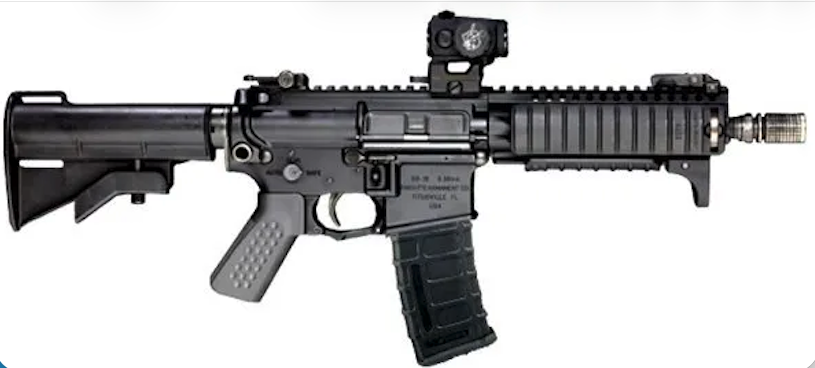
Short-barreled rifles (SBRs) have surged in popularity among firearms enthusiasts for their compact size, maneuverability, and tactical appeal. These firearms combine the power of rifle cartridges with a shorter profile, making them ideal for close-quarters scenarios, home defense, vehicle use, or suppressed setups. However, SBRs fall under strict federal regulations as Title II firearms under the National Firearms Act (NFA) of 1934. Understanding the legal definitions, differences from similar platforms like AR pistols, and practical considerations is essential before diving in.
What Legally Defines a Short-Barreled Rifle (SBR)?
Under ATF rules, a rifle is a firearm designed to be fired from the shoulder with a rifled bore. An SBR is classified as a rifle with a barrel length less than 16 inches, measured from the muzzle to the bolt face or breech when closed, or any weapon made from a rifle with an overall length (OAL) less than 26 inches, measured from the rearmost point of the stock to the muzzle, with stocks extended if adjustable.
The barrel measurement uses a rod inserted until it contacts the closed bolt, marked, and measured externally. Permanently attached muzzle devices that are pinned and welded count toward barrel length, but removable ones do not factor into OAL.
If a firearm starts as a rifle, such as from a rifle lower receiver, and gets modified to meet these criteria, like shortening the barrel or reducing OAL, it becomes an SBR. Converting a standard rifle by attaching a stock to a short upper or cutting the barrel short triggers this classification.
Non-compliance is serious: possessing an unregistered SBR is a federal felony, carrying potential prison time and fines. Always prioritize legality. Consult the ATF website, a knowledgeable FFL, or legal expert for your situation, as state laws may add restrictions.
SBR vs. AR Pistol: Key Differences and Legality
A common point of confusion is the line between an SBR and an AR pistol, especially on AR-15 platforms. Both can feature barrels under 16 inches, but classification hinges on design and features.
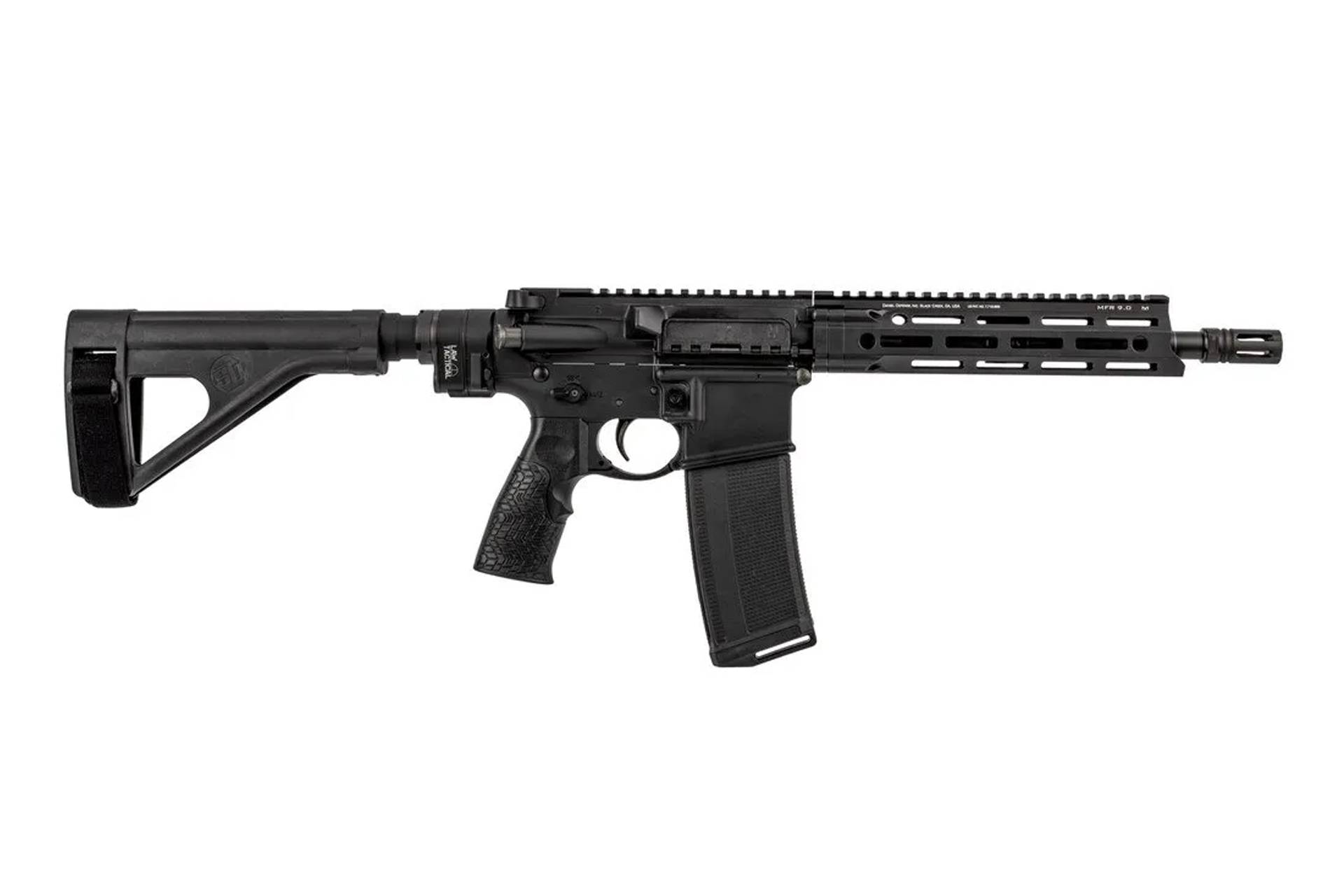
An AR pistol is a firearm designed to be fired with one hand, per ATF definition, without a stock intended for shouldering. It typically uses a pistol brace, though recent ATF rules have evolved regarding brace criteria. Always check current guidance. Pistols have no federal barrel length minimum and are Title I firearms. No NFA registration is required. You can transport them across state lines like any handgun, subject to state laws.
The critical distinction is that if you add a stock, whether traditional or collapsible, to an AR pistol with a barrel under 16 inches, it becomes an SBR and requires NFA registration. Conversely, building from a pistol lower allows conversion to a rifle by adding a stock without registration, but starting from a rifle lower and making it short-barreled demands it.
Many opt for braced AR pistols to achieve similar compactness without NFA hurdles. However, if you want true shoulder-fired capability with a stock, the SBR path is the legal route. Stressing legality here: never assume a brace makes it safe. ATF interpretations can change, and misconfiguration can lead to felony charges. As of 2026, the 2023 ATF rule reclassifying many pistols with stabilizing braces as SBRs has been overturned, meaning those braced pistols are no longer considered SBRs and do not require registration. Existing NFA criteria still apply: if a firearm has a barrel under 16 inches and is intended for shoulder firing with a stock, it qualifies as an SBR. Register properly via eForm 1 for builds or Form 4 for transfers to avoid issues.
Advantages and Drawbacks of SBRs
SBRs excel in maneuverability. Their shorter barrels and overall length make them easier to handle in tight spaces like doorways, vehicles, or dense brush. They retain rifle-caliber ballistics, which are far superior to handguns, while being lighter and more concealable than full-size rifles. Pairing with a suppressor further reduces length and noise, enhancing home defense or tactical use.
Drawbacks include velocity loss from shorter barrels, increasing muzzle blast, flash, and recoil. Effective range drops compared to rifles with barrels 16 inches or longer, though most real-world uses stay under 200 to 300 yards. The NFA process previously added a cost of a $200 tax stamp and wait times of weeks to months, though e-filing has sped it up. However, as of January 1, 2026, following the passage of the One Big Beautiful Bill (H.R. 1) in 2025, the $200 federal tax stamp for SBRs, suppressors, short-barreled shotguns, and any other weapons has been eliminated. This removes the financial barrier, but the core NFA requirements remain intact: you still need ATF approval, registration, background checks, fingerprints, and photographs. Interstate travel requires ATF approval, and non-compliance risks severe penalties. State and local laws continue to apply, so verify restrictions in your area.
Popular Calibers and Barrel Length Recommendations
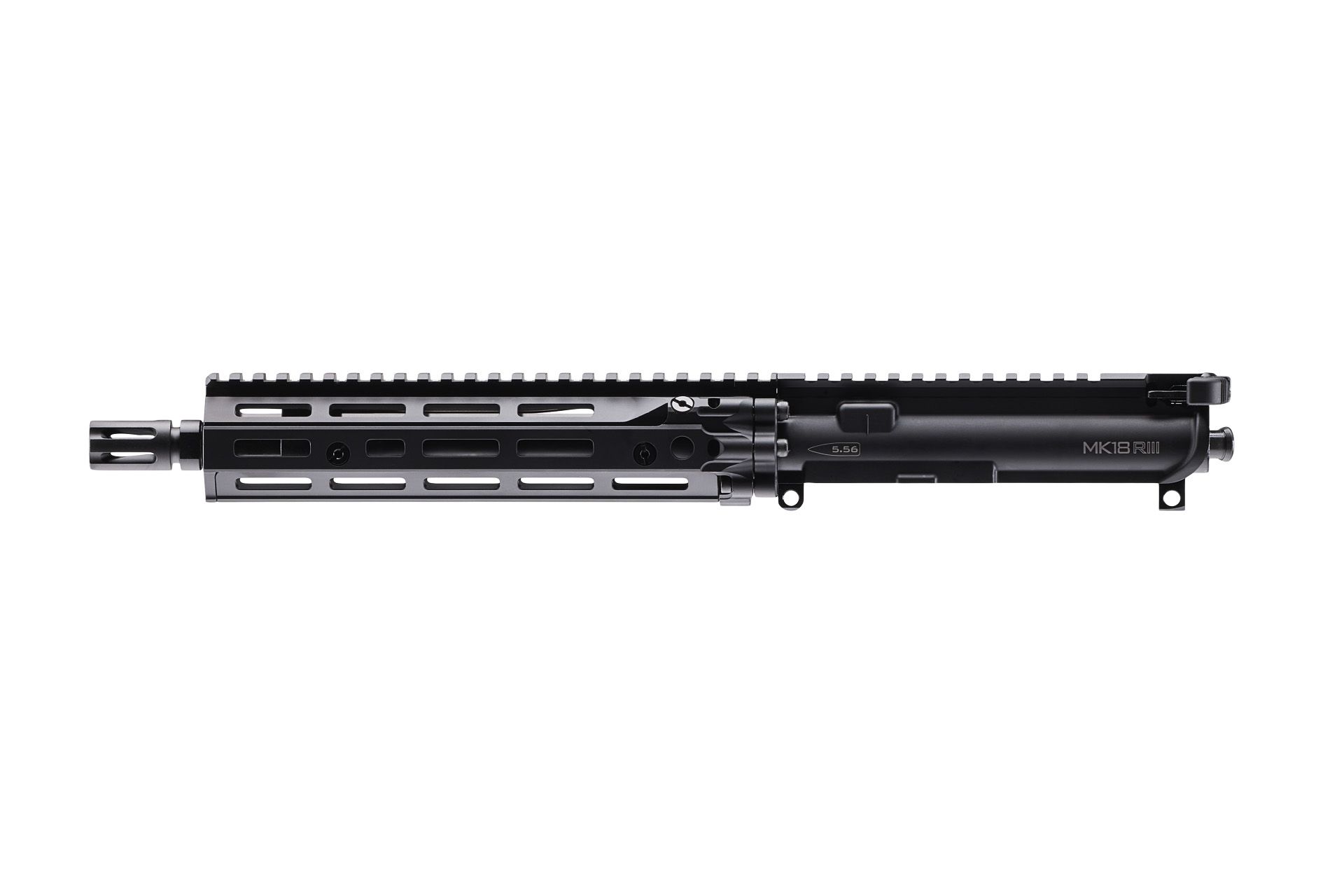
AR-15 platforms dominate SBR builds due to modularity. Common calibers include 5.56 NATO/.223 Remington and .300 Blackout.
For 5.56, avoid going too short. Barrels under 10.5 to 11 inches lose significant velocity, leading to reduced terminal performance, excessive flash, and unreliable cycling with some ammo. An 11.5-inch or 12.5-inch barrel strikes the best balance: enough dwell time for powder burn, solid velocity around 2,500 to 2,700 fps with 55 to 77 grain loads, and compact handling. These lengths provide a do-all setup for defensive use, with minimal sacrifices.
.300 Blackout shines where 5.56 falters in ultra-short configurations. Designed for short barrels, it achieves full powder burn in 8 to 10 inches. An 8-inch .300 Blackout build delivers excellent subsonic performance, ideal suppressed, around 950 to 1,050 fps with 200 to 220 grain loads for quiet, hard-hitting home defense, and strong supersonic velocities over 2,000 fps with 110 to 125 grain. It is more forgiving in compact lengths, with less blast unsuppressed and better energy retention for hunting or barriers.
If building an SBR, great starting points would be an 11.5-inch or 12.5-inch 5.56 rifle for versatile, all-around performance or an 8-inch 300 Blackout build for maximum compactness, especially suppressed. Going shorter with 5.56, such as 7 to 10 inches, often underperforms. Switch to .300 Blackout there for superior results.
Building or Buying an SBR
Many build SBRs using a stripped lower, filing Form 1 first, waiting for approval, then assembling. Others buy pre-registered examples from SOT dealers via Form 4. Popular manufacturers include Daniel Defense, BCM, SIG Sauer, and Q for ready options.
Accessories enhance SBRs: suppressor-ready muzzle devices, quality optics like red dots or LPVOs, extended handguards for control, and lights or lasers for low-light use. Train regularly. SBRs handle differently due to recoil and balance.
In summary, SBRs offer rifle power in a compact package but demand respect for NFA rules. Prioritize compliance, choose barrel and caliber wisely, such as 11.5 to 12.5 inch 5.56 or 8 inch .300 Blackout as strong starters, and enjoy the benefits responsibly.
Do not forget about the foregrip difference, if you build an AR pistol, you cannot use a vertical foregrip, it must be angled or a hand stop.