

 Dirty Bird Bakersfield
Oct
Table of Contents
Conversion basics: what “caliber conversion” means for your rifle
A caliber conversion replaces or adapts the barrel, bolt/slide, magazine, or complete upper assembly, allowing a firearm to accept and fire a different cartridge. Conversions range from simple drop-in barrels and recoil/slide assemblies to complete upper swaps that change the operating pressures, magazine geometry, and feeding path. Why convert? Three clear benefits drive most shooters: training cost savings (e.g., switching to economical .22 LR or 9mm), platform flexibility (one lower receiver or frame supporting more roles), and mission fit (changing from a lightweight plinking caliber to a defensive or hunting caliber). However, conversions add complexity. Headspace, pressure differences, and feed angle are technical issues that must be resolved by purpose-built kits or proper gunsmithing. A successful conversion relies on parts designed to work together: a barrel without a compatible bolt or magazine will not produce reliable feeding or safe pressures. Some platforms—like the AR-15—are intentionally modular: uppers can be swapped to move between calibers (5.56, .300 BLK, 6.5 Grendel, etc.) without changing the lower, which preserves ergonomics while shifting capability. Other platforms use insert-style kits, such as .22 LR conversion slides or dedicated carbine upper kits, that offer quick changeovers but may trade off ultimate reliability or precision. Always inspect the kit’s engineering pedigree: reputable manufacturers design barrels, feed ramps, and magazines as a complete system, ensuring that headspace, extractor engagement, and case support are safe and reliable.
Glock conversions: kits, barrels, and practical tradeoffs
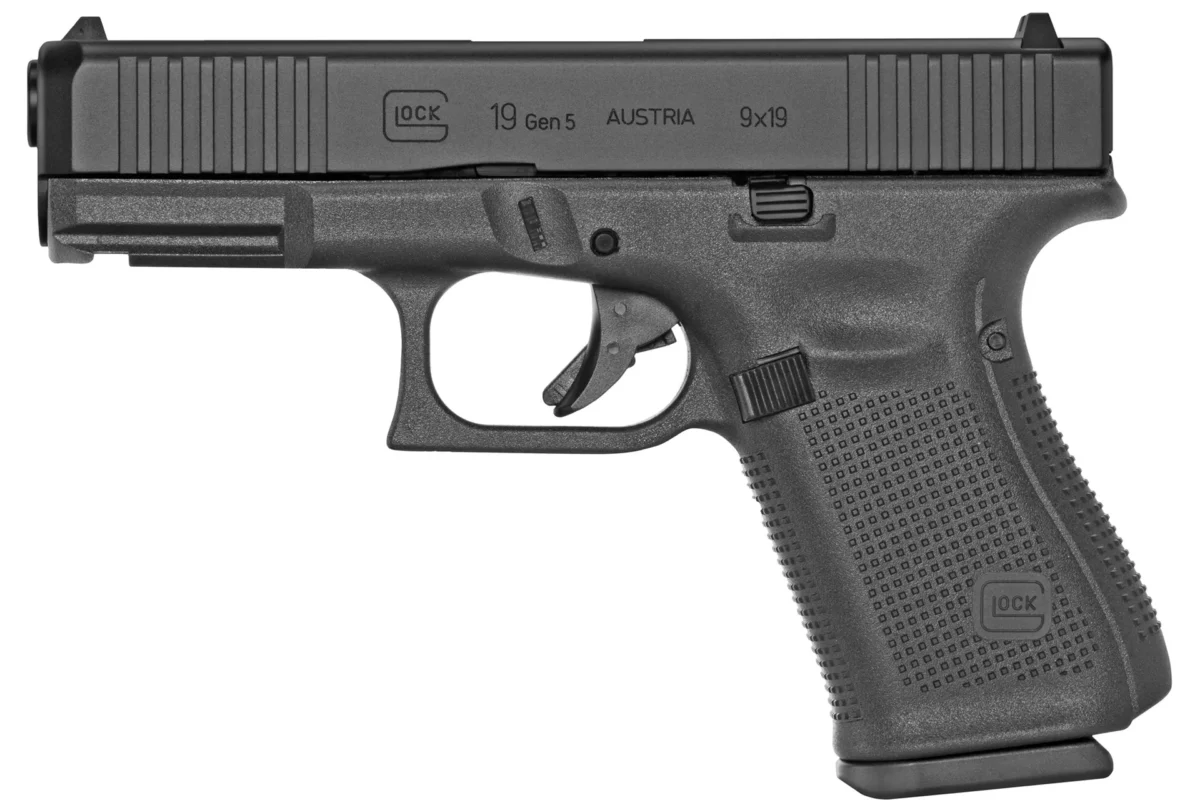
Glock conversions cater to a broad market, offering full conversion slides, drop-in .22LR units, and carbine chassis that enable a Glock pistol to serve as the fire-control device for a rifle-length package. Advantage Arms and other vendors produce .22 LR conversion kits that are popular for inexpensive target practice and training. Meanwhile, other manufacturers offer caliber-change barrels or complete slide assemblies that allow a Glock to be swapped between, for example, .40 and 9mm. Conversion kits that mimic the factory slide/drop-in form factor are convenient because most of the pistol’s controls remain unchanged, and installation is often fast and reversible—many users appreciate practicing with the same ergonomics while saving money on ammunition. Carbine-style Glock rifle kits (often called “Glock carbine conversions” or “Glock rifle kits”) integrate the pistol into a stocked chassis and sometimes include longer barrels, improved sights, and rails. These provide better sight radius and stability but introduce legal and mechanical considerations that must be addressed—serialized parts and compliance vary by jurisdiction and kit type. Conversion performance varies: .22 LR kits are terrific for trigger work and cost-per-round savings, but may exhibit different recoil and cycling characteristics compared to centerfire cartridges. Multi-caliber conversion barrels or kits that allow swapping between 9mm, .40, and .357 magnum equivalents exist, but true reliability often depends on matching recoil springs, mags, and possibly barrel extensions. For Glock owners, consider conversion systems from manufacturers with a proven track record of reliability and clear installation instructions. Availability of drop-in conversion barrels and kits is broad and active in the market
1911 conversions: why .22 LR remains popular for practice
The 1911 platform is a natural candidate for sub-caliber conversion. Manufacturers such as Advantage Arms have long offered .22 LR conversion slides and complete kits that enable 1911 owners to practice with lower-cost ammunition while retaining the pistol’s ergonomics and controls. The reasons are straightforward: the 1911’s single-action trigger and grip feel are frequently practiced skills, and a .22 conversion preserves those elements for fraction-of-the-cost training. Many 1911 .22 LR kits include a dedicated slide, barrel, and magazine—sometimes packaged with a small range bag or simplified installation tools—so users can easily switch between centerfire and .22 LR ammunition with minimal hassle. These units are optimized to work with the 1911’s feed angle and extractor design; that’s essential because simply dropping a .22 barrel into a .45 frame without a matched slide/magazine seldom yields reliable function. Beyond training, dedicated .22-chambered 1911 variants can be built as light-recoil range guns, youth trainers, or dedicated plinkers; they’re also handy for load development and sighting because the lower recoil helps with follow-up shot practice. Note that the .22 conversion market encompasses both low-cost, range-focused kits and higher-end, match-oriented subcaliber slides; choose the solution that aligns with your practice goals. As with any conversion, inspect the manufacturer’s support and parts availability. Advantage Arms and similar vendors have long offered 1911 .22 kits and supporting magazines that fit a wide range of 1911 frames.
AR-15 caliber swaps: uppers, barrels, and real-world flexibility
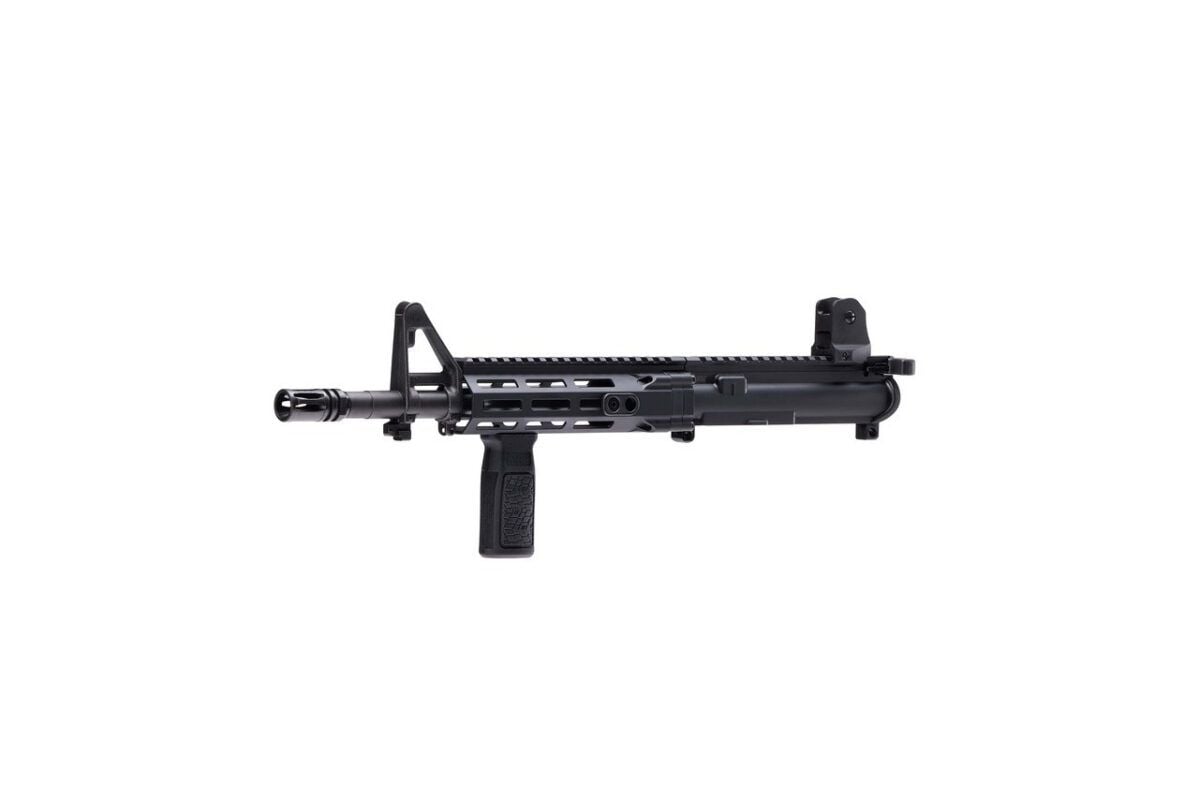
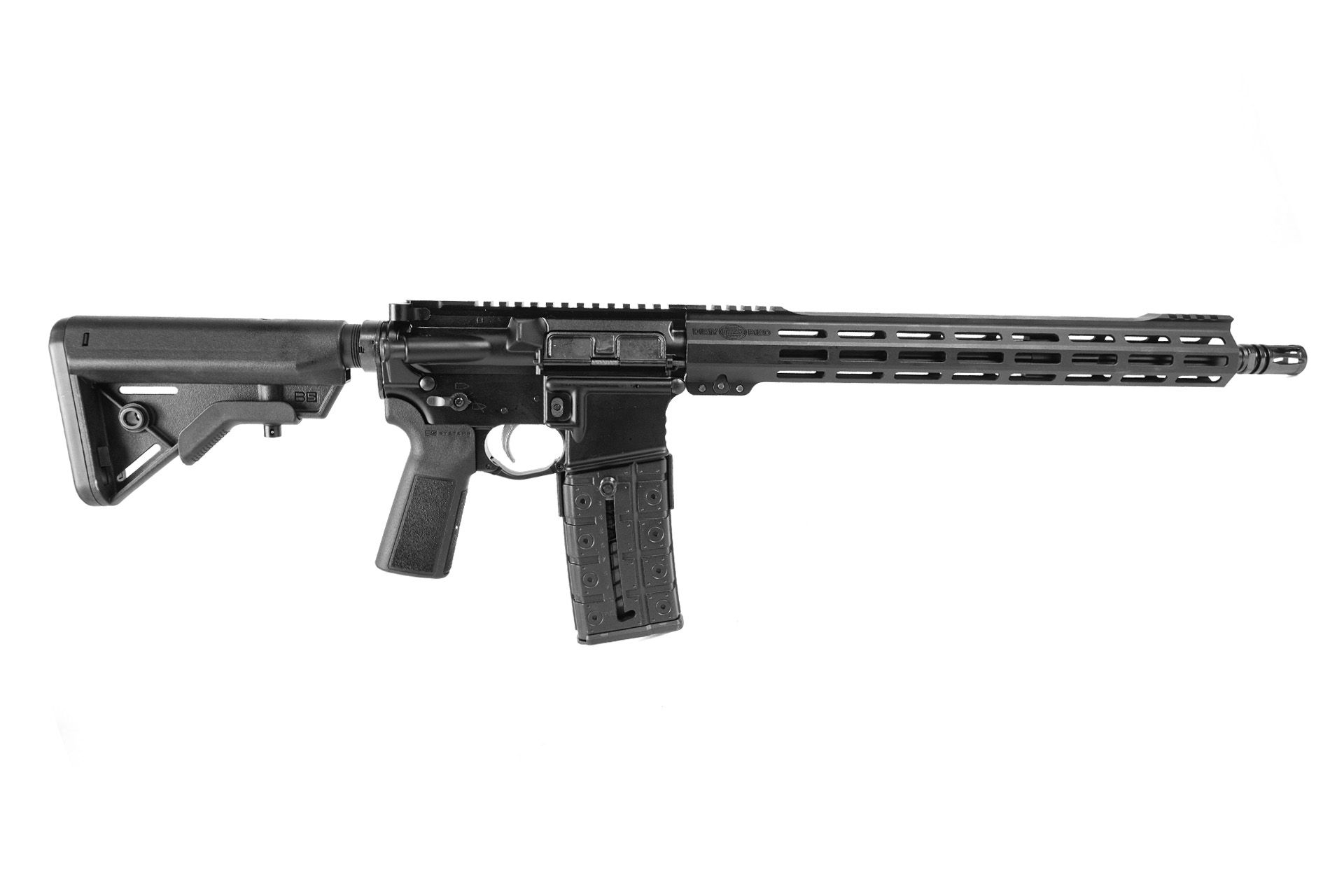
The AR-15 is among the most modular rifle platforms ever made—its split upper/lower architecture makes caliber changes practical and common. In many cases, converting an AR-15 between calibers is as simple as swapping the upper receiver and the barrel, and sometimes the bolt (for different case head sizes) and magazines. Common and field-proven AR swaps include the 5.56/.223, .300 AAC Blackout (300 BLK), 6.5 Grendel, .224 Valkyrie, and various pistol-caliber AR builds that utilize dedicated lowers and magazines. Each caliber brings its own tradeoffs: 300 BLK lets users run heavier subsonic loads for suppressed use on a standard AR lower; 6.5 Grendel extends accurate reach in short-barrel platforms; and small-bore options like 5.56 remain lightweight and low-recoil. When planning a caliber swap, check bolt compatibility and magazine feed geometry—failure to address these will cause malfunctions and safety risks. A complete upper swap from a reputable builder preserves feeding reliability while offering the quickest changeover path. Guides and primers for AR calibers—covering ballistics and everyday use cases—are widely available and helpful when choosing which direction to go. Remember that barrel length, gas system length, and twist rate all influence the ultimate performance of a new caliber on an AR platform. Consult the manufacturer’s specifications for recommended configurations and test with your intended ammunition.
Lever-action rifles and conversions: niche uses and chambering limits
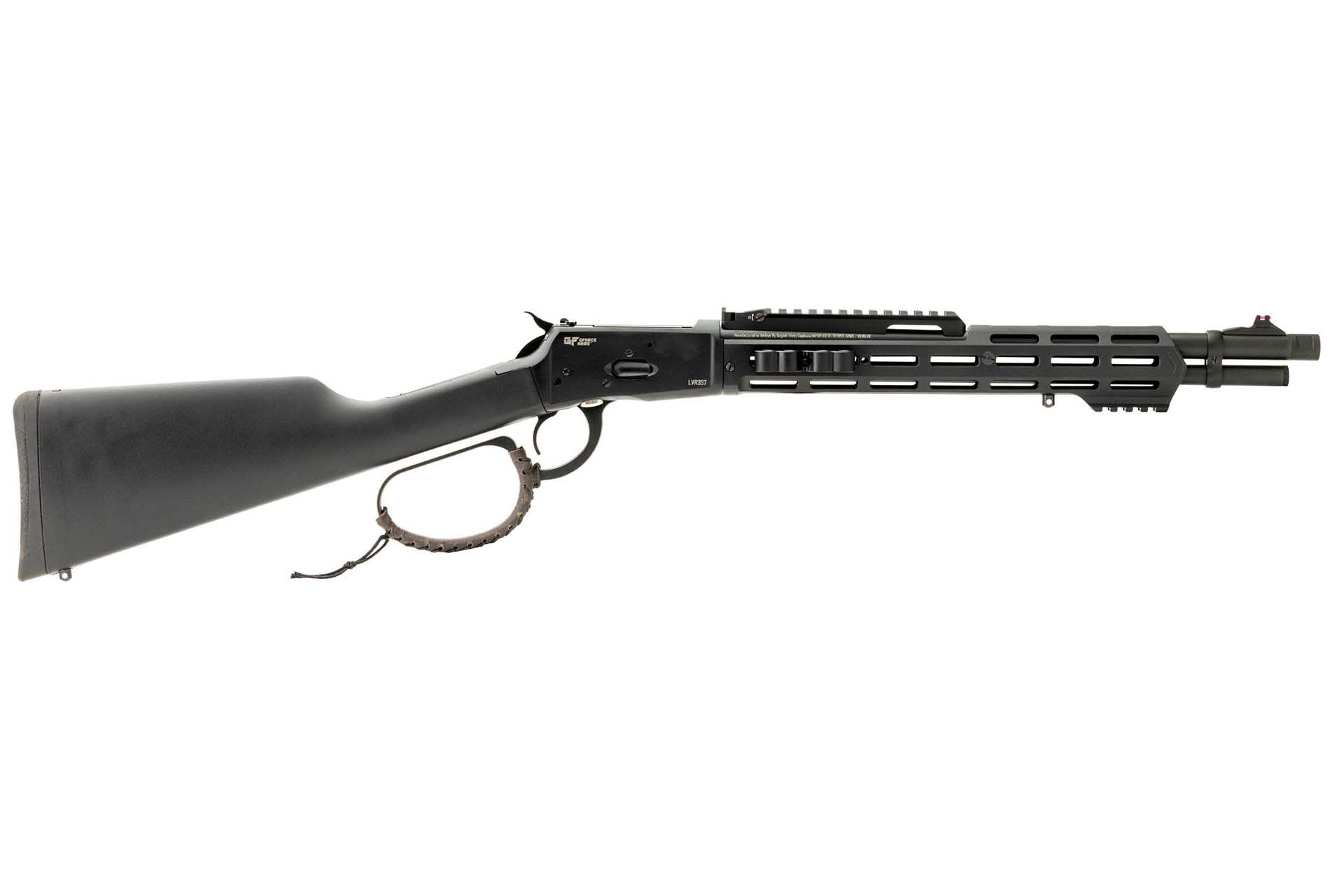
Lever-action rifles are less commonly converted between calibers in the hobbyist sense, but they matter in this conversation for two reasons. First, modern lever-action rifle designs have expanded chambering options—manufacturers like Henry, Marlin, Winchester, and Remington produce models in .22 LR, .357, .30-30, and even .308 caliber—so buyers can select the best native chambering for their intended role rather than converting after purchase. Second, some shooters adapt pistol cartridges into lever guns (for example, .357 lever action rifles chambered for .357 Magnum/.38 Special) because lever actions naturally accept rimmed cartridges. Lever guns are prized for their handling and quick follow-up shots in hunting contexts, and modern lever-action rifle variants sometimes include features such as threaded muzzles, optics rails, and synthetic stocks that increase versatility. Swapping barrels or chambers on a lever gun is nontrivial—headspacing and timing the action are sensitive operations best left to the factory or a competent gunsmith. If your goal is a different caliber for hunting or range use, consider shopping for a modern lever-action rifle in the desired chambering rather than improvising a swap; the market now includes lever rifles in many of the commonly requested calibers. Sources from major manufacturers show a robust lineup of new lever models and chamberings to choose from.
Practical considerations: reliability, cost, and legality before you convert
Converting calibers is as much about logistics as it is about mechanics. Start with reliability: aftermarket conversion kits vary in reliability—while many are excellent for training, not all achieve the same level of function as a factory-caliber barrel and magazine. Test a conversion with representative ammo types before trusting it for carry or high-stakes use. Cost is the second axis: conversions can save significant sums in training ammo, but initial kit cost and any needed additional parts (mags, springs, bolts) should be budgeted—often you’ll reach break-even after a few bricks of .22 LR vs. centerfire practice. Legal compliance is nonnegotiable: laws around pistols converted to rifle configurations, or adding stocks and barrels to pistols, are complex and vary widely. Some kits are designed to remain within legal boundaries by keeping serialized parts as the controlled component; others require additional documentation or aren’t permitted in certain regions. Finally, consider resale and support—kits from established manufacturers typically come with better documentation, spare part availability, and a known service life. When purchasing conversion parts or a new upper assembly, select sellers and brands that clearly state their compatibility, provide detailed installation instructions, and offer a warranty or service support. If you’re shopping for parts or complete conversions, Dirty Bird USA’s Rifles page compiles vetted options and reputable kits, allowing you to compare parts with confidence.
 CA Compliant
 CA Compliant
 CA Compliant
 CA Compliant
FAQs — Common Questions on Caliber Conversions
Are Glock caliber conversions reliable enough for defensive use?
Many Glock conversion kits work well for training and recreational shooting. For defensive use, most shooters prefer sticking with a factory-caliber barrel and slide to ensure maximum reliability.
What’s the benefit of a 1911 .22 long rifle conversion?
It allows for practice with the same ergonomics and trigger feel of a 1911, while using inexpensive .22 LR ammunition. It’s excellent for training, new shooters, and reducing overall costs.
Do AR-15 caliber conversions require a new lower receiver?
No. In most cases, you can swap the upper receiver assembly, barrel, and sometimes the bolt or magazines. The modular AR platform was designed to support caliber changes without requiring the replacement of the lower receiver.
Can lever-action rifles be converted between calibers?
It’s possible in theory, but lever guns are not designed for simple caliber swaps. The better option is to buy a lever-action rifle in the desired chambering—manufacturers like Henry, Marlin, and Winchester offer a wide variety.
Is it legal to convert a pistol into a rifle with a carbine kit?
Laws vary by region. Some kits are designed to comply with regulations, while others may require additional paperwork or be subject to restrictions. Always check local, state, and federal rules before making modifications.
Build Smarter with Dirty Bird USA
Caliber conversions open up new opportunities—whether you’re saving on ammo with a .22 LR kit, turning your Glock into a compact carbine, or expanding your AR-15 into a multi-caliber workhorse. Each platform offers unique advantages, but success ultimately depends on selecting the right kit, understanding the trade-offs, and ensuring compliance with the law.
Dirty Bird USA makes it simple to find the right rifle parts, conversion kits, and accessories for your build. From match-grade barrels to complete uppers and trusted conversion systems, we stock parts from reputable manufacturers, allowing you to build with confidence.
Additional resources, www.ar15discounts.com