

 Dirty Bird Bakersfield
AR Parts and Accesories, AR-15, News, Rifle
Forced Reset Triggers in 2026: FRTs, Super Safeties, Key Differences
Feb
Table of Contents
The AR-15 aftermarket is seeing renewed attention in early 2026 around forced reset triggers, commonly referred to as FRTs, along with selector-based systems often called Super Safeties. These products are discussed heavily because they allow extremely rapid semi-automatic fire while still requiring a separate trigger function for each shot when operating as designed.
Interest has increased following changes in federal enforcement posture and ongoing litigation outcomes regarding forced reset triggers that reshaped how rate-of-fire accessories are evaluated. As a result, shooters are asking more detailed questions about how these systems actually work, what separates one design from another, and what the current legal environment realistically looks like.
Why Forced Reset Systems Became So Popular
The appeal of forced reset systems comes down to trigger reset speed. A standard AR-15 trigger requires the shooter to release the trigger far enough forward to reset before firing again. That physical reset is the limiting factor in how quickly follow-up shots can occur.
Forced reset systems shorten that delay by using the firearm’s cycling action to mechanically push the trigger forward into reset. Instead of relying solely on finger movement, the bolt carrier group performs part of the reset work. As long as the shooter maintains control and continues to perform separate trigger pulls, the rifle can fire extremely fast semi-automatic strings.
It is common to see specific rate-of-fire numbers mentioned online, but those figures are highly variable and dependent on the shooter, rifle setup, ammunition, and tuning. The accurate way to describe performance is that forced reset systems can enable very rapid semi-automatic fire that may approach cyclic-rate-like speed in demonstrations, rather than guaranteeing a specific rounds-per-minute figure.
The Core Difference Between FRTs and Super Safeties
Although both systems rely on forced trigger reset, they differ fundamentally in where the mechanism is located.
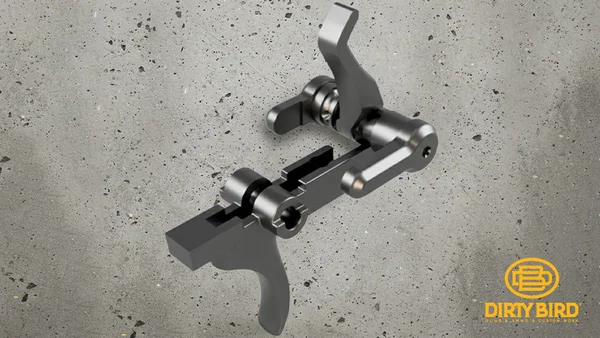
A forced reset trigger is a complete trigger replacement. It installs in place of the standard fire control group and uses modified internal geometry so that the cycling of the bolt carrier group physically forces the trigger forward into reset. The trigger feel, pull weight, and reset characteristics are determined by the manufacturer’s design and are fixed once installed.
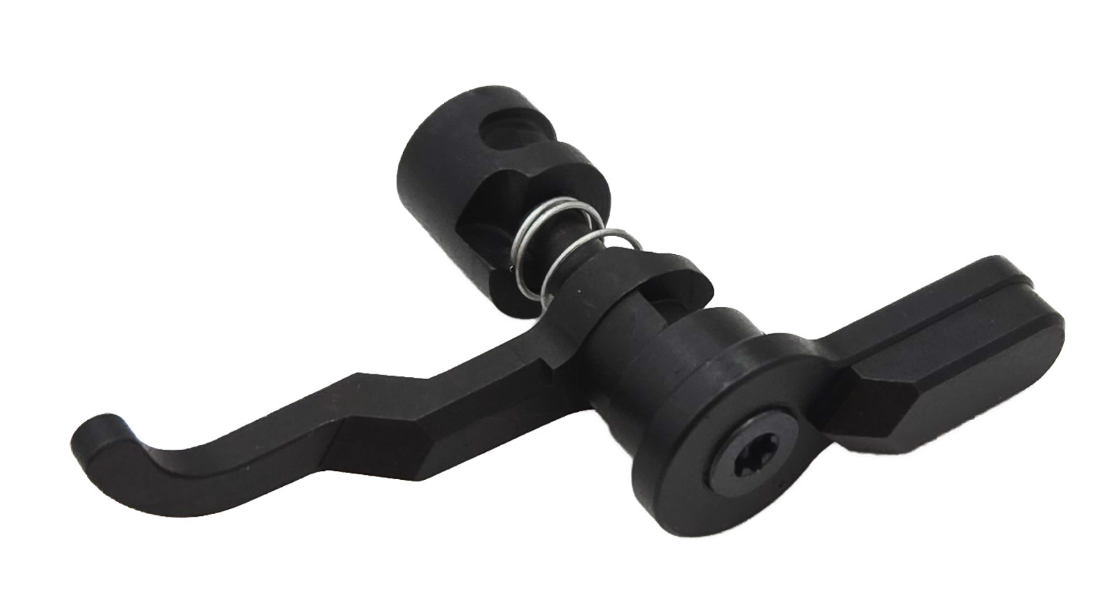
A Super Safety is selector-based rather than trigger-based. It replaces the safety selector and adds a dedicated forced reset mode. In that mode, the selector’s cam or lever geometry interacts with the trigger during the firing cycle and mechanically drives the trigger forward into reset. The original trigger remains in place, allowing the user to retain their preferred trigger characteristics as long as the trigger is compatible.
Most Super Safety designs use a three-position selector that includes safe, standard semi-automatic, and forced reset operation. This selector-driven approach is why these systems are often described as more modular and flexible.
How Forced Reset Triggers Function
In a standard AR-15 firing cycle, the shooter pulls the trigger, the hammer falls, the round fires, and the bolt carrier cycles. During cycling, the hammer is cocked and held by the disconnector. Only when the shooter releases the trigger does the hammer transfer back to the sear, allowing the next shot.
Forced reset triggers modify the reset phase. As the bolt carrier group returns forward, it contacts a modified surface within the trigger or hammer assembly. That contact mechanically forces the trigger forward into the reset position. Internal timing features are designed to prevent reset from occurring unless the bolt carrier is in the proper position.
The shooter must still perform a separate trigger pull for each shot, but the reset happens automatically and rapidly due to the firearm’s movement rather than finger release alone.
How Super Safety Selectors Achieve Forced Reset
Selector-based forced reset systems leave the trigger itself unchanged. In the forced reset selector position, the selector cam or lever engages the trigger during the cycling sequence.
As the bolt carrier group moves forward, it actuates the selector mechanism, which pushes the trigger forward into reset. The trigger then remains ready for the next pull almost immediately. The shooter still controls each shot, but the reset timing is handled mechanically.
Because the trigger is not replaced, compatibility matters. Some triggers may require fitting or may not work properly with certain selector designs. Installation experiences can vary depending on receiver tolerances and trigger geometry.
Strengths and Tradeoffs
Forced reset triggers appeal to shooters who want an integrated system designed specifically for maximum reset speed. They can deliver extremely consistent performance but come with a fixed trigger feel and higher cost. Because more components are involved in the reset process, wear and spring stress are considerations over time.
Super Safeties appeal to shooters who value modularity and customization. Keeping an existing trigger allows for greater control over pull weight and feel. Selector-based designs are often more affordable and are perceived by many users as distributing forces in a way that may reduce long-term wear. The tradeoff is that compatibility and tuning matter more, and operation requires familiarity with selector modes.
Both systems benefit from properly tuned buffers, bolt carrier groups, and recoil systems. Shooter technique and control remain critical for safe and effective use.
Comparison to Binary Triggers
Binary triggers fire once on trigger pull and once on trigger release. While effective for controlled double shots, they require deliberate release timing, which limits sustained speed.
Forced reset systems differ by mechanically driving the reset forward, allowing faster follow-up shots while still requiring a separate trigger function for each round fired.
The Legal Landscape in 2026
At the federal level, recent court decisions and settlements changed how certain rate-of-fire accessories are treated in enforcement practice. While forced reset triggers are still subject to scrutiny, broad federal efforts to classify all such devices as machine guns have been reduced, and sales have resumed in many markets.
It is important to avoid overstatements. The legal environment is still evolving, and enforcement positions can change. State and local laws vary significantly, and some jurisdictions prohibit devices intended to increase rate of fire regardless of federal interpretation. Compliance depends on location, product design, and intended use.
Anyone purchasing or installing a forced reset system should verify state and local legality before doing so.
Final Thoughts
The real distinction between forced reset triggers and Super Safeties comes down to design philosophy. FRTs are complete trigger systems built for speed through direct interaction with the firearm’s cycling. Super Safeties take a selector-based approach that emphasizes flexibility, compatibility, and customization.
In 2026, both represent a major evolution in semi-automatic fire control design. Choosing between them depends less on raw speed and more on how much control, modularity, and long-term flexibility a shooter wants from their setup.