

 Dirty Bird Bakersfield
California Compliant, California Roster Guns
Your Complete Guide to the Firearms Safety Certificate: Is There a Gun Permit in California?
Jun
Table of Contents
At Dirty Bird Guns and Ammo, customers regularly deal with the many layers of California firearm regulations. One of the most common questions we hear is some version of: do I need a gun permit in California to buy a firearm? The short answer is no. California does not issue a traditional gun permit for purchasing firearms. Again, there is no gun permit in California…but, of course, there are hoops. Instead of a gun permit in California, what is required for most buyers is the Firearms Safety Certificate, known as the FSC. Understanding the difference matters, and knowing what the FSC actually requires helps you prepare before walking into a dealer.
California mandates the FSC for the large majority of firearm transactions. Administered by the Department of Justice, the requirement applies to both handguns and long guns. Once issued, the certificate remains valid for five years. After that period, buyers must go through the process again if they want to make additional purchases. Some will confuse this as there being a gun permit in California, but that’s not exactly correct. Nonetheless, it’s an annoying hoop to jump through.

TL;DR- Too Long Didn’t Read
The blog post details the complexities of purchasing firearms in California, highlighting the necessity of the Firearms Safety Certificate (FSC) rather than a traditional gun permit.
- California does not have a traditional gun permit but requires the FSC for most firearm purchases.
- The FSC involves passing a written safety test and is valid for five years.
- Specific groups may be exempt from the FSC, such as military members and peace officers.
- A $25 fee is required to take the FSC test, with retakes available if necessary.
- The FSC covers both handguns and long guns and requires buyers to undergo additional procedures like background checks.
- Buyers need to be informed of practical firearms operations and legal obligations.
No Gun Permit in California, But the FSC Is Required
It is worth being direct on this point. There is no gun permit in California. Again, California does not have a traditional gun permit system for purchasing firearms the way some people assume. There is no license to buy that you apply for in advance and carry around. What exists, is not a gun permit in California, but instead is a layered purchase process that includes the FSC, a Dealer Record of Sale background check, a 10-day waiting period, and other requirements depending on the firearm and the buyer’s situation.
State rules added the FSC to the purchase process in January 2015, when it replaced the older Handgun Safety Certificate and expanded the requirement to cover all firearm types. It requires passing a written test on basic safety and laws before a dealer can proceed with most transfers. For many customers, it simply means extra time, effort, and a $25 fee before taking possession of a firearm. It functions less like a gun permit in California and more like a mandatory knowledge test that must be passed before the rest of the transaction can proceed.
Who Must Obtain the FSC
Most California residents 18 years and older need a valid FSC when buying or receiving a firearm. You must present the certificate to the dealer at the beginning of the transaction. A number of exemptions exist, but they apply only to specific groups such as active or honorably retired military members, peace officers, CCW permit holders, and certain others with qualifying training. A valid hunting license exempts buyers for long guns only and does not apply to handgun purchases.
New residents bringing guns into California should review the rules carefully for possession and any future transfers. Exemptions can be narrow, so many people still face this extra requirement. Our staff at Dirty Bird can help check your situation, but the burden remains on the buyer to sort through the details.
Navigating the FSC Process
To get the certificate, you visit a DOJ-certified instructor, often located at a licensed dealer. You need valid identification, such as a California driver license or DMV ID card, to prove you are at least 18. The $25 fee covers the test and up to two attempts with the same DOJ-certified instructor if needed.
The test contains 30 true-or-false and multiple-choice questions. A score of at least 23 correct answers, or 75 percent, is required to pass. Instructors give the test on site, and results come quickly in most cases. If you pass, you receive the FSC shortly afterward. If you fail the first attempt, you must wait 24 hours before retaking it with the same instructor at no additional charge.
If your FSC is lost or destroyed, a replacement is available only through the original DOJ-certified instructor who issued it. The replacement costs $5 and carries the same expiration date as the original certificate. If that instructor is no longer available, contact the DOJ directly for assistance.
Buyers then complete a safe handling demonstration with the specific firearm after the DROS paperwork goes in. This practical step uses dummy ammunition and covers basic operations under supervision. Exempt individuals avoid both the test and the demonstration.
What You Need to Know to Pass
The official resource remains the Firearms Safety Certificate Study Guide published by the California Department of Justice. Download the current version, revised as of June 2025, directly from the Attorney General’s website. Study it thoroughly because the test draws every question from this material. Many customers find they must read it several times to absorb the details and pass on the first try.
The guide opens with core firearm safety rules that appear repeatedly on the test. Treat every firearm as if it is loaded. Keep your finger off the trigger until your sights are on the target and you have decided to shoot. Never point the muzzle at anything you are not willing to destroy. Be sure of your target and what lies beyond it. These rules apply in every handling situation.
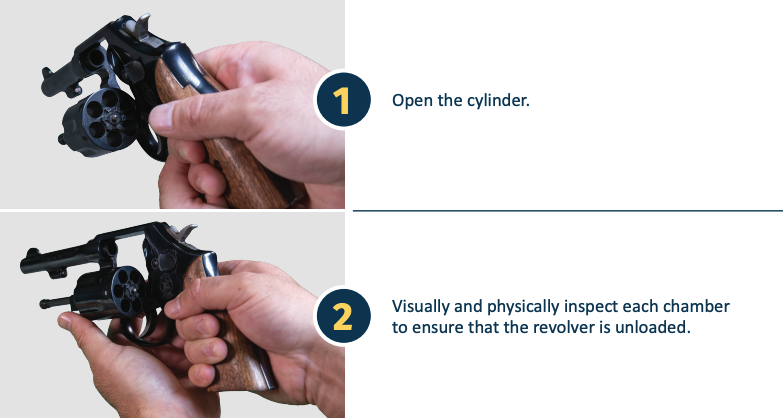
Sections on firearm types explain the mechanical differences buyers must understand. For revolvers, learn single-action and double-action operation, how to open the cylinder, unload, and verify the chambers are empty. For semiautomatic pistols, master inserting and removing magazines, pulling the slide to chamber a round, and clearing malfunctions such as failures to feed or eject. Long guns cover bolt-action, pump, semiautomatic, and break-action rifles and shotguns, including proper shouldering and safe unloading procedures.
Ammunition knowledge receives dedicated coverage. Identify compatible calibers, understand the difference between rimfire and centerfire, and recognize safe storage practices that keep ammunition separate from firearms. The guide stresses that using the wrong ammunition can cause catastrophic damage or injury.
Safe storage rules carry heavy weight because of potential criminal liability. Use a certified locking device or container that renders the firearm inoperable. Keep firearms out of reach of children and unauthorized users. The guide teaches the exact four-step response children should follow if they find a gun: stop, do not touch, leave the area, and tell an adult. Note that storage requirements tightened further starting January 1, 2026, under updated laws that emphasize secure gun safes or certified devices.
Legal responsibilities form another major tested area. Learn who qualifies as a prohibited person, including felons and those with certain domestic violence convictions. Understand the ban on straw purchases, where you cannot buy a firearm for someone who cannot legally own one. Transportation rules generally require firearms to be unloaded and in a locked container when in a vehicle. The guide outlines when a separate concealed carry permit is necessary and summarizes justifiable use of force in self-defense situations.
Take notes while studying. Focus on diagrams of firearm actions and the step-by-step safe handling demonstration procedures. Many buyers at Dirty Bird review the guide, then come in to discuss specific topics with staff before scheduling their test. This extra effort helps cut through the dense regulatory language and improves the chances of passing without needing a retake after the mandatory 24-hour wait.
Completing the Purchase After the FSC
With the certificate in hand, you still face the full DROS background check, waiting period, and any other applicable rules. The FSC covers both handguns and long guns during its five-year window, but it does not remove any other obstacles in the system. Repeat buyers must plan around expiration dates to avoid starting over.
Additional Considerations
Family transfers and longer-term loans often require the recipient to hold a valid FSC, depending on the details. Owners do not need to carry the physical card daily after purchase, though you must present it to a dealer at the start of any new transaction. California regulations continue to evolve, with ongoing discussions about adding formal training requirements in coming years. For now, the written test and study guide remain the main hurdle most buyers face.
Shop CA Compliant at Dirty Bird Guns and Ammo
The FSC is not a gun permit in California in the traditional sense, but it is a mandatory step that functions as a knowledge requirement built into California’s layered purchase process. Customers must navigate it along with background checks, waiting periods, and feature restrictions before bringing home a new gun.
Here at Dirty Bird, we carry a wide selection of firearms, ammunition, storage options, and California-compliant accessories. Our team helps customers work through the paperwork and requirements they face. Whether preparing to take the FSC test or simply trying to understand what California’s firearm purchase process actually involves, we provide products and information to make the experience as straightforward as possible under the rules.