

 Dirty Bird Bakersfield
Feb
Table of Contents
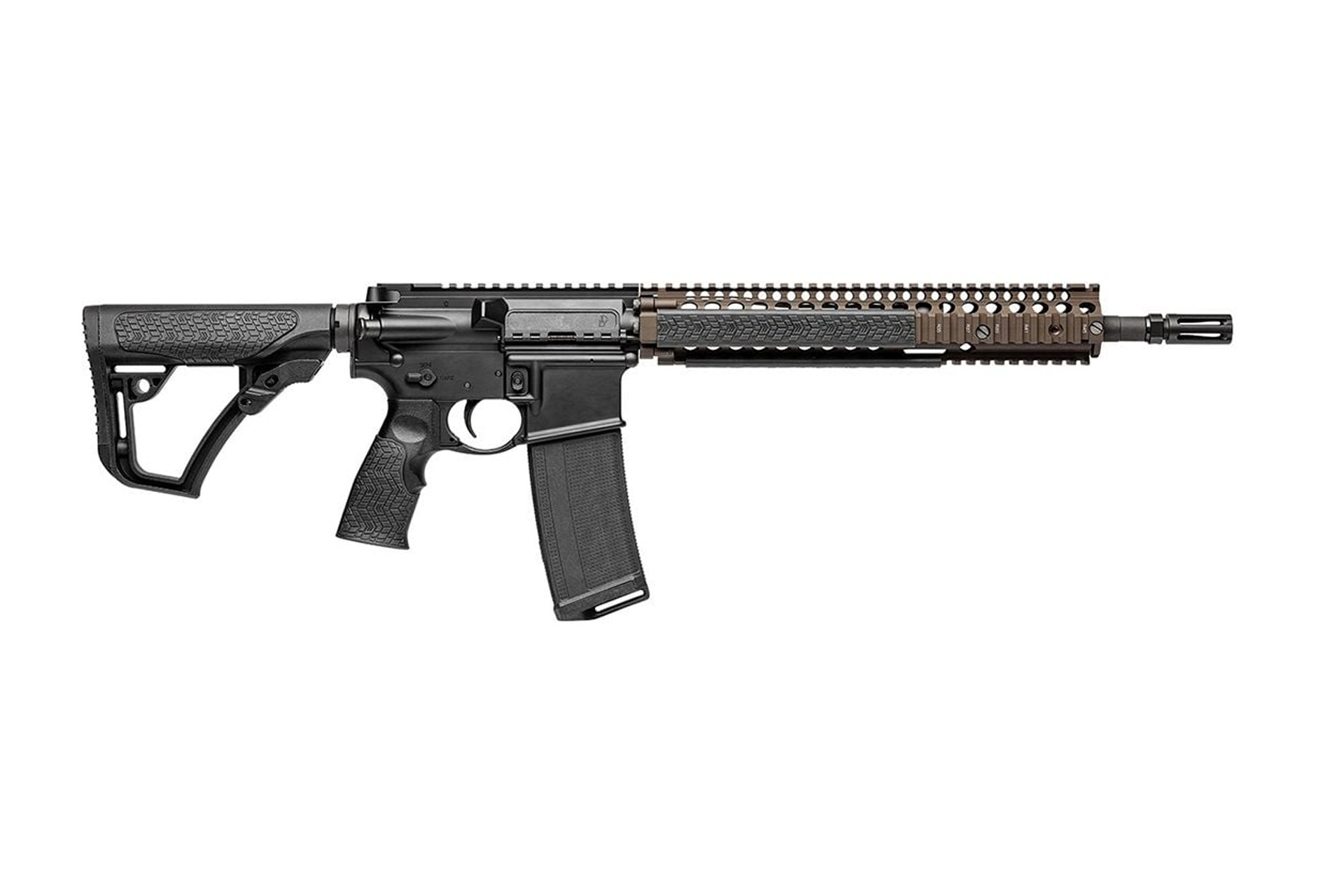
The AR-15 rifle remains one of the most iconic and adaptable firearms available to civilians in the United States. Its modular design allows for extensive customization, making it a popular choice for home defense, competitive shooting, hunting, and recreational range use. Frequently compared to the military-issued M4 carbine, the AR-15 rifle shares the same foundational design but differs in important ways shaped by law, intended use, and manufacturing standards. Understanding those distinctions helps clarify what separates a civilian sporting rifle from a service carbine.
Origins of the AR-15 Rifle
The AR-15 traces its roots to the late 1950s when Eugene Stoner, working for ArmaLite, developed a lightweight rifle intended to replace heavier battle rifles of the era. Building on the earlier AR-10 platform but scaled for the .223 Remington cartridge, the rifle emphasized reduced weight through aluminum receivers and synthetic furniture, along with a direct impingement gas system for efficient cycling.
ArmaLite sold the design rights to Colt in 1959. Colt refined the rifle and secured U.S. military contracts, leading to the adoption of the select-fire M16 in 1963. The M16 evolved through several variants, including the M16A1 and later the M16A2, which incorporated design refinements such as improved sights and burst capability.
The M4 carbine emerged in the 1980s as a more compact derivative of the M16. Designed for improved maneuverability in vehicles and close-quarters environments, it featured a shorter barrel and collapsible stock. It was officially designated as the M4 in the early 1990s and gradually replaced longer M16 variants in frontline service. The M4A1 later introduced full-automatic capability in place of burst mode for certain units.
Meanwhile, Colt retained the AR-15 name for semi-automatic civilian rifles. After key patents expired, other manufacturers entered the market, dramatically expanding the platform’s availability and driving innovation in components and configurations.
Core Design Similarities
At a structural level, the M4 and AR-15 share the same basic architecture. Both are built around the AR-pattern platform and typically use a direct impingement gas system in which gas from the fired cartridge cycles the bolt carrier group. Both use a rotating bolt design and forged aluminum upper and lower receivers.
They are most commonly chambered in 5.56x45mm NATO, with civilian AR-15 rifles also frequently chambered in .223 Remington or marked for safe use with both. Standard magazine capacity for both platforms is typically 20 or 30 rounds, subject to local laws.
Modern versions of both rifles incorporate accessory mounting systems such as Picatinny rails or M-LOK handguards, allowing users to attach optics, lights, grips, and other accessories. Many components such as charging handles, triggers, and bolt carrier groups are dimensionally compatible across platforms, although select-fire parts remain restricted.
Key Technical Differences
Barrel Length and Gas System
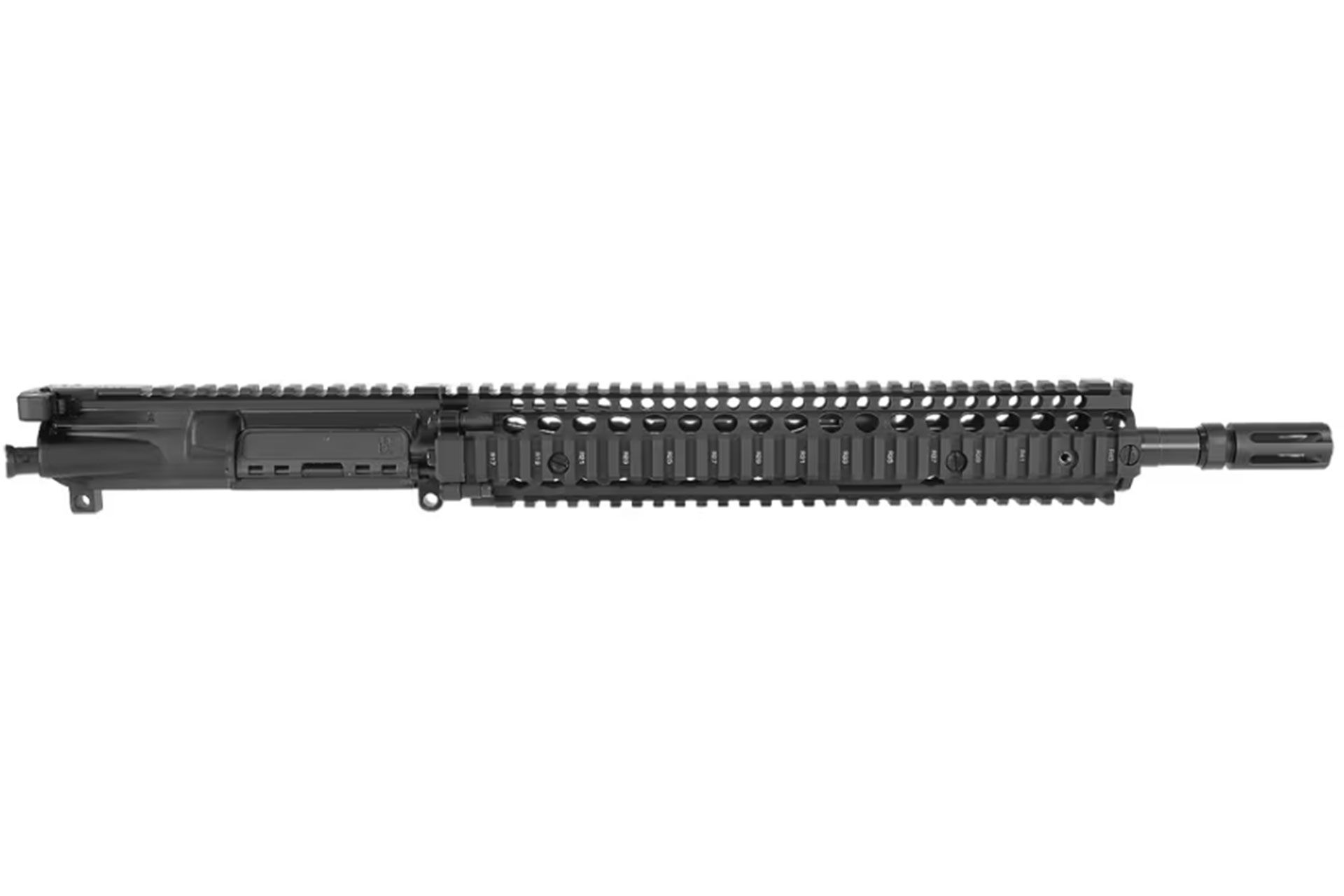
A standard military M4 uses a 14.5-inch barrel paired with a carbine-length gas system. The shorter barrel improves maneuverability, especially in confined environments. Because the gas port sits closer to the chamber, the carbine system cycles more quickly, which can increase wear compared to longer gas systems. M4 barrels also feature extended feed ramps commonly referred to as M4 feed ramps to enhance feeding reliability.
Civilian AR-15 rifles must meet federal minimum barrel length requirements of 16 inches unless registered as short-barreled rifles under the National Firearms Act. As a result, the most common AR-15 barrel length is 16 inches, though 18-inch and 20-inch configurations are also popular. Many 16-inch rifles use a mid-length gas system, which tends to provide smoother recoil impulse and reduced component stress compared to a carbine-length system.
Some civilian builds use a 14.5-inch barrel with a permanently attached muzzle device to reach the legal 16-inch minimum overall barrel length. This configuration visually mirrors the M4 profile while remaining compliant.
Fire Control Group and Firing Modes
The most significant difference between the M4 and a civilian AR-15 is the fire control group.
The M4 is a select-fire rifle. Depending on the variant, it offers semi-automatic and either three-round burst or full-automatic fire. This capability requires a lower receiver designed to accept an auto sear and other specific internal components.
Civilian AR-15 rifles are semi-automatic only, meaning one round is fired per trigger pull. Federal law prohibits civilian ownership of newly manufactured machine guns for private use, and select-fire components cannot be legally installed in standard AR-15 lower receivers.
Stock and Ergonomics
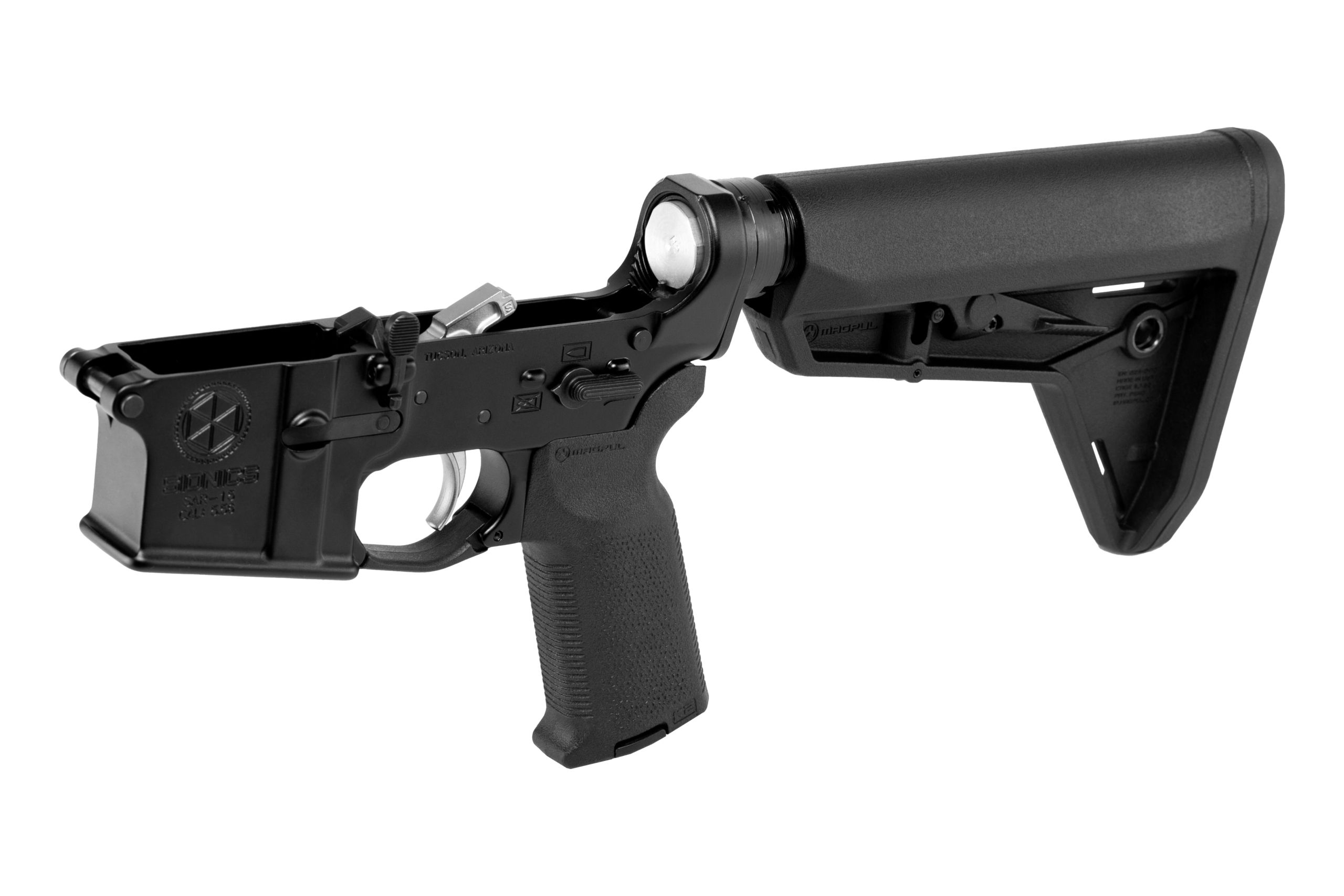
The M4 is equipped with a collapsible stock to allow adjustment for body armor and operational needs. Traditional service configurations often include a fixed front sight base integrated into the gas block.
AR-15 rifles are available with a wide range of stock options, including fixed rifle-length stocks and adjustable carbine-style stocks. Many civilian builds incorporate low-profile gas blocks and full-length free-floating handguards, which provide greater flexibility for optic placement and accessory mounting.
The civilian market has driven extensive ergonomic refinement, including ambidextrous controls, enhanced grips, upgraded triggers, and lightweight handguard systems.
Weight and Balance
A standard M4A1 weighs roughly between 6.5 and 7.5 pounds unloaded, depending on configuration. When outfitted with optics, lights, and other equipment, weight increases accordingly.
A 16-inch AR-15 rifle typically falls within a similar unloaded weight range, though lightweight builds can weigh less and heavy-barreled precision rifles can weigh more. Longer barrels shift balance slightly forward, which can enhance stability for longer-range shooting.
Performance Comparison
Velocity and Ballistics
Barrel length affects muzzle velocity. A 14.5-inch barrel typically produces slightly lower velocity than a 16-inch barrel when firing comparable 5.56 ammunition. While the difference is measurable, it is not dramatic for most civilian shooting applications. The longer barrel of a 16-inch AR-15 may offer marginally improved velocity and energy at extended distances.
For precision-oriented use, longer 18-inch or 20-inch AR-15 barrels can offer improved ballistic performance and sight radius when using iron sights.
Recoil and Handling
Carbine-length gas systems, such as those found on standard M4 configurations, can produce a sharper recoil impulse compared to mid-length systems commonly used on 16-inch civilian rifles. Many shooters find mid-length systems smoother and more comfortable during extended firing sessions.
Reliability
Both platforms are capable of excellent reliability when properly maintained. Military-issued M4 carbines are built to strict specifications and are designed for high round counts and demanding conditions. Civilian AR-15 rifles from reputable manufacturers often meet or exceed similar material and testing standards, though specifications vary by brand.
One major advantage of the AR-15 platform in the civilian market is caliber flexibility. While the M4 is standardized around 5.56 NATO, AR-15 rifles are available in numerous chamberings, including .300 Blackout, 6.5 Grendel, and others, allowing users to tailor performance to specific needs.
Legal and Ownership Considerations
Authentic military M4 carbines with select-fire capability are not available for civilian purchase unless they were registered prior to 1986 under federal law, and such firearms are rare and extremely expensive. They also require compliance with National Firearms Act regulations, including federal approval and tax stamps.
By contrast, semi-automatic AR-15 rifles are widely available in most states, subject to local restrictions. As long as they meet federal barrel length requirements and other applicable laws, they are treated as standard rifles under federal law. Pricing varies widely depending on manufacturer and configuration.
Many civilian builds replicate the look and handling characteristics of the M4 while remaining semi-automatic. These configurations are often described as M4-style rifles and combine compliant barrel lengths with collapsible stocks and tactical accessories.
Which One Is Right for You?
For civilian shooters, the AR-15 offers unmatched flexibility, legal accessibility, and customization potential. Whether configured for home defense, predator control, range training, or competition, it can be tailored to specific roles with relative ease.
Those drawn to the compact feel and military styling of the M4 can achieve a similar experience with a compliant AR-15 configuration. By selecting appropriate barrel lengths, gas systems, and components, shooters can balance handling, reliability, and performance according to their needs.
Understanding the technical and legal differences between the M4 and AR-15 clarifies that while they share a common heritage, they serve different purposes within clearly defined boundaries.